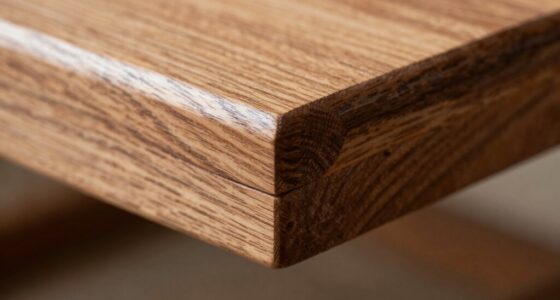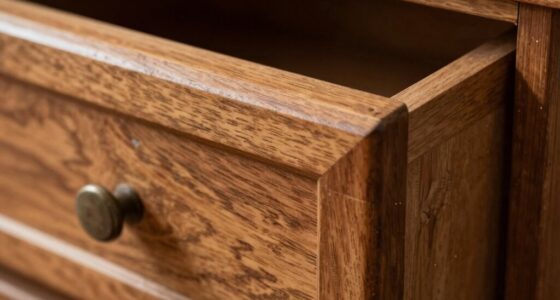
When the panel fits too perfectly in frame-and-panel joinery, you increase the risk of warping, cracking, and structural failure. Wood expands and contracts with changes in humidity, and tight fits don’t allow for this natural movement. As humidity rises, your snug panel could lead to serious issues down the line. To guarantee durability and functionality, it’s essential to accommodate wood’s natural behavior. Discover more about effective techniques to enhance your joinery.
Key Takeaways
- Panels that fit too snugly restrict natural wood movement, leading to warping or cracking as humidity levels change.
- High humidity causes solid wood panels to expand, risking structural failure in tightly fitted joinery.
- Overly perfect panels neglect the need for flexibility, compromising the integrity of the frame-and-panel system.
- Materials that are prone to significant expansion can exacerbate issues when panels are designed without allowances for movement.
- Effective joinery techniques must incorporate space for natural wood behavior to ensure long-term durability and performance.

When you’re working with frame-and-panel joinery, it’s vital to recognize potential failures that can compromise your project. One common issue arises when the panel is “too perfect.” This perfection might seem like an achievement, but it can lead to significant problems, primarily due to panel expansion and the effects of humidity. Understanding these factors can help you avoid costly mistakes.
Panels are often made from solid wood, which naturally expands and contracts with changes in humidity. If you’ve crafted a panel that fits snugly within the frame, you may be setting yourself up for failure. When humidity levels rise, the panel expands. If it’s too tightly fitted, this expansion can cause warping, splitting, or even cracking. It’s essential to leave space for this natural movement. A well-designed frame-and-panel joinery accommodates these changes, allowing the panel to move freely without damaging the surrounding structure.
Panels made from solid wood need room to expand; a snug fit can lead to warping, splitting, or cracking.
Material selection plays a significant role in how your project performs over time. You might choose a wood that’s prone to significant expansion or contraction, which can exacerbate the issues associated with a “too perfect” fit. Instead, consider using stable materials or engineered woods that resist these humidity effects. This approach can help guarantee that your joinery holds up well over time, even if environmental conditions fluctuate.
Joinery techniques also matter when you’re addressing these potential failures. If you’re using traditional joinery methods without accounting for wood movement, you’re likely to encounter problems down the line. Techniques such as using a groove to allow for panel expansion can help mitigate these risks. By implementing these techniques, you create a flexible connection that can accommodate changes in the wood without compromising the integrity of the frame.
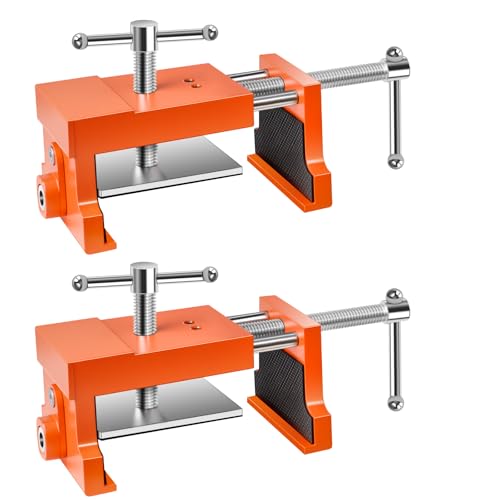
Cabinet Clamps, Professional Wood Joinery Alignment Tool, Adjustable Panel Clamping System for Cabinet Building, 4-Point Positioning Clamps, 2 Pack, Orange
No-Slip Grip and Drilling Guide Design: Achieve flawless cabinet installations effortlessly! Our heavy-duty cabinet clamps feature a non-slip…
As an affiliate, we earn on qualifying purchases.
As an affiliate, we earn on qualifying purchases.
Frequently Asked Questions
What Wood Types Work Best for Frame-And-Panel Joinery?
For frame-and-panel joinery, hardwoods like oak, maple, and cherry work best. Their wood characteristics, such as stability and strength, help maintain the integrity of the joint. You’ll want to guarantee your panel thickness is appropriate—typically between 1/4 inch and 3/4 inch—to allow for seasonal movement. Using these woods with the right thickness will enhance durability and prevent issues down the line, making your projects last longer and look great.
How Can I Prevent Seasonal Wood Movement?
To prevent seasonal wood movement, you should focus on humidity control. For instance, imagine you’ve built a beautiful cherry cabinet. If you keep the humidity stable around 40-50%, you’ll minimize wood expansion. Use a dehumidifier in summer and a humidifier in winter to maintain consistent moisture levels. Regularly check your indoor climate, and allow your frame-and-panel joinery to adapt, ensuring your pieces remain tight and functional throughout the seasons.
What Tools Are Essential for Frame-And-Panel Construction?
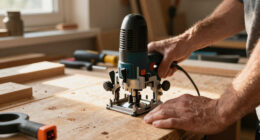
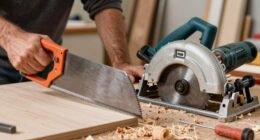
For frame-and-panel construction, you’ll need essential tools like a table saw for precise cuts, a router for shaping edges, and clamps for joint alignment. Don’t forget a chisel set for fine adjustments and a square to guarantee everything’s straight. Regular tool maintenance is vital, too; keep your blades sharp and your equipment clean to achieve the best results. Properly maintained tools help you achieve seamless joints and sturdy panels.
Can Glue Be Used With Frame-And-Panel Joints?
Yes, you can use glue with frame-and-panel joints. However, it’s essential to choose the right glue types, like PVA or polyurethane, that allow for some flexibility. Since the panel expands and contracts with temperature and humidity changes, using glue only on the frame’s edges can prevent stress. This way, you maintain the joint’s integrity while accommodating the panel’s movement, ensuring a durable and functional construction.
How Do I Finish Frame-And-Panel Assemblies Effectively?
To finish frame-and-panel assemblies effectively, you’ve got to embrace the beauty of contrast. Start by selecting panel finishes that complement your frame. Use joinery techniques that allow for expansion, ensuring your finish doesn’t crack. Sand the surfaces smoothly and apply a suitable primer before your final coat. Whether you go for oil, varnish, or paint, always test on scrap pieces first to see how the finish interacts with both frame and panel.

Trial Pack Flexible EPDM Rubber Strip 1/2", 3/4" and 1" (100mm/3.94" Each) for Concrete Crack Repair and Replacement – Weather and Aging Resistant Expansion Joint Filler for Driveways and Sidewalks
High-Quality Material: Made of EPDM rubber, this concrete expansion joint filler is flexible, strong, and resistant to weather…
As an affiliate, we earn on qualifying purchases.
As an affiliate, we earn on qualifying purchases.
Conclusion
In frame-and-panel joinery, perfection in the panel can actually lead to failure. If the panel fits too snugly, it can’t expand or contract with changes in humidity, causing cracks or warping. Isn’t it better to allow a little room for movement than risk a compromised structure? Embracing a bit of imperfection can enhance the durability and longevity of your work, ensuring that your craftsmanship stands the test of time. Remember, flexibility can be your best ally!
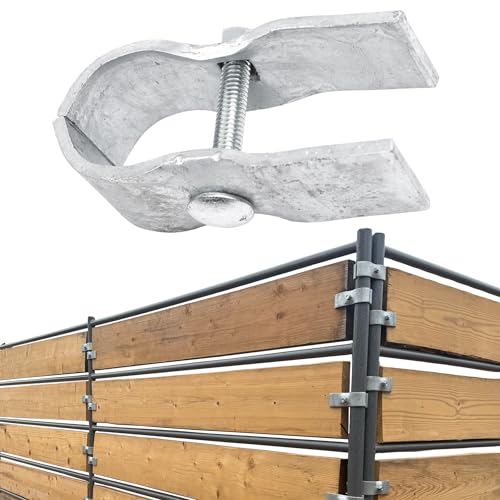
Horse Panel Clamps for Wood Boards – Fit 1-5/8" Livestock Corral Panels, Heavy-Duty Galvanized, Attach Lumber to Horse Stalls & Round Pens, 8-Pack
Fits Standard Horse Panels – Designed specifically for 1-5/8 inch diameter livestock and horse corral panels, ensuring a…
As an affiliate, we earn on qualifying purchases.
As an affiliate, we earn on qualifying purchases.

5 Pack Wood Grain Tool,Woodgraining Tool Kit,Texture Pattern with Handle Roller Rubber Empaistic Graining Tool Paint Look Like Wood for DIY Wall Room Art Decoration
【SET OF 5 WOOD GRAIN TOOL】Our wood graining painting tool set contains 5 different types of rollers. Specially…
As an affiliate, we earn on qualifying purchases.
As an affiliate, we earn on qualifying purchases.