Beginners comparing woodworking tool sets are usually deciding how to make their first projects: with a compact collection of hand tools or a bundle of powered tools. The hand-tool set is generally cheaper, quieter, and easier to store, but work takes longer and depends more on technique. A power-tool set can make straight cuts and repeated tasks faster, though its higher cost, setup needs, and safety demands can be a poor fit for someone still learning the basics. Choose hand tools for small projects, limited space, and gradual skill-building; choose power tools if you have a suitable workspace and expect to build larger pieces or repeat cuts.

Get business pricing on tools and workshop supplies
- Business-only prices and quantity discounts
- Tax-exempt purchasing
- Multiple users, one account, clear invoices

Bluvizo 30-in-1 Wood Carving Kit with Leather Case
- ✔ Brand: Bluvizo
- ✔ Model: WC-30IN1-04
- ✔ Tools: 4 carving knives and 4 chisels

32-Piece Wood Carving Kit with Storage Bag, Templates, and Basswood Blocks
- ✔ Manufacturer: KERNOWO
- ✔ Piece count: 32
- ✔ Knife count: 11

SAKERNEO 25-Piece Wood Carving Kit with Leather Storage Bag
- ✔ Brand: SAKERNEO
- ✔ Model: GJ101144-X67507
- ✔ Piece count: 25
At a Glance
| Criteria | Beginner Hand-Tool Set | Beginner Power-Tool Set | Winner |
|---|---|---|---|
| Upfront cost | Usually lower; core tools can be added gradually | Usually higher, especially when batteries, blades, bits, and dust control are included | A |
| Learning curve | Builds control and technique, though accurate sawing and planing take practice | Can simplify basic cuts, but requires safe setup and machine-specific practice | Depends |
| Speed and repeatability | Slower, with results depending heavily on hand skill | Faster for repeated cuts and stock preparation; accuracy still depends on setup | B |
| Workspace and storage | Quiet and compact; suitable for a small bench or shared space | Needs stable work surfaces, storage, power, and often dust collection | A |
| Project range | Good for small furniture, boxes, repairs, and hand-cut joinery | Better for larger builds, sheet goods, and repeated dimensional cuts | B |
| Maintenance and accessories | Fewer power-specific accessories; edges need sharpening and care | Blades, bits, batteries, and maintenance add ongoing costs | A |
| Safety and noise | Quiet, but sharp blades still require careful handling | Louder and creates more dust; requires guards, eye and hearing protection, and safe work habits | A |
Bluvizo 30-in-1 Wood Carving Kit with Leather Case
For someone choosing a first carving set, Bluvizo makes the fewest early decisions necessary. Its four carving knives and four chisels cover different approaches to shaping and detailing, while seven basswood blocks and a spoon blank give a new user material for practice and a defined project to attempt. The illustrated guide adds a starting point that the other product descriptions do not specify as clearly.Compared with KERNOWO, Bluvizo has fewer listed knives but a more explicit beginner package: gloves, bandage, templates, sandpaper, a sharpening stone, and a leather strop are all included. SAKERNEO supplies a hammer and more individual tool types for layout and tool-assisted work, but Bluvizo’s practice materials and guide make the learning path more concrete. Its walnut handles and forged alloy-steel blades are useful details to weigh, though the supplied description notes that the blades may need more frequent sharpening than high-carbon alternatives.The main limitation is scope. The supplied practice wood is basswood, and the set is aimed at carving rather than general workshop tasks or demanding hardwood projects. We would choose it for learning basic cuts and small decorative work, then look elsewhere if the goal is broad furniture-making or sustained work in harder woods.
Pros:
- Combines four carving knives and four chisels with practice basswood and a spoon blank.
- Includes an illustrated guide, gloves, bandage, and sharpening supplies.
- Walnut handles and a PU leather tool roll support comfortable handling and organized storage.
- Seven basswood blocks provide more listed practice pieces than the other two kits.
Cons:
- Alloy-steel blades may need frequent sharpening, according to the product description.
- Practice material is limited to basswood, which may not satisfy advanced hardwood work.
- The eight listed knives and chisels provide fewer knife options than KERNOWO’s 11 knives.
Best for: Beginners who want carving tools, practice wood, basic safety items, and an illustrated starting guide in one bundle.
Not ideal for: Woodworkers looking for general-purpose shop tools or a kit centered on hardwood projects and longer-term advanced carving.
Bottom line: Choose Bluvizo if we want the most clearly guided first carving experience, with practice materials and basic safety and sharpening supplies already included.
“Choose Bluvizo if we want the most clearly guided first carving experience, with practice materials and basic safety and sharpening supplies already included.”
32-Piece Wood Carving Kit with Storage Bag, Templates, and Basswood Blocks
KERNOWO is the knife-forward choice in this group. Its 11 pre-sharpened stainless steel knives with Mo.V alloy reinforcement give beginners more listed knife options than either Bluvizo or SAKERNEO. Four templates and six basswood blocks add a guided way to practice, so this set makes sense for learners who would rather try several carving shapes than start with a single spoon-oriented project.Against Bluvizo, KERNOWO trades some of the more explicit starter support for a broader knife selection. Bluvizo lists gloves, a bandage, sharpening tools, and an illustrated guide; the supplied KERNOWO details emphasize pre-sharpened blades, templates, and storage instead. SAKERNEO has fewer total pieces but names a hammer, scriber, and marking knife, which may better suit someone interested in layout and tool-assisted work. KERNOWO’s description does not list those tools.The reinforced stainless steel blades are presented as durable, and the double-layer PU leather bag is designed to keep tools organized for storage or transport. However, the templates are described as simple, and this is still a wood-carving set rather than a multi-material workshop kit. Beginners should also check whether their preferred safety and sharpening accessories are already available, since they are not prominent in the listed inclusions.
Pros:
- Includes 11 knives, the largest stated knife selection among these three kits.
- Four templates and six basswood blocks support structured practice.
- Mo.V alloy reinforced stainless steel blades are described as pre-sharpened.
- Double-layer PU leather storage bag is designed for organized carrying.
Cons:
- Templates are described as simple, which may limit options for more advanced projects.
- The supplied description does not list gloves or sharpening accessories.
- Designed specifically for wood carving rather than metal or stone work.
Best for: Beginners who want to explore a range of knife shapes using templates and supplied basswood blocks.
Not ideal for: Learners who need a clearly illustrated instruction guide, a listed set of safety gear, or extra layout and hammer tools.
Bottom line: Pick KERNOWO when a broad selection of carving knives and template-based practice matter more than the more explicit starter guidance in Bluvizo.
“Pick KERNOWO when a broad selection of carving knives and template-based practice matter more than the more explicit starter guidance in Bluvizo.”
SAKERNEO 25-Piece Wood Carving Kit with Leather Storage Bag
SAKERNEO differentiates itself through the tools around the knives. Alongside three chisels, eight whittling knives, and five detail knives, it includes a scriber, hammer, and marking knife. Those additions give a beginner more ways to mark and shape a project, making this a better fit than KERNOWO for someone whose planned carving calls for layout work or a hammer-assisted approach.Its stainless steel blades have Mo.V alloy reinforcement, and the knives have varnished walnut handles. A sharpening stone, polishing paste, leather strop, and safety gloves are also listed, bringing useful maintenance and protection items into the bundle. Compared with Bluvizo, though, SAKERNEO does not list basswood blocks, a spoon blank, or an illustrated beginner guide. That means a new carver may need to source practice wood and project instructions separately.The double-layer leather roll has hand and shoulder straps, which is a carrying advantage over the storage details supplied for the other sets. We would keep two constraints in mind: the product is restricted to adults with age verification required, and its description recommends use with wood and other soft materials. That makes it a more specialized option than a universal beginner woodworking set, despite its varied collection of carving and layout tools.
Pros:
- Includes a hammer, scriber, and marking knife in addition to carving knives and chisels.
- Mo.V alloy reinforced stainless steel blades and walnut handles are specified.
- Sharpening stone, polishing paste, strop, and safety gloves are included.
- Leather roll has hand and shoulder straps for carrying.
Cons:
- Adult-only restriction and age verification requirement limit who can use the kit.
- No basswood blocks or illustrated project guide are listed.
- Recommended for wood and other soft materials, limiting its stated range.
Best for: Adult beginners who already have practice wood and want carving tools plus a hammer and layout instruments.
Not ideal for: Younger learners, people seeking included practice blocks and a beginner guide, or anyone looking for a general-purpose woodworking set.
Bottom line: Choose SAKERNEO if we are adults who value layout and hammer tools and can supply our own practice wood and project guidance.
“Choose SAKERNEO if we are adults who value layout and hammer tools and can supply our own practice wood and project guidance.”
As an Amazon Associate we earn from qualifying purchases.
Key Differences
The central tradeoff is control and low entry cost versus speed and capacity. A hand-tool set lets a beginner start with a saw, chisels, a plane, measuring tools, and clamps, then add pieces as projects demand. That approach can teach how wood responds to cutting and shaping, but it will not make precision automatic: sharpening, layout, and practice matter. A modest set of properly chosen tools is often more useful than a large assortment of low-quality pieces.
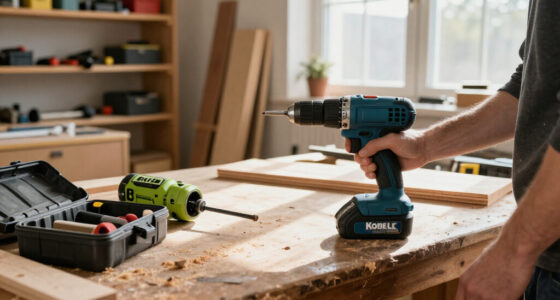
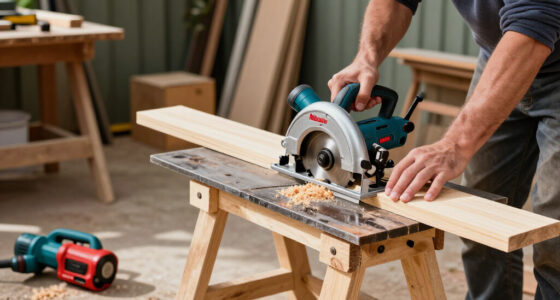
A power-tool bundle makes more sense when the goal is to process lumber quickly or build larger projects. A drill-driver, circular saw, and sander can cover many early tasks, but the purchase price is only part of the cost. Batteries, suitable blades, clamps, a straightedge or guide, dust management, and protective equipment can add up. For a first-time woodworker, workspace and project plans should decide the purchase more than the number of tools in the box.
Detailed Comparison
Upfront cost (Beginner Hand-Tool Set wins — moderate)
Beginner Hand-Tool Set wins; moderate gap. A useful hand-tool collection can start small, with the buyer adding tools as needs become clear. A powered bundle usually asks for a larger initial commitment, and the advertised kit may not include the blades, bits, batteries, or dust controls needed for actual projects. Pay the extra amount only if faster cutting or larger work will be used regularly.
Learning curve (moderate difference)
Depends; the difference is moderate. Hand tools require patience to learn sawing straight, planing evenly, and keeping edges sharp, but the feedback is direct and mistakes often happen more slowly. Power tools can make some tasks easier to repeat, yet they introduce setup, workholding, guards, and safe operating procedures. A beginner who wants to learn traditional methods may prefer hand tools; someone comfortable learning machines may reach usable results sooner with powered equipment.
Speed and repeatability (Beginner Power-Tool Set wins — major)
Beginner Power-Tool Set wins; major gap for repeated work. A circular saw with a guide can cut boards faster than a hand saw, and a sander can smooth broad surfaces quickly. This matters when building several matching parts or preparing a larger quantity of lumber. For one small box or a few repairs, the time saved may not justify the cost and setup. Powered tools improve pace, but accurate results still rely on measurements, guides, and careful workholding.
Workspace and storage (Beginner Hand-Tool Set wins — major)
Beginner Hand-Tool Set wins; major gap for small or shared spaces. Hand tools fit in a drawer or portable case and produce little noise or airborne dust. Many power tools need a stable surface, room to handle long stock, a safe place to store batteries and accessories, and a way to manage dust. If woodworking happens in an apartment, shared garage, or temporary setup, hand tools are usually easier to use consistently.
Project range (Beginner Power-Tool Set wins — moderate)
Beginner Power-Tool Set wins; moderate gap for larger builds. Hand tools can handle boxes, small furniture, repairs, and joinery, but breaking down sheet goods or preparing many boards takes more effort. A powered set is more capable for shelves, cabinets, and other projects involving repeated or long cuts. Neither kit is complete for every job: tool selection should match the actual project, and larger builds may call for a table saw or planer beyond a basic beginner bundle.
Maintenance and accessories (Beginner Hand-Tool Set wins — minor)
Beginner Hand-Tool Set wins; minor to moderate gap. Hand tools need cleaning, rust prevention, and sharp edges; sharpening takes time but uses a relatively small set of supplies. Power tools bring consumable blades and bits, battery management, and sometimes dust extraction or specialized guides. The details vary by brand and tool type, so compare what is included instead of relying on the set name. Over time, accessories can make a low headline price less attractive.
Safety and noise (Beginner Hand-Tool Set wins — moderate)
Beginner Hand-Tool Set wins for lower noise and simpler setup; moderate gap. Hand tools can cause serious cuts, so careful handling and secure workholding still matter. Powered tools add higher speed, noise, and dust, making guards, eye protection, hearing protection, and disciplined setup especially important. A power-tool user should be ready to learn each tool’s safe operation before cutting. For a quiet home environment, hand tools are the more practical choice.
Beginner Hand-Tool Set: Pros and Cons
Pros:
- Lower initial cost and easy to expand gradually
- Compact, quiet, and suitable for small workspaces
- Encourages precise measuring, controlled cuts, and sharpening skills
Cons:
- Slower for long cuts and repeated tasks
- Accuracy depends on practice and tool condition
- Less convenient for large boards and sheet goods
Beginner Power-Tool Set: Pros and Cons
Pros:
- Speeds up repeated cuts, sanding, and stock preparation
- Better suited to larger projects and sheet materials
- Can make some basic operations more consistent when properly guided
Cons:
- Higher total cost once accessories and safety equipment are counted
- Needs more space, power, dust control, and storage
- Requires machine-specific setup and safety practice
Who Should Choose What
Choose Beginner Hand-Tool Set if:
- You are starting with small projects and want to keep the initial spend low.
- You have limited space, share walls with neighbors, or need a quiet setup.
- You want to build hand skills and add tools as project needs become clear.
Choose Beginner Power-Tool Set if:
- You have a stable, ventilated workspace and expect to build larger items.
- You value faster stock preparation or need to make many similar cuts.
- You can budget for accessories and will learn safe operation before use.
Skip both if: Skip buying a bundled set if you already know the tools your projects require or the bundle includes low-quality pieces you would replace. Buy a short list of reliable individual tools instead.
Value for Money
For most beginners, the hand-tool set is the better value when projects are small and occasional: it keeps the initial purchase modest and avoids paying for capacity that may sit unused. Paying more for a power-tool set is worthwhile when time saved has real value, the workspace can support it, and projects regularly involve long cuts, sheet goods, or repeated parts. Compare the full setup cost, including batteries, blades, bits, clamps, guides, dust collection, and protection. A focused set of dependable tools usually offers better value than a large bundle chosen by piece count.
Final Verdict
Choose the Beginner Hand-Tool Set if you are exploring woodworking, working in a compact or shared space, or building smaller pieces. It is the stronger default for a first purchase because it costs less, stores easily, and lets you add tools as your plans develop. Choose the Beginner Power-Tool Set if you have room to work safely and already expect to tackle larger projects or repeated cuts. The deciding factor is how often you will use the speed: for occasional small builds, save the money; for regular larger work, the power tools can justify their higher total cost.
Frequently Asked Questions
Are hand tools or power tools better for a complete beginner?
Hand tools are a strong starting point for small projects, limited space, and gradual learning. Power tools suit beginners who have a safe workspace and want to build larger items sooner. Either route still takes practice.
What should a beginner woodworking set include?
Start with tools that match a first project: accurate measuring and marking tools, a saw, a way to hold the work securely, and tools for smoothing or joining. For a powered setup, a drill-driver and guided circular saw cover common tasks, but check whether batteries and accessories are included.
Is a woodworking tool bundle worth buying?
A bundle can be good value if its tools match your planned projects and are of dependable quality. Ignore the piece count and check each tool, included accessories, warranty, and replacement consumables. A smaller set of useful tools is often the better buy.
Can I start woodworking without a dedicated workshop?
Yes. Hand tools work well in a small, quiet setup if you can secure the material and store tools safely. Power tools can also work in a garage or outdoor workspace, but need room to handle stock and a plan for noise and dust.