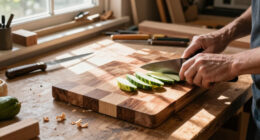
Cherry wood cutting boards vary most in grain orientation, thickness, and how much counter space they claim. I rank the CONSDAN 20 x 15-inch, 1.5-inch board as the best overall balance of generous prep area and substantial build; the TIMBARIS 20 x 15-inch end-grain board stands out for cooks prioritizing an end-grain surface, while the CONSDAN 16 x 12-inch board is a more manageable everyday choice. Larger, thicker boards offer steadier work space but take up more room and require more effort to move and maintain. Reversible designs and juice grooves suit different prep habits, while edge-grain and end-grain boards bring different looks and care needs. Read on for the full breakdown and a guide to choosing the right fit.

Get business pricing on tools and workshop supplies
- Business-only prices and quantity discounts
- Tax-exempt purchasing
- Multiple users, one account, clear invoices
Complete the kit


Key Takeaways
- The 20 x 15-inch CONSDAN at 1.5 inches thick leads for a balance of work surface and substantial construction; the 20 x 15-inch, 1-inch CONSDAN saves weight and height at the cost of heft.
- The TIMBARIS and 17 x 12-inch grooved board are the end-grain options, but they differ in scale: one is a large, thick work surface, while the other is more contained and includes a juice groove.
- Thickness changes day-to-day handling: the 1-inch CONSDAN models are easier to lift and store than the 1.5- to 2-inch boards, which occupy more space and feel more substantial on the counter.
- Reversibility is a practical separator: the John Boos CHY-R01 and WoodForChef models suit cooks who want two usable sides, while a juice groove favors tasks that release liquid but reduces uninterrupted board surface.
- Size is the clearest choice point in this lineup: 16 x 12-inch boards suit smaller kitchens and routine prep; 20-inch-wide options better serve batch cooking but need more counter and storage room.
| CONSDAN Solid Cherry Wood Cutting Board, 16 x 12 x 1 Inch |  | Best Compact Pick | Material: Cherry wood | Dimensions: 16 x 12 x 1 inch | Shape: Rectangular | VIEW LATEST PRICE | See Our Full Breakdown |
| CONSDAN Solid Cherry Wood Edge-Grain Cutting Board, 16 x 12 x 1.5 Inches | | Best Compact, Heavier-Duty Pick | Material: Cherry wood | Construction: Edge grain | Dimensions: 16 x 12 x 1.5 inches | VIEW LATEST PRICE | See Our Full Breakdown |
| TIMBARIS 20 x 15-Inch End-Grain Cherry Wood Cutting Board, 2 Inches Thick |  | Best for Spacious End-Grain Prep | Material: Cherry wood | Dimensions: 20 x 15 x 2 inches | Shape: Rectangular | VIEW LATEST PRICE | See Our Full Breakdown |
| CONSDAN Solid Cherry Wood Cutting Board, 20 x 15 Inches, 1.5 Inches Thick | | Best Overall for Everyday Large-Batch Prep | Material: USA-grown cherry wood | Dimensions: 20 x 15 x 1.5 inches | Finish: Food-safe wax oil | VIEW LATEST PRICE | See Our Full Breakdown |
| John Boos CHY-R01 Reversible Cherry Wood Cutting Board, 18 x 12 x 1.5 Inches |  | Best Reversible Mid-Size Pick | Brand: John Boos | Model: CHY-R01 | Material: Cherry wood | VIEW LATEST PRICE | See Our Full Breakdown |
| CONSDAN Solid Cherry Wood Cutting Board, 20 x 15 x 1 Inches | | Best for Juice-Heavy Prep | Material: USA-grown cherry wood | Dimensions: 20 x 15 x 1 inches | Weight: 3.65 kg | VIEW LATEST PRICE | See Our Full Breakdown |
| WoodForChef Large Reversible Cherry Cutting Board, 20 x 16 x 1.5 in |  | Best Reversible Prep Surface | Material: FSC-certified cherry hardwood | Dimensions: 20 x 16 x 1.5 inches | Weight: 5.14 kg (10.78 lb) | VIEW LATEST PRICE | See Our Full Breakdown |
| John Boos R-Board Cherry Wood Cutting Board, 20 × 15 in |  | Best Thick Edge-Grain Pick | Material: Cherry wood | Dimensions: 20 x 15 x 1.5 inches | Weight: 10 lb | VIEW LATEST PRICE | See Our Full Breakdown |
| 17 x 12-Inch End-Grain Cherry Wood Cutting Board with Juice Groove |  | Best Compact End-Grain Option | Brand: TIMBARIS | Material: Cherry wood | Construction: End grain | VIEW LATEST PRICE | See Our Full Breakdown |
| cherry wood cutting board | Material | Dimensions | Features | Care |
|---|---|---|---|---|
| CONSDAN Solid Cherry Wood Cutt | Cherry wood | 16 x 12 x 1 inch | Deep juice groove and built-in inner handles | Hand wash only |
| CONSDAN Solid Cherry Wood Edge | Cherry wood | 16 x 12 x 1.5 inches | Deep juice groove and recessed handles | Hand wash only |
| TIMBARIS 20 x 15-Inch End-Grai | Cherry wood | 20 x 15 x 2 inches | Deep juice groove, built-in handles, and non-slip rubber feet | Hand wash only |
| CONSDAN Solid Cherry Wood Cutt | USA-grown cherry wood | 20 x 15 x 1.5 inches | Built-in handles and deep juice groove | Hand wash only |
| John Boos CHY-R01 Reversible C | Cherry wood | 18 x 12 x 1.5 inches | Reversible sides, recessed finger grips, and oil finish | Hand wash only; maintain with board oil and cream |
| CONSDAN Solid Cherry Wood Cutt | USA-grown cherry wood | 20 x 15 x 1 inches | Deep juice groove; polished inset handles | Hand wash only |
| WoodForChef Large Reversible C | FSC-certified cherry hardwood | 20 x 16 x 1.5 inches | Deep juice groove; side handles | Hand wash, dry upright, and re-oil as needed |
| John Boos R-Board Cherry Wood | Cherry wood | 20 x 15 x 1.5 inches | Reversible sides; recessed finger grips; oil finish | Hand wash only; maintain with board oil and cream |
| 17 x 12-Inch End-Grain Cherry | Cherry wood | 17 x 12 x 1.6 inches | Reversible; juice groove; built-in handles; non-slip rubber feet | Hand wash only |
More Details on Our Top Picks
CONSDAN Solid Cherry Wood Cutting Board, 16 x 12 x 1 Inch
At 16 x 12 inches, this CONSDAN board suits cooks who want cherry wood without giving up much counter or storage space. Its deep juice groove helps catch liquids from fruit and meat, while the polished inner handles make it easier to lift than a plain-edged board of similar size. The smooth surface is designed to be easy on knives, and the wax oil finish brings out cherry’s warm tone. Compared with the larger CONSDAN 20 x 15-inch board, this one offers less room for batch prep but is easier to place in a smaller kitchen. The tradeoff is that it is only one inch thick and requires hand washing; its lifetime warranty also excludes damage from misuse, heat, excess moisture, and normal wear.
Pros:- Compact 16 x 12-inch footprint fits more easily on crowded counters.
- Deep groove helps contain juices during food preparation.
- Polished inner handles make lifting and carrying easier.
- Smooth cherry surface is designed to be gentle on knives.
Cons:- One-inch thickness provides less heft than the thicker CONSDAN and TIMBARIS options.
- Hand washing is required.
- Warranty exclusions leave natural wear and damage from heat or excess moisture uncovered.
Best for: Apartment cooks and occasional meal preppers who want a manageable cherry board with a groove for everyday slicing.
Not ideal for: People who regularly prep large roasts or multiple ingredients at once, since the 16 x 12-inch surface is smaller than the lineup’s full-size boards.
- Material:Cherry wood
- Dimensions:16 x 12 x 1 inch
- Shape:Rectangular
- Finish:Food-safe wax oil
- Features:Deep juice groove and built-in inner handles
- Care:Hand wash only
- Recommended uses:Cheese, fruit, meat, and vegetables
- Warranty:Lifetime coverage for material or workmanship defects under normal use
Our verdict“Choose this CONSDAN if you want a grooved cherry board for routine prep but do not need the work area of a 20-inch model.”
CONSDAN Solid Cherry Wood Edge-Grain Cutting Board, 16 x 12 x 1.5 Inches
This CONSDAN keeps the 16 x 12-inch footprint of the thinner CONSDAN compact board but adds half an inch of thickness and specifies edge-grain construction. That extra thickness gives it a more substantial feel for regular chopping, while the recessed handles and deep groove keep carrying and wet prep practical. Its USA-grown cherry wood and food-safe wax oil finish make it a straightforward choice for cooks seeking a compact board with more body than the one-inch version. Compared with the John Boos CHY-R01, it is smaller and includes a juice groove, but it does not offer that model’s reversible sides. The main compromises are the limited work area and hand-wash care; the warranty excludes damage from misuse, dishwashers, extreme heat or moisture, and natural wear.
Pros:- One-and-a-half-inch thickness gives the compact board more substance than the one-inch CONSDAN.
- Edge-grain cherry construction provides a smooth, knife-friendly prep surface.
- Deep juice groove helps contain liquids.
- Recessed handles aid lifting and carrying.
Cons:- The 16 x 12-inch area can feel cramped when prepping several ingredients.
- Hand washing is required.
- It is not reversible, unlike the John Boos CHY-R01.
Best for: Cooks with limited counter space who want a thicker edge-grain cherry board for routine chopping and wet ingredients.
Not ideal for: Batch-prep cooks who need a broad surface or anyone seeking a reversible board for separate prep tasks.
- Material:Cherry wood
- Construction:Edge grain
- Dimensions:16 x 12 x 1.5 inches
- Finish:Food-safe wax oil
- Features:Deep juice groove and recessed handles
- Care:Hand wash only
- Recommended uses:Bread, cheese, fruit, meat, and vegetables
- Warranty:Lifetime coverage for material or workmanship defects under normal use
Our verdict“Pick this model over the thinner CONSDAN when a compact footprint matters but you want a thicker edge-grain board.”
TIMBARIS 20 x 15-Inch End-Grain Cherry Wood Cutting Board, 2 Inches Thick
The TIMBARIS is the lineup’s most substantial choice: a 20 x 15-inch, two-inch-thick end-grain board with reversible sides. That large working area suits cooks who want room for slicing, chopping, and meat preparation without crowding ingredients together. Built-in handles and rubber feet are useful additions at this size: the feet help limit movement, while the handles help with lifting. A deep groove, linseed oil and beeswax finish, and serving use add flexibility. Compared with the CONSDAN 20 x 15-inch board, the TIMBARIS is thicker and reversible, but the CONSDAN’s simpler build may suit buyers who do not need end grain or two usable sides. This board is not intended for heavy cleaver hacking, and its size, hand-wash care, and one-year warranty make it a more demanding choice than the smaller CONSDAN models.
Pros:- Large reversible surface provides two usable sides for prep and serving.
- Two-inch-thick end-grain construction offers a substantial worktop.
- Rubber feet support stability on the counter.
- Deep groove helps catch liquids during meat preparation.
Cons:- Not intended for heavy cleaver hacking.
- Its 20 x 15-inch, two-inch-thick build takes considerable counter and storage space.
- Hand washing is required, and the warranty is one year.
Best for: Frequent home cooks who want a large, reversible end-grain cherry surface for slicing, chopping, and serving.
Not ideal for: Small-kitchen cooks, heavy cleaver users, or buyers who prefer a lighter board with a longer warranty.
- Material:Cherry wood
- Dimensions:20 x 15 x 2 inches
- Shape:Rectangular
- Design:Reversible end grain
- Features:Deep juice groove, built-in handles, and non-slip rubber feet
- Finish:Linseed oil and beeswax
- Care:Hand wash only
- Limitation:Not intended for heavy cleaver hacking
- Warranty:1 year
Our verdict“Choose the TIMBARIS if you want the largest, thickest cherry option here and can accommodate its size and cleaver-use limitation.”
CONSDAN Solid Cherry Wood Cutting Board, 20 x 15 Inches, 1.5 Inches Thick
This CONSDAN earns the everyday large-board slot by pairing a 20 x 15-inch prep area with a more manageable 1.5-inch thickness than the TIMBARIS. It gives cooks room for bread, vegetables, or meat, while the deep groove helps keep juices from running onto the counter. Recessed handles on both sides make the broad board easier to move, and the food-safe wax oil finish keeps the cherry wood’s smooth, knife-friendly surface ready for routine kitchen work. Compared with the TIMBARIS end-grain board, this is a simpler, thinner option without reversible construction or rubber feet; it also avoids the TIMBARIS’s stated restriction against heavy cleaver hacking. The tradeoff is that this board has only one described cutting surface and still needs hand washing. Its lifetime warranty applies to defects under normal use, not misuse or natural wear.
Pros:- 20 x 15-inch surface accommodates larger ingredients and batch preparation.
- Deep juice groove helps contain liquids.
- Recessed handles on both sides aid carrying.
- Food-safe wax oil finish and smooth surface suit routine slicing and chopping.
Cons:- The broad footprint needs ample counter and storage space.
- Hand washing is required.
- It lacks the TIMBARIS board’s reversible design and rubber feet.
Best for: Home cooks who regularly prepare meals for several people and want a broad, grooved cherry board without a two-inch-thick build.
Not ideal for: Buyers with limited storage or those specifically seeking reversible end-grain construction and non-slip feet.
- Material:USA-grown cherry wood
- Dimensions:20 x 15 x 1.5 inches
- Finish:Food-safe wax oil
- Features:Built-in handles and deep juice groove
- Care:Hand wash only
- Recommended uses:Bread, cheese, fruit, meat, and vegetables
- Warranty:Lifetime coverage for material or workmanship defects under normal use
Our verdict“For a spacious everyday cherry board with a groove and carrying handles, choose this CONSDAN over the thicker, more specialized TIMBARIS.”
John Boos CHY-R01 Reversible Cherry Wood Cutting Board, 18 x 12 x 1.5 Inches
The John Boos CHY-R01 takes a middle path between the compact CONSDAN boards and the larger 20-inch models. At 18 x 12 inches, it offers more length than the 16-inch CONSDAN while staying narrower than the full-size boards. Its reversible edge-grain design provides two cutting surfaces, a practical advantage for separating different prep tasks or saving one side for serving. Recessed finger grips help with handling, and the level surface is suited to slicing and chopping. Unlike the grooved CONSDAN options, this model has no listed juice groove, so cooks handling wet meat may prefer those boards. It also calls for hand washing and ongoing care with board oil and cream, sold separately. Compared with the TIMBARIS, it is smaller and thinner, but easier to fit into kitchens that cannot accommodate a broad, two-inch-thick board.
Pros:- Reversible sides provide two cutting surfaces.
- Edge-grain cherry construction offers a level surface for chopping and slicing.
- Recessed finger grips help with handling.
- Mid-size footprint is less demanding than the 20 x 15-inch options.
Cons:- No juice groove is listed for containing liquids.
- Hand washing is required.
- Board oil and cream for maintenance are sold separately.
Best for: Cooks who want a reversible cherry board for everyday slicing and serving, but need a size between compact and full-width models.
Not ideal for: People who often cut juicy meats and want a groove, or buyers who do not want to purchase and apply board oil and cream.
- Brand:John Boos
- Model:CHY-R01
- Material:Cherry wood
- Construction:Edge grain
- Dimensions:18 x 12 x 1.5 inches
- Weight:7 pounds
- Features:Reversible sides, recessed finger grips, and oil finish
- Care:Hand wash only; maintain with board oil and cream
Our verdict“Choose the John Boos CHY-R01 if two usable sides and a mid-size footprint matter more than having a juice groove.”
CONSDAN Solid Cherry Wood Cutting Board, 20 x 15 x 1 Inches
The 20 x 15-inch cherry surface gives this CONSDAN room for batch prep, while its deep juice groove is the main reason to choose it for carving meat or cutting juicy produce. The food-safe wax oil finish and smooth, knife-friendly wood keep the design focused on everyday kitchen use rather than extra-thick construction. Compared with the WoodForChef Large Reversible Cherry Cutting Board, this board is thinner and lighter, so it is easier to move but offers only a single described work surface. Inset handles help with carrying, though the 3.65 kg weight still makes it a substantial board. It needs hand washing, and its warranty does not cover misuse, dishwasher exposure, or natural wear, so it suits owners willing to maintain wood carefully.
Pros:- Large 20 x 15-inch work area accommodates several ingredients at once.
- Deep juice groove helps contain liquid from meat and produce.
- Smooth cherry surface is described as knife-friendly.
- Inset handles and food-safe wax oil finish support practical handling and care.
Cons:- Hand washing is required, so cleanup is less convenient than with dishwasher-safe boards.
- At 1 inch thick, it is less substantial than the 1.5-inch WoodForChef and John Boos options.
- Warranty exclusions leave damage from misuse, dishwashers, extreme heat, moisture, and natural wear uncovered.
Best for: Home cooks who regularly carve meat or prep juicy fruit and want a large cherry board with an effective liquid-catching groove.
Not ideal for: Buyers who want two usable sides or a low-maintenance board; this model is single-sided as described and must be hand-washed.
- Material:USA-grown cherry wood
- Dimensions:20 x 15 x 1 inches
- Weight:3.65 kg
- Finish:Food-safe wax oil
- Features:Deep juice groove; polished inset handles
- Recommended uses:Bread, cheese, fruit, meat, and vegetables
- Care:Hand wash only
- Warranty:Lifetime coverage for material or workmanship defects under normal use, subject to exclusions
Our verdict“Choose this CONSDAN if a roomy cherry board and deep groove matter more than reversible use or a thicker build.”
WoodForChef Large Reversible Cherry Cutting Board, 20 x 16 x 1.5 in
The two usable sides give this WoodForChef a clear advantage for cooks who want to separate messy prep from serving or use one face for different tasks. Its 20 x 16-inch footprint is the largest here, and the 1.5-inch thickness makes it more substantial than the 1-inch CONSDAN board. A deep groove and side handles add practical support for carving and moving food, while FSC-certified cherry hardwood provides a sourcing detail absent from the other listed boards. The tradeoff is care: this board needs hand washing, upright drying, and re-oiling as needed. It weighs 5.14 kg, so it is less convenient to shift around than a lighter option. Compared with the thicker John Boos R-Board, it offers a slightly larger footprint and explicit FSC sourcing, but both require attentive wood maintenance.
Pros:- Reversible construction provides two usable surfaces for prep and serving.
- Large 20 x 16-inch area suits carving and multi-ingredient preparation.
- Deep juice groove helps collect liquids during meat or produce prep.
- FSC-certified cherry hardwood and side handles add sourcing and handling benefits.
Cons:- At 5.14 kg, it can be cumbersome to move and store.
- Requires hand washing and upright drying.
- Needs re-oiling as needed to maintain the wood.
Best for: Cooks who want a large cherry board with separate prep and serving faces, plus responsibly sourced hardwood.
Not ideal for: People who need a lightweight board for frequent lifting or prefer minimal upkeep; it is heavy and needs drying and periodic re-oiling.
- Material:FSC-certified cherry hardwood
- Dimensions:20 x 16 x 1.5 inches
- Weight:5.14 kg (10.78 lb)
- Construction:Reversible, with two usable surfaces
- Features:Deep juice groove; side handles
- Finish:Pre-seasoned with food-safe mineral oil and wax
- Origin:Crafted in Canada
- Care:Hand wash, dry upright, and re-oil as needed
Our verdict“Pick the WoodForChef if you want the broadest reversible cherry work surface and are comfortable with its weight and upkeep.”
John Boos R-Board Cherry Wood Cutting Board, 20 × 15 in
The John Boos R-Board makes sense for buyers who want a thick, reversible edge-grain board in a familiar 20 x 15-inch format. At 1.5 inches thick, it has a more substantial build than the thinner CONSDAN 20 x 15-inch board, and its recessed finger grips give you places to hold the board without adding projecting handles. The reversible sides provide two work surfaces, though the product details do not list a juice groove, unlike the WoodForChef Large Reversible Cherry Cutting Board. That makes the Boos less suited to containing carving juices but a straightforward choice for bread, fruit, meat, and vegetable prep. Care is the main drawback: hand washing is required, and board oil and cream are sold separately. I’d favor it for sturdy, general-purpose prep rather than liquid-heavy carving.
Pros:- 1.5-inch edge-grain construction provides a thick, substantial work surface.
- Reversible sides offer two cutting surfaces.
- Recessed finger grips aid lifting without projecting handles.
- Made in the USA and suitable for a broad range of everyday food prep.
Cons:- No juice groove is listed, making it less suited to containing carving liquids than the WoodForChef board.
- Hand washing is required.
- Board oil and cream for maintenance are sold separately.
Best for: Home cooks seeking a thick, reversible USA-made cherry board for regular bread, fruit, meat, and vegetable preparation.
Not ideal for: Cooks who frequently carve juicy roasts and want a listed juice groove, or buyers who want maintenance products included.
- Material:Cherry wood
- Dimensions:20 x 15 x 1.5 inches
- Weight:10 lb
- Construction:Edge grain
- Features:Reversible sides; recessed finger grips; oil finish
- Model:CHY-R03
- Country of manufacture:USA
- Care:Hand wash only; maintain with board oil and cream
Our verdict“Choose the John Boos R-Board for a thick, reversible general-prep surface if a juice groove is not a priority.”
17 x 12-Inch End-Grain Cherry Wood Cutting Board with Juice Groove
This TIMBARIS board is the lineup’s compact choice for buyers specifically seeking end-grain cherry construction. At 17 x 12 inches, it takes up less counter space than the 20-inch CONSDAN and WoodForChef boards, while its 1.6-inch thickness and non-slip rubber feet support a stable prep setup. The reversible design, built-in handles, and juice groove make it usable for both cutting and serving. Its smaller footprint is also the main compromise: it gives you less room for large ingredients or batch prep than the John Boos R-Board. The product notes that it is not intended for heavy cleaver hacking, so this is better matched to slicing, chopping, dicing, and carving than forceful chopping. Hand washing is required, and the warranty is limited to one year.
Pros:- End-grain cherry construction offers a distinct alternative to the lineup’s edge-grain boards.
- Reversible design supports separate prep and serving uses.
- Juice groove and built-in handles add practical prep and carrying features.
- Non-slip rubber feet help keep the board stable during use.
Cons:- Smaller 17 x 12-inch surface offers less room than the 20 x 15-inch John Boos board.
- Not intended for heavy cleaver hacking.
- Hand washing is required, and the warranty lasts one year.
Best for: Cooks with limited counter space who want a reversible end-grain cherry board with a groove and stabilizing feet.
Not ideal for: Large-batch meal preppers or cooks who rely on heavy cleaver work; its 17 x 12-inch surface is smaller and not intended for heavy hacking.
- Brand:TIMBARIS
- Material:Cherry wood
- Construction:End grain
- Dimensions:17 x 12 x 1.6 inches
- Features:Reversible; juice groove; built-in handles; non-slip rubber feet
- Finish:Linseed oil and beeswax
- Care:Hand wash only
- Warranty:1 year
Our verdict“Pick this TIMBARIS model if you want end-grain cherry in a more compact, stable format and do not need a large chopping area.”
How We Picked
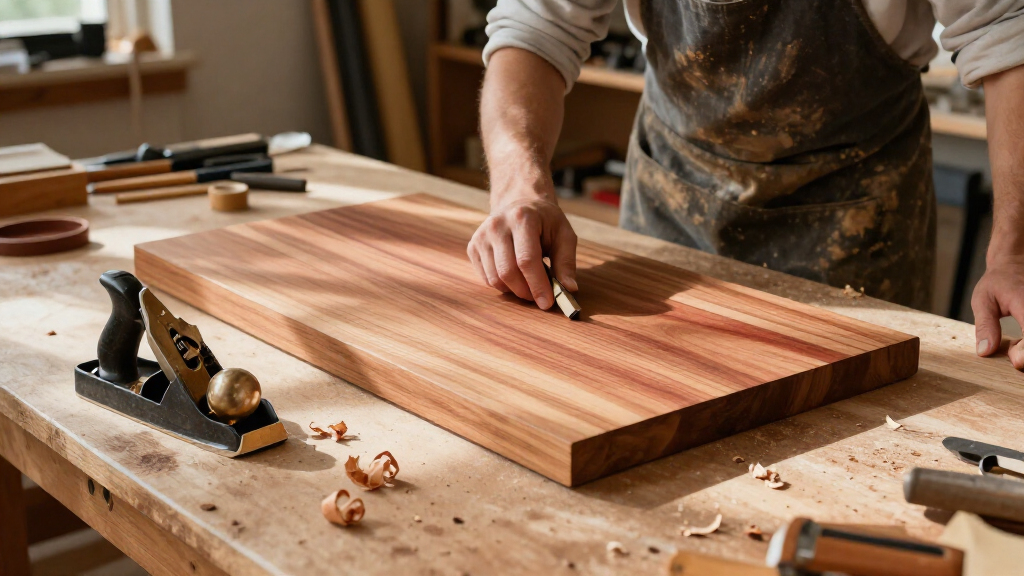
I compared the nine boards by wood and grain construction, working dimensions, thickness, and useful design details such as reversible faces and juice grooves. Those factors shape how much prep a board can handle, how it fits a kitchen, and how much effort it takes to move, store, and maintain. I also weighed whether a feature supports a distinct use rather than treating larger dimensions or extra details as automatic advantages.
The ranking favors versatile choices with a clear balance of workspace and handling, followed by boards aimed at more specific needs. The large 1.5-inch CONSDAN ranks first as a broadly useful size-and-thickness compromise. The compact CONSDAN, end-grain boards, reversible models, and thinner large boards rank according to the buyer they serve best; none is a universal upgrade. Product details provided here do not specify features such as feet or included care supplies, so I do not assume them.
| cherry wood cutting board | Material | Finish | Care | Construction |
|---|---|---|---|---|
| CONSDAN Solid Cherry Wood Cutt | Cherry wood | Food-safe wax oil | Hand wash only | — |
| CONSDAN Solid Cherry Wood Edge | Cherry wood | Food-safe wax oil | Hand wash only | Edge grain |
| TIMBARIS 20 x 15-Inch End-Grai | Cherry wood | Linseed oil and beeswax | Hand wash only | — |
| CONSDAN Solid Cherry Wood Cutt | USA-grown cherry wood | Food-safe wax oil | Hand wash only | — |
| John Boos CHY-R01 Reversible C | Cherry wood | — | Hand wash only; maintain with board oil and cream | Edge grain |
| CONSDAN Solid Cherry Wood Cutt | USA-grown cherry wood | Food-safe wax oil | Hand wash only | — |
| WoodForChef Large Reversible C | FSC-certified cherry hardwood | Pre-seasoned with food-safe mineral oil and wax | Hand wash, dry upright, and re-oil as needed | Reversible, with two usable surfaces |
| John Boos R-Board Cherry Wood | Cherry wood | — | Hand wash only; maintain with board oil and cream | Edge grain |
| 17 x 12-Inch End-Grain Cherry | Cherry wood | Linseed oil and beeswax | Hand wash only | End grain |
Factors to Consider When Choosing Cherry Wood Cutting Boards
Before choosing among cherry wood cutting boards, I would match the board to the way it will live in your kitchen—not just the way it looks in a product photo. These broader tradeoffs help avoid buying a board that is cumbersome, undersized, or harder to care for than expected.
Choose Grain Orientation for Your Priorities
Edge-grain and end-grain describe how the wood is arranged, not simply a quality tier. Edge-grain boards show longer strips of wood across the surface, while end-grain boards present the ends of the wood fibers. Shoppers often assume end-grain is automatically the right choice, but its construction, weight, and upkeep can make it less convenient for a small or busy kitchen. Compare the board’s dimensions and care instructions alongside grain type rather than choosing by label alone. If you are unsure, a straightforward edge-grain board may be the more familiar, simpler format.
Balance Cutting Area Against Storage and Handling
A large board needs a home when it is not in use, so measure both your counter and your storage space before buying. A 20-inch board can give ingredients room to stay separated, but it may be awkward to lift, wash, or tuck away in a narrow kitchen. Smaller boards are easier to handle, yet crowded prep can push scraps toward the edge. Check the board’s footprint against your sink as well as your counter; a board that is hard to wash comfortably may become a chore. For frequent batch prep, extra surface area can justify the storage demand.
Treat Thickness as a Handling Choice, Not a Quality Shortcut
Thickness affects weight, storage height, and counter presence, so thicker is not automatically better. A substantial board can feel steadier in use, but it is harder to move and can be inconvenient to wash by hand. A thinner board is easier to lift and store, though buyers seeking a heavy, fixed-feeling work surface may prefer more thickness. Consider who will move the board and where it will be kept before prioritizing heft. Do not infer that thickness alone tells you how well a board is made; construction and care matter too.
Decide Whether a Groove Helps Your Typical Prep
A juice groove is useful when cutting foods that release liquid, but it takes away from the flat cutting area. If most of your prep involves dry ingredients, the groove may offer little practical benefit and can collect scraps that need extra attention during cleanup. For carving or juicy produce, it can help contain runoff on the board. Check how much flat surface remains inside the groove, especially on a smaller model. Choose the feature for your regular tasks, not as a general sign of a more capable board.
Look at Reversibility and Surface Layout
A reversible board can give you two working faces, which may help separate prep tasks or extend the usable surface. That advantage depends on how each side is finished: grooves, feet, or other details can make one face less suitable for certain jobs. Do not assume that reversible means both sides are identical or equally practical. Read the product details and check whether the board can sit securely on either face. If you plan to use separate sides for different foods, follow safe food-handling practices and clean the board between tasks.
Plan for Wood Care Before Buying
Wood boards need more deliberate care than a dishwasher-safe plastic surface. Confirm the maker’s cleaning and conditioning instructions before purchase, and expect to wash by hand rather than rely on a dishwasher unless the manufacturer explicitly says otherwise. Let the board dry fully and avoid leaving it wet or submerged, since prolonged moisture can affect wood. A large or thick board can take more space and time to dry than a compact one. If you prefer low-maintenance cleanup above all else, compare that routine with your habits before choosing wood.
Frequently Asked Questions
Which size is the safest choice if I have not owned a large wood board before?
A 16 x 12-inch board is the lower-commitment starting point if counter and storage space are uncertain. It can handle routine chopping without taking over a small work area, though it offers less room for batch prep than the 20-inch models. Measure your sink and the place where the board will be stored, not just the open counter. If you cook for several people or often prep multiple ingredients at once, a larger board may be worth the extra handling. The best beginner size is the largest board you can comfortably wash, dry, and put away.
Should I choose end-grain or edge-grain for a cherry board?
Choose based on construction, care, and handling—not grain type alone. This roundup includes large end-grain options and an edge-grain CONSDAN, giving buyers a choice between different surface layouts and sizes. End-grain may appeal to cooks who specifically want that construction, but the thick TIMBARIS is also a substantial board to move and store. Edge-grain can be a simpler fit for buyers who want a direct, familiar format. Check the maker’s care guidance and consider weight and footprint before treating either style as the default.
Is a 1.5-inch board worth choosing over a 1-inch board?
The thicker board makes more sense if you value a substantial counter work surface; the thinner board is a better match when easier handling matters more. In this lineup, both thicknesses appear in large CONSDAN formats, so buyers can compare the tradeoff without changing the footprint. A thicker board generally takes up more vertical storage space and can be harder to lift and wash. Do not pay for added thickness if the board will be moved often or stored in a tight cabinet. Think about how you will handle it after prep as well as how it will feel during chopping.
Do I need a juice groove on a cherry wood cutting board?
A groove is most useful for foods that release liquid, such as juicy produce or meat, and less useful for routine dry chopping. The 17 x 12-inch end-grain model is the grooved option in this roundup, while the other listed choices give buyers different sizes or reversible designs. A groove can help contain runoff, but it also reduces the uninterrupted flat area and needs cleaning. If your typical prep is mostly vegetables, bread, or herbs, a plain surface may be more convenient. Match the feature to repeated tasks rather than occasional exceptions.
How should I choose between a reversible board and a grooved board?
Reversibility favors flexibility; a groove favors liquid containment. The John Boos CHY-R01 and WoodForChef are listed as reversible, while the 17 x 12-inch end-grain model is the one identified with a juice groove. Before choosing a reversible design, check whether both faces are usable for your intended tasks and whether any design details limit one side. Before choosing a groove, decide if you regularly cut foods that produce enough liquid to justify giving up some flat space. If neither feature solves a frequent kitchen problem, prioritize a size and thickness you can comfortably manage.
Conclusion
For the best overall balance, I recommend the CONSDAN 20 x 15-inch, 1.5-inch board; its large work area and substantial thickness make it the most broadly suited pick in this lineup. For a value-minded buyer seeking a large footprint with easier handling, choose the CONSDAN 20 x 15-inch, 1-inch board. The TIMBARIS 20 x 15-inch end-grain board is the premium-style choice for shoppers who specifically want a thick end-grain surface, while the 16 x 12-inch CONSDAN is my pick for beginners and smaller kitchens. Choose the John Boos CHY-R01 or WoodForChef if reversibility matters most, and the 17 x 12-inch grooved end-grain board for a more compact board suited to juicy prep. The right choice is the one whose grain, footprint, and upkeep fit your actual routine.