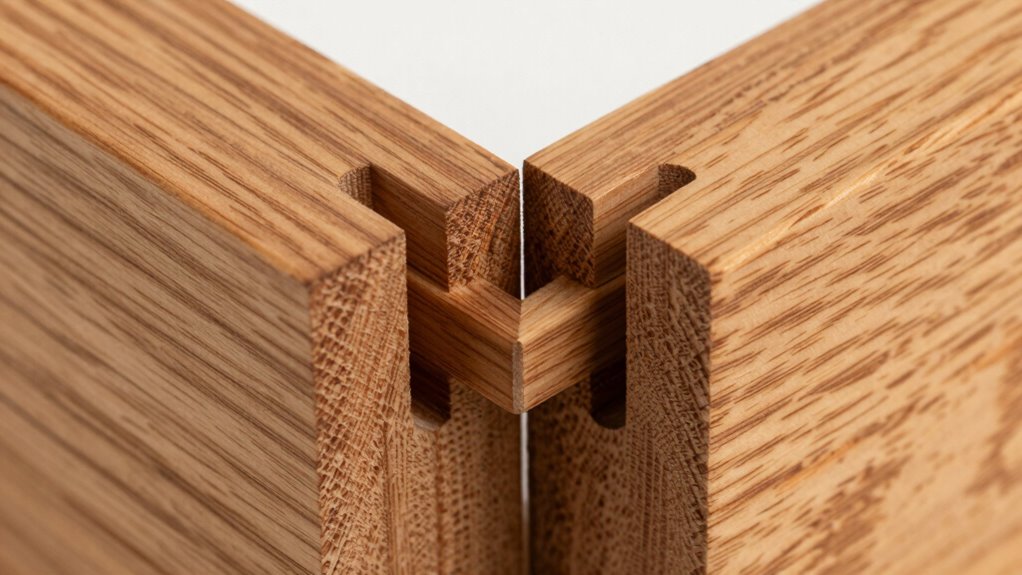

Dovetails are incredibly strong because of their interlocking shape that creates a mechanical lock, resisting pull-apart forces. Precise craftsmanship ensures tight fits, maximizing surface contact and distributing stress evenly across the joint. Using quality hardwoods with straight grain further boosts durability. Proper cutting and assembly prevent gaps and wear, guaranteeing longevity. Understanding these features helps you build joints that stand the test of time—keep exploring to learn how to make them even stronger.
Key Takeaways
- The interlocking shape creates a mechanical lock that resists pull-apart forces and distributes stress evenly.
- Larger contact surface areas between tails and pins enhance joint strength and stability.
- Precise craftsmanship minimizes gaps, ensuring force transfer and reducing movement or wear over time.
- Selecting durable hardwoods with straight grain improves overall strength and resistance to cracking.
- Proper fit and shape prevent splitting and allow for material expansion, boosting long-term durability.
What Are Dovetail Joints and Why Are They Valued?
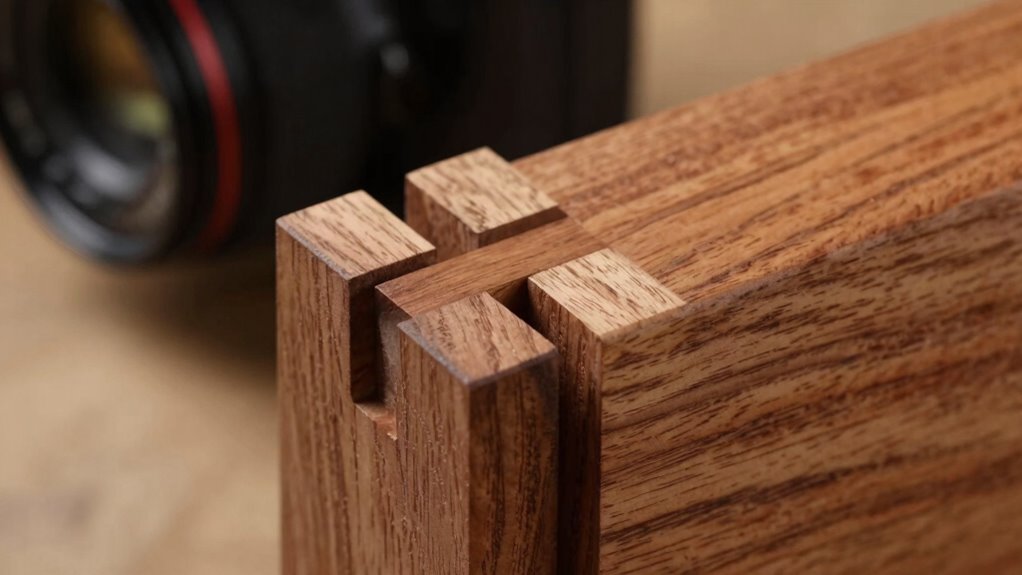
Have you ever wondered what makes dovetail joints so popular in woodworking? It’s their stunning dovetail aesthetics that immediately catch the eye, showcasing craftsmanship and attention to detail. The history of dovetails dates back thousands of years, with ancient artisans using them to create durable, elegant furniture and storage solutions. These joints are appreciated not only for their beauty but also for their functional strength, locking pieces firmly together without nails or screws. The interlocking design distributes stress evenly, making dovetails highly reliable over time. Whether in traditional or modern pieces, their distinctive appearance highlights skill and quality. This combination of visual appeal and proven performance is why dovetail joints have remained a favorite among woodworkers for centuries. Additionally, exploring the principles of joint strength reveals why dovetails are so effective for ensuring long-lasting craftsmanship. Furthermore, understanding the design principles behind dovetails can deepen appreciation for their enduring popularity, especially when considering the interlocking mechanism that provides added stability.
How Mechanical Features Make Dovetails Extremely Strong
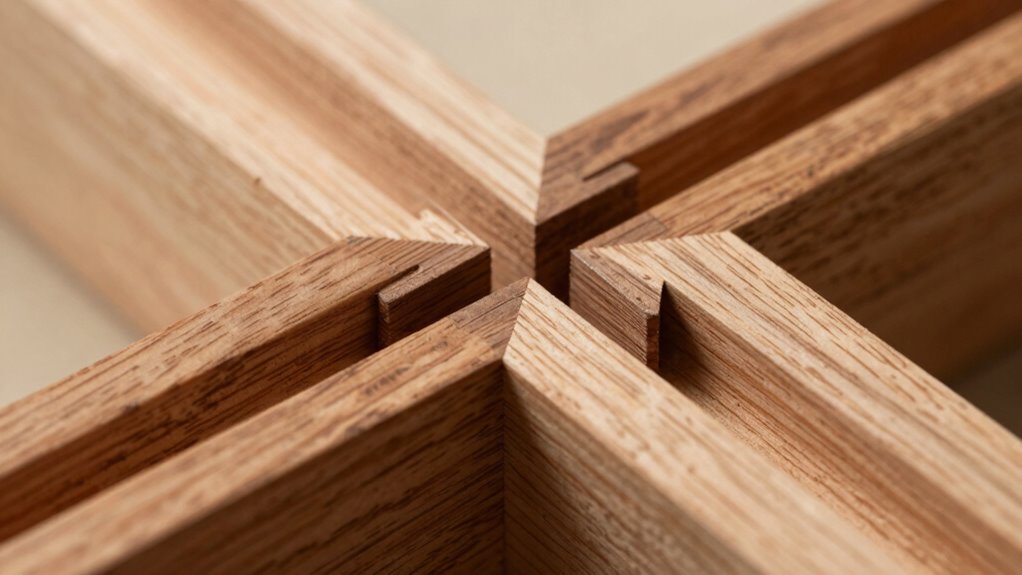
The mechanical design of dovetails creates a firm, interlocking connection that resists pulling apart. This shape increases the contact surface area between parts, distributing force more effectively. As a result, dovetails become remarkably strong and durable, even under heavy stress. Additionally, the shape of dovetails plays a crucial role in ensuring stability and resistance to shear forces. The structural integrity of dovetails is further enhanced by precise craftsmanship, which minimizes gaps and maximizes contact. Incorporating free floating techniques can also contribute to accommodating movement and reducing stress on joints, further strengthening the overall connection. Understanding wiring basics can also help ensure that joints are properly secured and safe in various applications. Moreover, attention to material selection can significantly impact the longevity and strength of dovetail joints, especially in demanding environments.
Interlocking Mechanical Design
Because of their unique interlocking features, dovetails are extremely strong joints. The joint geometry creates a mechanical lock that resists pulling apart, making it highly durable. The precisely cut tails and pins interlock tightly, distributing stress evenly along the joint. This design provides a mechanical advantage, as force applied to one part is transferred efficiently through the interlock, reducing the risk of failure. The interlocking shape means you don’t need extra fasteners, relying instead on the strength of the mechanical connection. This clever design ensures the joint remains secure under tension and shear forces. By leveraging joint geometry and mechanical advantage, dovetails deliver exceptional strength, stability, and resistance to pulling apart, making them ideal for high-stress woodworking applications. Additionally, understanding the importance of proper tools can further enhance the accuracy and strength of dovetail joints.
Increased Surface Area Contact
The mechanical features of dovetails increase the contact surface area between the mating parts, which considerably enhances their strength. This larger surface contact distributes forces more evenly, boosting joint stability and reducing the risk of failure. When the surface contact is maximized, the joint resists pulling apart or shifting under load. The increased surface area allows the dovetail to handle greater stress without loosening or wearing down quickly. As a result, your project gains durability and maintains its integrity over time. This mechanical advantage is why dovetails are favored in woodworking and carpentry—they create a tightly fitting, stable joint that withstands daily use. Ultimately, the expanded surface contact directly contributes to the overall strength and longevity of your assembled piece. Additionally, the precise mechanical design of dovetails ensures that forces are transferred efficiently across the joint, further enhancing its robustness.
How Interlocking Shapes Boost Dovetail Durability
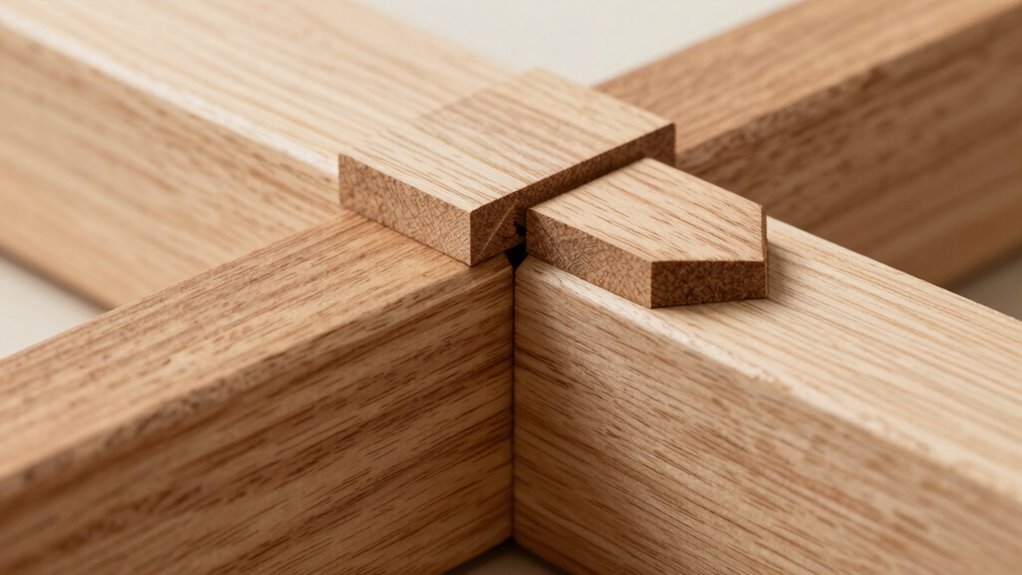
Interlocking shapes in dovetails increase their overall strength by locking pieces firmly together. When the fit is precise, it reduces movement and wear over time, boosting durability. This precise fit also helps compensate for material expansion and contraction due to temperature changes, maintaining joint integrity. This design makes your joints not only stronger but also long-lasting. Additionally, choosing high-quality materials can further enhance the longevity of dovetail joints. Pinball machines, for example, often rely on durable construction to withstand frequent use. Moreover, understanding the Youngster Choice concept helps explain why selecting the right materials and design features is critical for long-term performance, especially when considering support breakfast options that emphasize quality and durability.
Interlocking Shapes Improve Strength
When you incorporate interlocking shapes into dovetail joints, they greatly enhance the overall strength and durability of the connection. This is because the shape itself resists pulling apart and shifting under load. To maximize this benefit, focus on:
- Grain orientation – aligning wood grains to support the interlocking parts prevents splitting and adds stability.
- Adhesive selection – choosing a strong, suitable glue ensures the interlocking shapes stay bonded over time.
- Precise cuts – accurate shaping of tails and pins increases contact surface area, improving joint integrity.
- Proper fit – ensuring the interlocking parts fit snugly reduces stress and enhances load distribution.
- Understanding mechanical principles – applying knowledge of structural strength can further optimize joint design and performance.
Together, these factors leverage the power of interlocking shapes, boosting your dovetail joint’s strength and longevity.
Precise Fit Enhances Durability
Achieving a precise fit between dovetail components is essential because it directly influences the joint’s durability over time. When parts lock together perfectly, they resist pulling apart and reduce stress on the wood, ensuring long-lasting strength. A tight fit also enhances joinery aesthetics, giving your project a clean, professional look. Using the right woodworking tools, like sharp chisels and fine saws, helps you cut accurate angles and precise tails. This precision prevents gaps that can weaken the joint. When the dovetail fits seamlessly, it distributes forces evenly, reducing wear and tear. Over time, this exact fit maintains the joint’s integrity, making your craftsmanship more durable and visually appealing. Proper measurement accuracy in cutting ensures the dovetails will fit tightly and last longer. In short, precision in fitting is key to creating strong, beautiful dovetails.
Choosing the Right Wood and Grain for Strong Dovetails

Choosing the right wood and grain is essential for creating strong, durable dovetails. The type of wood and its wood grain greatly influence joint strength and stability. To guarantee quality, consider these points:
- Select hardwoods like oak or maple for better strength and wear resistance.
- Opt for straight, tight wood grain; it provides more predictable cuts and better adhesion.
- Always check wood moisture content; ideally, it should be between 6-8% to prevent warping or cracking.
- Avoid woods with irregular grain patterns or knots, as they weaken the joint and make cutting more difficult.
- Using exquisite post quality wood can further enhance the strength and appearance of your dovetails.
- Properly selecting and preparing wood based on its grain pattern can significantly impact the overall durability of your joint. Additionally, considering the wood type can help in choosing materials that respond well to woodworking techniques and environmental conditions.
- Understanding the properties of different wood species allows for better selection tailored to your specific project needs. Moreover, selecting the appropriate wood finish can help protect your dovetails from environmental damage and extend their lifespan.
Achieving the Perfect Fit: Tightness and Precision in Dovetails
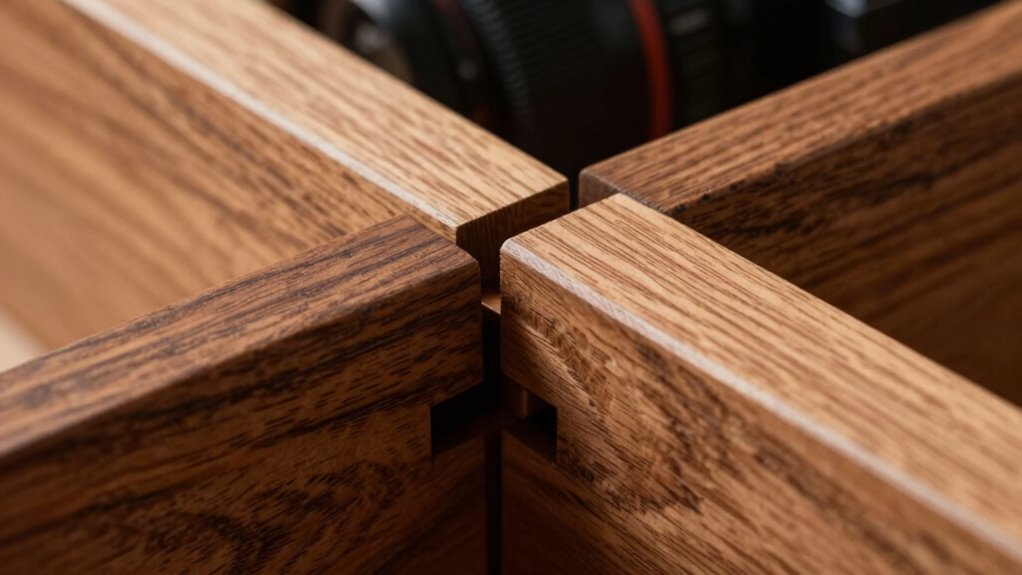
Getting the fit right is key to making dovetails that are both strong and attractive. When your joints are precise, the joint aesthetics improve dramatically, creating a seamless, professional appearance. Tight-fitting dovetails minimize gaps and movement, enhancing the overall strength and durability of your piece. Precision ensures each pin and tail interlocks perfectly, which is essential for long-lasting craftsmanship. Historically, well-fitted dovetails symbolize skill and attention to detail—traits valued across centuries. To achieve this, you need careful marking, accurate cuts, and a keen eye for fitting pieces snugly together without forcing. Remember, a perfect fit balances tightness with ease of assembly, making your dovetails not only functional but also a reflection of craftsmanship’s artistry and historical significance.
How to Cut and Assemble Dovetail Joints Like a Pro
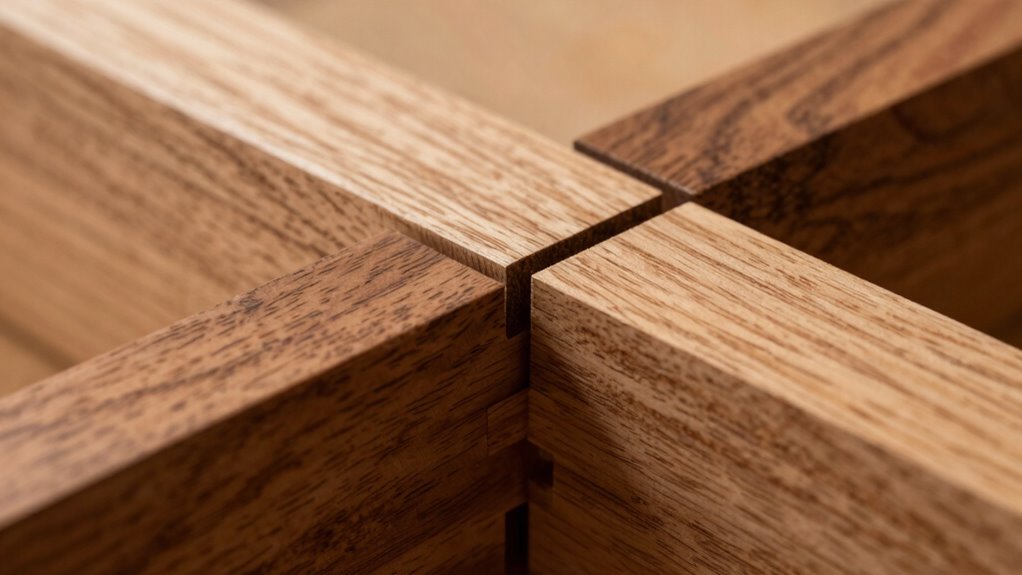
Mastering the cut and assembly of dovetail joints begins with careful planning and precise technique. Knowing dovetail history helps you appreciate their strength and craftsmanship. To cut and assemble like a pro, follow these steps:
- Select quality woodworking tools, such as a dovetail saw and chisel, for accuracy.
- Mark your dovetails carefully, ensuring consistent angles and measurements.
- Cut the tails and pins precisely, verifying fit before assembly.
- Assemble the joint, using glue if needed, then clamp until secure.
- Understanding the power tools involved can significantly improve your precision and efficiency during these tasks. Additionally, understanding the material properties of your wood can influence how well your joints hold over time.
Practicing these steps sharpens your skills and ensures tight, durable joints. Remember, the key is patience and attention to detail. With the right tools and techniques, you’ll master dovetail joints that are both beautiful and strong, honoring their rich dovetail history.
Common Mistakes That Weaken Dovetail Joints: And How to Avoid Them

Even with precise cuts and careful assembly, common mistakes can weaken dovetail joints and compromise their strength. One mistake is rushing the process, which can lead to poor fit and reduced joint stability. Using dull tools or cutting uneven tails and pins creates gaps that weaken the connection. Ignoring proper marking or measurement results in misaligned joints that aren’t secure. Additionally, neglecting woodworking safety can cause accidents, leading to sloppy cuts or injuries that affect joint quality. Over-tightening clamps during glue-up can also distort the joint, reducing its strength. To avoid these pitfalls, double-check measurements, keep tools sharp, and prioritize safety. These steps ensure your dovetails remain strong and stable, giving your project lasting durability.
Comparing Dovetails to Other Wood Joints: Strengths and Uses
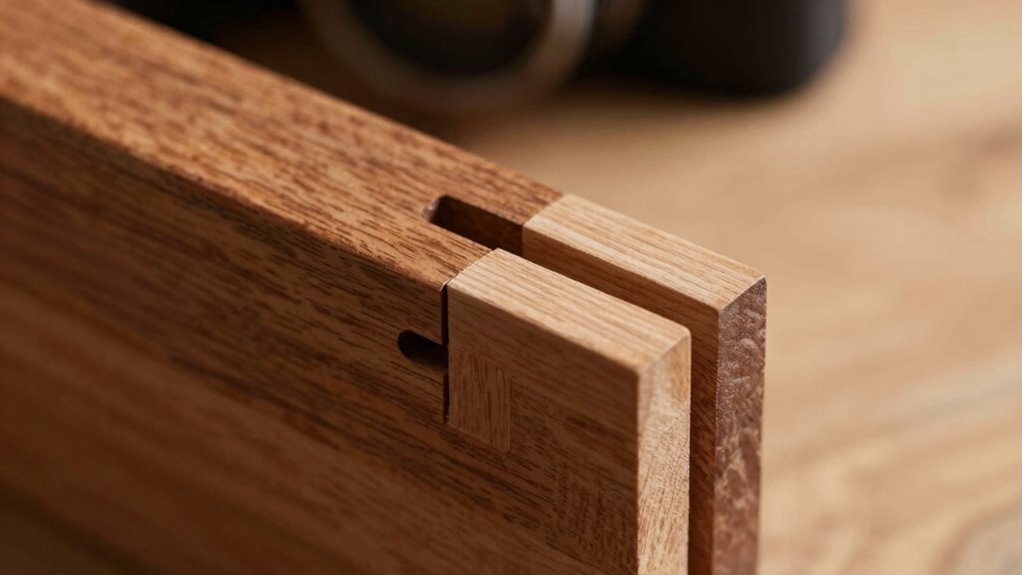
Dovetail joints are renowned for their strength and aesthetic appeal, but they aren’t always the best choice for every project. When comparing them to other wood joints, consider these points:
- Strength: Dovetails excel in resisting pulling apart, making them ideal for drawers and boxes.
- Ease of assembly: Butt joints or pocket screws are quicker but less durable.
- Aesthetics: Dovetails showcase craftsmanship, while lap joints are more utilitarian.
- Finishing techniques: Dovetails often require careful sanding and wood glue for a seamless look, whereas simpler joints may need less finishing effort.
Choose your joint based on strength needs and desired appearance, ensuring proper finishing techniques to enhance durability.
Tips to Maximize the Strength and Longevity of Your Dovetail Joints

To guarantee your dovetail joints are both strong and durable, focus on precise cutting and proper assembly techniques. Using the right woodworking techniques ensures tight, accurate joints that resist stress over time. Start by selecting quality tools—sharp saws, chisels, and marking gauges—to achieve clean, consistent cuts. Accurate marking and careful layout are essential, so double-check measurements before cutting. When assembling, apply even glue and clamp the joint securely, but avoid over-tightening, which can cause misalignment. Proper tool selection makes the process smoother and more precise, reducing errors that weaken the joint. Regularly inspect your tools and maintain sharp edges. By paying attention to woodworking techniques and choosing the right tools, you’ll maximize both the strength and longevity of your dovetail joints.
Frequently Asked Questions
How Does Wood Movement Affect Dovetail Joint Strength?
Wood movement from expansion and contraction can impact dovetail joint strength, especially if you don’t allow for this natural change. As wood expands with humidity, it can loosen the joint, reducing stability. To maintain joint strength, you should design dovetails with slight clearance and choose stable, seasoned wood. Properly accommodating wood movement guarantees the joint remains secure and durable over time, even with seasonal changes.
What Tools Are Best for Cutting Perfect Dovetails?
You should use a dovetail saw and a fine chisel for cutting perfect dovetails, as they offer precision and control. A dovetail saw, with its small, sharp teeth, helps create clean, accurate cuts that enhance dovetail aesthetics. The history of dovetail joints highlights their durability, and using quality tools guarantees your craftsmanship respects this tradition. Practice with these tools, and you’ll achieve tight, beautiful dovetail joints every time.
Are Dovetails Suitable for Load-Bearing Furniture?
Yes, dovetails are suitable for load-bearing furniture because of their excellent strength and durability. Their traditional dovetail aesthetics add visual appeal, showcasing craftsmanship. Historically, dovetail joints have been used in sturdy furniture like chests and drawers, proving their reliability under stress. When properly executed, they provide a strong mechanical connection, making them ideal for supporting weight while maintaining a beautiful, timeless look.
How Does Glue Choice Influence Dovetail Joint Durability?
Your choice of glue considerably impacts the durability of dovetail joints. Using the right adhesive types, like PVA or hide glue, guarantees strong, lasting bonds. Proper glue application techniques, such as applying an even coat and clamping correctly, prevent weak spots. When you select quality glue and follow precise application methods, your dovetail joints become more resilient, enhancing the overall strength and longevity of your furniture.
Can Dovetails Be Reinforced With Additional Fasteners?
Think of your dovetail joint as a trusty ship; you can add reinforcement like sturdy ropes or nails to keep it seaworthy. While dovetail reinforcement with additional fasteners isn’t usually necessary, you can use fastening alternatives like screws or metal pins for extra security. Just guarantee these don’t compromise the joint’s aesthetic or integrity. This way, your project remains both strong and visually appealing, sailing smoothly for years.
Conclusion
Mastering dovetails isn’t just about precision; it’s about forging a bond that endures like time itself. By understanding their mechanical marvels and choosing the right materials, you craft joints that whisper strength and resilience. Remember, every perfectly cut dovetail is a silent promise—an unbreakable vow of craftsmanship. So, approach each cut with care and confidence, knowing that the true strength lies not just in the joint, but in your mastery of the craft.