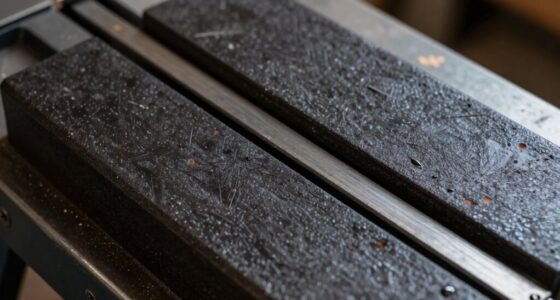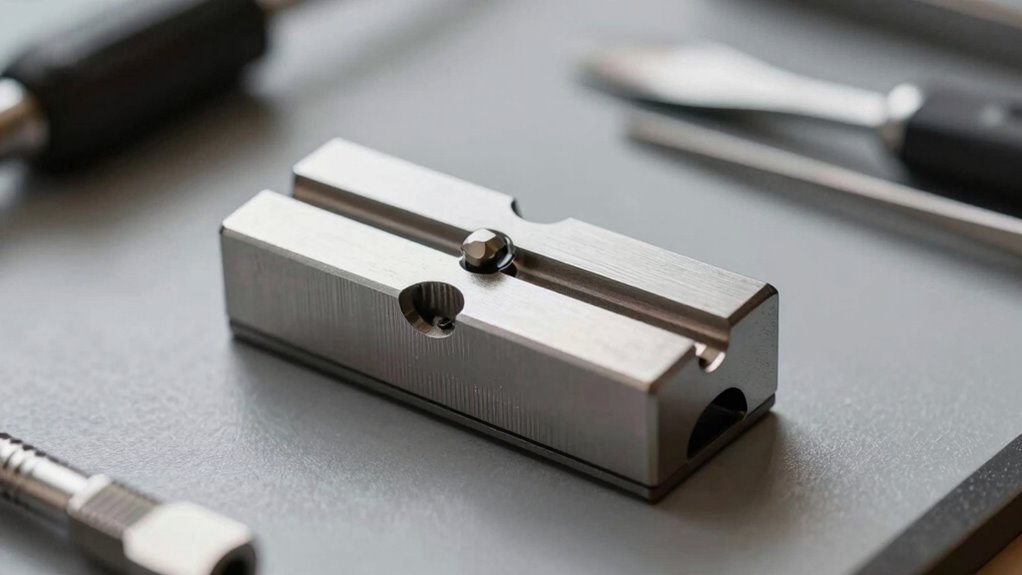

When it comes to sharpening systems, sticking to a consistent routine with simple tools often outperforms complex setups. You’ll find that regular, proper techniques help maintain your blades longer, prevent damage, and keep your tools safe to use. Simple methods build muscle memory, making sharpening feel more automatic and less intimidating. By focusing on consistency, you’ll get reliable results and save time in the long run. Keep exploring, and you’ll discover how simple routines can transform your sharpening practice.

Get business pricing on tools and workshop supplies
- Business-only prices and quantity discounts
- Tax-exempt purchasing
- Multiple users, one account, clear invoices
Key Takeaways
- Consistent sharpening routines develop muscle memory, reducing errors and ensuring blades stay reliably sharp.
- Simple, routine-based systems are more sustainable and effective than complex setups that can be difficult to master.
- Regular maintenance with straightforward tools prevents blade dullness, extending tool lifespan and performance.
- Consistency in technique minimizes the risk of damaging blades, unlike complex systems that may cause mistakes if misused.
- A focus on steady, repeated practices simplifies the process, making sharpening less intimidating and more efficient over time.
Have you ever struggled with dull knives or tools that just don’t perform like they used to? It’s frustrating, especially when you’re trying to get work done efficiently. The secret isn’t always about having the most complicated sharpening system; it’s about developing consistent habits that work for you. When you focus on personalized techniques and establish solid maintenance routines, sharpening becomes less of a chore and more of a reliable part of your toolkit.
Instead of chasing the latest high-tech sharpener, consider what works best for your tools and your hands. Personalized techniques mean you adapt your sharpening method to the specific edge and blade type you’re dealing with. For example, a chef’s knife might require a different angle or pressure than a woodworking chisel. By paying close attention to these details, you ensure each tool gets the proper care without overcomplicating the process. Consistency in your approach matters more than complexity, because it helps you develop muscle memory and reduces errors.
Personalize your sharpening method for each tool to improve results and simplify the process.
Creating a maintenance routine is key. Regularly inspecting and sharpening your tools prevents them from becoming dull and losing their edge. This doesn’t mean you need to sharpen every day, but establishing a routine—say, once a week or after a certain number of uses—keeps your blades in top shape. When you stick to a routine, sharpening becomes a simple, almost automatic task. This consistency saves you time and effort in the long run, and it extends the lifespan of your tools. It’s not about having a fancy system; it’s about making sharpening a habitual part of your process. Incorporating proper technique ensures each sharpening session is effective and reduces the risk of damaging your tools.
Moreover, simple tools and straightforward techniques often outperform complex systems when used with discipline. A sharpening stone, a honing rod, or a basic guided system can do the job effectively if you use them consistently and correctly. Developing a good understanding of tool maintenance can help you identify when your blades need attention before they become unusable. The importance of regular maintenance** cannot be overstated; it is a fundamental aspect of preserving your tools’ performance and longevity. Additionally, understanding the material composition of your blades can help you select the most suitable sharpening method and avoid unnecessary wear or damage. The key is to stay patient and attentive to your technique, adjusting as needed** based on how your tools respond. Over time, you’ll notice that sharpening becomes quicker, more accurate, and less intimidating.
In the end, it’s clear that consistency beats complexity. By developing personalized techniques suited to your tools and sticking to regular maintenance routines, you ensure your blades stay sharp without unnecessary fuss. This approach not only saves you time but also keeps your tools performing at their best, making each task safer and more enjoyable.
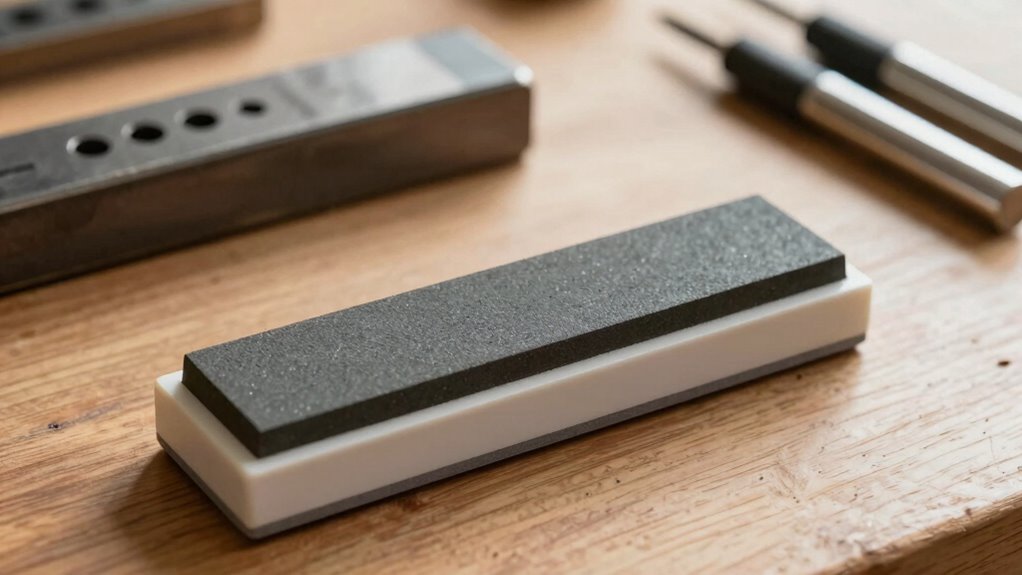
manual sharpening stone for knives
As an affiliate, we earn on qualifying purchases.
As an affiliate, we earn on qualifying purchases.
Frequently Asked Questions
How Often Should I Calibrate My Sharpening System?
You should calibrate your sharpening system regularly, ideally every few weeks or after significant changes in your equipment. Consistent calibration helps maintain precision, which accelerates your skill development. Keep track of your calibration times through time tracking to recognize patterns and guarantee you’re practicing regularly. This routine keeps your system reliable, prevents errors, and assures your sharpening remains consistent, ultimately making your skill progression smoother and more efficient.
Can I Use the Same System for Different Blade Types?
Yes, you can use the same sharpening system for different blade types, but it depends on blade compatibility and system versatility. Make sure your system can handle various materials and edge angles. If it’s adaptable enough, you’ll save time and effort. However, for ideal results and blade longevity, consider adjusting settings or using specific accessories tailored to each blade type. Always check manufacturer guidelines for best practices.
What Maintenance Is Required for a Sharpening System?
You need to regularly clean and inspect your sharpening system to maintain blade durability. Check the abrasive surfaces for wear and replace them as needed. Keep your system properly lubricated if required, and follow specific sharpening techniques for different blade types. Consistent maintenance guarantees your system works effectively, preserves the sharpness of your blades longer, and prevents damage. Prioritize routine upkeep to get the best results from your sharpening system and extend its lifespan.
Is Manual Sharpening More Effective Than Automated Systems?
Manual sharpening is like crafting a fine sculpture—your precision shapes the final edge. It can be more effective if you value manual precision, allowing you to fine-tune blades exactly as needed. Automated systems, however, provide consistent results every time, reducing human error. If consistency is your priority, automated systems excel. But if you seek tailored sharpness, manual sharpening lets you control every angle for the perfect edge.
How Do I Choose the Right Consistency Level?
You choose the right consistency level by considering your blade material and sharpening angle. For harder blades like stainless steel, maintain a steady, moderate pressure to avoid damage and guarantee even sharpening. Adjust your consistency based on the blade’s material and desired edge sharpness. Keep a consistent angle throughout, whether manual or automated, to achieve the best results. Practice helps you develop a feel for maintaining that perfect consistency.
As an affiliate, we earn on qualifying purchases.
Conclusion
So, next time you’re tempted to add more bells and whistles to your sharpening system, ask yourself: is complexity really what’s going to give you better results? Often, sticking to a consistent, simple approach beats chasing after every new gadget or technique. Remember, mastery comes from repetition, not complication. Why not focus on perfecting your current system first? After all, isn’t clarity and consistency what truly sharpens your skills?
As an affiliate, we earn on qualifying purchases.
woodworking chisel sharpening system
As an affiliate, we earn on qualifying purchases.
As an affiliate, we earn on qualifying purchases.
Fall yard work Picks
leaf blowers
As an affiliate, we earn on qualifying purchases.