When choosing quiet shops and air tools, you’ll notice the tradeoff in performance and workflow. Quieter tools often produce less power, which can slow down tasks, while soundproofing measures might require extra effort and maintenance. Upgrading to quieter compressors can cost more upfront but reduce overall noise. Balancing safety, efficiency, and noise reduction is key, and exploring these factors further will help you find the best solutions for your workspace.

Get business pricing on tools and workshop supplies
- Business-only prices and quantity discounts
- Tax-exempt purchasing
- Multiple users, one account, clear invoices
Key Takeaways
- Quieter air tools often reduce power, potentially impacting workflow speed and efficiency.
- Soundproofing measures can add costs and may slightly slow down tool operation.
- Mufflers decrease noise but can increase air resistance, affecting tool performance.
- Choosing quieter compressors may involve higher upfront costs but benefits long-term workspace comfort.
- Balancing noise reduction and tool effectiveness requires careful consideration of safety, productivity, and costs.
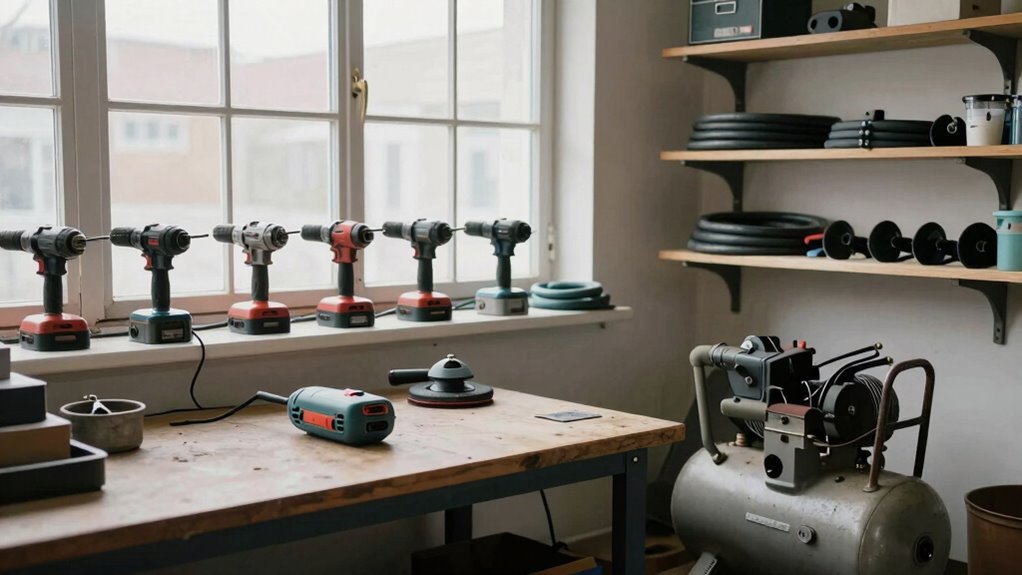
In busy workshops, noise from air tools can be disruptive and even harmful over time. The constant din not only makes it hard to concentrate but can also lead to long-term hearing damage if proper precautions aren’t taken. That’s why many shop owners and workers look for ways to improve noise reduction without sacrificing tool efficiency. It’s a delicate balance—reducing noise too much might impact the power or performance of your air tools, but ignoring it can create a stressful, unhealthy environment.
Balancing noise reduction and tool efficiency is key to a safe, productive workshop environment.
When you prioritize noise reduction, you often turn to quieter air tools or add soundproofing measures around your workspace. These steps can make a noticeable difference, creating a calmer environment that boosts productivity and worker well-being. However, some quieter tools might lack the raw power of traditional models, which could slow down your workflow. This tradeoff is critical because, in some cases, quieter tools might require longer operation times or more frequent maintenance, ultimately affecting overall tool efficiency.
You might also consider installing mufflers or silencers on your air tools. These accessories can significantly cut down the noise output, making your shop more comfortable without necessarily compromising performance. But be aware that adding mufflers can sometimes increase air resistance, which may slightly decrease tool efficiency or require adjustments to your compressor settings. The key is finding a balance—selecting mufflers that dampen sound without hampering the tool’s power or speed. Additionally, selecting appropriate muffler types can help optimize noise reduction while maintaining performance.
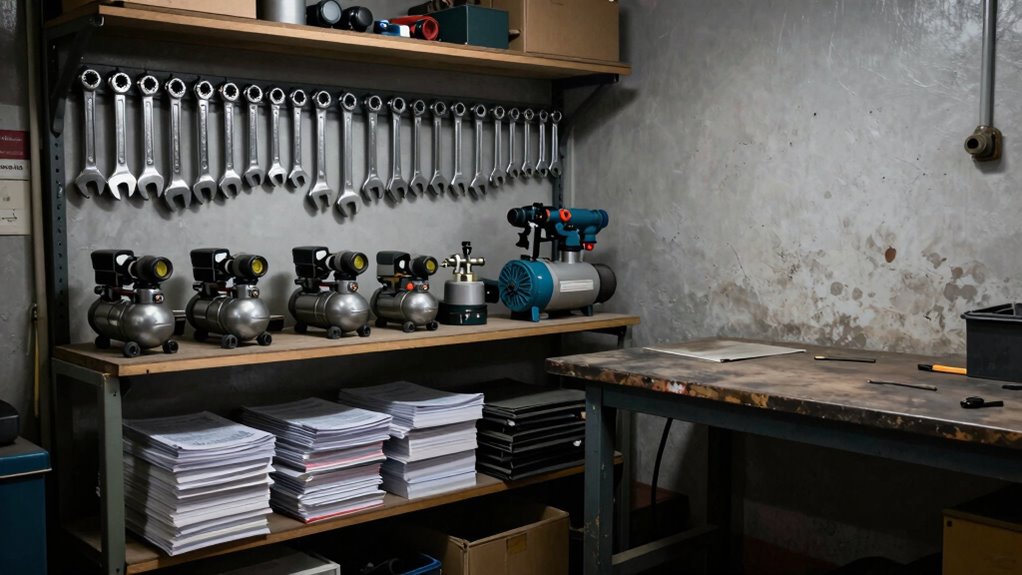
Another factor to consider is the type of air compressor you use. Quieter compressors tend to produce less noise across the entire workspace, improving noise reduction and creating a more pleasant environment. But these models are often more expensive upfront and may have different maintenance needs. If you choose a quieter compressor, it could help maintain your tools’ efficiency by providing a steady, consistent air supply, but you’ll need to weigh the initial investment against the long-term benefits. Additionally, understanding air tool noise levels** can help you make more informed choices about equipment upgrades, especially when considering noise mitigation** strategies that can further improve your workspace environment.
Ultimately, the tradeoff between noise reduction and tool efficiency comes down to your specific needs. If your priority is worker safety and comfort, investing in quieter tools and soundproofing makes sense—even if it means a slightly higher cost or minor adjustments to performance. But if your workflow depends on maximum power and speed, you might accept higher noise levels as the cost of operational efficiency. Recognizing the importance of noise management can help you develop a comprehensive approach to balancing safety, comfort, and productivity in your shop. In any case, understanding the balance between these factors helps you make informed decisions that enhance both safety and performance in your shop.
quiet air compressor for workshop
As an affiliate, we earn on qualifying purchases.
As an affiliate, we earn on qualifying purchases.
Frequently Asked Questions
How Do Noise Levels Impact Worker Safety and Productivity?
Higher noise levels can negatively impact your worker safety and productivity by disrupting concentration and increasing stress. When noise is loud, you may struggle to focus, leading to mistakes or accidents. Reducing noise helps improve worker concentration, which boosts safety and efficiency. It also promotes stress reduction, making the work environment more comfortable and encouraging better performance. Ultimately, managing noise levels benefits both your team’s well-being and overall productivity.
Are Quieter Air Tools as Effective as Traditional Ones?
Quieter air tools can be just as effective as traditional ones, thanks to advancements like soundproof casings and vibration dampening technology. These features reduce noise without sacrificing power or efficiency, allowing you to work comfortably and safely. You won’t lose performance, and your environment becomes more pleasant. Focus on tools with these innovations, and you’ll find that quieter options meet your needs while minimizing noise-related fatigue.
What Are the Costs Associated With Noise Reduction Measures?
You might think noise reduction costs are high, but investing in acoustic panels and vibration dampening can be cost-effective long-term. While initial expenses include purchasing and installing these measures, they reduce noise-related health issues and improve work environments. The true costs involve maintenance and occasional upgrades, but the benefits of a quieter shop often outweigh these, especially when considering increased productivity and worker satisfaction.
How Do Noise Regulations Vary by Region?
You’ll find that regional legislation greatly influences noise regulations, with some areas enforcing stricter limits than others. Noise compliance varies depending on local laws, industry standards, and community needs. You need to stay informed about regional legislation to make sure your operations meet legal requirements. This might involve adopting quieter air tools or soundproofing measures, especially in regions with stringent noise control policies, to avoid fines and maintain good community relations.
What Maintenance Is Required for Quieter Air Tools?
You need to regularly check the lubrication frequency for your quieter air tools to guarantee smooth operation. Keep an eye on seal integrity, as damaged seals can lead to air leaks and reduced efficiency. Lubricate the tools as recommended by the manufacturer, typically after every few hours of use or weekly. Proper maintenance not only prolongs the life of your tools but also keeps them performing quietly and efficiently.
As an affiliate, we earn on qualifying purchases.
Conclusion
Balancing quiet shops and air tools is like walking a tightrope—you want the silence to protect your ears and peace, but the power of air tools can make that balance tricky. Remember, finding the right tradeoff is about choosing what matters most to you, whether it’s a quieter workspace or the raw strength of your tools. Ultimately, it’s your shop’s symphony, and you’re the conductor—make it harmonious, not chaotic.
As an affiliate, we earn on qualifying purchases.
soundproofing materials for workshops
As an affiliate, we earn on qualifying purchases.
As an affiliate, we earn on qualifying purchases.
Fall yard work Picks
leaf blowers
As an affiliate, we earn on qualifying purchases.