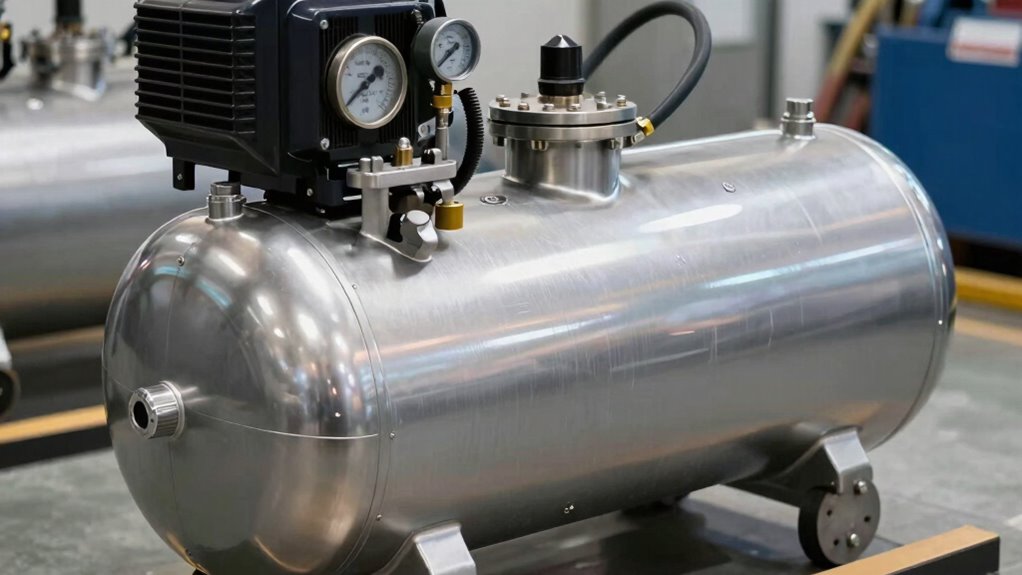

Choosing the right tank size depends on the tools you plan to use. Larger tanks store more compressed air, providing steadier airflow and reducing compressor cycling, which improves efficiency and tool performance. If your tools demand continuous or heavy use, a bigger tank helps maintain consistent pressure. On the other hand, smaller tanks are suitable for light tasks or portable setups. Understanding your workload and compressor design can help you pick the most suitable tank size to keep your tools running smoothly—explore further to see how each factor influences your choice.

Get business pricing on tools and workshop supplies
- Business-only prices and quantity discounts
- Tax-exempt purchasing
- Multiple users, one account, clear invoices
Key Takeaways
- The required tank size depends on the air demand and continuous operation needs of the specific tool.
- Larger tanks are suitable for high-volume or continuous-use tools to ensure steady airflow.
- Smaller tanks may suffice for intermittent or low-demand tools, offering portability and quick startup.
- Tool pressure requirements influence tank size selection to maintain optimal performance.
- Matching tank size to workload minimizes compressor cycling, improving efficiency and prolonging equipment lifespan.
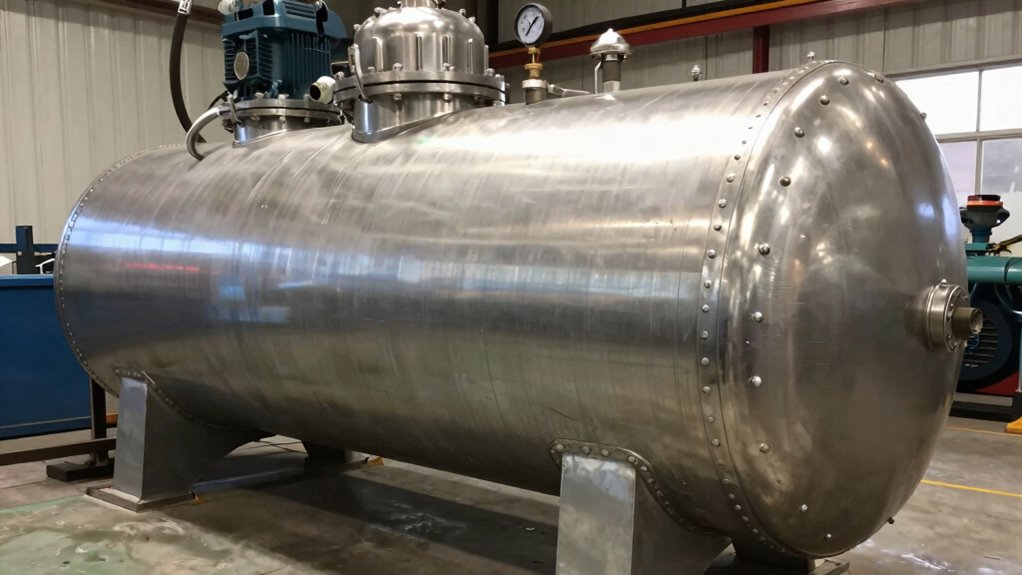
Have you ever wondered how the size of a compressor’s tank impacts its performance? The tank size plays a vital role in determining how well your compressor meets your needs, especially when it comes to air quality and noise levels. Larger tanks store more compressed air, which means your compressor can deliver a steady flow without constantly turning on and off. This consistency improves air quality because it reduces the fluctuations and moisture buildup that can occur with smaller tanks. When the compressor runs smoothly, there’s less chance of introducing contaminants or moisture into the air stream, guaranteeing cleaner output for your tools or applications. Proper tank size can also influence the efficiency of your compressor, helping to reduce energy consumption over time. Additionally, selecting the right tank size can extend the lifespan of your compressor by minimizing wear and tear caused by frequent cycling. Understanding air compression principles can further assist in making an informed choice that balances capacity and performance. Moreover, the material of the tank can also affect its durability and weight, impacting portability and maintenance.
On the other hand, the size of the tank also influences noise levels. Generally, bigger tanks tend to operate more quietly because they don’t need to cycle as frequently. When your compressor runs less often, it generates less noise over time, creating a more comfortable workspace, especially in environments where noise can be disruptive. Conversely, smaller tanks require the compressor to switch on and off more frequently to maintain pressure, which can lead to increased noise levels. If you work in a shared or noise-sensitive environment, selecting a larger tank can make a noticeable difference in maintaining a quieter operation. Moreover, understanding air compressor design can help you choose a tank size that aligns with your workspace and workload needs.
air compressor tank size for woodworking tools
As an affiliate, we earn on qualifying purchases.
As an affiliate, we earn on qualifying purchases.
Frequently Asked Questions
How Does Altitude Affect Compressor Tank Size Requirements?
Altitude affects compressor tank size requirements because lower air density at higher elevations means your compressor needs a larger tank. You should consider altitude adjustments to guarantee consistent air supply, as thinner air doesn’t generate as much pressure. A bigger tank helps buffer pressure drops caused by reduced air density, preventing your compressor from cycling on and off too often, thereby maintaining ideal performance in higher altitudes.
Can a Small Tank Compressor Handle Continuous Heavy-Duty Tasks?
A small tank compressor is like a fragile bird in a storm—it’s not built for continuous heavy-duty tasks. You need sufficient tank capacity to maintain steady airflow, preventing drops in pressure. For demanding tasks, a larger tank ensures consistent air flow, supporting prolonged operation. Relying on a small tank can cause frequent motor restarts and reduced efficiency, making it unfit for continuous heavy-duty work.
What Safety Precautions Are Necessary for Large Compressor Tanks?
You need to prioritize tank safety by regularly inspecting your large compressor tanks for corrosion, cracks, or leaks. Follow proper inspection protocols, including checking pressure relief valves and ensuring safety valves function correctly. Always release pressure before maintenance and avoid over-pressurization. Wearing protective gear and keeping the area clear are essential. These precautions help prevent accidents and extend your compressor’s lifespan, ensuring safe and efficient operation.
How Often Should Compressor Tanks Be Inspected and Maintained?
You should inspect and maintain your compressor tanks regularly, following recommended maintenance schedules. Inspection frequency depends on usage and manufacturer guidelines, but generally, you should check for corrosion, leaks, and pressure relief valve operation at least once every three to six months. Routine maintenance includes draining moisture, inspecting safety devices, and cleaning. Staying consistent with these inspections helps prevent failures and guarantees your compressor operates safely and efficiently.
Do Different Tank Materials Influence Compressor Performance?
Different tank materials do influence compressor performance. You’ll find that tanks made from durable materials like aluminum resist corrosion better, extending their lifespan and maintaining performance over time. Steel tanks offer strength but may be more prone to corrosion if not properly coated or maintained. Choosing the right material depends on your environment and needs, ensuring ideal tank durability and consistent compressor operation.
large capacity air compressor for continuous use
As an affiliate, we earn on qualifying purchases.
As an affiliate, we earn on qualifying purchases.
Conclusion
Just like a ship’s hull shapes its voyage, the tank size on your compressor guides your work’s flow. Smaller tanks keep things nimble, perfect for quick tasks, while larger tanks provide steady power for longer jobs. Think of it as balancing a dance—choosing the right size guarantees your tool moves seamlessly with your needs. When you pick the right tank, you’re not just selecting a feature; you’re setting the rhythm for your entire project.
portable small air compressor with tank
As an affiliate, we earn on qualifying purchases.
As an affiliate, we earn on qualifying purchases.
quiet air compressor with large tank
As an affiliate, we earn on qualifying purchases.
As an affiliate, we earn on qualifying purchases.
Fall Picks
fall essentials
As an affiliate, we earn on qualifying purchases.