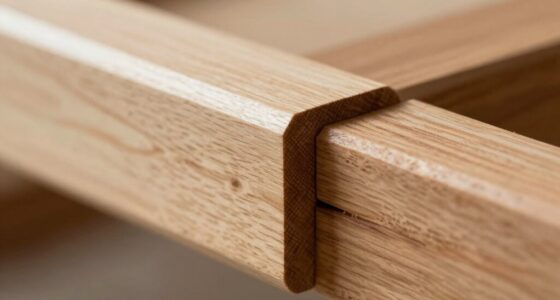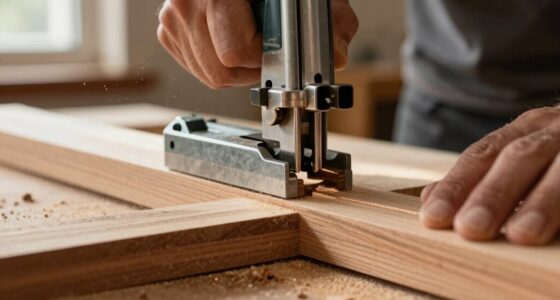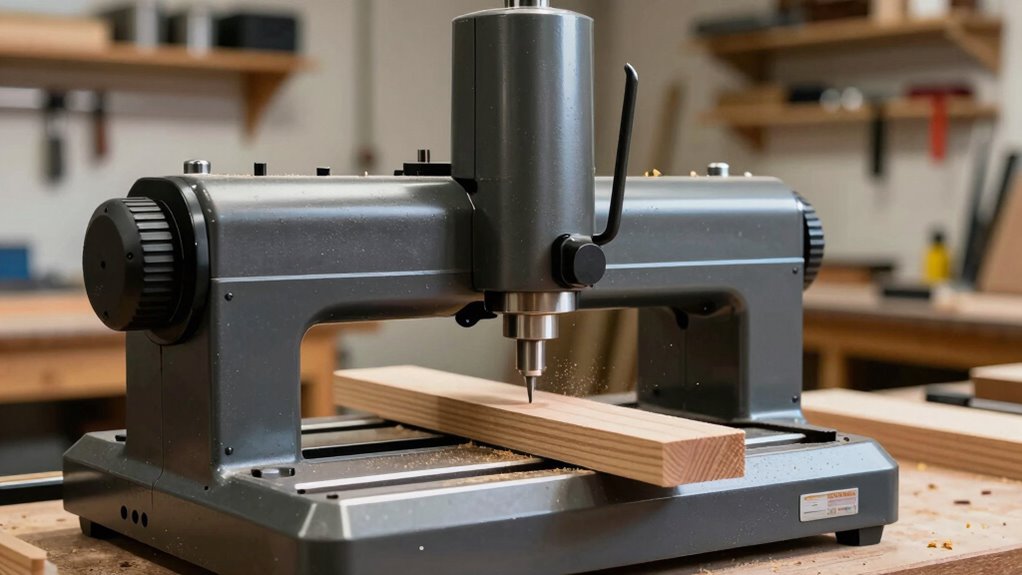

Loose tenon machines have transformed small-shop joinery by making it faster, more precise, and easier to achieve strong joints. They streamline the process, reduce errors, and save you time compared to manual tools. Proper operation and maintenance guarantee safe use and long-lasting performance. By taking advantage of these machines, you can elevate your craftsmanship and improve project consistency. Keep exploring, and you’ll discover how to maximize their benefits in your workshop.

Get business pricing on tools and workshop supplies
- Business-only prices and quantity discounts
- Tax-exempt purchasing
- Multiple users, one account, clear invoices
Key Takeaways
- They significantly speed up the joint-making process compared to manual methods.
- They ensure consistent, precise joints, improving overall structural integrity and aesthetics.
- They reduce errors and improve safety through proper setup and operation.
- They enable small shops to produce professional-quality joints with less skill and effort.
- They streamline workflow and maintenance, boosting efficiency and craftsmanship in small-shop joinery.
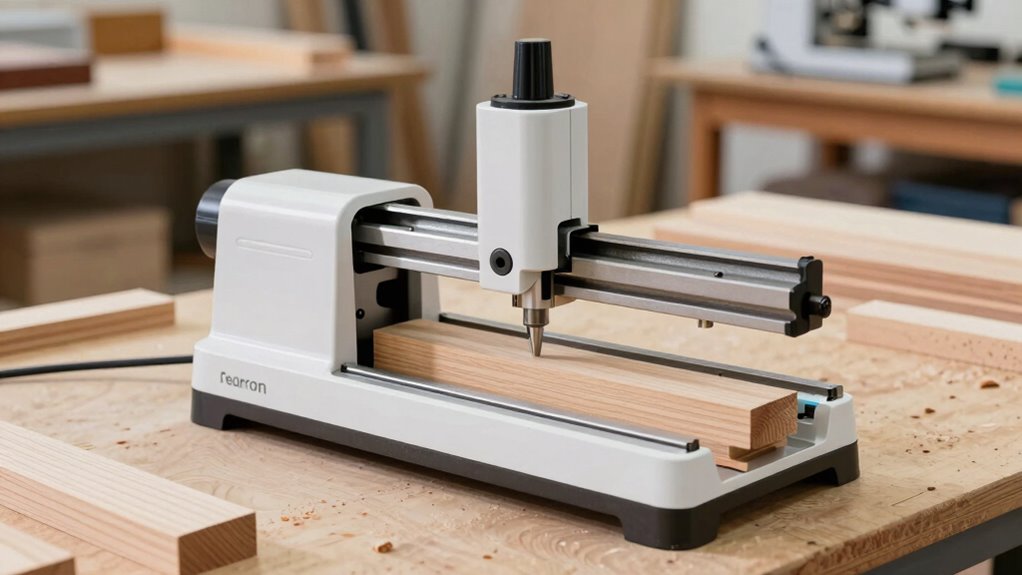
One of the main advantages of loose tenon machines is their ability to streamline the joint-making process. Instead of manually cutting mortises and tenons, you simply set up the machine, align your workpiece, and let it do the heavy lifting. This not only saves time but also reduces the chance of errors that can occur with hand tools. The consistency and precision offered by these machines mean that your joints fit snugly and hold securely, which is essential for both structural integrity and aesthetic appeal. Additionally, understanding how power tools operate safely is crucial to prevent accidents and ensure smooth operation. Proper training or practice on scrap pieces before starting your project can help you become more comfortable and confident with the machine’s operation. However, as with any power tool, safety should always be a top priority. Woodworking safety involves wearing appropriate protective gear like goggles and hearing protection, and understanding how to operate your loose tenon machine properly. Always follow the manufacturer’s instructions, and avoid rushing through setups or adjustments. Proper machine maintenance is equally critical. Regularly inspecting blades, guides, and other components ensures the machine operates smoothly and prevents safety hazards. Keeping your machine clean and well-lubricated reduces wear and prolongs its lifespan, ultimately saving you money and time in repairs. Maintaining a clean workspace also contributes to safer and more efficient operation. Moreover, being aware of proper dust extraction techniques can significantly improve air quality and reduce health risks in your workshop.
Using a loose tenon machine also demands attention to woodworking safety procedures. Secure your workpieces firmly, keep your hands clear of moving parts, and never bypass safety guards. Proper training or practice on scrap pieces before starting your project can help you become more comfortable and confident with the machine’s operation. This diligence minimizes accidents and ensures your work remains precise and safe.
In essence, loose tenon machines have transformed small-shop joinery by making robust, accurate joints achievable with less effort. They rely on careful machine maintenance and a commitment to woodworking safety to function effectively and safely over the long term. When used responsibly, these machines not only elevate your craftsmanship but also streamline your workflow, allowing you to focus more on your creative process and less on the technical hurdles of traditional joinery methods.
loose tenon machine for woodworking
As an affiliate, we earn on qualifying purchases.
As an affiliate, we earn on qualifying purchases.
Frequently Asked Questions
Are Loose Tenon Machines Suitable for Beginner Woodworkers?
Yes, loose tenon machines are suitable for beginner woodworkers. They help improve joint stability and woodworking precision, making projects more durable and professional-looking. While they may seem complex at first, with proper instruction and practice, you’ll find them straightforward to operate. Using a loose tenon machine can boost your confidence and skill, helping you create strong, accurate joints without requiring advanced techniques or tools.
What Safety Precautions Should I Follow When Using a Loose Tenon Machine?
When using a loose tenon machine, prioritize tool safety by always wearing eye and hearing protection. Before starting, carefully follow machine setup instructions to guarantee proper alignment and secure workpieces. Keep your hands clear of cutting areas and avoid distractions during operation. Regularly inspect the machine for any damage or loose parts. By practicing safe tool handling and correct setup, you reduce risks and make your joinery projects safer and more precise.
How Does the Cost of a Loose Tenon Machine Compare to Traditional Methods?
The cost comparison shows that loose tenon machines are typically more expensive upfront than traditional methods like dowels or mortise and tenon joints. However, they save you time and effort, reducing labor costs over time. While traditional methods may seem cheaper initially, loose tenon machines boost efficiency and consistency, making them a worthwhile investment for small-shop joinery. Over time, they can actually lower your overall expenses.
Can Loose Tenon Machines Be Used for Metal or Plastic Joinery?
Ever imagine using a loose tenon machine for metal or plastic joinery? While these machines excel with wood, they aren’t designed for metal compatibility or plastic joinery. Metals require specialized tooling and high precision, which loose tenon machines typically lack. For plastics, you need equipment that handles softer materials without melting or warping. So, for metal or plastic projects, look for tools specifically made for those materials to guarantee quality and safety.
What Maintenance Is Required to Keep a Loose Tenon Machine in Optimal Condition?
To keep your loose tenon machine in top shape, follow a regular lubrication schedule to prevent rust and guarantee smooth operation. Check and adjust blade alignment frequently to maintain precision and safety. Clean dust and debris after each use, and inspect parts for wear or damage. Proper maintenance extends your machine’s lifespan, improves joinery quality, and reduces downtime, making it a reliable tool for your small-shop projects.
woodworking mortise and tenon jig
As an affiliate, we earn on qualifying purchases.
As an affiliate, we earn on qualifying purchases.
Conclusion
Embracing loose tenon machines transforms your small-shop joinery into a well-oiled machine, where precision and efficiency dance in harmony. Think of these machines as the steady heartbeat behind your craftsmanship, breathing new life into your projects. They help you craft joints as tight as a drum and as seamless as a river’s flow. With this tool in your arsenal, you’ll turn ordinary wood into extraordinary masterpieces, making your workshop the symphony of skilled creation it’s meant to be.
power loose tenon joinery machine
As an affiliate, we earn on qualifying purchases.
As an affiliate, we earn on qualifying purchases.
As an affiliate, we earn on qualifying purchases.
Fall Picks
fall essentials
As an affiliate, we earn on qualifying purchases.