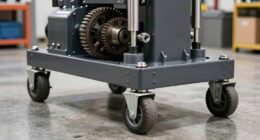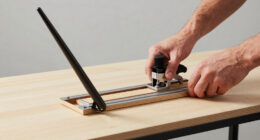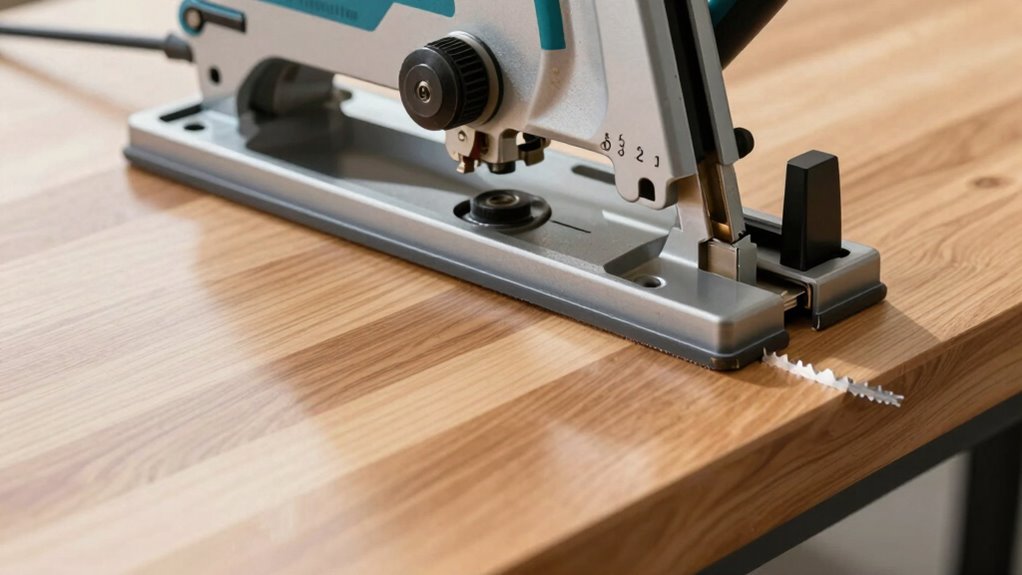

Your miter saw’s accuracy starts with a level, stable surface. An uneven or wobbly work area can cause crooked cuts and waste material. Make sure the surface is flat, debris-free, and regularly checked for stability. Proper alignment of the saw and secure fencing also boost precision. When your setup is solid, your cuts become cleaner and more accurate. Want to discover more tips for perfect cuts? Keep exploring to improve your woodworking skills.
Key Takeaways
- A level, stable work surface prevents vibrations that can misalign cuts and reduce accuracy.
- Regularly inspect and calibrate the surface to ensure it remains flat and debris-free.
- An uneven or wobbling surface causes inaccuracies and uneven cuts during miter saw operation.
- A clean, stable platform minimizes vibrations, maintaining blade stability and precise measurements.
- Proper setup of the work surface is essential for consistent, accurate miter saw performance.

Achieving precise cuts with a miter saw is essential for professional-looking woodworking projects. The foundation of accuracy begins with guaranteeing that the surface beneath your saw is perfectly level and stable. When the surface isn’t flat, even the most finely tuned saw can produce crooked or uneven cuts. Before you start your project, take a moment to check that your work area is solid, free of debris, and free of any uneven spots. A wobbly or uneven surface causes vibrations and misalignments, making it difficult to achieve clean, precise cuts every time. Proper surface flatness is critical for consistent results. Ensuring your work surface is level and stable helps to prevent these issues and promotes accuracy throughout your project. Regularly inspecting your workspace for uneven surfaces can help catch potential problems early before they impact your cuts.
A stable, flat work surface is crucial for accurate, clean cuts with your miter saw.
One of the most critical factors in maintaining miter saw accuracy is blade alignment. If your blade isn’t properly aligned with the fence and the miter angle, even the slightest skew can lead to inaccurate cuts. Regularly check and adjust the blade to ensure it’s perpendicular to the surface and aligned with the saw’s cutting line. Misaligned blades produce gaps or incorrect angles, which can ruin your project. Many saws have built-in alignment guides, but it’s a good idea to double-check with a square or a dedicated alignment tool. Proper blade alignment ensures that your cuts are straight and true, saving you time and material waste.
Fence stability is equally important for precision. Your fence acts as the guide for your workpiece, so if it wobbles or shifts during a cut, your angles will be off and your measurements inconsistent. Always make sure your fence is securely locked in place before making a cut. Check for any looseness or play, and tighten adjustments as needed. A stable fence guarantees that your workpiece stays in the correct position throughout the cut, leading to cleaner, more accurate results. If your fence isn’t stable, even the smallest movement can throw off your entire project, so don’t neglect to inspect and secure it before each use. Additionally, ensuring that the work surface is level and free of debris contributes significantly to overall accuracy. Regularly calibrating your saw can help identify and correct minor misalignments that might otherwise go unnoticed.
In addition to surface flatness, blade alignment, and fence stability, regularly calibrating your miter saw helps maintain long-term accuracy. Keep everything tight, aligned, and checked frequently, especially if you move the saw around or after extensive use. When all these elements work together—flat surface, aligned blade, and stable fence—you’ll find that your cuts become more precise, your projects more professional, and your frustration levels decrease. Your woodworking results depend on these foundational steps, so invest time in setting up your workspace correctly. This way, every cut you make will meet the high standards you expect. Regular calibration is also vital for ensuring consistent performance over time.
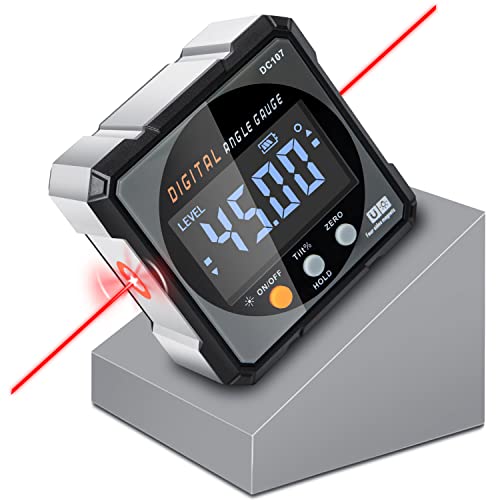
Digital Angle Finder with Electronic Laser – 4-side Strong Magnetic Angle Gauge, Cube Inclinometer with Backlight, Table Saw Miter Protractor, Woodworking Measuring Tool, Level Box for Hanging
Nivel Digital Level with Laser – (Class II laser, Output<5mW) L2.4in, W2.4in, H1.2in, portable pocket size with matching…
As an affiliate, we earn on qualifying purchases.
As an affiliate, we earn on qualifying purchases.
Frequently Asked Questions
How Often Should I Calibrate My Miter Saw?
You should calibrate your miter saw every few months or whenever you notice cuts aren’t precise. Regular blade maintenance is essential for accuracy, so keep the blade clean and sharp. Calibration frequency depends on how often you use the saw—more use means more frequent checks. Always verify the saw’s settings before big projects to make sure your cuts are accurate. Regular calibration keeps your miter saw performing at its best.
What Tools Are Best for Cleaning the Saw Surface?
You should use a soft cloth or a brush to clean your saw surface, removing dust and debris that can affect blade alignment. For thorough cleaning, apply a mild solvent or compressed air. Regular surface inspection is essential to identify any buildup or misalignment, ensuring your cuts stay precise. Keeping the surface clean and checking it often helps maintain accuracy and prolongs the life of your saw.
Can Uneven Flooring Affect Miter Saw Accuracy?
Uneven flooring is like a crooked foundation—it can throw off your cuts. When the floor lacks stability, surface imperfections cause the miter saw to wobble or shift, reducing accuracy. To guarantee precise cuts, make sure your workspace has a stable, level surface. Address any unevenness before cutting. A steady foundation helps your saw perform at its best, giving you clean, accurate results every time.
How Do Temperature Changes Impact Saw Precision?
Temperature changes can impact your saw’s precision through material expansion and contraction. When it gets warmer, parts may expand slightly, causing minor misalignments. Conversely, cooler temperatures can lead to contraction, affecting cut accuracy. To maintain environmental stability, keep your workspace at a consistent temperature and store your saw in a controlled environment. This helps guarantee your cuts stay precise, regardless of outside temperature fluctuations.
Is It Necessary to Level the Workbench Regularly?
Think of your workbench like a steady ship; if it’s not level, your cuts can veer off course. Yes, you should level your workbench regularly to guarantee consistent accuracy. Stable surface maintenance prevents wobbling and misalignments. Over time, minor shifts happen from use or temperature changes, so checking and adjusting your workbench keeps your miter saw precise, just like a ship kept on a steady course.

GOINGMAKE Table Saw Gauge Dia Indicator for Table Saw and Band Saw,0.01mm Accuracy Calibration Tool,Table Saw Jig Guide Fits for 3/4" T Slot U Slot,Table Saw Accessories for Woodworking,Machinery
【Precision Calibration】GOINGMAKE table saw gauge provides 0.01mm accuracy dial indicator. It is precision to use and easy to…
As an affiliate, we earn on qualifying purchases.
As an affiliate, we earn on qualifying purchases.
Conclusion
Remember, just like a knight trusts his sword, your miter saw’s accuracy begins with a true, stable surface. If your workbench isn’t level or sturdy, even the finest saw will falter—like trying to cut with a dull blade in the Dark Ages. So, take a moment to confirm everything’s aligned and solid. Trust me, your future projects will thank you, and you’ll avoid the frustration of dodging miscuts, proving that a good foundation truly makes all the difference.
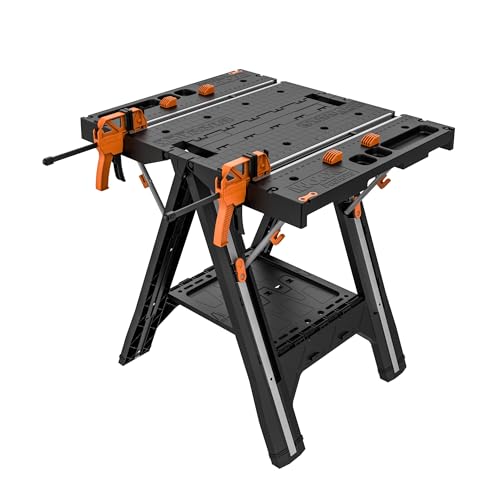
Worx Pegasus 2-in-1 Folding Work Table & Sawhorse, Easy Setup Portable Workbench, 31" W x 25" D x 32" H Lightweight Worktable with Heavy-Duty Load Capacity, WX051 – Includes 2 Clamps & 4 Clamp Dogs
FOLD AND GO: More than just a workbench for garage use, the Pegasus goes anywhere you need extra…
As an affiliate, we earn on qualifying purchases.
As an affiliate, we earn on qualifying purchases.
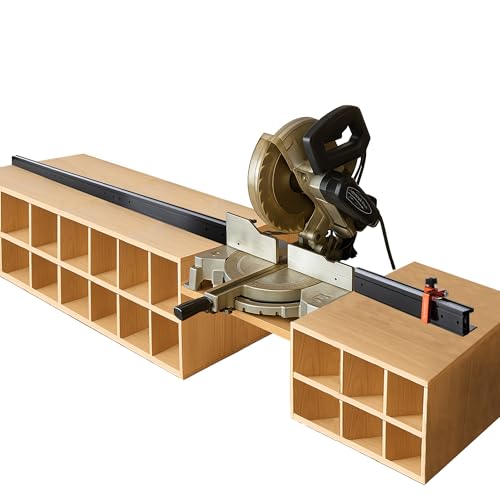
O'SKOOL Miter Saw Fence System with Adjustable Flip Stop – 68" Expandable Aluminum Track with Dual-Direction Measure Tape for Radial Arm Saws, Drill Presses, and Woodworking Stations, RTS024
Modular 68" expandable miter saw fence system: Each 17" aluminum rail connects seamlessly to create a 68" total…
As an affiliate, we earn on qualifying purchases.
As an affiliate, we earn on qualifying purchases.