You should opt for a jobsite saw when you need portability, quick setup, and the flexibility to work in different locations. It’s perfect if you often move between sites or work outdoors, as it doesn’t rely on a dedicated workshop. Modern models offer enough power for most tasks while being easier to transport and store. To discover more about when a jobsite saw outperforms traditional machines, keep exploring the differences and benefits.

Get business pricing on tools and workshop supplies
- Business-only prices and quantity discounts
- Tax-exempt purchasing
- Multiple users, one account, clear invoices
Key Takeaways
- When projects require frequent relocation or on-site setup, a jobsite saw offers superior portability and quick assembly.
- For smaller-scale or budget-conscious jobs, a portable saw provides sufficient power without the expense of heavy cast-iron machines.
- In confined or challenging workspaces, the compact design of a jobsite saw enhances safety and maneuverability.
- When environmental impact and energy efficiency are priorities, modern portable saws support sustainable practices.
- For tasks that do not demand maximum cutting capacity, a jobsite saw balances performance with ease of use.
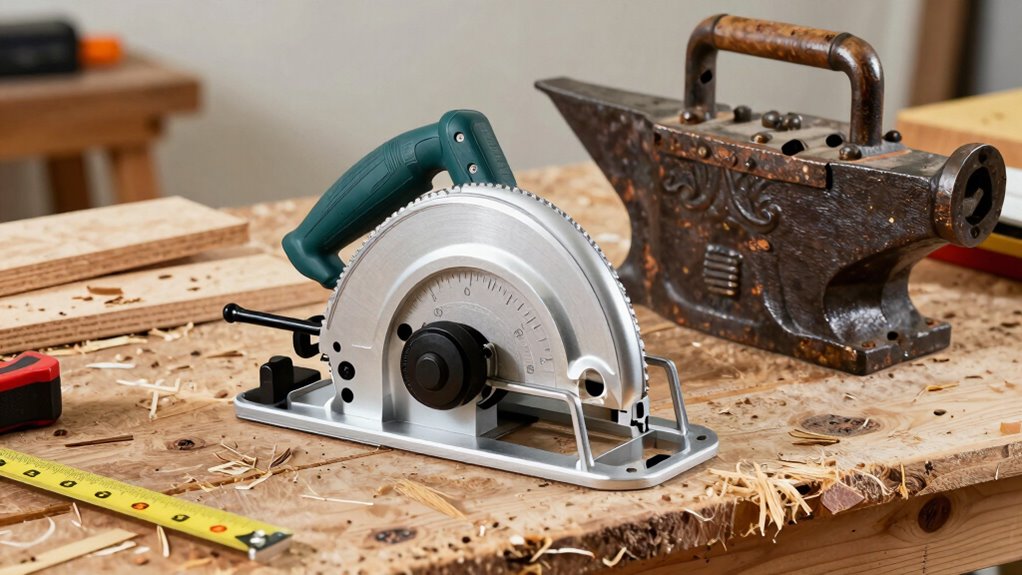
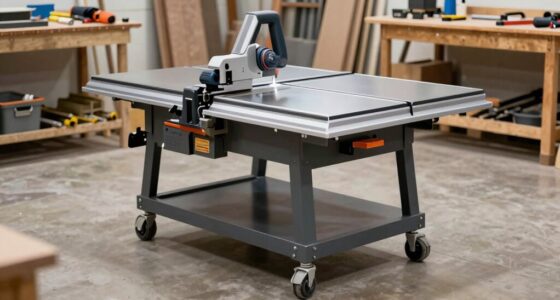
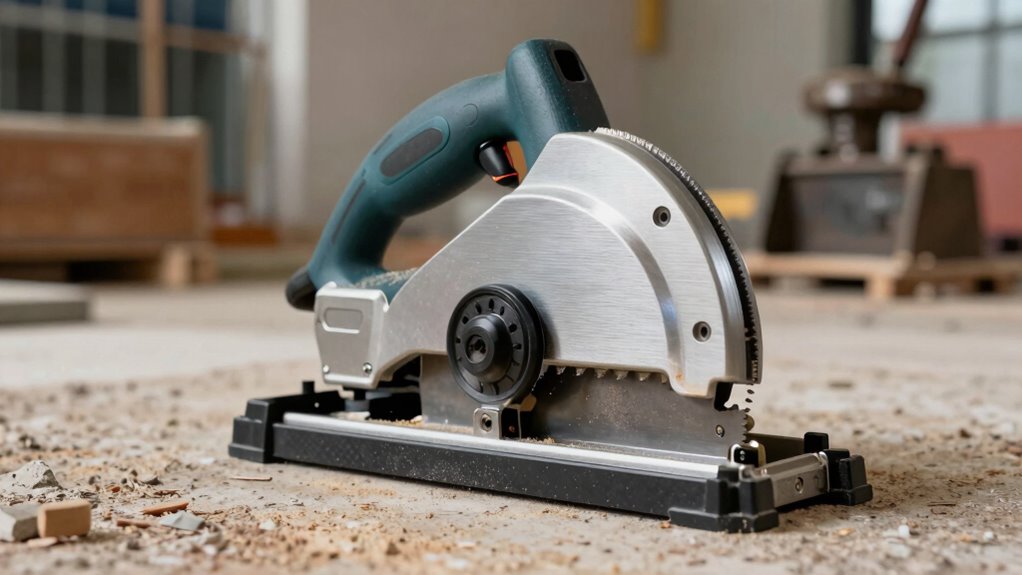
When choosing a saw for your woodworking projects, it’s important to take into account the job’s specific demands—sometimes, a portable jobsite saw is the smarter choice over a bulky cast-iron machine. If you often work in different locations or need to move your equipment frequently, a portable power saw provides the flexibility you require. Unlike traditional stationary saws, these models are designed to be lightweight, compact, and easy to transport, so you can set up your workspace wherever the job takes you. This mobility means you’re not tied to a single workshop, and you can adapt quickly to changing project sites, saving you time and effort. Additionally, portable saws are often more cost-effective for those who don’t require the extensive capacity of larger machines. Workspace flexibility is a significant advantage when opting for a jobsite saw. With a larger cast-iron machine, you’re constrained by your workshop’s size and layout. You need dedicated space, sturdy tables, and often, complex dust collection systems. But a portable saw offers a different approach. You can bring it directly to the work area, whether it’s a construction site, a remote job, or a tight space inside a home. This means you can work more efficiently, adjusting your setup as needed without sacrificing precision or power. Plus, many models feature adjustable stands and wheels, making setup and breakdown quick and effortless. Power is another consideration. While a portable power saw might not match the raw strength of a large cast-iron machine, modern models pack enough punch for most woodworking tasks. They’re equipped with durable motors capable of handling crosscuts, rip cuts, and even some heavier cuts with ease. The key is choosing a saw that balances power and portability, so you’re not sacrificing performance for convenience. Many models also feature safety enhancements, like blade guards and anti-kickback mechanisms, ensuring you can work confidently without compromising safety. In essence, a jobsite saw offers a practical solution when your work requires mobility and flexibility. You get to enjoy the benefits of portable power, making it easier to perform precise cuts on-site without the hassle of transporting large, heavy machinery. Whether you’re working on a small renovation or a large construction project, this kind of saw adapts to your needs. It’s about making your workflow more efficient, reducing setup time, and giving you the freedom to work where and how you want. When the project demands quick, adaptable, and reliable cutting power, a portable jobsite saw often makes more sense than a bulky cast-iron alternative. Understanding power-to-weight ratio is crucial when selecting a portable saw that can handle your workload without unnecessary bulk, especially considering the importance of biodiversity and sustainable living in reducing environmental impact from manufacturing and operation. Additionally, choosing energy-efficient models can further support environmentally conscious sustainable practices, aligning your tools with your commitment to reducing environmental impact. Incorporating energy efficiency into your choice can also help lower operating costs and lessen your overall ecological footprint.
As an affiliate, we earn on qualifying purchases.
Frequently Asked Questions
How Do Jobsite Saws Compare in Accuracy to Cast-Iron Machines?
You’ll find that jobsite saws are generally less precise than cast-iron machines, especially in blade precision, due to their portable design and movement. However, many modern models improve accuracy and feature better dust collection, helping you maintain a cleaner workspace. While they might not match the stability of cast-iron saws, a well-maintained jobsite saw can still deliver accurate cuts for most projects.
What Safety Features Are Common on Modern Jobsite Saws?
You’ll find modern jobsite saws equipped with essential safety features like blade guards and dust collection systems, which greatly reduce hazards. Blade guards prevent accidental contact, while dust collection keeps your workspace cleaner and safer. Although some worry about convenience, these features guarantee safer operation without sacrificing efficiency. With these safety measures, you can work confidently, knowing your jobsite saw prioritizes your safety while maintaining performance.
Can a Jobsite Saw Handle Heavy-Duty Woodworking Tasks?
A jobsite saw can handle heavy-duty woodworking tasks when equipped with a sturdy blade guard and efficient dust collection system. You’ll find these safety features protect you during tough cuts, while the powerful motor and robust build allow for demanding projects. Though smaller, modern jobsite saws are designed for versatility, so with the right features, they can manage heavy workloads without compromising safety or performance.
How Portable Are Jobsite Saws for Frequent Transport?
Your jobsite saw is as portable as a feather in a hurricane, making it perfect for frequent transport. It offers unmatched portable convenience, allowing you to move it easily from site to site. Plus, its compact storage design guarantees you can store it without hassle, even in tight spaces. Whether you’re heading to a new job or just rearranging, this saw’s mobility keeps your workflow smooth and efficient.
What Is the Typical Lifespan of a Jobsite Saw?
A typical jobsite saw lasts around 5 to 10 years with proper blade maintenance and regular dust collection. You keep the blades sharp and clean, ensuring smooth cuts and less wear. Regularly clearing dust prevents overheating and mechanical issues. If you maintain it well, your saw can serve you reliably through many projects. However, heavy daily use might shorten its lifespan, so keep an eye on its performance.
compact power saw for woodworking
As an affiliate, we earn on qualifying purchases.
As an affiliate, we earn on qualifying purchases.
Conclusion
So, next time you’re choosing between a jobsite saw and a massive cast-iron machine, consider your needs. If flexibility, portability, and quick setup matter most, a jobsite saw often makes more sense. It’s all about matching the tool to the task, rather than just size or tradition. When you prioritize efficiency and practicality, you’ll find that a jobsite saw can actually save you time—and maybe even make your work a little more enjoyable.
As an affiliate, we earn on qualifying purchases.
As an affiliate, we earn on qualifying purchases.
Halloween Picks
halloween
As an affiliate, we earn on qualifying purchases.