Proper hinge layout is essential to prevent your door from binding or sticking over time. By accurately measuring and carefully placing hinges along the door’s height, considering the swing arc, and avoiding common placement mistakes, you guarantee smooth operation and long-lasting durability. Using the right tools and following correct marking procedures helps achieve precise installation. Keep in mind that adjusting hinges later can maintain performance; continue exploring to learn how to perfect your hinge setup.
Key Takeaways
- Proper hinge layout ensures even weight distribution, preventing door binding and misalignment over time.
- Accurate measurement and marking from the door edge help position hinges correctly for smooth operation.
- Consider the door swing arc during hinge placement to avoid interference and ensure seamless movement.
- Evenly spaced hinges along the door’s height support stability and reduce the risk of sagging or sticking.
- Double-check measurements and alignment before installation to prevent binding issues and prolong hinge lifespan.

Door Hinge Jig and Door Lock Installation Kit, Aluminum Alloy Router Template for Hinge Mortising from 2.5" to 5" and Types of Square, 1/4", 5/8" Radius, Door Hole Drilling Kit for Knob and Deadbolt
【All-in-One Pro Combo: Perfect Hinge & Lock Installation】This complete set includes both a door hinge jig and a…
As an affiliate, we earn on qualifying purchases.
As an affiliate, we earn on qualifying purchases.
Why Proper Hinge Layout Prevents Doors From Binding
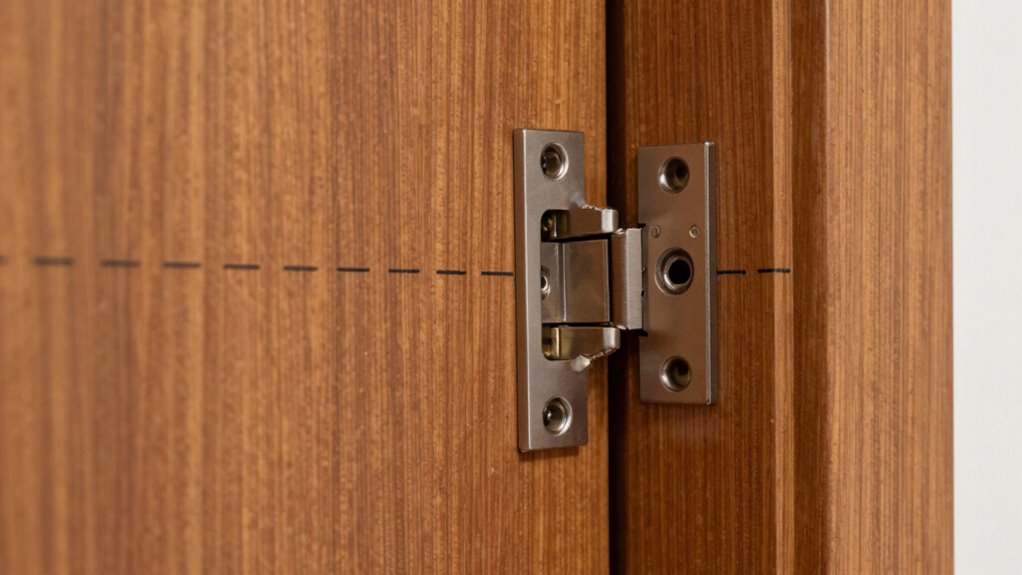
Have you ever closed a door only to find it sticking or scraping against the frame? That’s often due to improper hinge layout. Choosing the right hinge material—such as steel, brass, or aluminum—ensures durability and smooth operation. Equally important is selecting the correct hinge style, whether butt, strap, or continuous, to match your door’s weight and use. Proper hinge placement prevents the door from sagging or binding, which can cause misalignment over time. You want hinges installed at precise points, typically on the door’s edge and frame, to support even weight distribution. When done correctly, this setup keeps your door swinging freely without resistance, saving you trouble and costly repairs later. Proper hinge layout is essential for smooth, functional doors. Additionally, understanding door weight distribution helps in choosing the appropriate hinges and placement for long-term performance.

SILENTLOK Adjustable Patio Door Hinges | Vertical & Horizontal Adjustment | High Strength Multi-Point Locking System | for Perfect Fit & Security
[Pro-Grade Durability & Load Capacity]: Engineered with high-strength extruded materials (Stainless steel & zinc alloy), Sentry hinges are…
As an affiliate, we earn on qualifying purchases.
As an affiliate, we earn on qualifying purchases.
Essential Tools and Measurements for Hinge Installation
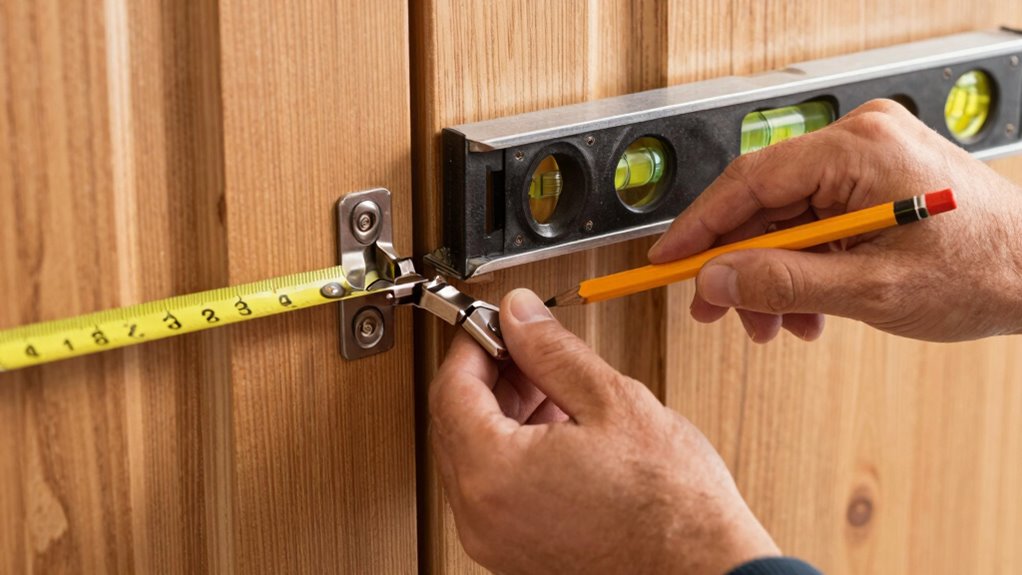
To guarantee your hinges are installed correctly, gathering the right tools and taking accurate measurements is essential. You’ll need a tape measure, a pencil, a square, and a drill with appropriate bits. Accurate hinge placement depends on precise measurement techniques; measure from the door edge to mark hinge positions consistently. Use a square to ensure your marks are level and aligned, preventing misalignment that causes binding. A level can also verify that hinges are installed straight. Double-check measurements before drilling to avoid mistakes. Proper tools and careful measurement techniques ensure hinges are positioned correctly, allowing the door to swing smoothly and preventing binding issues. Taking this extra time upfront makes the entire installation process more efficient and reliable. Additionally, understanding the importance of hinge placement can help you achieve optimal door operation and longevity.

RG35XX 2026 Upgraded Door Hinge Adjustment Tool Compatible with Flag Hinges(0.32-0.55inch Diameter),Hinge Gap Adjusting Wrench for Residential Door,Fire Doors,etc.
Compatible Door Hinge Specifications: The small-sized wrench is suitable for flag hinges diameters ranging from 0.32 to 0.75…
As an affiliate, we earn on qualifying purchases.
As an affiliate, we earn on qualifying purchases.
Planning Your Hinge Placement for Smooth Operation
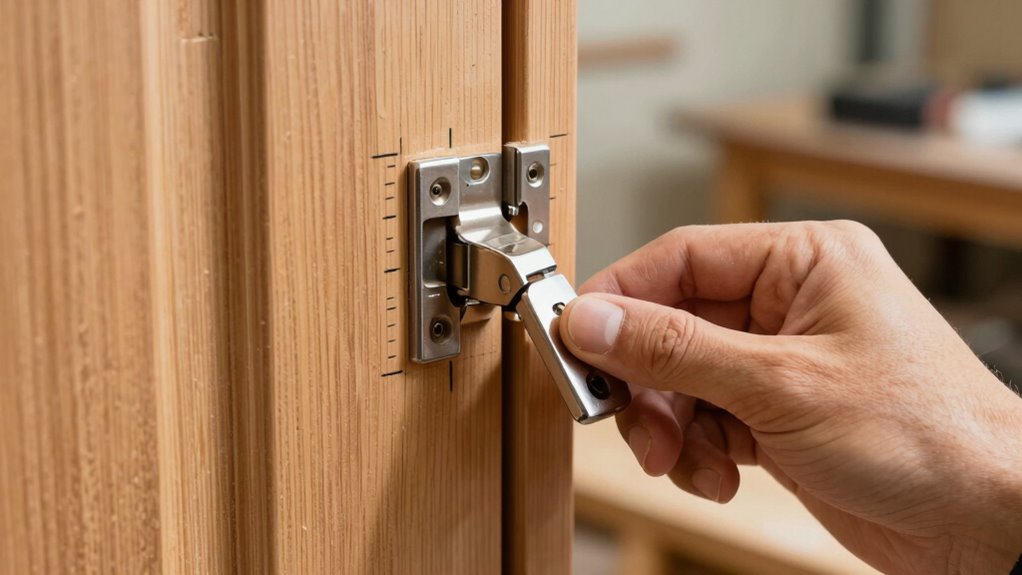
Planning your hinge placement carefully guarantees your door opens smoothly and stays aligned over time. Consider the door hinge materials, as different types—such as steel, brass, or plastic—offer varying durability and aesthetics. When determining hinge positions, follow hinge installation tips like placing hinges evenly along the door’s height and ensuring they’re flush with the surface for proper operation. Avoid placing hinges too close to the edges, which can cause binding, or too far apart, leading to sagging. Think about the door’s weight and size; heavier doors require more robust hinge placement. Proper planning ensures your hinges support the door correctly, reducing strain and potential misalignment, and ultimately providing smooth, reliable operation for years to come. Additionally, understanding hinge materials can help you select the best type for your specific door and usage conditions.

goldenwarm Pack of 3 Matte Black Heavy Duty Iron Door Hinges, 4 Inch x 4 Inch Interior and Exterior Black Door Hinges with 5/8" Radius Corners
Matte Black Finish – 4 inch x 4 inch, 5/8'' Radius Corners – We recommend you to apply…
As an affiliate, we earn on qualifying purchases.
As an affiliate, we earn on qualifying purchases.
How to Mark and Install Hinges Correctly
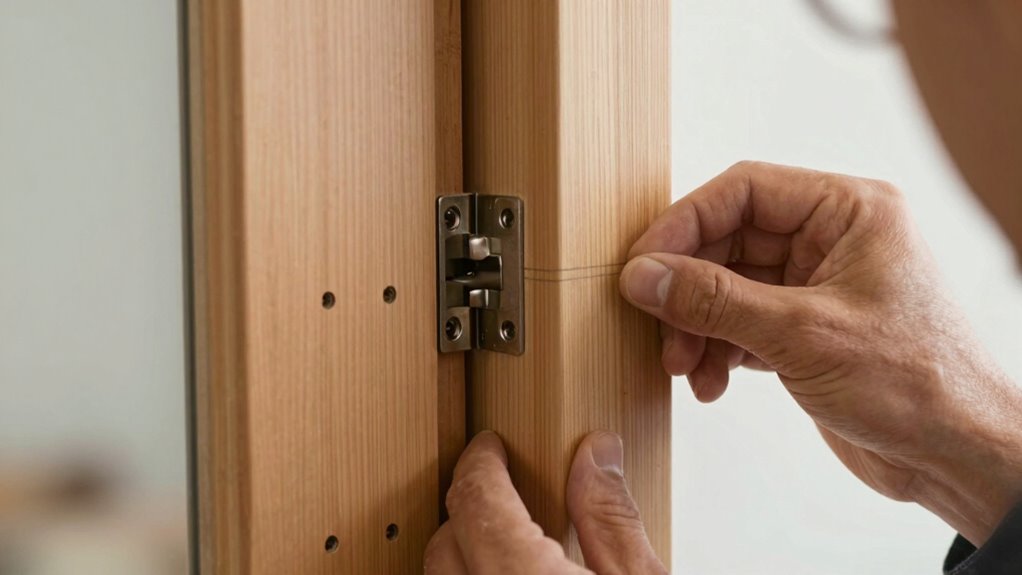
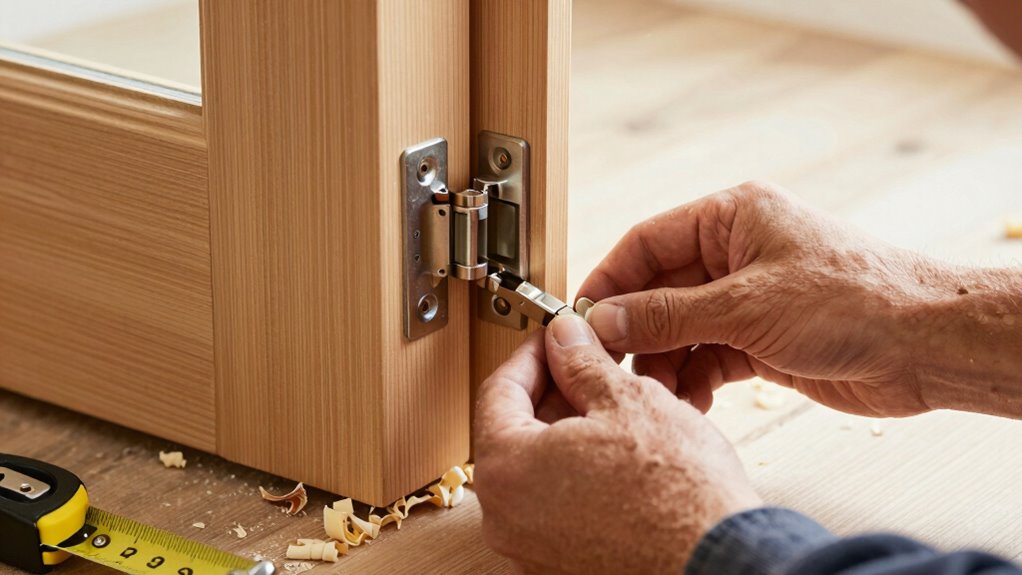
Marking and installing hinges accurately is essential for a door that opens smoothly and stays aligned. First, choose the right hinge material and type—whether brass, steel, or concealed hinges—to match your door’s needs. To guarantee proper placement:
- Measure carefully, aligning hinges with the door’s edge and frame for balanced weight distribution.
- Use a pencil to mark hinge locations precisely, considering the hinge’s leaf length and pin height.
- Drill pilot holes slightly smaller than the hinge screws to prevent wood splitting.
- Secure hinges firmly, ensuring they sit flush and allow smooth operation without binding.
- Remember that proper alignment is crucial for avoiding issues like sticking or uneven wear over time.
Accurate marking and installation prevent misalignment, ensuring your door functions perfectly and maintains its aesthetic appeal over time.
Common Mistakes in Hinge Layout and How to Avoid Them
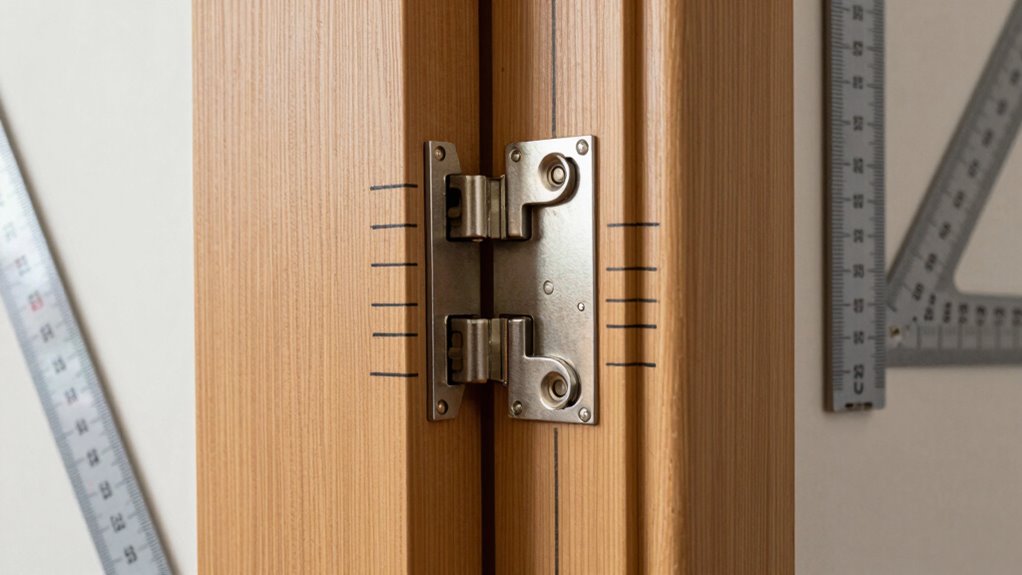
One common mistake is placing hinges inaccurately, which can cause the door to misalign or stick. Neglecting the door swing arc can lead to hinges that interfere with movement, creating frustration. Overlooking frame alignment can result in uneven gaps and compromised door stability; paying attention to these details helps ensure smooth operation.
Inaccurate Hinge Placement
Inaccurate hinge placement is a common mistake that can compromise the functionality and appearance of your door. When hinges are misaligned, your door may not swing smoothly, or worse, become stuck. To avoid this, pay close attention to hinge material and hinge color, ensuring they match your door’s style. Poor placement can lead to uneven weight distribution, causing stress on the hinges and eventual failure. Additionally, understanding the importance of proper hinge layout can prevent binding doors and extend the lifespan of your installation. Here are four mistakes to watch out for: 1. Placing hinges too high or low, causing imbalance. 2. Ignoring the door’s weight, risking sagging. 3. Using mismatched hinge material, reducing durability. 4. Choosing a hinge color that clashes with your door’s finish, ruining the look. Accurate placement keeps your door functioning seamlessly and looking great.
Ignoring Door Swing Arc
Ignoring the door swing arc is a common mistake that can cause your door to hit walls, furniture, or other obstacles, making it difficult to open or close smoothly. Failing to consider the swing path can also impact door clearance, risking damage or awkward opening angles. Additionally, neglecting the swing arc affects hinge aesthetics, as misaligned hinges may be visible or look out of place. To avoid these issues, plan the door’s movement before installing hinges, ensuring ample clearance and smooth operation. Mark the swing arc on the frame or wall, and double-check hinge placement to match the door’s path. Properly accounting for the swing arc ensures your door functions perfectly, looks good, and stays free of obstructions or damage. Considering efficient hinge installation can further improve door functionality and longevity.
Overlooking Frame Alignment
Proper frame alignment is essential for ensuring your hinges function smoothly and your door operates correctly. Overlooking frame distortion and incorrect hinge spacing can lead to binding, uneven operation, or damage. When you ignore proper alignment, you risk compromising the door’s functionality and durability. Additionally, understanding the thermal behavior of your door frame can help anticipate and prevent warping that affects hinge performance. Be mindful of these common mistakes: 1. Failing to check for frame distortion before installing hinges 2. Ignoring the importance of precise hinge spacing 3. Rushing the layout process, causing misaligned hinges 4. Overlooking how frame issues affect overall door operation
How to Adjust Hinges for Long-Lasting, Smooth Doors
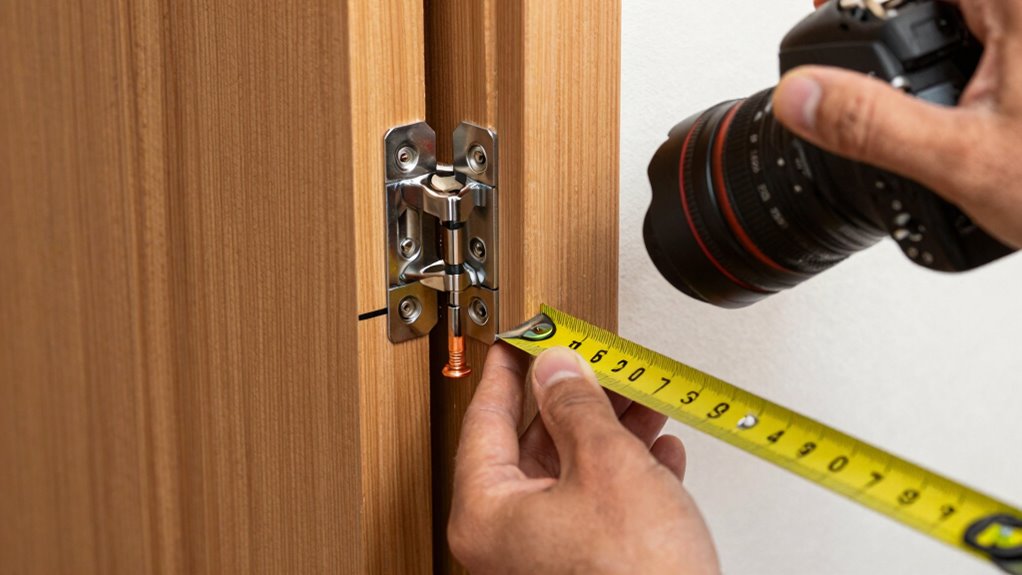
To guarantee your door operates smoothly and lasts longer, adjusting the hinges correctly is essential. Start by checking the door’s weight distribution; uneven weight causes misalignment. Lubricate hinges with a silicone spray or light oil to reduce friction and prevent squeaks. Tighten loose screws or replace damaged hinges to maintain stability. For fine-tuning, use a screwdriver to adjust the hinge pins, raising or lowering the door as needed. Proper hinge adjustment ensures even weight support and smooth operation. Regularly inspecting hinge materials and understanding heat distribution can also help prevent premature wear and tear.
Tips for Maintaining Your Doors and Preventing Future Binding
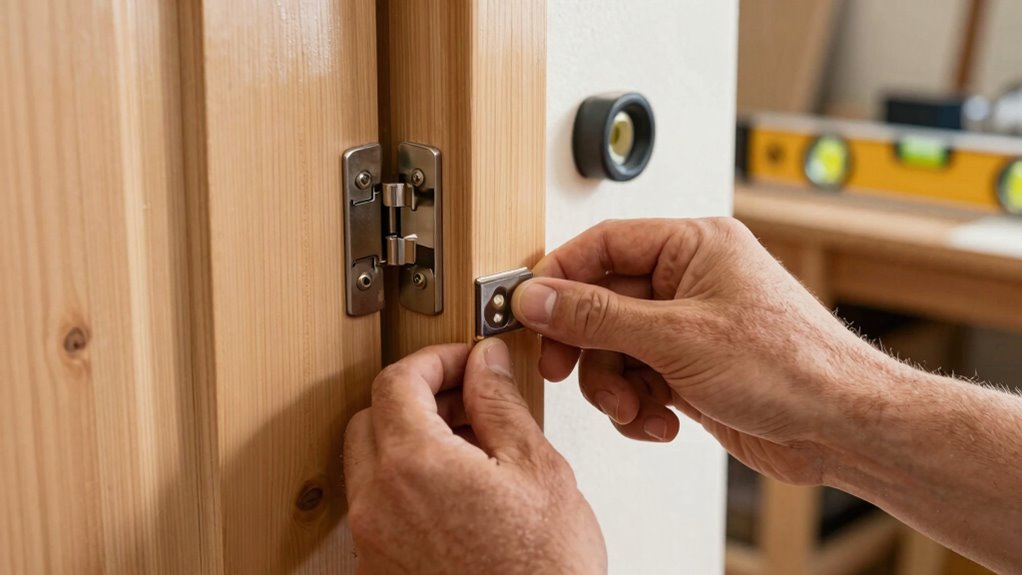
Regularly inspecting and maintaining your doors can prevent common issues like binding or sticking. To keep your doors operating smoothly, focus on these key tips:
- Apply door lubrication regularly to hinges to reduce friction and noise, ensuring effortless movement.
- Check hinges for looseness and tighten or replace them as needed to maintain alignment.
- Install hinge reinforcements if you notice sagging or wear, adding extra support and durability.
- Keep the door frames clean and free of debris to prevent misalignment that can lead to binding.
- Proper hinge installation is crucial in preventing future binding issues and ensuring smooth operation.
Consistent maintenance not only prolongs your door’s lifespan but also keeps it functioning flawlessly, giving you peace of mind and a smoothly opening door every time.
Frequently Asked Questions
How Do I Choose the Right Hinge Type for My Door?
To select the appropriate hinge type for your door, consider the hinge material and style. Metal hinges like brass or steel are durable and suited for heavy doors, while plastic or composite hinges work for lightweight applications. Pick a hinge style that matches your aesthetic—such as butt, strap, or continuous hinges—making sure it aligns with your door’s weight and usage. This way, you prevent binding and guarantee smooth operation.
What Materials Are Best for Durable Door Hinges?
Did you know that stainless steel hinges last up to 50% longer than other options? For durability, choose hinges made from stainless steel, brass, or bronze, as they offer excellent hinge durability and resist corrosion. Consider material compatibility with your door and environment to guarantee longevity. These materials withstand daily wear and tear, prevent rust, and keep your hinges functioning smoothly for years to come.
Can Hinge Installation Be Done Without Professional Tools?
You can install hinges without professional tools, but proper hinge alignment and screw size selection are vital. Use a screwdriver or drill with the correct bit to guarantee precise screw placement. Carefully mark hinge positions, keeping everything aligned to prevent binding doors. Although basic tools may suffice, investing in quality equipment helps achieve better hinge placement, reducing the risk of misalignment and ensuring smooth door operation.
How Often Should Hinges Be Inspected and Maintained?
You should inspect and maintain your hinges every six months. During inspections, check hinge alignment and listen for squeaks or sticking. Apply hinge lubrication to keep parts moving smoothly and prevent binding doors. If you notice misalignment or difficulty opening, adjust the hinges promptly. Regular maintenance guarantees your doors operate quietly and extend hinge lifespan, saving you time and effort in the long run.
What Are Signs That Hinges Need Replacement?
If your hinges start squeaking or become loose, it’s time to replace them. You might notice the door sagging or not closing properly, indicating wear. Loose hinges can cause misalignment and increase squeaking. When lubrication no longer stops squeaking or tightening doesn’t fix looseness, replacing hinges guarantees smooth operation. Regular inspections help catch these signs early, preventing further damage and maintaining your door’s functionality.
Conclusion
Think of hinge layout like tuning a guitar—when every string is just right, the music flows smoothly. I once watched a door stick because the hinges weren’t aligned properly; it was a small mistake with big consequences. By taking the time to plan, measure, and install your hinges carefully, you’ll guarantee your doors open effortlessly for years. Remember, a well-laid hinge is the secret to door harmony—keep it balanced, and everything will swing perfectly.