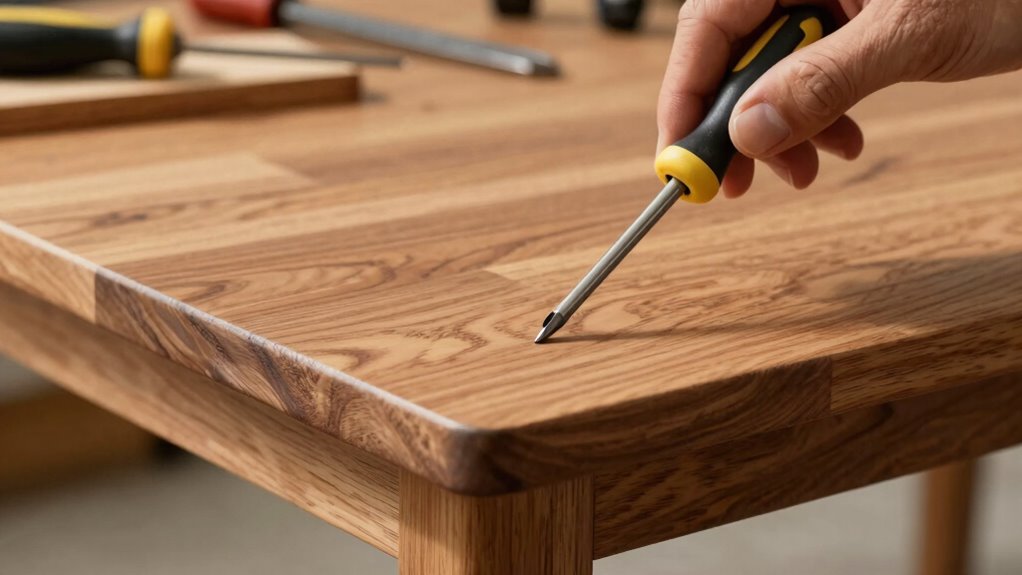
To fix a wobbly table, start by checking if all legs are even and tightly attached. Use a level to identify unevenness on the table or floor. Gently rock each leg to see if any feel loose. If needed, adjust uneven legs with shims or tighten loose screws and bolts. For persistent wobbling, more tips can help you identify whether floor issues or structural problems are at play—keep exploring to get it steady!

Get business pricing on tools and workshop supplies
- Business-only prices and quantity discounts
- Tax-exempt purchasing
- Multiple users, one account, clear invoices
Key Takeaways
- Use a carpenter’s level to check for uneven surfaces on the table and floor.
- Gently rock each leg to identify loose joints or wobbling points.
- Measure leg lengths to detect unevenness and determine if trimming or shimming is needed.
- Inspect and tighten screws, bolts, and joints to eliminate looseness.
- Place shims or furniture pads under uneven or shorter legs for quick stabilization.
As an affiliate, we earn on qualifying purchases.
Why Is My Table Wobbling? Common Causes Explained
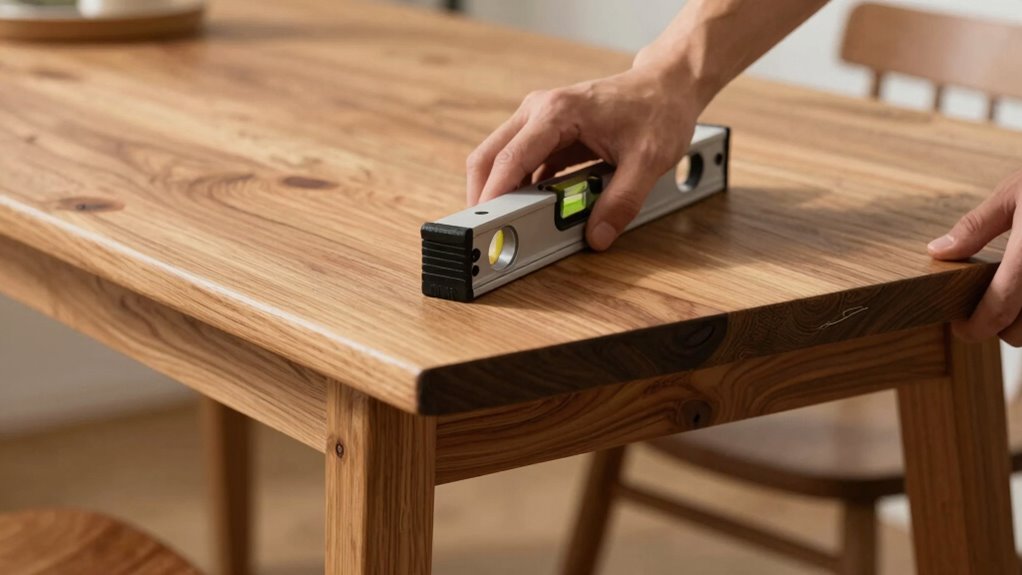
A wobbling table is often caused by uneven or damaged legs, which can happen over time due to regular use or shifting furniture. When your table wobbles, the first step is to check if the legs are uneven or loose. You might need a simple table leg adjustment, like tightening screws or adding small shims under uneven legs. Sometimes, if the legs are damaged or worn out, furniture reupholstery might be necessary to replace or repair them. Additionally, understanding furniture stability can help prevent future issues. Proper furniture maintenance techniques can extend the life of your table and help avoid this problem. Recognizing the importance of furniture stability can guide you in choosing the right corrective measures. Identifying these common causes helps you decide whether a quick fix, like leg adjustment, or a more involved solution, such as reupholstery or replacement, is needed to restore stability. Regular inspections and furniture care can further help maintain your table’s balance over time.
As an affiliate, we earn on qualifying purchases.
How to Check if Your Floor Is Uneven
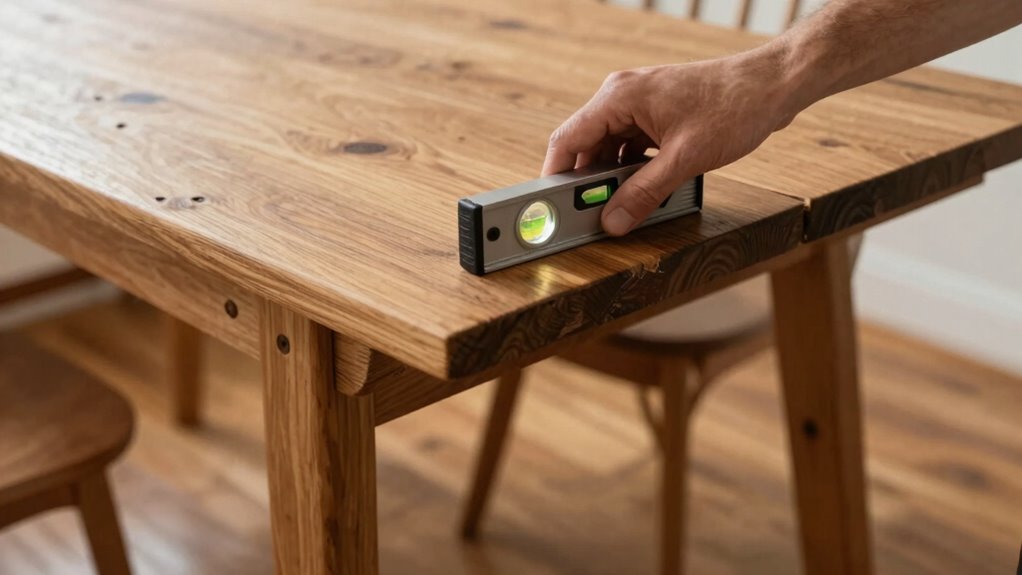
To see if your floor is uneven, grab a level tool and place it across different areas of the floor. Check for bubbles that aren’t centered, which indicate high or low spots. Understanding floor leveling helps you identify where adjustments are needed. Using a level regularly can also assist in maintaining a calm and organized home by preventing furniture wobbling and misalignment. Additionally, recognizing signs of uneven flooring early can save you from more extensive repairs later. Incorporating basic home energy considerations, such as ensuring a level surface, can contribute to overall safety and efficiency in your living space. Being aware of Polynesian symbols for strength can also inspire resilience when tackling home repairs.
Use a Level Tool
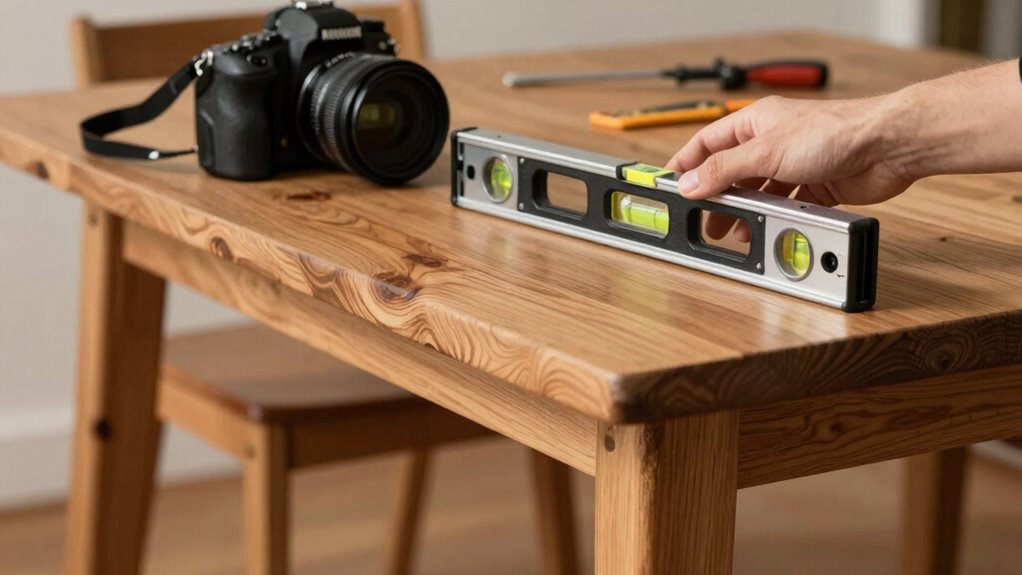
Before adjusting your table, it’s important to determine if your floor is uneven. Using a level tool is the most reliable way to do this. Place the level on different parts of your table’s surface and check the bubble’s alignment. If the bubble isn’t centered, your table isn’t sitting flat. Ensure your level is properly calibrated for accurate results—sometimes, tools need a quick check on a known flat surface before use. When using the level, be sure to hold it steady and avoid tilting it. Record any uneven spots by noting where the bubble shifts. This simple test helps you identify whether the wobble comes from an uneven floor or the table itself, guiding your next steps in table leveling.
Identify High and Low Spots
Wondering if your floor is uneven? To identify high and low spots, examine the grain pattern and wood type. Place a straightedge across the floor and look for gaps or dips. Pay attention to variations in the grain, which can reveal uneven areas. For example, softer woods like pine may show more noticeable dips, while hardwoods like oak are more resistant. Visualize this table:
| High Spot | Even Surface | Low Spot |
|---|---|---|
| Elevated grain pattern | Flat grain pattern | Sunken grain pattern |
| Harder wood areas | Consistent grain | Warped or soft spots |
This helps you see where your floor dips or rises, guiding your repair process. Consistent grain and wood type can make spotting unevenness easier, especially when comparing different sections. Regular inspection and understanding of wood grain patterns can assist in maintaining a level floor over time. Additionally, understanding the properties of different wood types can help you identify areas that are naturally more prone to dips or warping.
As an affiliate, we earn on qualifying purchases.
Are Your Table Legs Loose or Uneven? Here’s How to Tell
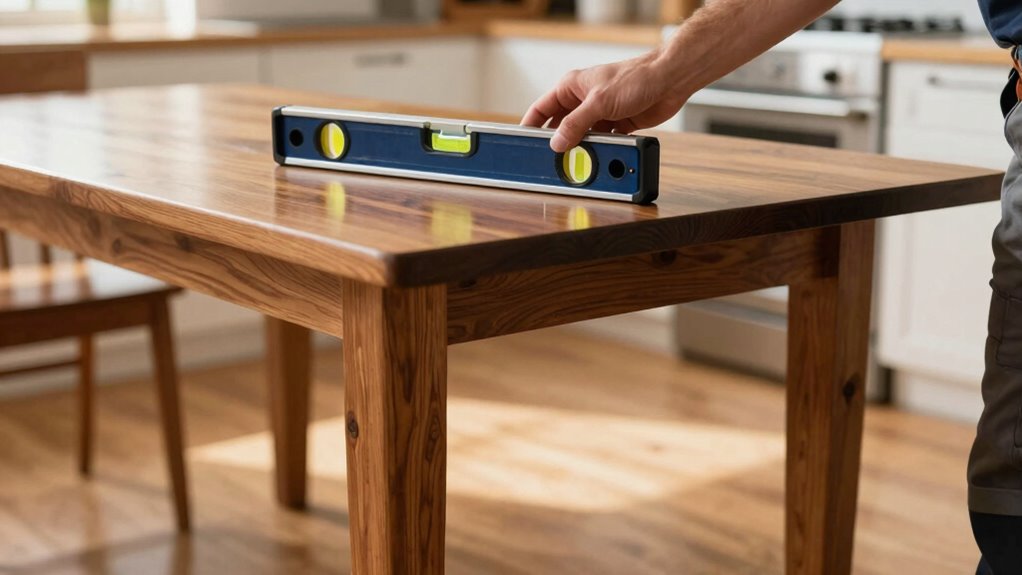
If your table wobbles when you set things down, it’s likely due to loose or uneven legs. To check, gently rock each leg side to side; if it moves, it needs attention. Examine the length of each leg by placing a level across the top and checking for gaps or tilts. Uneven legs compromise furniture stability, causing wobbliness. Look closely at where the legs attach—loose joints or screws can be the culprit. Tighten any loose bolts or screws first, then assess if the wobble persists. If the legs are uneven, you’ll need to determine whether to trim or add shims. Properly furniture stabilization is essential for accurate diagnosis and effective repair. Additionally, understanding how to properly measure and adjust furniture can help prevent future issues, especially when considering different leg lengths. Proper furniture assessment ensures that your repair efforts are targeted and effective. Paying attention to the connection points can also reveal hidden issues that contribute to instability.
As an affiliate, we earn on qualifying purchases.
How to Fix Loose or Uneven Table Legs
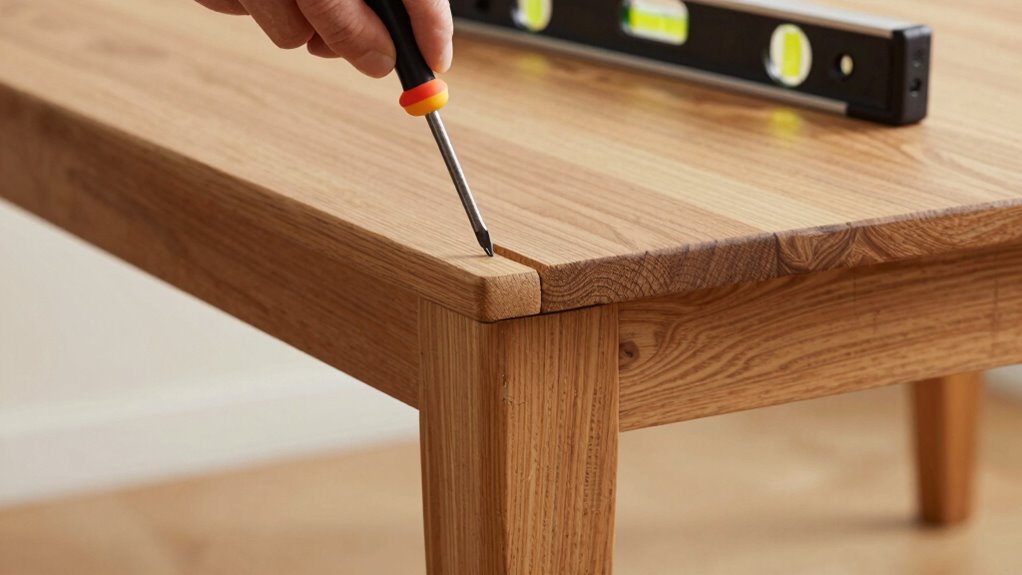
To fix loose or uneven table legs, start by tightening all bolts and screws connecting the legs to the table frame. This is the first step in effective table leg repair and furniture stabilization. If tightening doesn’t solve the wobble, try these methods:
- Add shims or washers under uneven legs to level the table.
- Apply wood glue or epoxy to loose joints, then clamp until dry.
- Replace damaged or broken legs if they can’t be stabilized with other fixes.
- Regularly inspecting and maintaining furniture can help prevent future issues and extend its lifespan through proper care. Ensuring your furniture is stable and secure may involve checking for underlying structural issues, similar to assessing device stability in wellness tech. Being aware of market reputation and customer feedback can also guide your decision to repair or replace furniture components. Additionally, understanding furniture materials can help you choose the best repair methods for different types of wood or composite surfaces. Recognizing natural wear and tear can help you plan for timely repairs before issues worsen.
These simple actions help restore stability and prevent future wobbling. Remember, ensuring all connections are tight and secure is key to a stable, wobble-free table. Proper furniture stabilization keeps your table sturdy and safe for everyday use.
What Tools Can Help Diagnose a Wobbly Table?

Diagnosing a wobbly table begins with identifying the specific cause of instability. To do this effectively, you’ll need some basic tools for table repair and evaluating furniture stability. A carpenter’s level is essential; it helps you check if the table surface is even and if the legs are properly aligned. A tape measure allows you to measure leg lengths quickly and identify unevenness. A straightedge or ruler can help detect warping or twisting of the tabletop. If you’re troubleshooting joint issues, a small hammer or rubber mallet can test tightness without damage. These tools help you pinpoint whether the wobble results from uneven legs, a warped table top, or loose joints, setting the stage for the most effective repair. Additionally, understanding furniture stability can guide you in applying the right fix to ensure long-term sturdiness. Using these diagnostic tools can also reveal underlying issues like material deformation, which may require more specific solutions. Regularly inspecting your furniture with these tools can help maintain its structural integrity over time.
How to Stabilize Your Table on an Uneven Floor
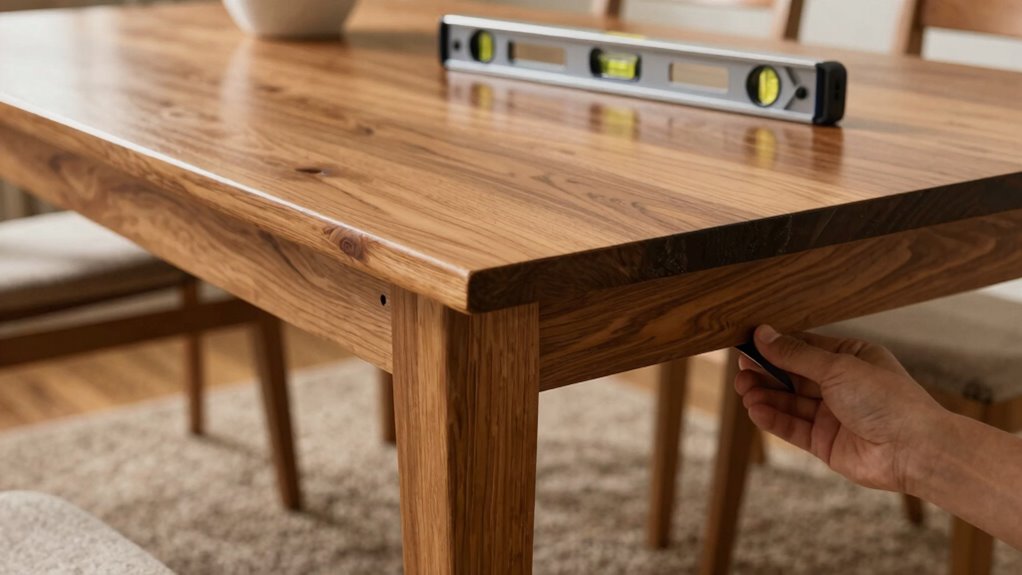
Uneven floors can cause your table to wobble, but you can stabilize it by adjusting its position or adding support. First, check your table’s material and leg design, as these influence your stabilization options. Then, follow these steps:
- Shift the table gently until it feels steady, considering the floor’s unevenness.
- Adjust the length of individual legs if they’re adjustable, ensuring all sit flat on the floor.
- Use furniture pads or slip-on supports under specific legs if some are shorter or uneven due to leg design.
When and How to Use Shims to Fix Wobbly Tables
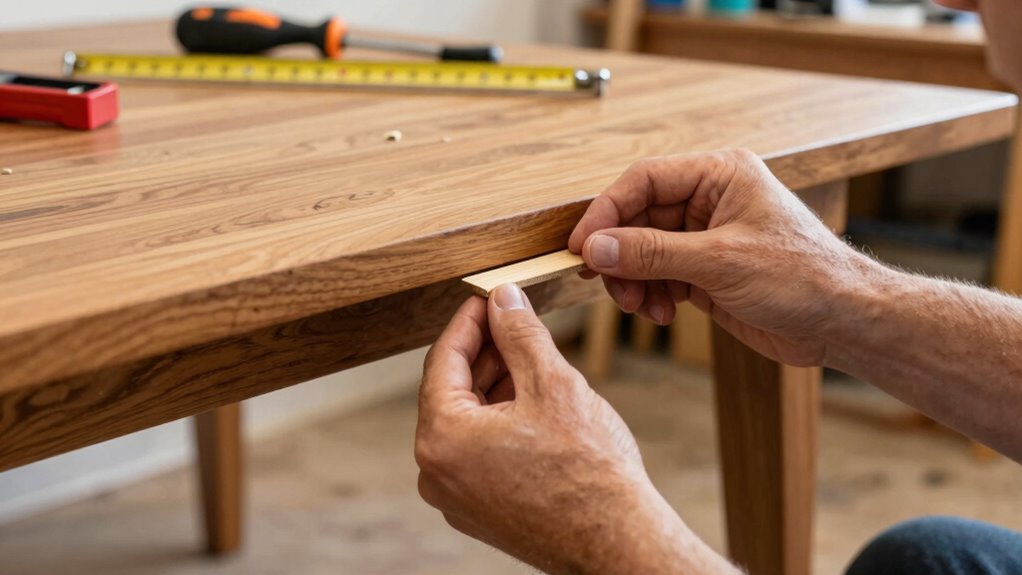
Shims are a simple and effective solution when your table wobbles due to uneven legs or floor surfaces. Wooden shims are ideal for furniture leveling because they are easy to insert and adjust. To use them, identify which leg is shorter or uneven, then slide a shim underneath that leg until the table stabilizes. You can cut shims to fit if needed, ensuring they sit flush and don’t cause instability. For best results, place shims on the outside of the leg or beneath the foot for better support. Regularly check the shims for stability and re-adjust if necessary. Using wooden shims is a quick, affordable way to fix wobbliness without dismantling your table or requiring extensive tools.
Quick Tips for Preventing Future Wobbling

To prevent your table from wobbling in the future, it’s important to maintain its stability proactively. First, regularly check and perform table leg adjustments to ensure all legs are even. Second, attach furniture pads to the bottom of each leg to absorb unevenness and protect your flooring. Third, tighten any loose screws or bolts to keep the legs securely in place. These small steps help prevent wobbling before it starts. Keep an eye on the table’s stability and make adjustments as needed. Using furniture pads not only stabilizes the table but also reduces noise and floor damage. Consistent maintenance of these simple tips will keep your table steady, saving you time and effort in the long run.
When to Call a Professional or Consider Replacing

Sometimes, despite your best efforts to stabilize a wobbly table, the problem persists or worsens over time. If you’ve tried adjusting the furniture stability and floor leveling without success, it’s time to contemplate professional help or replacement. Structural damage or uneven furniture legs may require expert assessment.
Here’s a quick guide:
| Situation | Recommended Action |
|---|---|
| Persistent wobbling after adjustments | Call a furniture repair specialist |
| Significant structural damage | Ponder replacing the table |
| Uneven flooring | Hire a flooring professional for leveling |
| High-quality, sentimental piece | Opt for professional repair |
If the issue stems from uneven floors or structural flaws, DIY fixes won’t suffice. Knowing when to escalate ensures safety and long-term stability.
Final Checklist: How to Fix Your Wobbly Table Once and For All
Before concluding your efforts, double-check that you’ve addressed all common causes of wobbliness. First, make precise table leg adjustments by tightening or leveling any uneven legs. Next, inspect the surface for scratches or rough spots; applying surface polishing can restore stability and smoothness. Ultimately, verify that all bolts and screws are secure, tightening any loose joints. If the table still wobbles, re-examine the legs and surface carefully. Consistent surface polishing not only improves appearance but also helps identify hidden issues. Properly aligning the legs and ensuring a smooth, even surface will give you a sturdy, wobble-free table. Following this final checklist guarantees a lasting fix and saves you from future wobbling frustrations.
Frequently Asked Questions
Can a Wobbly Table Cause Damage Over Time?
A wobbly table can cause damage over time by stressing joints and weakening furniture stability. If you ignore it, the instability may lead to further loosening or cracks, potentially damaging the table or nearby surfaces. Regular table maintenance helps prevent these issues, ensuring your furniture stays sturdy. Addressing wobbliness early keeps your table safe, prolongs its lifespan, and maintains the overall stability of your furniture.
Are There Specific Table Materials That Wobble More Often?
A stitch in time saves nine, so knowing your table material helps prevent issues. You’ll find that lighter, less sturdy materials like particleboard or MDF tend to wobble more often because they lack the durability of solid wood or metal. These materials have higher wobble frequency, especially if not properly supported. To avoid future instability, choose durable materials and ensure proper assembly, because a wobbling table can cause more trouble over time.
How Often Should I Check My Table for Stability?
You should perform regular stability checks on your table at least once every few months, especially if it’s heavily used or shows signs of wobbling. Incorporate table maintenance into your routine to catch issues early. When checking, make certain all legs are even and secure. Frequent stability checks help prevent further damage, prolong the table’s life, and keep it safe for everyday use.
Is It Safe to Fix a Wobbly Table Myself?
Yes, you can safely fix a wobbly table yourself by doing a DIY repair, but make sure to follow safety precautions. Turn off any power tools, wear protective gear, and work on a stable surface. Carefully assess the problem, tighten loose screws or bolts, and use appropriate tools. If the issue seems complex or involves structural damage, consider consulting a professional to guarantee safety and a lasting fix.
What Are Professional Options if DIY Fixes Fail?
If DIY fixes fail, you should consider professional repair services for furniture stabilization. A trained furniture repair specialist can assess the wobble, identify underlying issues, and apply advanced techniques to stabilize your table effectively. They can reinforce joints, replace damaged parts, or use specialized tools to guarantee your table is sturdy and safe. Investing in professional furniture stabilization guarantees a longer-lasting fix and peace of mind.
Conclusion
A wobbly table can be a common annoyance—did you know that over 60% of household furniture issues are caused by uneven floors or loose legs? By following these simple tests and fixes, you can restore stability quickly. Regularly checking your table’s legs and floor level can prevent future wobbling. With just a few tools and some quick adjustments, you’ll enjoy a steady, wobble-free surface—no professional needed!
Fall Picks
fall essentials
As an affiliate, we earn on qualifying purchases.