Understanding MERV and HEPA filters helps you choose the right air filtration for your woodshop. MERV ratings cover filters from 1 to 16, capturing dust and larger particles effectively, while HEPA filters trap at least 99.97% of tiny particles like mold spores and fumes. MERV filters are great for controlling sawdust and wood chips, whereas HEPA filters excel at capturing finer airborne contaminants. Keep going to discover how to select the best filter for your workspace needs.
Key Takeaways
- MERV ratings measure a filter’s ability to trap larger particles; higher MERV means better filtration of dust and pollen.
- HEPA filters capture at least 99.97% of tiny particles, including fine dust, mold spores, and airborne contaminants.
- MERV filters are suitable for capturing sawdust and wood chips, while HEPA filters excel at trapping fine dust and fumes.
- HEPA filters are more expensive and require regular maintenance, but offer superior air purification for sensitive environments.
- Choosing the right filter depends on your shop’s needs, balancing filtration efficiency, airflow, and maintenance costs.
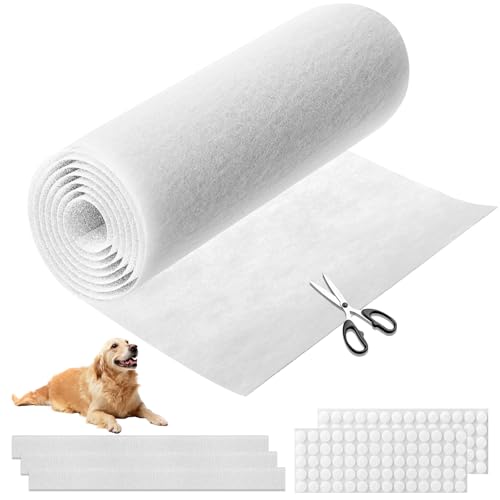
Demiwise MERV 13 Air Filter Material -23 Ft² Cut to Fit Air Filter Media for Home HVAC, Furnace, AC & Purifier -Filters Dust and Pet Dander as Small as 0.3 Microns-Easy DIY with Hook Tape
Advanced MERV 13 Filtration:This MERV 13 filter material captures to 95% of particles as small as 0.3 microns—like…
As an affiliate, we earn on qualifying purchases.
As an affiliate, we earn on qualifying purchases.
What Are MERV and HEPA Filters? An Overview of Air Filtration Ratings
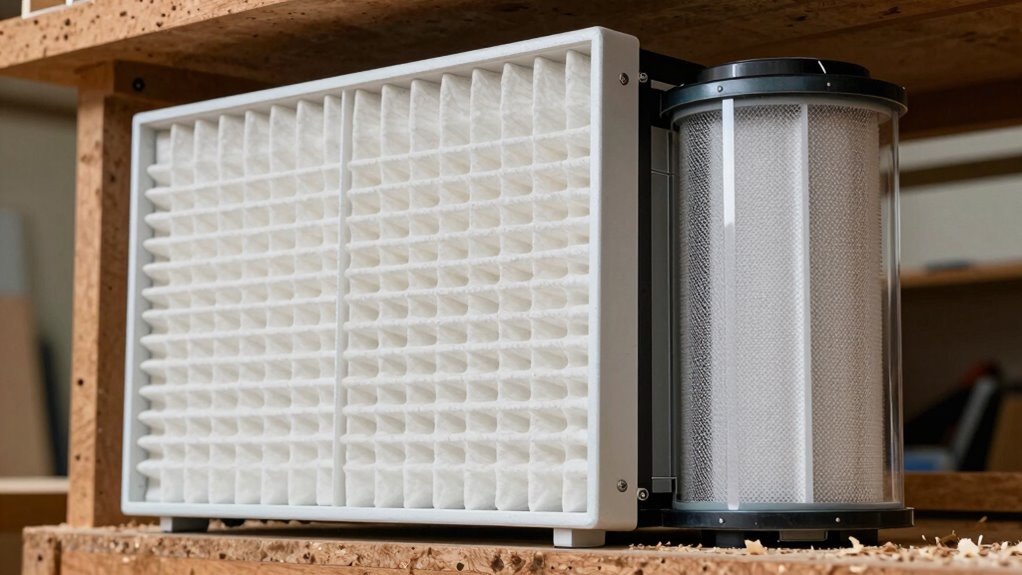
Have you ever wondered how air filters are rated for their effectiveness? It all comes down to filter technology and how well they improve air quality. MERV (Minimum Efficiency Reporting Value) ratings measure a filter’s ability to capture particles like dust, pollen, and pet dander, with higher numbers indicating better filtration. HEPA (High-Efficiency Particulate Air) filters take it a step further by capturing at least 99.97% of particles as small as 0.3 microns, making them ideal for environments requiring superior air quality. These ratings help you choose the right filter based on your needs, whether for general air cleaning or specialized applications. Understanding the basics of MERV and HEPA filters clarifies how different filter technologies impact indoor air quality and overall health. High-performance filtration plays a critical role in achieving cleaner indoor environments, especially in controlled indoor settings.
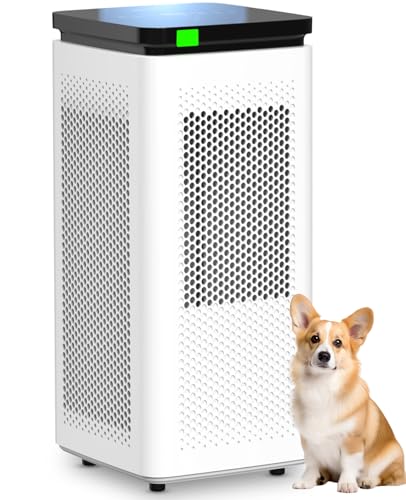
Air Purifiers for Home Large Rooms up to 3500 Ft², H13 True HEPA 0.1 Micron 99.97% Filtration with Carbon Filter, 235 CFM CADR, Removes Allergens, Pet Odor, Smoke, VOCs, 30dB Sleep Mode, PM2.5 Display
H13 True HEPA + Carbon Filter – Removes Allergens, Odors & Smoke: Equipped with H13 True HEPA (0.1μm,…
As an affiliate, we earn on qualifying purchases.
As an affiliate, we earn on qualifying purchases.
How Do MERV Ratings Work and What Do They Mean?
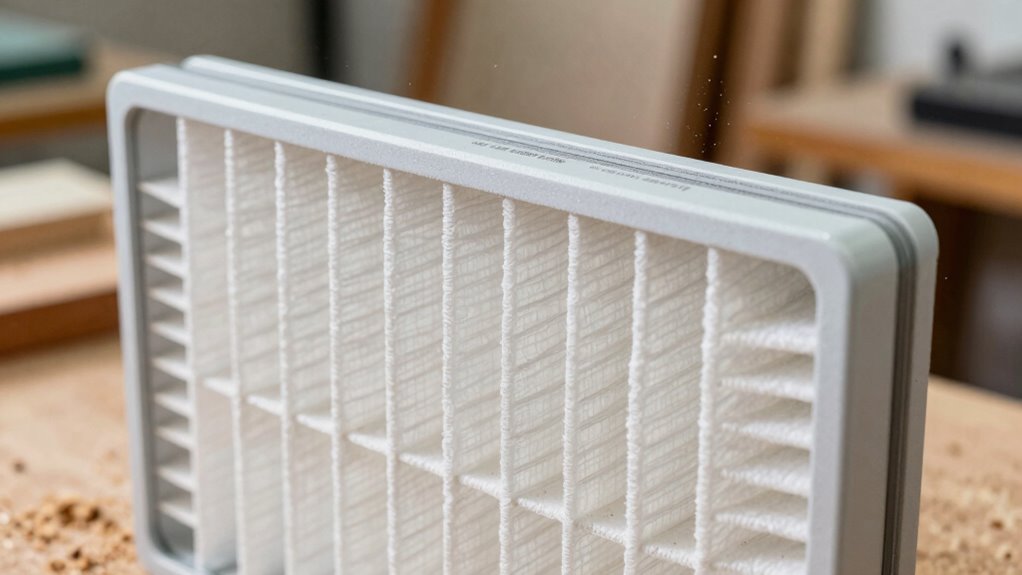
MERV ratings work by quantifying a filter’s ability to capture airborne particles across different size ranges. The higher the MERV rating, the more effective the filter is at removing smaller particles, which directly impacts your indoor air quality. For example, a filter with a MERV rating of 8 captures larger particles like dust and pollen, while ratings of 13 or higher trap microscopic particles such as bacteria and smoke. Understanding these ratings helps you choose the right filter for your woodshop needs. Keep in mind, a higher MERV rating can also mean a shorter filter lifespan because it traps more debris. Regularly replacing or maintaining your filter guarantees excellent air quality and keeps your filtration system working efficiently. Additionally, some filters are designed to meet industry standards for specific environments, ensuring optimal performance and safety. Selecting the correct filter rating is essential for balancing filtration efficiency with system airflow requirements. Being aware of filter efficiency can help you make more informed decisions about your air filtration options. Proper knowledge about air filtration can also assist in reducing health risks associated with airborne contaminants.
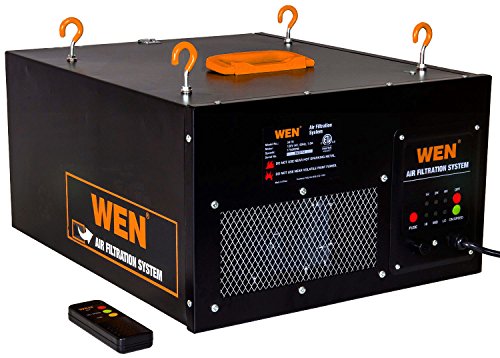
WEN 3410 3-Speed Remote-Controlled Air Filtration System (300/350/400 CFM), Basic w/ RF Remote (400 CFM) , Black
Includes a 1-micron filter and a 5-micron pre-filter, both of which can be easily replaced
As an affiliate, we earn on qualifying purchases.
As an affiliate, we earn on qualifying purchases.
Understanding HEPA Filters and Their Use in Woodshops
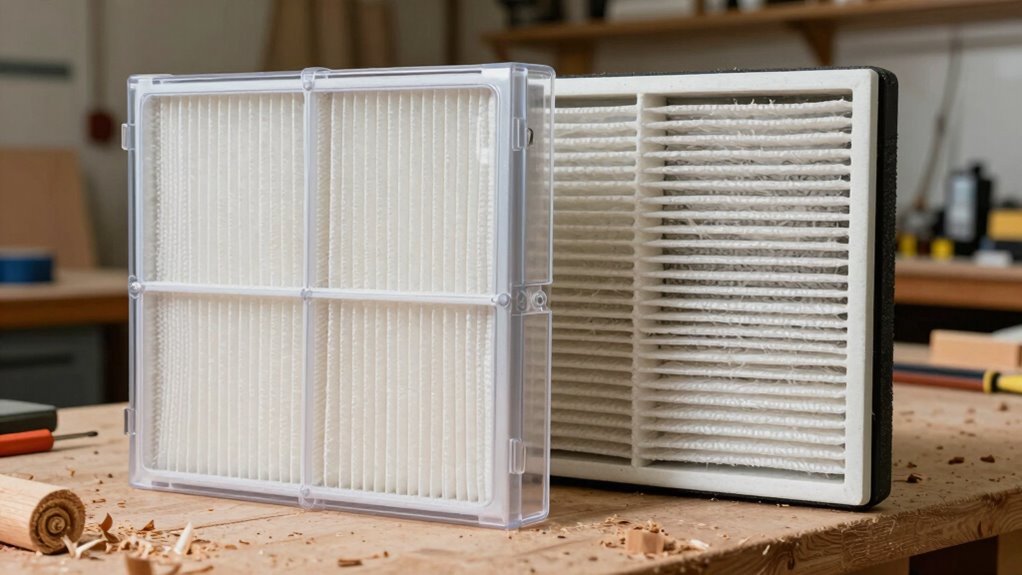
HEPA filters are highly effective at capturing tiny particles, making them ideal for woodshops with dust and airborne contaminants. Understanding their efficiency, air purification capacity, and maintenance needs helps you choose the right system. Ensuring safety and proper upkeep keeps your workspace healthy and your equipment functioning properly. Incorporating essential oils with antimicrobial properties can further improve air quality and create a more pleasant environment. Additionally, selecting filters that meet industry standards ensures optimal performance and safety in your woodworking space. Recognizing the importance of filter ratings helps you assess the effectiveness of different filtration options and maintain a safe, clean environment. Regular monitoring of air quality levels can help you determine when to replace filters and maintain optimal filtration performance. Being aware of filter lifespan also assists in planning replacements to prevent decline in filtration efficiency.
HEPA Filter Efficiency
Understanding how HEPA filters work is essential for guaranteeing your woodshop air remains safe and clean. HEPA filters are highly efficient, capturing at least 99.97% of particles as small as 0.3 microns. This level of dust control considerably improves air quality by removing fine dust, mold spores, and allergens that can linger in your workspace. Their efficiency makes them ideal for maintaining a healthier environment, especially when working with materials that produce fine dust particles. HEPA filters excel at trapping microscopic contaminants that traditional filters might miss. By investing in a high-efficiency HEPA filter, you guarantee your air remains cleaner, reducing health risks associated with airborne dust and improving overall air quality in your woodshop. Filter efficiency is a key factor in selecting the right air filtration system for your workspace. Additionally, HEPA filters are particularly well-suited for environments requiring beyond standard filtration, ensuring even the smallest particles are effectively removed. Incorporating a HEPA filtration system can significantly enhance your workspace’s safety and air quality. Furthermore, choosing a HEPA filter with certified filter performance can ensure maximum effectiveness in dust removal. Understanding the particle size that HEPA filters target helps you assess their suitability for your specific needs.
Air Purification Capacity
Since HEPA filters are designed to capture tiny airborne particles, their ability to purify air effectively depends on their capacity to process large volumes of air quickly. In a woodshop, this means the filter can improve air quality by removing dust, allergens, and other fine particles efficiently. The higher the air purification capacity, the faster your space clears of airborne contaminants, helping you breathe easier and maintain a cleaner environment. Additionally, air filtration capacity directly impacts the overall efficiency and effectiveness of your air purification system. Understanding filter performance is essential for selecting the right HEPA filter that balances capacity with durability. Moreover, lease negotiations can sometimes include considerations for equipment like air filtration systems, which can be beneficial for maintaining air quality standards. This capacity also influences filter lifespan; filters working continuously at high volume may need replacement sooner. Choosing a HEPA filter with a suitable air purification capacity ensures your shop stays safer and cleaner without frequent maintenance, and considering proper maintenance routines can further enhance the longevity and performance of your air purification setup.
Safety and Maintenance
Maintaining proper safety and care when using HEPA filters in your woodshop is crucial to guarantee effective air purification and protect your health. Regularly inspect and replace filters as recommended to ensure peak performance and maximize their lifespan. A clean HEPA filter helps sustain high air quality by efficiently capturing dust, allergens, and other particles. Always handle filters with care to avoid releasing trapped contaminants into the air. Keep your ventilation system well-maintained, and don’t forget to check for any signs of damage or clogging. Proper maintenance not only extends the filter’s lifespan but also ensures it continues to improve air quality. Additionally, understanding filter ratings can help you select the most effective filter for your specific needs. Recognizing the difference between MERV and HEPA ratings allows you to choose a filter that provides optimal filtration for your woodworking environment. By following these safety and care practices, you maintain a healthier workspace and prevent potential respiratory issues caused by poor air quality.

Filtrete 16x25x1 AC Furnace Air Filter, MERV 13, MPR 1900, Premium Allergen, Bacteria&Virus Filter, 3-Month Pleated 1-Inch Electrostatic Air Cleaning Filter, 2-Pack (Actual Size 15.719×24.72×0.78 in)
MAKE YOUR HOME YOUR SANCTUARY: 2-pack of 3-month pleated 1” Filtrete 16x25x1 MPR 1900 AC Furnace Air Filter…
As an affiliate, we earn on qualifying purchases.
As an affiliate, we earn on qualifying purchases.
MERV vs. HEPA: Which Air Filter Is Best for Your Woodshop?
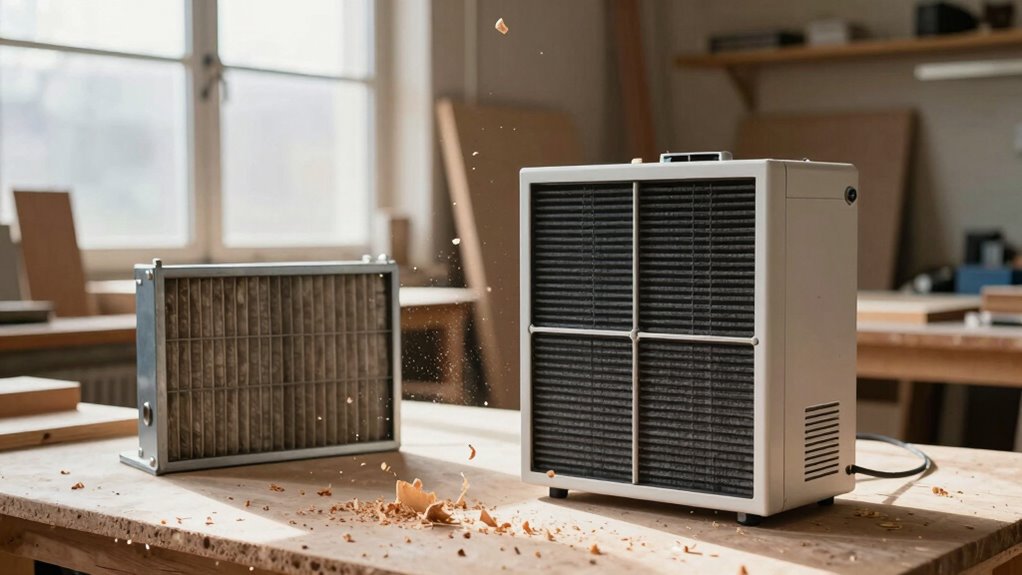
When choosing between MERV and HEPA filters, you need to consider their efficiency levels, costs, and maintenance needs. MERV filters often cost less and are easier to maintain, but HEPA filters provide higher filtration performance. Think about your woodshop’s specific needs to evaluate which filter type offers the best balance of effectiveness and practicality.
Filtration Efficiency Levels
Are you unsure which air filter offers the best protection for your woodshop? Filtration efficiency levels determine how well a filter captures airborne particles, directly impacting your air quality standards. MERV filters are rated from 1 to 16, with higher ratings capturing smaller particles like dust and pollen more effectively. HEPA filters excel at removing at least 99.97% of particles as small as 0.3 microns, making them ideal for fine dust and airborne contaminants. The filtration materials used in HEPA filters are dense and tightly woven fibers, ensuring maximum efficiency. While MERV filters provide good filtration for general dust, HEPA filters deliver superior air cleaning for fine particles, helping you maintain a safer, cleaner woodshop environment.
Cost and Maintenance Factors
Choosing the right air filter for your woodshop involves considering not just filtration performance but also the costs and ongoing maintenance. A clear cost comparison shows that MERV filters are generally more affordable upfront and have lower replacement expenses, making them budget-friendly for many workshops. HEPA filters tend to be more expensive initially and require more frequent replacements due to their dense filtering material. Maintenance requirements also differ: MERV filters are easier to change and often last longer between replacements, while HEPA filters may need more careful handling and regular attention to avoid clogging. Ultimately, balancing initial costs with ongoing maintenance needs helps you select an air filter that fits your budget and keeps your workspace clean and safe.
Suitable Applications in Woodshops
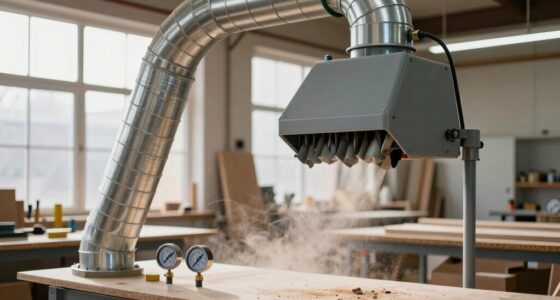
Selecting the right air filter for your woodshop depends on the specific tasks you perform and the level of air quality you need. For effective dust collection during woodworking, MERV filters are ideal for capturing larger particles like sawdust and wood chips, improving indoor air quality without restricting airflow. HEPA filters excel at trapping fine particles such as smoke, mold spores, and airborne allergens, making them suitable if you’re concerned about airborne contaminants or working with finishes that release fumes. If your focus is on maintaining a clean, dust-free environment for general woodworking, a high-rated MERV filter often suffices. However, for projects requiring the highest air purity, especially when working with sensitive finishes or respiratory concerns, incorporating a HEPA filter into your dust collection system is a smart choice.
How to Choose the Right Air Filter for Your Woodshop Needs
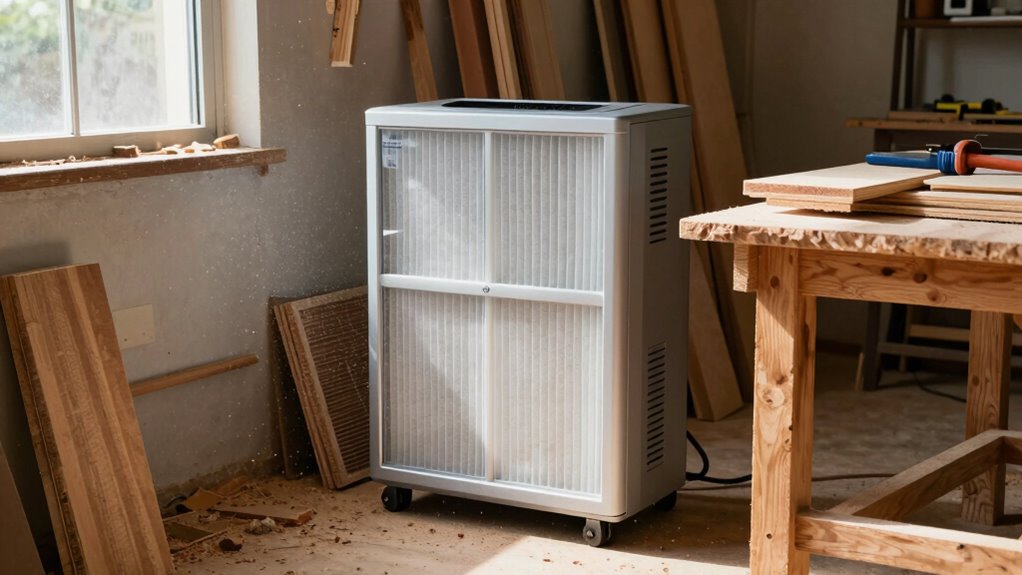
When setting up your woodshop, picking the right air filter is essential to maintain a clean and safe environment. Focus on improving air quality by selecting a filter that effectively captures dust, fumes, and other airborne particles. Consider the filter’s durability—choosing one that withstands frequent use and the harsh conditions of woodworking ensures consistent performance over time. Look at the MERV rating to gauge filtration efficiency; higher ratings mean better particle removal. Balance your needs with your budget, and think about the size and airflow capacity to match your shop’s volume. Regular maintenance, like replacing filters when dirty, keeps air quality high and prolongs filter lifespan. This careful selection process helps you create a healthier, more efficient workspace.
Common Mistakes to Avoid When Picking Air Filtration Systems
One common mistake is focusing solely on the filter’s price without considering its actual performance. Cheaper filters may seem like a good deal initially, but they often have a shorter filter lifespan and don’t effectively improve air quality. This can lead to more frequent replacements and increased long-term costs. When selecting an air filtration system, prioritize filters that balance cost with performance. High-quality filters can better trap airborne particles, ensuring cleaner air in your shop. Ignoring filter lifespan can also cause you to replace filters too often, disrupting workflow and increasing expenses. Ultimately, choosing a filter based only on price can compromise air quality and lead to higher costs over time. Focus on performance and durability to ensure your filtration system works efficiently.
Tips to Maintain and Maximize Your Air Filter’s Effectiveness

Proper maintenance is key to ensuring your air filter performs at its best and lasts longer. Regularly checking and replacing your filter keeps the air quality high and extends its lifespan. To maximize effectiveness, consider these tips:
Routine checks and timely replacements keep your air filter efficient and long-lasting.
- Replace filters according to manufacturer recommendations.
- Clean reusable filters regularly to prevent dust buildup.
- Keep your workspace well-ventilated to reduce strain on the filter.
- Monitor air quality and adjust filter type or replacement schedule as needed.
Frequently Asked Questions
Can MERV Filters Remove Airborne Bacteria and Viruses Effectively?
MERV filters can remove some airborne bacteria and viruses, but their effectiveness for bacteria removal and virus filtration isn’t as high as HEPA filters. MERV ratings of 13-16 can trap larger bacteria and some viruses, but smaller particles might pass through. For better protection in your woodshop, especially against airborne pathogens, consider using HEPA filters, which are designed specifically for high-efficiency bacteria removal and virus filtration.
Are HEPA Filters Suitable for Large Woodshop Operations?
You’ll find HEPA filters are highly effective for large woodshop operations, meeting strict air quality standards by trapping tiny particles, bacteria, and viruses. They improve air quality considerably, making your workspace safer. Just keep in mind, proper filter maintenance is essential to guarantee peak performance. Regularly checking and replacing filters prevents airflow issues, so your HEPA system continues to protect you and maintain a healthy environment.
How Often Should Air Filters Be Replaced or Cleaned in a Woodshop?
You should replace or clean your air filters every 1 to 3 months, depending on your shop’s usage and dust levels. Keeping a regular maintenance schedule helps maintain ideal filter lifespan and air quality. Check filters frequently for dirt buildup, and follow manufacturer recommendations for replacement intervals. Proper maintenance ensures your filtration system works efficiently, protecting your health and preserving filter performance over time.
Do MERV and HEPA Filters Impact Airflow and Ventilation in Workshops?
Did you know that improper filter selection can reduce airflow by up to 50%? MERV and HEPA filters considerably impact airflow and ventilation in your workshop. Higher-rated filters improve air quality but may hinder airflow if not chosen carefully. To optimize airflow and guarantee proper ventilation, incorporate strategic ventilation strategies alongside your filters. Balancing filtration efficiency with airflow is key to creating a safe, healthy, and productive workspace.
What Are the Cost Differences Between MERV and HEPA Filters?
You’ll find that MERV filters are generally less expensive upfront and have a longer filter lifespan, which keeps maintenance costs lower over time. HEPA filters, on the other hand, cost more initially and tend to need more frequent replacement due to their higher filtration efficiency. While HEPA filters are more effective at capturing tiny particles, your budget and maintenance capacity will influence which filter type suits your workshop best.
Conclusion
Choosing the right air filter is like finding the perfect pair of glasses—you want clarity without unnecessary fog. Whether you opt for a MERV or HEPA filter, understanding their differences helps you see your woodworking space more clearly and breathe easier. Regular maintenance is the lens cleaning that keeps everything sharp. Invest wisely, and you’ll create a safer, cleaner shop where your craft can truly shine without the haze of airborne dust.