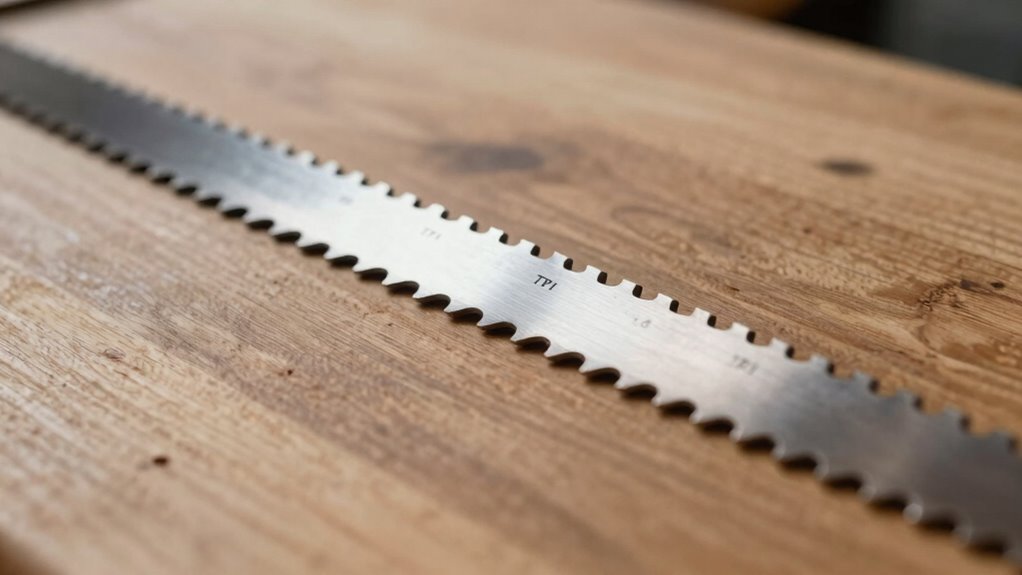

Choosing the right bandsaw blade depends on matching the blade width and TPI to your project needs. Wider blades offer stability for straight cuts, while narrower ones excel at curves. Higher TPI blades give smoother finishes but cut slower, whereas lower TPI blades are faster but rougher. Material type also influences your choice, with different blades designed for durability or fine cut quality. To get the best results and extend blade life, understanding these factors is essential—you’ll find valuable tips if you keep exploring.
Key Takeaways
- Blade width affects stability, flexibility for curves, and heat dissipation, influencing cut quality and blade longevity.
- TPI determines cut speed and finish, with higher TPI providing smoother surfaces and lower TPI enabling faster, rougher cuts.
- Matching blade width and TPI to the material and project requirements optimizes performance and reduces wear.
- Proper selection of blade parameters minimizes blade wandering, binding, and premature wear for consistent results.
- Regular maintenance and correct tension enhance the effectiveness of chosen blade width and TPI, extending blade life.

POWERTEC 93-1/2 Inch Bandsaw Blades Assortment for Woodworking, Band Saw Blades for Delta, Grizzly, Rikon, Sears Craftsman, Jet, Shop Fox and Rockwell 14" Band Saw, 3PK (13603)
SET INCLUDES: (1) 93-1/2-Inch by 1/2-Inch by 6TPI Wood Bandsaw Blade, (1) 93-1/2-Inch by 1/8-Inch by 14-TPI Scroll…
As an affiliate, we earn on qualifying purchases.
As an affiliate, we earn on qualifying purchases.
What Factors Matter Most When Choosing a Bandsaw Blade
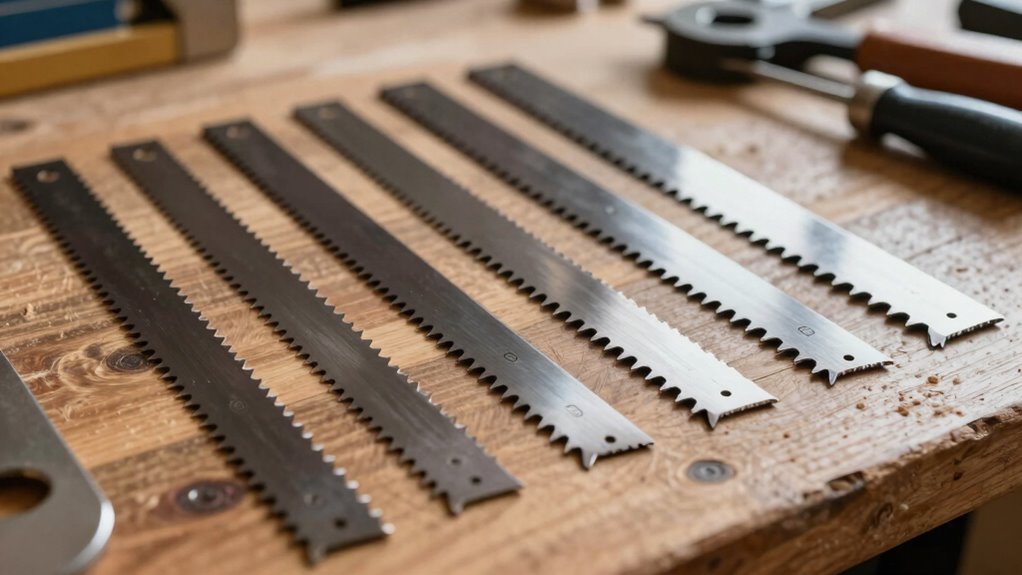
When choosing a bandsaw blade, understanding the key factors that impact performance is essential. Blade tension plays a vital role; if it’s too loose, the blade may wander or break, while too tight can cause premature wear. You need to adjust tension properly for smooth, accurate cuts. The cutting angle, or the tilt of the blade’s teeth, also matters. It determines how efficiently the blade slices through material and influences the quality of your cut. A proper cutting angle reduces strain on the blade and motor, ensuring longevity and better results. Keep in mind that both blade tension and cutting angle work together to optimize your cutting performance, making it easier to handle different materials and achieve precise, clean cuts every time. Additionally, selecting the right blade width and TPI (teeth per inch) can significantly affect the cut quality and efficiency for your specific projects. Understanding the material properties helps in choosing the most suitable blade for your tasks. Moreover, being aware of blade design features can further improve your cutting experience and results. Paying attention to cutting speed is also crucial, as it influences both the quality of the cut and the lifespan of the blade. Incorporating knowledge about cutting techniques can further enhance your overall results and efficiency.

Dark Stone Band Saw Blade, 62" x 3/8" x 14 TPI, High Carbon Steel, Fine-Cut Blade for 9" Band Saws, Smooth & Controlled Woodworking, Model DS23238
1️⃣EFits 9" Band Saws Using 62" Blades Designed for 9-inch band saws and other 2-wheel band saws that…
As an affiliate, we earn on qualifying purchases.
As an affiliate, we earn on qualifying purchases.
How Blade Width Affects Cuts in Wood and Metal
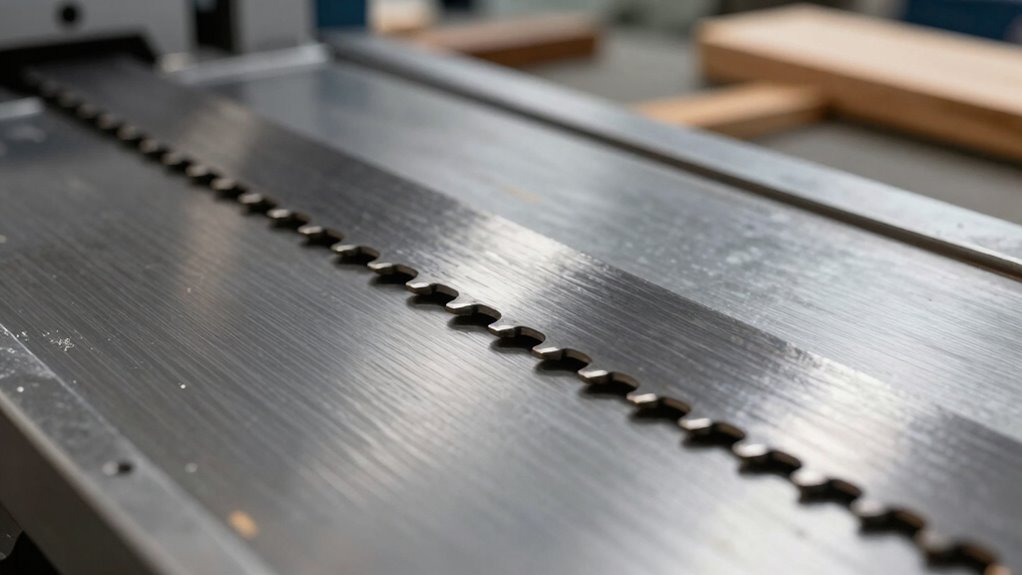
Have you ever wondered how blade width influences the quality and precision of your cuts? Wider blades provide more stability, reducing blade deflection and offering cleaner, straighter cuts in both wood and metal. Narrower blades excel at making tight curves, but may require more blade tension to prevent wandering. Blade width impacts cutting heat; wider blades distribute heat better and resist overheating, while narrower blades can generate more heat, risking warping or dulling faster. When choosing, consider:
- Stability for straight cuts
- Flexibility for curves
- Blade tension requirements
- Heat dissipation
- Material hardness
Adjusting blade tension appropriately is pivotal, especially with narrower blades, to maintain cut quality and prevent premature dulling. The blade width directly influences cut precision, heat management, and overall efficiency in your projects. Proper understanding of cutting mechanics can help optimize your blade selection for improved results, especially when considering saw blade design and its impact on performance. Additionally, understanding blade durability can help in selecting the most suitable blades for extensive use and longevity. Being aware of safety considerations related to blade selection and operation is crucial for safe and effective use of your saws.

FOXBC 64-1/2" x 1/2" x 0.02" x 24 TPI Metal Bandsaw Blade Cutting for Harbor Freight, Wen 3970, Jet Band Saw – 2 Pack
64-1/2" X 1/2" X 0.02" X 24 TPI Bi-Metal M42 Bandsaw Blade – 2 Pack
As an affiliate, we earn on qualifying purchases.
As an affiliate, we earn on qualifying purchases.
How TPI Influences Cut Quality and Speed
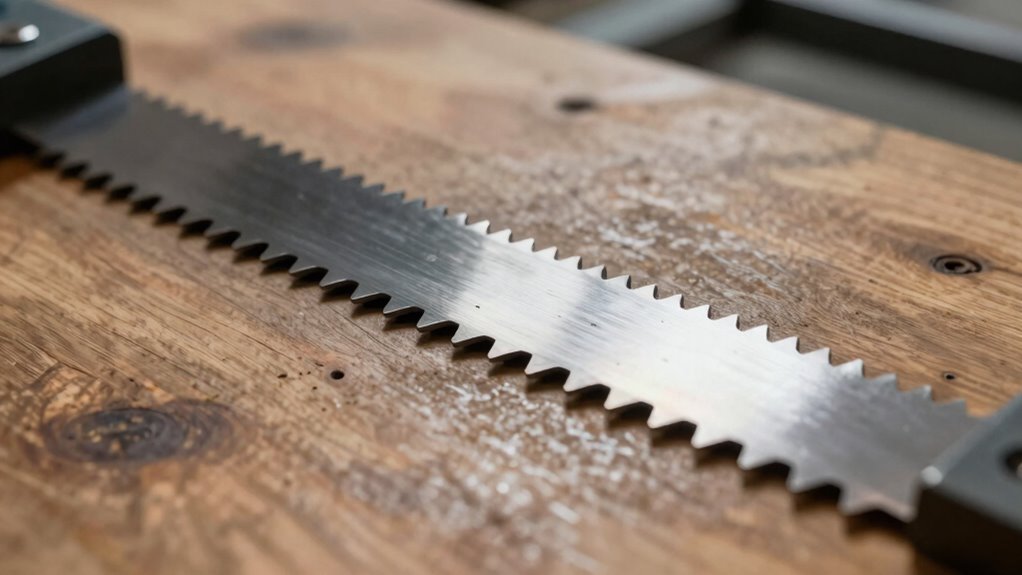
Your choice of TPI directly impacts how fast you can cut and the smoothness of the finish. Higher TPI blades cut more slowly but leave a finer surface, while lower TPI blades move faster but may roughen the edge. Understanding this balance helps you pick the right blade for your project’s precision and efficiency. Blade selection can also be influenced by the type of material you are working with, ensuring optimal results. Additionally, considering the contrast ratio of your tools can improve overall performance and accuracy during cutting.
TPI and Cutting Speed
The number of teeth per inch (TPI) on a bandsaw blade directly affects both the quality of your cut and the cutting speed. A higher TPI provides smoother cuts but requires more effort, slowing you down. Conversely, a lower TPI increases cutting speed but may produce rougher edges. To optimize performance:
- Maintain proper blade tension for efficient cutting
- Expect more cutting noise with lower TPI blades at high speeds
- Use higher TPI blades for delicate or detailed work
- Choose lower TPI blades for rough cuts or thicker stock
- Be mindful that too tight blade tension can reduce cutting speed and cause vibrations
- Detecting passive voice can help improve clarity and engagement in your writing.
Balancing TPI with blade tension guarantees smooth operation, reduces cutting noise, and maximizes cutting speed without sacrificing quality.
Blade Flexibility and Finish
TPI considerably influences a bandsaw blade’s flexibility and the quality of your cut finish. Higher TPI blades tend to be less flexible, which can limit your ability to cut curves smoothly but often produce a finer finish. Conversely, lower TPI blades are more flexible, allowing easier handling of complex shapes with a rougher finish. The balance between blade flexibility and finish quality depends on your project needs. Use the table below to understand how TPI impacts these factors:
| TPI Range | Flexibility | Finish Quality |
|---|---|---|
| 3-6 TPI | Very flexible | Coarse, quick cuts |
| 8-14 TPI | Moderately flexible | Medium finish, moderate speed |
| 18+ TPI | Less flexible | Fine, smooth finish |

Imachinist S933414 M42 93" X 3/4" X 10/14tpi Bi-Metal Metal Cutting Band Saw Blades
Bi-metal type, M42 grade, 93" long, 3/4" wide, 0.035" thick, 10-14 TPI
As an affiliate, we earn on qualifying purchases.
As an affiliate, we earn on qualifying purchases.
Which Blade Materials Are Best for Durability and Finish
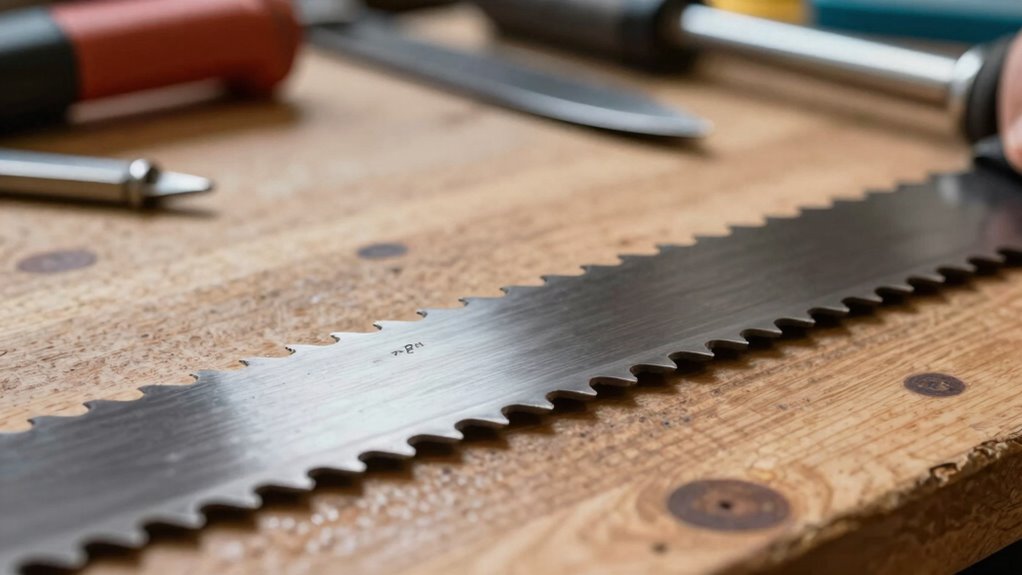
Selecting the right blade material is essential for balancing durability and achieving a smooth finish. Your choice impacts how well the blade withstands wear and the quality of your cut. Among blade materials, high-speed steel (HSS) offers excellent durability and sharpness. Carbide-tipped blades excel in durability comparison, lasting longer and cutting tougher materials. Bi-metal blades combine flexibility with strength, providing a good balance for various projects. Carbon steel blades are affordable but wear quickly, suitable for softer woods. Tungsten carbide blades deliver superior durability but come at a higher price. Consider your project type and budget to choose the best material for durability and finish quality.
- High-speed steel (HSS) for sharpness
- Carbide-tipped blades for longevity
- Bi-metal blades for versatility
- Carbon steel for soft woods
- Tungsten carbide for tough materials
How to Match Blade Width and TPI to Your Project Needs
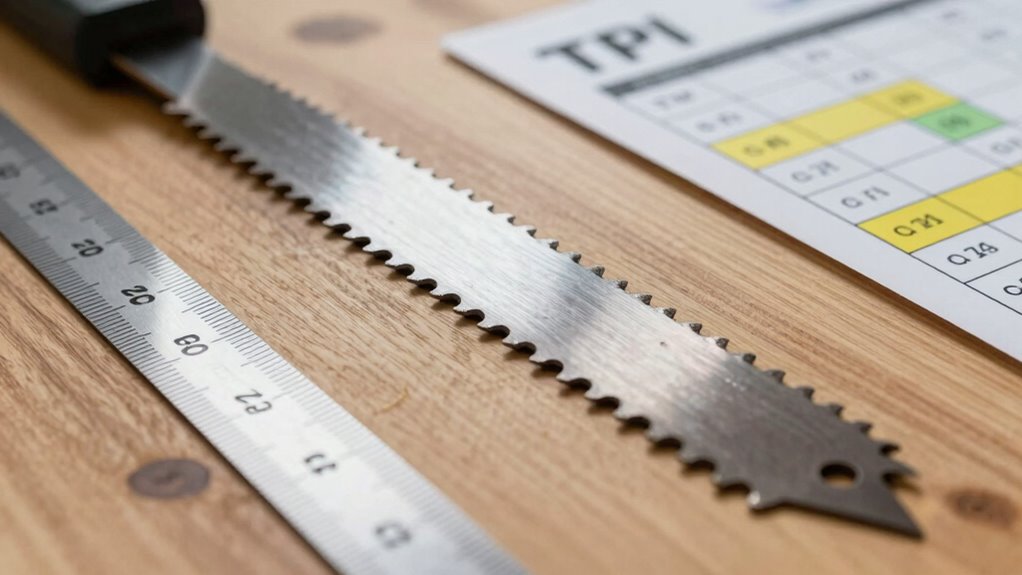
Choosing the right blade width and TPI is key to getting the best cut for your project. You’ll want to match the blade width to the material to guarantee stability and accuracy, while selecting the appropriate TPI affects cut quality and speed. Finding the right balance helps you achieve both precision and efficiency without sacrificing one for the other. Additionally, understanding blade characteristics can help optimize your cutting performance for different materials and applications.
Matching Blade Width to Material
Matching the width of your bandsaw blade to the material you’re cutting is essential for achieving clean, accurate cuts. A wider blade provides stability for straight cuts on thick or dense materials, while a narrower blade offers better maneuverability for curves and intricate work. When selecting blade width, consider the following:
- Use wider blades for thicker, tougher materials.
- Narrower blades excel on intricate curves and tight corners.
- Adjust blade tension to maintain proper cutting angles.
- Beware of excessive width that can cause binding or wandering.
- Match blade width with your project’s precision requirements.
Choosing the right width also affects how well the blade handles blade tension and cutting angles, directly impacting cut quality. Proper matching ensures smoother operation, reduces blade wear, and improves overall safety.
Choosing TPI for Cut Quality
The teeth per inch (TPI) of your bandsaw blade directly influences the quality of your cuts, especially when paired with the blade’s width. Higher TPI blades produce smoother finishes, ideal for fine work or delicate materials, but they may require slower cutting speeds and more blade tension to prevent wandering. Lower TPI blades are better for rough cuts and thicker materials, offering increased durability and faster cutting. Matching TPI to your project ensures ideal blade tension and cutting speed, reducing blade wear and tear. For precision, use a higher TPI with a narrower blade, and for rougher cuts, a lower TPI on a wider blade works best. Always adjust blade tension appropriately to maintain cut quality and prevent blade deflection.
Balancing Speed and Precision
Balancing speed and precision requires understanding how blade width and TPI work together to meet your project’s specific needs. A wider blade offers stability for faster cuts but may sacrifice detail, while a narrower blade provides precision at slower speeds. To optimize performance:
- Choose a wider blade for rough cuts and quick material removal
- Use a finer TPI for smoother finishes and delicate cuts
- Regularly saw blade sharpening maintains cutting efficiency
- Store blades properly to prevent rust and damage, ensuring consistent precision
- Match blade width and TPI to the type of material you’re cutting
Understanding how blade design influences cutting outcomes helps you select the right tools for your project.
How Blade Tension and Speed Impact Your Cuts
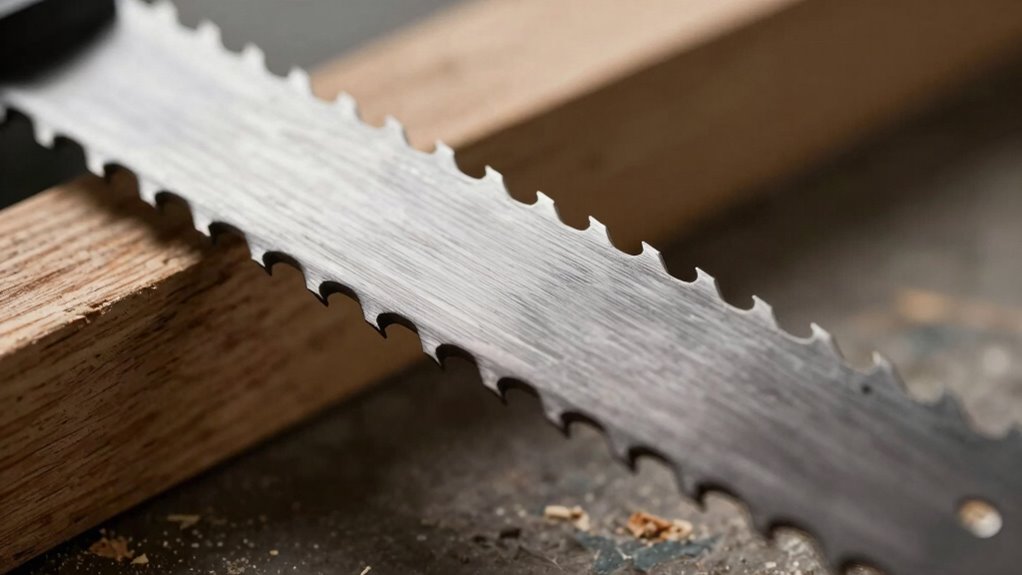
Proper blade tension and speed are essential for achieving clean, accurate cuts with your bandsaw. When your blade tension is too loose, the blade can wobble, causing rough cuts and increased wear. Too tight, and it risks breaking or warping. Adjusting blade tension correctly ensures stability and precision. blade tension is crucial because it directly affects the blade’s ability to cut smoothly and last longer. Proper tension helps prevent blade deflection and maintains consistent contact with the workpiece. Maintaining proper tension also reduces the likelihood of blade breakage and extends the lifespan of your blade. Blade speed also plays a critical role; running the blade too fast can cause overheating and rough edges, while too slow may result in burning or tearing the material. Matching blade speed to the material and blade type helps optimize cut quality. Cut quality depends heavily on maintaining appropriate speed settings tailored to specific tasks. When both blade tension and speed are set properly, you’ll experience smoother cuts, less blade wear, and better control. Fine-tuning these factors makes a noticeable difference in your work’s accuracy and finish. Proper maintenance and regular adjustments are also vital for maintaining optimal cutting performance over time.
Common Mistakes to Avoid When Picking Bandsaw Blades
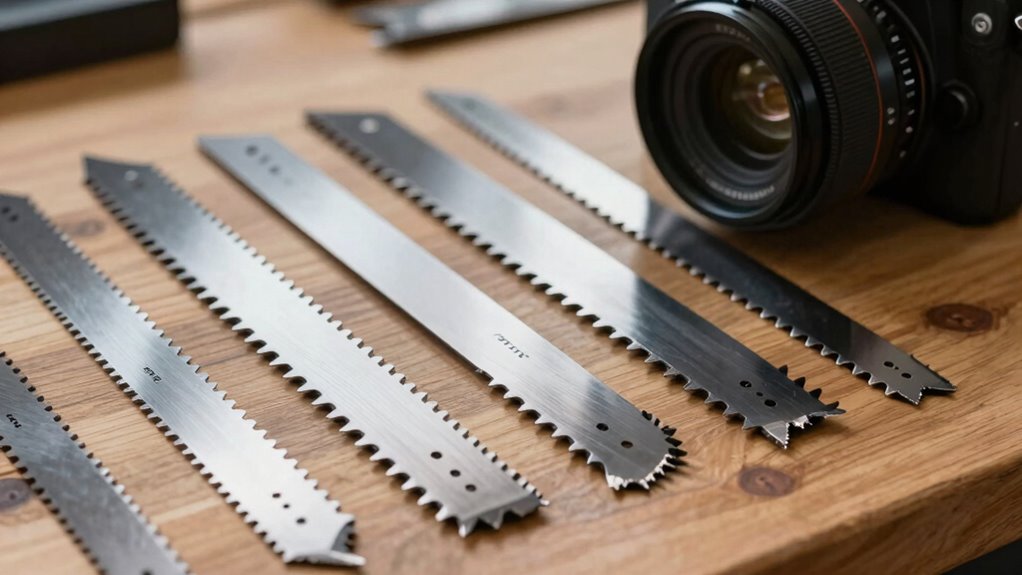
Many beginners make the mistake of choosing bandsaw blades based solely on price or availability, without considering their project needs. This can lead to poor cuts, increased blade wear, and frustration. Avoid these common pitfalls:
- Ignoring the right blade width and TPI for your material
- Overlooking the importance of blade sharpening for peak performance
- Forgetting to properly store blades to prevent rust and damage
- Choosing blades without considering their compatibility with your saw
- Neglecting regular blade maintenance, like cleaning and tension checks
- Failing to understand the significance of blade material to communicate your brand effectively. Proper selection of blade material impacts durability and cutting efficiency, ensuring your projects are completed smoothly and safely. Additionally, understanding blade design can optimize your cutting experience and extend the lifespan of your blades.
Tips for Extending Your Bandsaw Blade’s Life
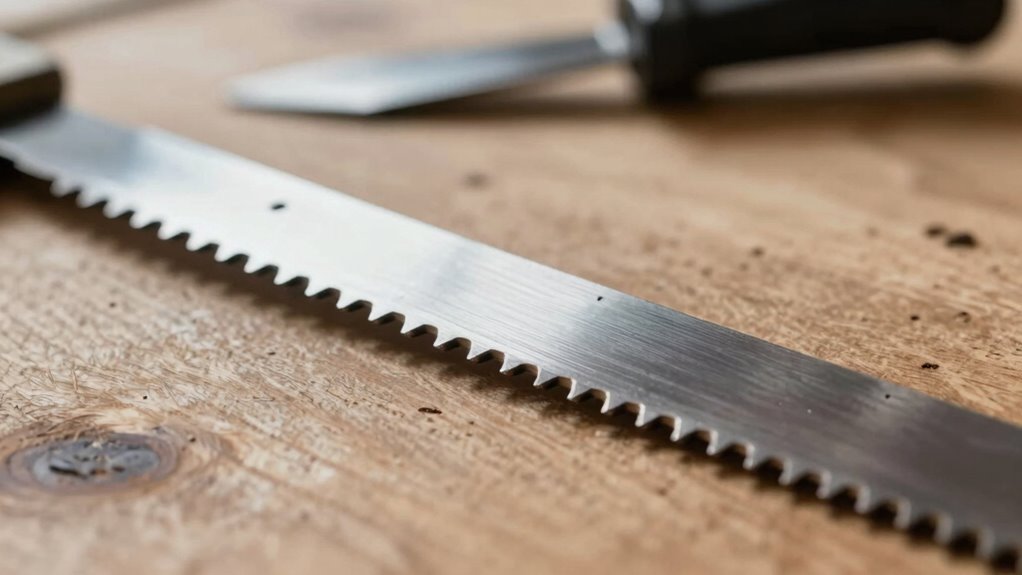
To get the most out of your bandsaw blades, regular maintenance and mindful usage are essential. Proper blade storage prevents rust and warping—store blades in a dry, organized space, ideally hanging or lying flat. Avoid stacking blades directly on top of each other to prevent damage. Sharpen your blades regularly using appropriate sharpening techniques to maintain their cutting efficiency and reduce strain. Dull blades cause increased friction, heat, and premature wear. Also, ensure you’re using the correct blade tension and speed for your material, which minimizes unnecessary stress. Keep blades clean by removing resin and debris with a soft brush or cloth. These simple habits extend your blade’s life, improve cut quality, and save you money over time. Additionally, understanding Blade Compatibility can help you select the right blade for your specific projects, further enhancing performance and durability.
How to Choose the Best Bandsaw Blade for Your Projects
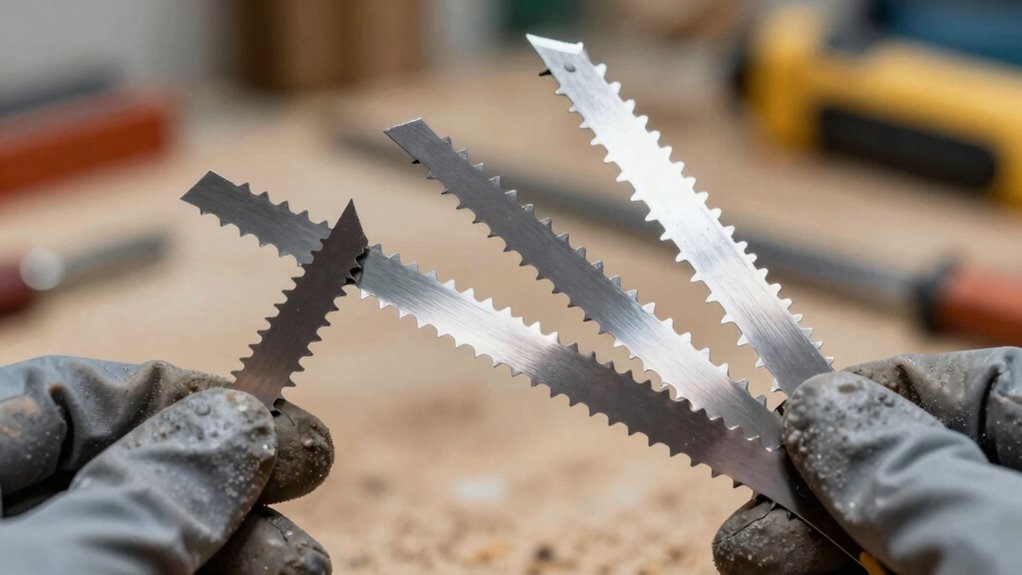
Choosing the right bandsaw blade depends on the specific project you’re working on and the material you’re cutting. To pick the best blade, consider the type of cut, material density, and desired finish. Focus on blade maintenance to guarantee longevity and performance. Always follow safety precautions to prevent accidents when changing blades or operating the saw. Here are key tips:
- Match blade width and TPI to your material and cut type
- Use the correct blade tension for smooth cuts
- Regularly inspect and sharpen blades for peak performance
- Keep blades clean and free of debris
- Wear safety gear and follow safety precautions during operation
Selecting the right blade improves cut quality, extends blade life, and keeps you safe. Proper maintenance and safety are essential in choosing the best blade for your projects.
Frequently Asked Questions
How Does Blade Tension Affect Cut Quality and Blade Lifespan?
Blade tension directly impacts cut quality and blade lifespan. When you adjust tension properly, it guarantees blade alignment, reducing wobbling and uneven cuts. Too tight, and you risk blade breakage; too loose, and cuts become rough and inaccurate. Regular tension adjustments help maintain ideal performance, prolonging blade life. Proper tension also minimizes vibrations, leading to cleaner cuts and less wear on your bandsaw, making your work more efficient and precise.
Can Specific Blade Designs Improve Curves or Intricate Cuts?
Think of your blade as a dancer gracefully steering tight corners—certain designs enhance flexibility, allowing it to bend smoothly for intricate cuts. By choosing blades with specialized tooth patterns and materials, you improve cut precision, making your curves sharper and cleaner. These tailored blades act like a skilled artist’s brush, giving you the finesse needed for detailed work. Opting for the right design transforms your saw into a precise tool for delicate, complex projects.
How Often Should I Replace My Bandsaw Blade for Optimal Performance?
You should replace your bandsaw blade when you notice it’s dull, making cuts rough or causing burning. Regular blade maintenance, like cleaning and checking for wear, helps extend its life. Store blades properly in a dry, safe place to prevent rust and damage. Changing blades regularly ensures peak performance, cleaner cuts, and safety. Trust your instincts and inspect the blade often—timely replacements keep your projects precise and efficient.
Are There Safety Considerations When Selecting Different Blade Types?
When selecting different blade types, you should always prioritize safety. Wear protective gear like safety glasses and ear protection, and make certain blade guards are properly installed and functioning. Avoid distractions, keep hands away from moving parts, and check the blade’s condition regularly. Using the right safety measures helps prevent accidents, injuries, and ensures you operate your bandsaw responsibly, no matter which blade you choose.
How Does Ambient Temperature Influence Blade Performance and Choice?
Ambient temperature markedly affects your blade’s performance. When it’s hot, blades tend to heat up quickly, so you should consider blade cooling options like lubricants or air flow to prevent overheating. Conversely, cold temperatures can make blades more brittle, increasing the risk of breakage. Understanding these temperature effects helps you choose the right blade and cooling methods, ensuring smoother cuts and prolonging blade life in varying environments.
Conclusion
Choosing the right bandsaw blade might seem complex, but it’s vital for achieving clean, precise cuts. Don’t let uncertainty hold you back—by considering blade width, TPI, and material, you’ll get better results and save money in the long run. Remember, investing a little time now guarantees smoother projects and fewer frustrations later. So, trust your choices, and watch your craftsmanship improve with every cut!