
Hide glue is still used today because it’s natural, strong, and reversible, making it ideal for traditional woodworking and restoration projects. Made from animal collagen, it bonds delicately without damaging materials and can be reheated for future repairs. Craftsmen prefer it for its authentic strength and eco-friendliness. If you want to understand why hide glue remains a popular choice and how to work with it, keep exploring its benefits and applications.

Get business pricing on tools and workshop supplies
- Business-only prices and quantity discounts
- Tax-exempt purchasing
- Multiple users, one account, clear invoices
Key Takeaways
- Hide glue offers strong, durable, and reversible bonds ideal for traditional woodworking, restoration, and antique repairs.
- Made from natural animal collagen, it is eco-friendly, biodegradable, and safe for delicate materials like wood.
- Its heat reactivation allows easy disassembly for future repairs or modifications, preserving historical integrity.
- Despite modern adhesives, hide glue’s traditional craftsmanship and reversibility keep it relevant.
- Proper preparation and application ensure reliable, high-quality bonds suited for fine woodworking and restorations.
As an affiliate, we earn on qualifying purchases.
What Is Hide Glue, and How Is It Made?
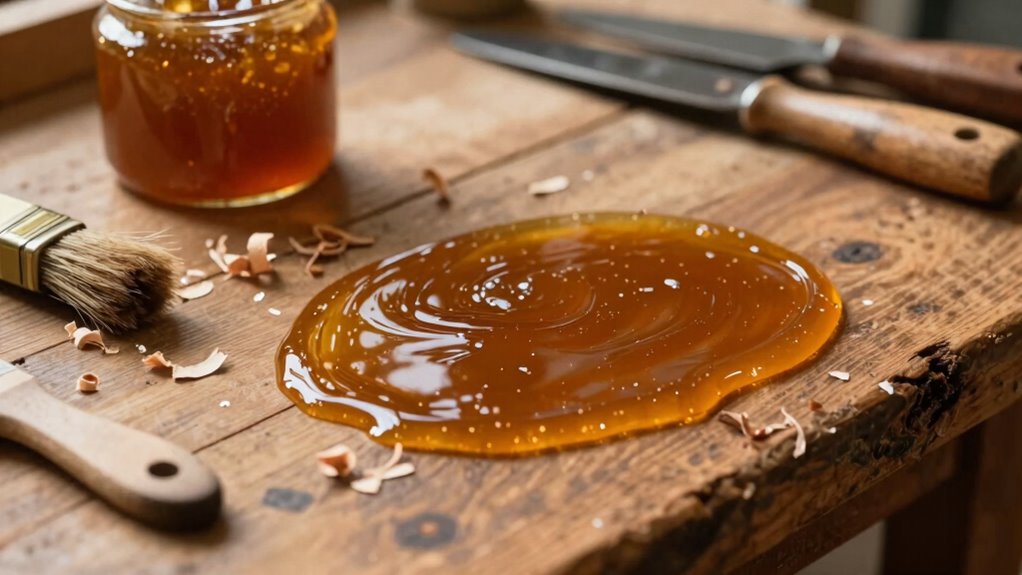
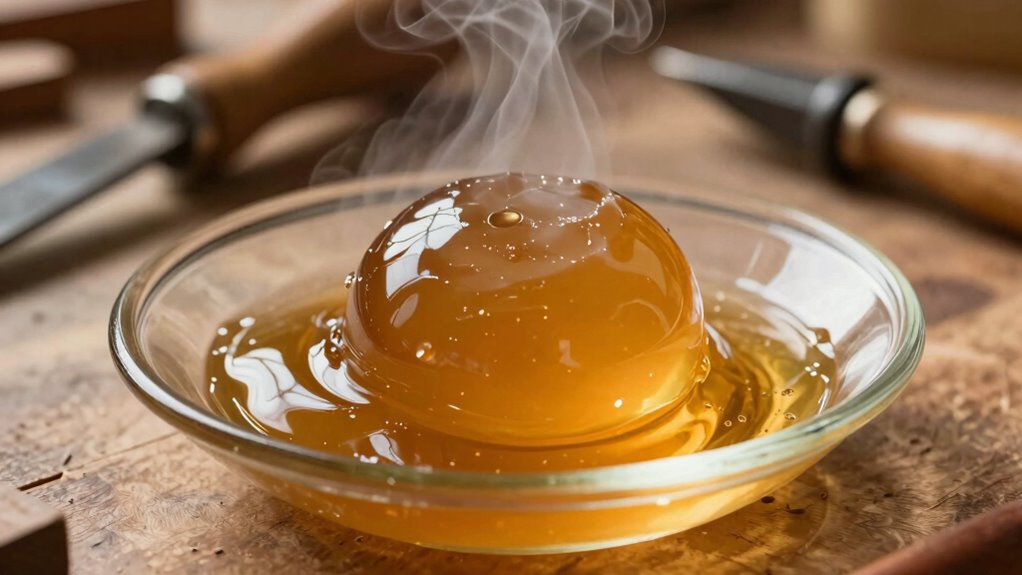
Hide glue is a type of adhesive made from animal collagen, primarily derived from the bones, hides, and connective tissues of animals like cows and pigs. This animal protein is extracted through a process of boiling and soaking, which breaks down the collagen into a gel-like substance. Once processed, it’s then dried and ground into powder or cut into sheets for convenience. When heated with water, the collagen dissolves, creating a sticky, strong adhesive formulation perfect for woodworking and craftsmanship. Because of its natural origin, hide glue offers excellent bonding strength and reversibility. Its unique properties make it a preferred choice for fine antiques and musical instruments, where traditional craftsmanship and material authenticity are valued. Additionally, the color accuracy of hide glue makes it especially suitable for applications requiring precise visual results. Furthermore, understanding the sustainability of hide glue underscores its appeal as an eco-friendly adhesive option in traditional and modern uses. The biodegradability of hide glue further enhances its suitability for environmentally conscious projects.
As an affiliate, we earn on qualifying purchases.
Why Do Craftsmen Still Prefer Hide Glue Today?
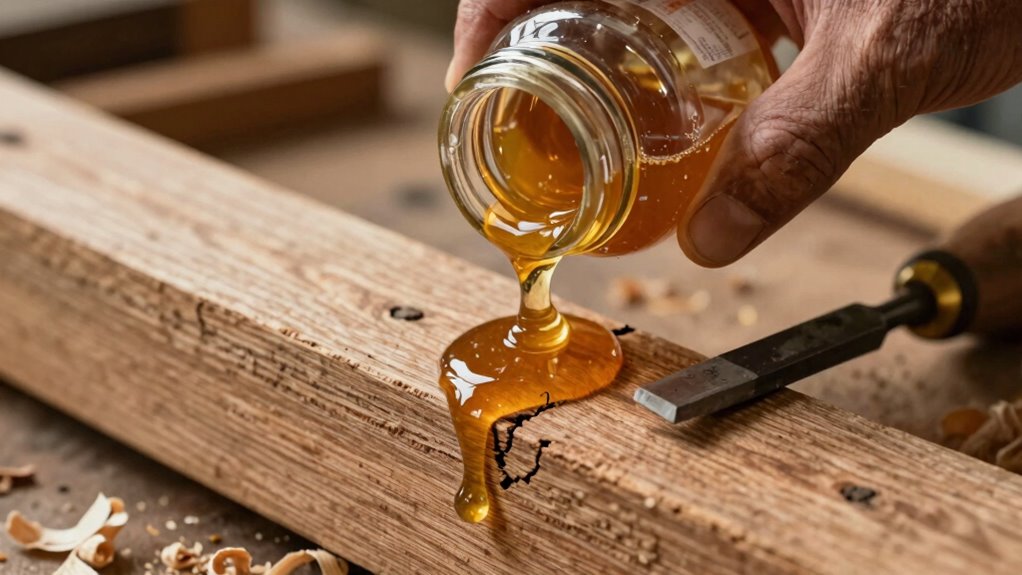
You might wonder why craftsmen still choose hide glue today. Its traditional bonding strength guarantees durable joints, while being reversible makes repairs easier. Plus, it’s gentle on delicate materials, safeguarding your work over time. Additionally, its versatility in applications makes it a preferred choice for various crafts and restoration projects. Many artisans also appreciate its environmentally friendly nature, which aligns with sustainable practices in craftsmanship. Furthermore, its historical significance underscores its continued relevance in both traditional and modern craftsmanship. The adhesive’s ability to adhere well to porous materials further enhances its usefulness in delicate restoration work.
Traditional Bonding Strength
Have you ever wondered why craftsmen still favor hide glue for bonding despite modern adhesives? Its traditional bonding strength has stood the test of time, rooted in its historical usage across centuries. Craftsmen valued hide glue’s powerful adhesion, especially in woodworking and furniture making, where durable joints are essential. The cultural significance of hide glue also plays a role; it’s been trusted for generations, symbolizing craftsmanship and quality. Unlike some modern glues, hide glue creates a strong, reliable bond that holds well under stress. Its ability to form a tight, cohesive connection makes it ideal for fine joinery and antique restoration. Additionally, hide glue’s reversibility allows for easier repairs and conservation, which is highly valued in art restoration practices. Its enduring strength, combined with its proven track record, keeps hide glue relevant and preferred by artisans today. Moreover, the ease of application and removal further cements its place in traditional craftwork.
Reversible and Repairable
Craftsmen continue to favor hide glue because of its unique reversibility and ease of repair. This property allows you to undo joints with gentle heat and moisture, making adjustments or restorations straightforward. It aligns perfectly with traditional woodworking techniques that emphasize precision and care. For those involved in historical preservation, hide glue is especially valuable, as it preserves the integrity of old wood without damaging delicate materials. When repairing antique furniture or restoring historic structures, you can reheat and soften the glue, avoiding the need for harsh chemicals or invasive methods. This reversibility ensures that your work remains reversible, respecting the original craftsmanship while making future repairs simpler and less invasive. Additionally, adhesive properties enable craftsmen to achieve a seamless repair that maintains the piece’s authenticity. The ability to restore old joints without compromising the original material is a significant advantage. Incorporating traditional techniques further enhances the durability and aesthetic of the repair. Modern innovations, such as precise temperature control, have made working with hide glue more accessible and consistent for craftsmen today. The reversibility of hide glue is especially beneficial when making adjustments or disassembling parts for transportation or reassembly. That’s why hide glue remains a trusted choice today.
Gentle on Materials
Hide glue is favored by artisans because it’s remarkably gentle on the materials it bonds. It allows wood to retain its natural flexibility, preventing cracks or damage over time. This quality is essential for preserving the integrity of delicate or antique pieces, ensuring they remain functional and beautiful for generations. When you use hide glue, you’re choosing a bond that respects the material’s original state, avoiding unnecessary stress. The table below highlights how hide glue promotes material preservation and flexibility:
| Benefit | Impact |
|---|---|
| Wood flexibility | Keeps wood resilient and less prone to cracking |
| Material preservation | Maintains original integrity during repairs |
| Gentle bonding | Protects delicate surfaces |
| Reversibility | Allows safe adjustments later |
| Long-lasting bond | Ensures durability without damage |
Additionally, the healing process of hide glue bonds typically allows for easier removal if adjustments are needed in the future. Understanding its reversible nature helps craftsmen plan for future repairs or modifications more effectively. Recognizing the natural properties of hide glue emphasizes its ongoing relevance in crafts and restoration work, especially because of its biodegradable and eco-friendly characteristics. Moreover, its ability to form a strong yet reversible bond makes it a preferred adhesive in conservation efforts.
As an affiliate, we earn on qualifying purchases.
What Are the Main Benefits of Using Hide Glue Over Modern Adhesives?
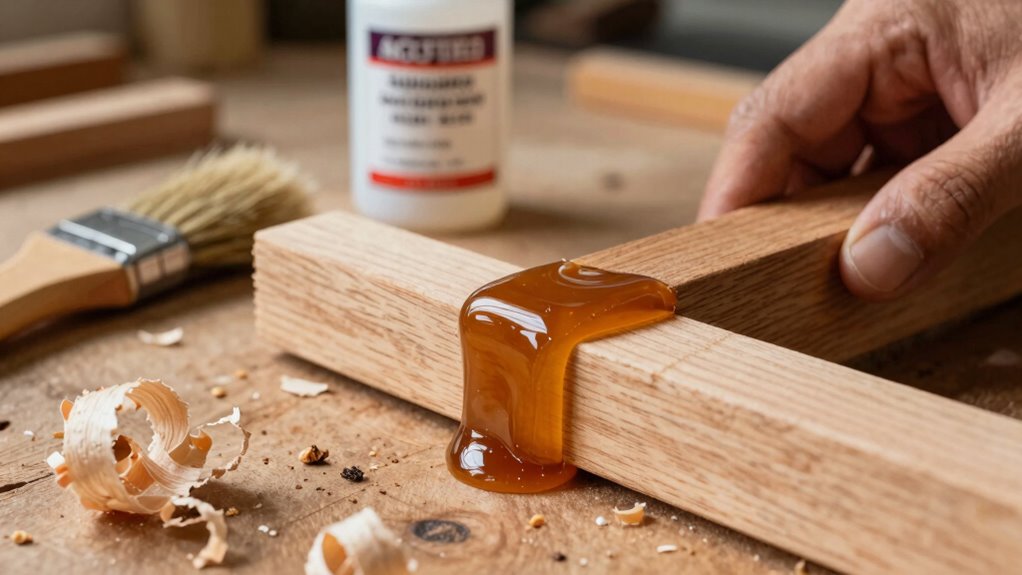
One of the main advantages of using hide glue over modern adhesives is its reversibility, which allows you to detach and reassemble joints without damaging the material. This flexibility is especially valuable for restoring or adjusting pieces, aligning with traditional woodworking techniques. Hide glue also boasts predictable adhesive curing times, giving you control during assembly and reducing surprises. Unlike some modern glues that cure quickly or unpredictably, hide glue offers a manageable working period, making fine adjustments easier. Additionally, hide glue creates a strong, durable bond that can be softened with heat and moisture, ensuring ease of disassembly if needed. This reversibility makes hide glue a preferred choice in fine woodworking and restoration projects. Its easy removability also makes it ideal for delicate repairs and projects requiring future modifications. Moreover, the use of hide glue aligns with environmentally friendly practices since it is made from natural animal proteins.
As an affiliate, we earn on qualifying purchases.
How Can You Prepare and Apply Hide Glue for Best Results?
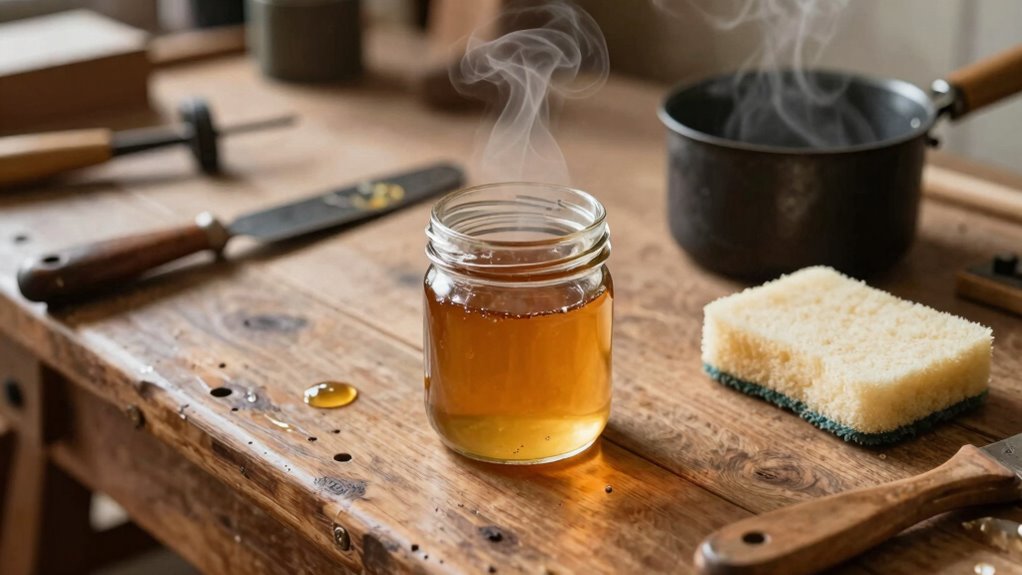
To get the best results, you need to prepare your hide glue carefully by mixing it to the right consistency. Use proper heating techniques to keep the glue warm and workable without overheating it. Applying the glue evenly with effective methods guarantees strong, seamless bonds every time. Additionally, understanding wood movement helps in adjusting the glue application to accommodate expansion and contraction of the wood over time. Being aware of thermal behavior ensures you maintain optimal temperatures during application, preventing issues like premature setting or weakening of the bond. Monitoring temperature control during application is crucial for achieving a durable and reliable bond over the long term.
Proper Glue Preparation
Preparing hide glue properly is essential to achieve strong, durable bonds. To do this, start by soaking the granules in cold water, allowing them to swell for at least 30 minutes. This step helps activate the adhesive chemistry, guaranteeing a smooth, workable consistency. When ready, gently heat the mixture, avoiding boiling, which can degrade the glue’s quality. Using a double boiler keeps the temperature steady and prevents scorching. Stir occasionally to dissolve the granules completely. Proper preparation also involves adjusting the glue’s viscosity for your woodworking techniques—thinner for veneer work, thicker for joints. By following these steps, you’ll guarantee your hide glue is at its maximum strength, providing reliable, long-lasting bonds in your woodworking projects.
Optimal Heating Techniques
Achieving the best results with hide glue depends heavily on how you heat and apply it. To guarantee proper melting, use a double boiler to gently warm the glue, avoiding direct heat that can degrade its quality. Climate considerations are vital; in humid environments, keep the glue warm but not overheated to prevent spoilage. Proper storage techniques, like keeping unused glue in airtight containers and in a cool, stable environment, help maintain its effectiveness over time. When reheating, do it gradually to prevent separation or weakening. Consistent temperature control ensures the glue remains workable and strong. By managing heat carefully and considering environmental factors, you’ll maximize the adhesive’s bonding strength and longevity.
Effective Application Methods
For the best results, start by thoroughly mixing your hide glue to guarantee an even consistency before applying. Proper preparation ensures strong, reliable bonds in your woodworking techniques and is especially important in historical preservation projects. Use a brush or a spatula to spread the glue evenly on both surfaces, working quickly before it cools or gels. Keep the glue warm during application to maintain its fluidity and ideal bonding properties. Clamps are essential to apply steady pressure and ensure a tight joint as the glue sets. For delicate repairs or intricate details, use a fine brush for precise application. By following these methods, you’ll achieve better adhesion, preserve the integrity of your work, and honor traditional techniques used in historical preservation efforts.
What Common Projects Benefit Most From Using Hide Glue?

Woodworking and luthiery projects often benefit the most from using hide glue because of its strong bond, reversibility, and traditional appeal. If you’re working on musical instruments, antique furniture, or fine cabinetry, hide glue excels due to its compatibility with delicate woodworking techniques and its preservation of historical integrity. It’s ideal for projects where future disassembly or repairs might be necessary, thanks to its reversible nature. In historical restoration, hide glue is preferred because it closely matches the original adhesives used in antique pieces, ensuring authenticity and stability. Its ability to bond well with wood fibers without causing damage during repairs makes it a top choice. Overall, projects requiring precision, gentle handling, and adherence to traditional methods benefit most from using hide glue.
How Does Hide Glue Rejuvenate and Reheat for Reversible Repairs?
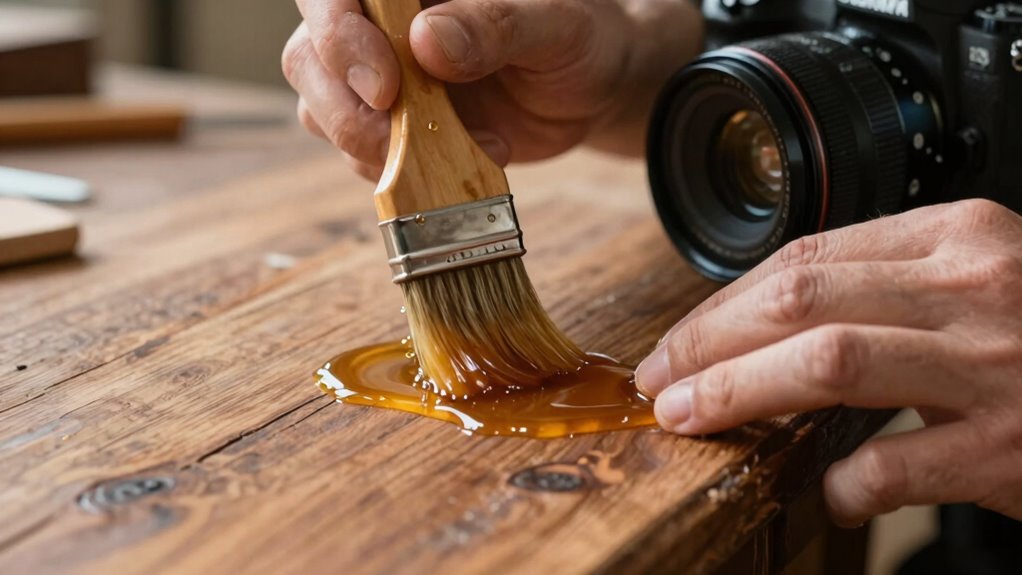
To effectively use hide glue for reversible repairs, you need to understand how it can be rejuvenated and reheated. Its ability to do so depends largely on its chemical composition, which changes during the aging process. When freshly prepared, hide glue is soluble in hot water, allowing it to be reheated easily. Over time, exposure to air and temperature causes polymer chains to cross-link, making the glue less soluble and more difficult to reheat. To rejuvenate old hide glue, you simply reheat it with additional hot water, breaking down these cross-links and restoring its adhesive qualities. This reversible nature stems from its unique chemical makeup, enabling repairs to be undone or adjusted without damaging the original material.
What Are the Limitations and Drawbacks of Using Hide Glue?
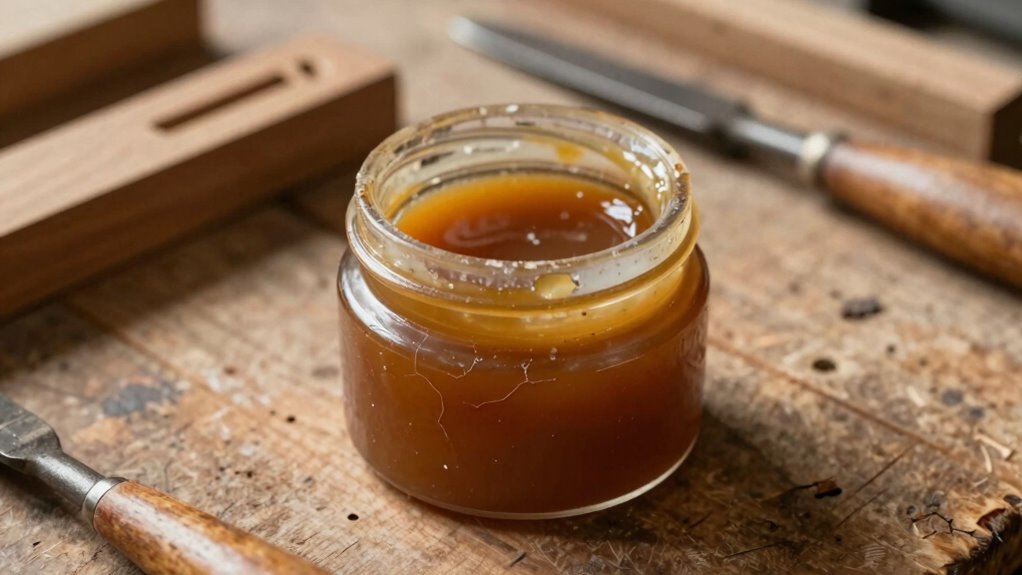
Despite its many advantages, hide glue has notable limitations that can affect its effectiveness. One major drawback is its sensitivity to moisture and humidity; exposure can weaken or loosen joints over time. Additionally, hide glue has a relatively short working time, which can make precise application challenging. Its brittle nature when dried can lead to cracks in certain conditions. Environmental concerns also play a role, as hide glue is animal-derived and not biodegradable, raising sustainability issues. Plus, it requires careful storage and handling to prevent spoilage. These limitations drawbacks mean that, despite its traditional appeal, hide glue may not be suitable for all projects or environments, especially where durability and moisture resistance are priorities.
How Does Hide Glue Fit Into Traditional Craftsmanship and Modern Practices?
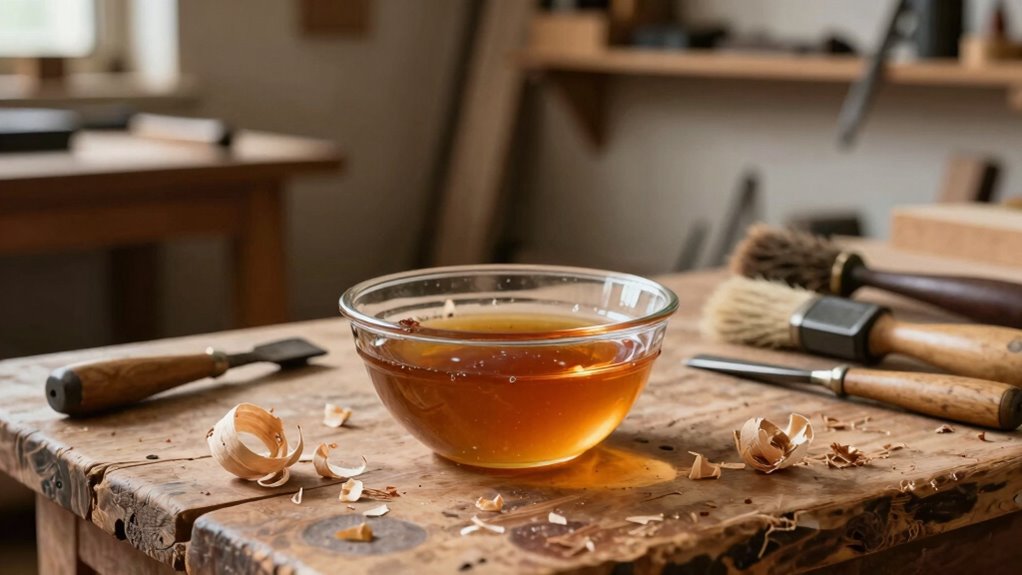
Hide glue has long been a cornerstone of traditional craftsmanship, valued for its strong, reversible bonds and historical authenticity. In historical applications, artisans relied on hide glue for furniture, musical instruments, and intricate inlay work, showcasing their mastery of artisan techniques. Today, many craftspeople continue to incorporate hide glue, appreciating its reversibility—allowing repairs without damaging the original piece—and its natural, non-toxic qualities. While modern adhesives offer convenience, hide glue’s adherence to traditional methods keeps it relevant in high-end restorations and fine woodworking. Its use bridges the gap between heritage craftsmanship and contemporary practices, preserving age-old skills while meeting modern standards of quality. You can embrace hide glue as a versatile, authentic option that respects both history and craftsmanship.
Frequently Asked Questions
Can Hide Glue Be Used Outdoors or in Humid Environments?
You shouldn’t use hide glue outdoors or in humid environments because it lacks weather resistance and can weaken when exposed to moisture. Its susceptibility to mold makes it a poor choice where humidity is high or weather conditions fluctuate. If you need a durable, moisture-resistant bond, consider modern glues specifically designed for outdoor or humid use, as hide glue isn’t built to withstand those conditions effectively.
How Long Does Hide Glue Typically Last in a Finished Project?
Think of hide glue as a trusted handshake—lasting when conditions are gentle. It typically endures for decades in a finished project, but its adhesion longevity and environmental durability depend on usage. If kept in stable, controlled environments, it can last a lifetime. However, exposure to humidity, temperature swings, or moisture can weaken its bond over time, making it less reliable outdoors or in humid settings.
Is Hide Glue Safe and Non-Toxic for Household Repairs?
Yes, hide glue is generally safe and non-toxic for household repairs when used properly. You should still consider safety considerations, such as ensuring good ventilation during application and avoiding ingestion or prolonged skin contact. Although toxicity concerns are minimal, it’s wise to keep the glue out of reach of children and pets. Overall, hide glue offers a safe, effective option for repairs around your home, especially when handled responsibly.
What Are the Key Differences Between Hide Glue and Other Natural Adhesives?
You might wonder what sets hide glue apart from other natural adhesives. Its secret lies in exceptional adhesive strength, creating bonds that last through time. Plus, its application versatility means you can heat it for easy application or soften it later for adjustments. Unlike other adhesives, hide glue offers a unique blend of durability and ease of use, making it a preferred choice for fine woodworking and restoration projects.
Can Hide Glue Be Color-Matched to Specific Wood Tones?
Yes, you can color match hide glue to specific wood tones. To do this, you add pigments or stains directly into the warm glue before applying it. This allows you to blend the glue seamlessly with your wood, making repairs less noticeable. Keep in mind, you should test your color match on scrap wood first to ensure it blends perfectly with your wood tone, achieving a natural look.
Conclusion
Remember, old habits die hard, and sometimes the best solution is the one with a rich history. Hide glue’s versatility and reversibility make it a trusted choice for many craftspeople today. While it has limitations, its benefits often outweigh them, especially in delicate repairs. Embrace traditional techniques, but know when to blend them with modern methods. After all, as the saying goes, “Old is gold”—and in craftsmanship, that holds especially true.
Fall yard work Picks
leaf blowers
As an affiliate, we earn on qualifying purchases.