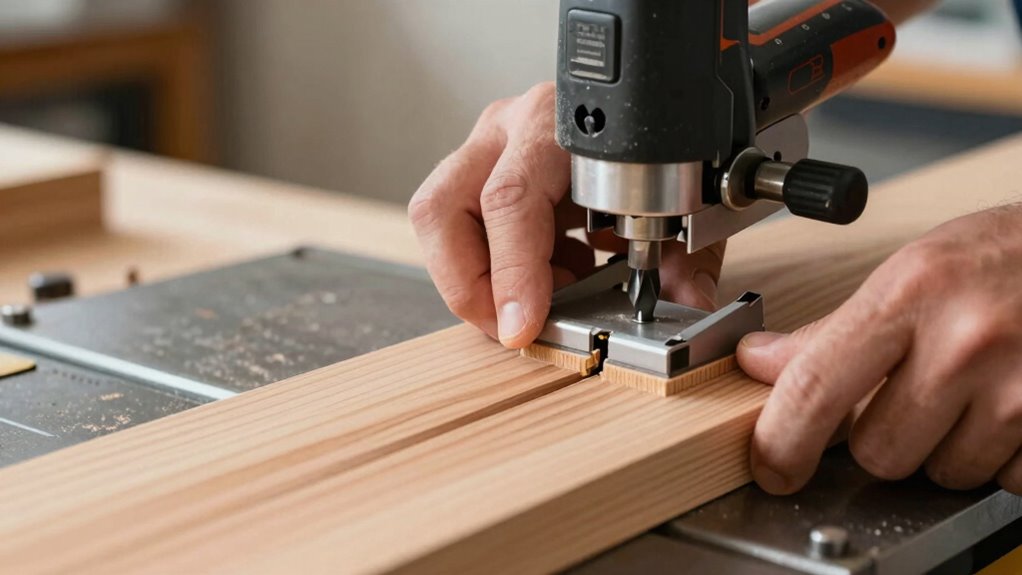

To keep your fingers safe on a router table, always follow the hand position rule: keep your hands clear of the cutter and work with support tools like push sticks or guides. Maintain a firm, relaxed grip on the workpiece, and position your hands on opposite sides, well away from the blade. Using jigs, featherboards, and proper techniques helps prevent accidents. Keep safety practices consistent—learn more ways to protect yourself and stay accident-free here.

Get business pricing on tools and workshop supplies
- Business-only prices and quantity discounts
- Tax-exempt purchasing
- Multiple users, one account, clear invoices
Key Takeaways
- Always keep hands clear of the router bit, using push sticks or guides to maintain a safe distance.
- Position hands on the sides of the workpiece, avoiding reaching over or near the cutter during routing.
- Keep fingers away from blades by using proper hand placement and secure workholding devices like featherboards.
- Use the hand position rule consistently to develop muscle memory for safe routing techniques.
- Incorporate safety equipment such as push sticks, featherboards, and guards to protect fingers and enhance control.
As an affiliate, we earn on qualifying purchases.
Why Keeping Your Hands Safe Matters When Using a Router Table

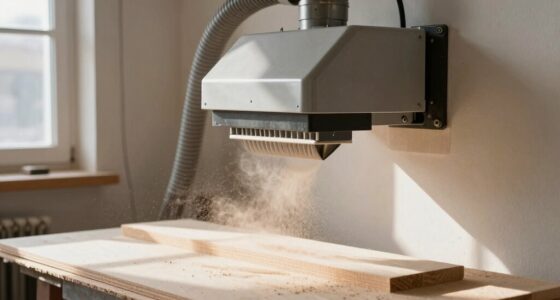
When using a router table, keeping your hands safe is essential because the spinning bit can cause serious injuries if you’re not careful. Clear blade visibility is vital; it helps you control the cut and avoid accidental contact. Ensure the guard is properly positioned so you can see the blade while maintaining safety. Dust management also plays a role—excess dust can obscure your view and lead to mistakes or slips. Regularly clean the table and use dust collection systems to keep your workspace clear. By maintaining good blade visibility and managing dust effectively, you reduce the risk of injuries. Proper safety practices are key to preventing accidents and ensuring a safe woodworking environment. Additionally, practicing safe hand positioning and using push sticks can significantly minimize the chance of injury. Your safety depends on staying alert and organized, including establishing routines that promote a safe work environment, such as consistent safety checks. Implementing these measures can also help you maintain visual clarity during operation, which is crucial for safe router table use. Moreover, understanding and applying risk awareness can further enhance your safety precautions.
As an affiliate, we earn on qualifying purchases.
Why the Hand Position Rule Is Important
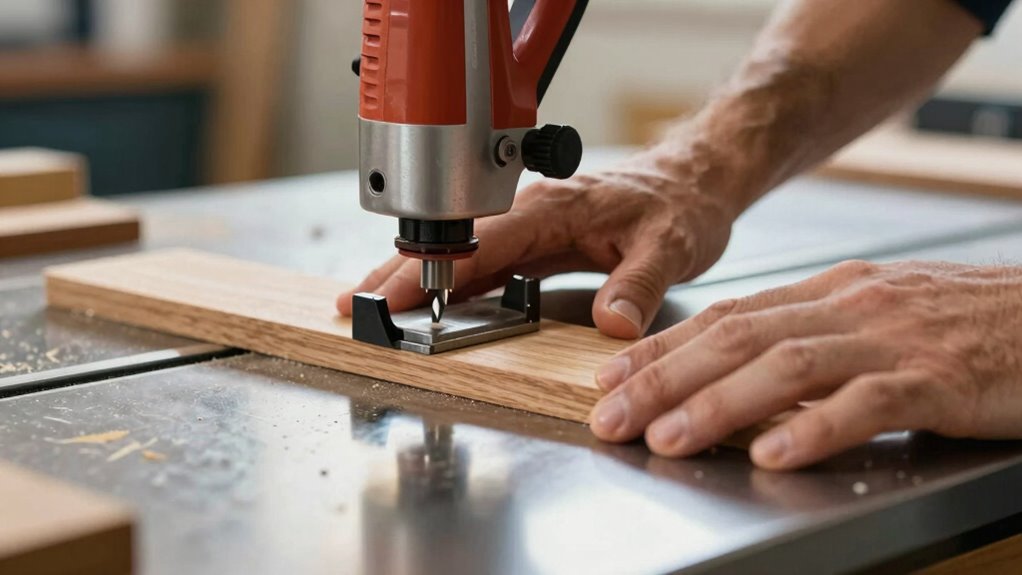
Ever wonder why the hand position rule is so crucial when working with a router table? Maintaining proper hand posture ensures you stay safe and in control. When your hands are correctly positioned, you reduce the risk of accidental slips that could threaten finger safety. This is especially important because proper hand positioning helps prevent injuries caused by unexpected router movements. This rule keeps your fingers well away from the cutter, minimizing injury risk. Proper hand posture also provides better leverage and stability during cuts. It helps you apply consistent pressure, resulting in cleaner, more accurate work. Remember, a good hand position isn’t just about safety—it’s about working efficiently. Staying mindful of this rule keeps your fingers protected and your focus sharp. Additionally, understanding the auditory processing involved can improve your awareness of potential hazards. Being aware of the noise levels generated by the router can alert you to possible issues before they become dangerous. Developing a safety mindset through consistent adherence to the hand position rule is essential for safe, confident router table use. Practicing proper hand placement also enhances your control and precision, leading to better overall results in your woodworking projects.
As an affiliate, we earn on qualifying purchases.
Proper Hand Positioning for Router Table Safety
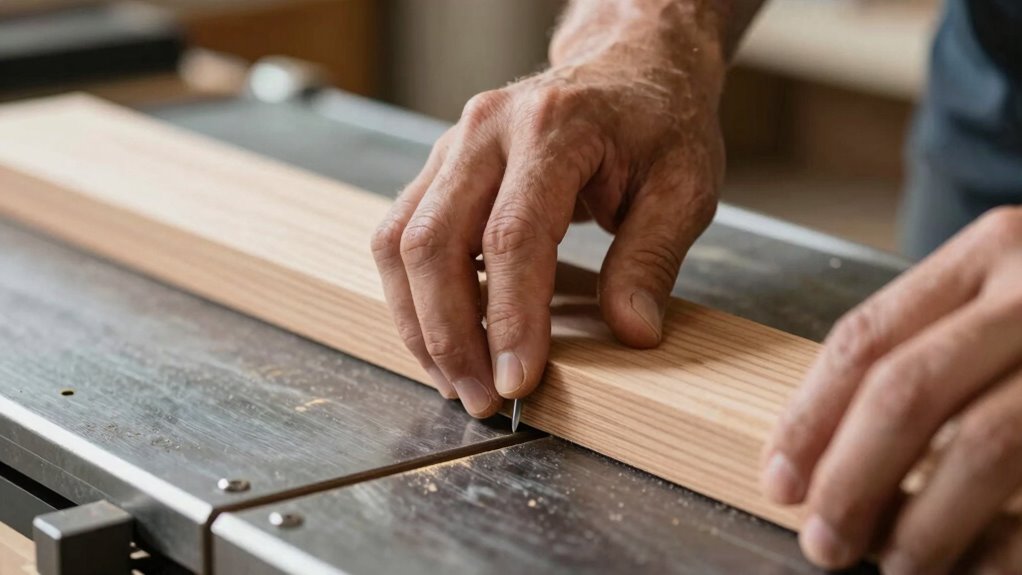
Maintaining proper hand positioning is essential for safe and effective router table operation. Your hands should always stay clear of the router bit, keeping fingers well away from moving parts to prevent accidents. Position your hands so that you control the workpiece confidently without gripping the bit directly. Use push sticks or guides when necessary to maintain a safe distance. Consistent hand positioning helps you maintain control and reduces the risk of slips. Remember, proper hand placement enhances router safety by ensuring your fingers stay out of harm’s way while you work. Keep your hands firm but relaxed, and never reach over the bit or workpiece. Good hand positioning is key to preventing injuries and achieving precise cuts. Being aware of the “why” behind food and safety practices can help you develop a more confident and mindful woodworking technique. Understanding the importance of safety procedures can further reinforce safe handling habits.
router table workholding devices
As an affiliate, we earn on qualifying purchases.
As an affiliate, we earn on qualifying purchases.
How to Apply the Hand Position Rule Step-by-Step
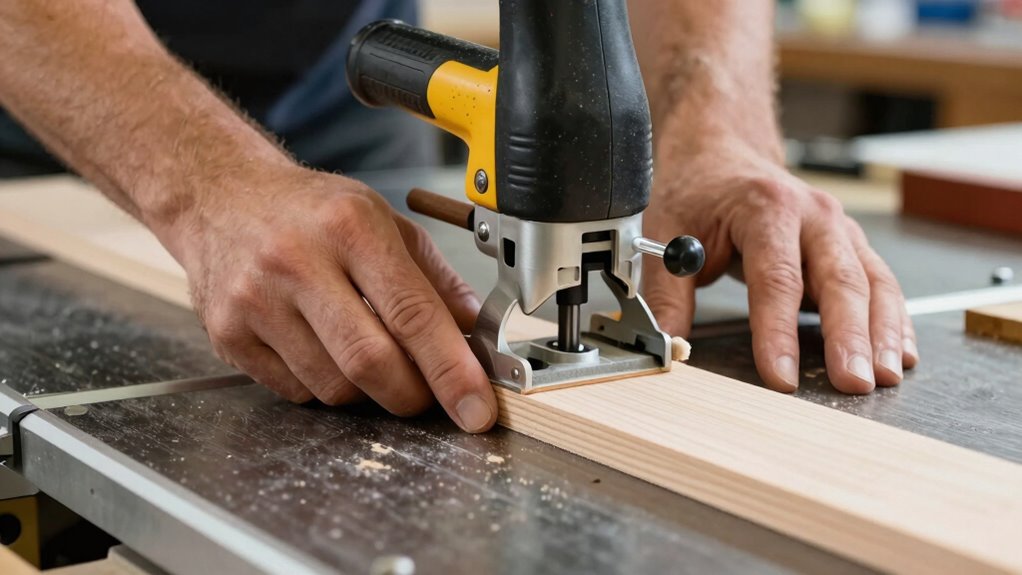
Applying the hand position rule step-by-step guarantees you stay safe and maintain control while using the router table. First, position your hands so your fingers stay well clear of the sharp blades, keeping them away from the bit’s cutting edge. Next, always keep your hands on either side of the workpiece, not over the blades, to avoid accidental contact. Ensure dust collection is active to improve visibility and reduce debris that could interfere with hand placement. Use a push stick when working with narrow pieces to keep fingers away. Additionally, maintaining a clean workspace minimizes risks and allows for better hand positioning during operation. Regularly inspecting your tools for any wear and tear helps prevent unexpected malfunctions. It’s also important to familiarize yourself with the router’s safety features and proper tool operation techniques. Proper tool safety practices are essential for avoiding common accidents and ensuring a successful project. Incorporating connected safety features, such as sensors or alerts, can further enhance your safety during router table use. Finally, check your hand positioning before starting, and adjust if anything feels off. These steps help you stay safe, control the router, and prevent injuries during your woodworking project.
Essential Tools to Maintain Safe Hand Placement
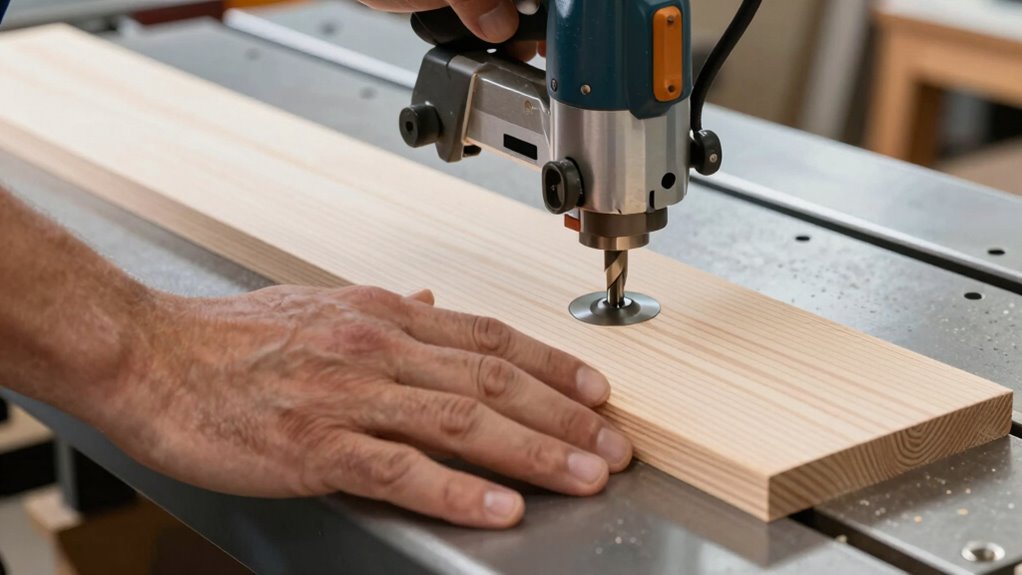
Using the right tools is essential for keeping your hands safe while working on the router table. Safety devices like push sticks and push blocks help you maintain proper hand positioning, keeping your fingers away from the spinning bit. Featherboards secure your workpiece firmly, reducing the need to hold it manually and minimizing risk. Riving knives and splitters prevent kickback and keep your hands at a safe distance from the cutter. Quality jigs and guides improve control, ensuring you follow safe routing techniques consistently. When you use these tools correctly, you support router safety and uphold the hand position rule. The right tools don’t just make your project easier—they actively protect your fingers while you work efficiently.
Practicing Safe Routing Techniques and Drills
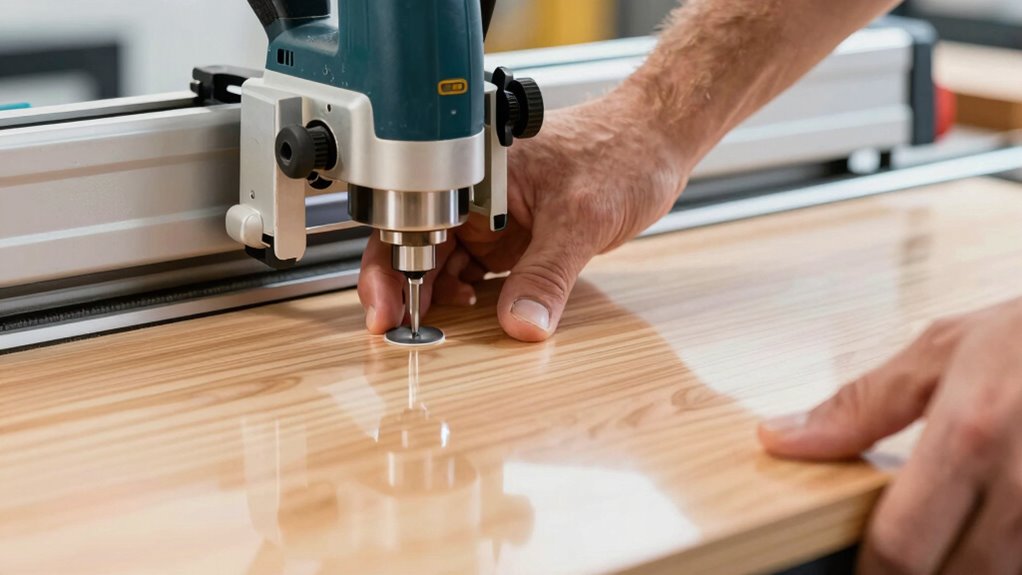
Practicing proper hand placement techniques helps you stay safe and in control during routing. Repeating these motions builds muscle memory, making safe techniques instinctive. Using templates and jigs can also guide your cuts and reduce the risk of mistakes. Additionally, understanding safety protocols can further minimize hazards associated with router table operations.
Proper Hand Placement Techniques
To guarantee safety when routing on a table, proper hand placement is essential. Correct hand positioning ensures control and minimizes the risk of injuries. Focus on keeping your hands clear of the router bit, using safety techniques like pushing the workpiece firmly and steadily. Maintain a firm grip without forcing or overextending your fingers. Always keep your hands behind the router’s bit path to avoid accidental contact. Use push sticks or jigs when working with narrow or small pieces. Regularly check your hand positioning to stay consistent. Being aware of router safety principles helps reinforce good habits and reduces the chance of accidents. Developing good safety habits is crucial for preventing injuries and ensuring smooth operation. Remember, confident and correct safety techniques in hand placement help you maintain control and prevent accidents, making your routing safer and more efficient.
Repetition for Muscle Memory
Consistent repetition of routing techniques helps develop muscle memory, making safe hand placement automatic. Repetitive practice trains your muscles to respond correctly without conscious effort, reducing errors and increasing safety. When you drill the same motions regularly, your hands remember proper positioning and movements, even under pressure. To reinforce this, create a routine of safe practices and drills. Use the table below to track your practice sessions:
| Practice Session | Focus Area |
|---|---|
| Day 1 | Hand positioning basics |
| Day 2 | Feed pressure control |
| Day 3 | Clamping and support |
| Day 4 | Routing different edges |
| Day 5 | Emergency stop drills |
Engaging in repetitive practice builds muscle memory, making safe routing second nature.
Using Templates and Jigs
Using templates and jigs considerably enhances safe routing by providing stable guides that keep your hands away from the cutting path. They ensure consistent results and improve your overall control. When you use template safety, you reduce the risk of slips and accidental contact. Jigs offer precision, helping you cut complex shapes accurately and safely. To maximize safety and effectiveness:
- Always secure your jig or template firmly before starting.
- Choose jigs designed for your specific router bit and project.
- Practice with different templates to build confidence and skill.
- Regularly check jigs for wear to maintain jig precision.
- Incorporate proper safety equipment such as push sticks and featherboards to further protect your fingers during routing.
Incorporating these practices helps you develop safe routing habits, minimizes errors, and keeps your fingers protected during every cut.
Common Routing Mistakes That Endanger Your Fingers
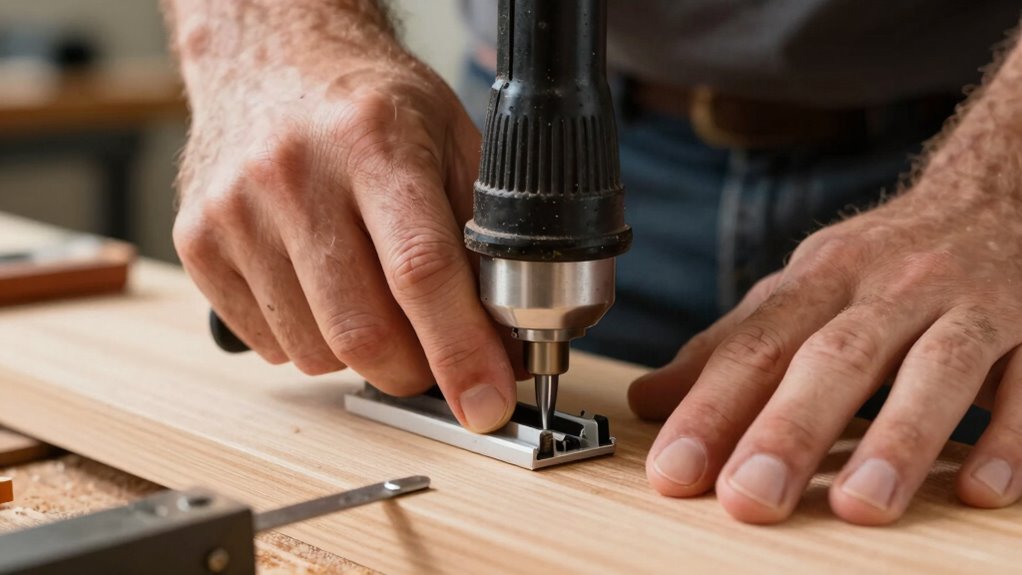
Many common routing mistakes put your fingers at risk. Poor finger placement or rushing can lead to accidents, so always stay mindful of where your hands are. Using improper push techniques and neglecting safety gear only increases the danger, so prioritize safety every time you use the router table. Additionally, understanding and applying safety protocols can significantly reduce the likelihood of injuries. Implementing proper document management practices can also help you stay organized and focused, further minimizing risks during woodworking. Staying aware of workplace safety standards is essential to creating a secure environment while operating power tools.
Finger Placement Risks
One of the most common dangers when using a router table is improper finger placement, which can lead to serious injuries. When your fingers get too close to the blade exposure, accidents happen quickly. Poor finger positioning increases the risk of cuts or pinches, especially during delicate cuts. To stay safe:
- Keep your fingers well away from the blade exposure at all times
- Avoid reaching over the bit or near the active cutting area
- Never rely solely on your hand to stabilize the workpiece
- Use push sticks or guides to maintain proper finger distance from the blade
Understanding proper finger placement is essential to prevent injuries. Staying aware of blade exposure and maintaining correct positioning keeps your fingers safe while routing.
Improper Push Techniques
Improper push techniques are a common mistake that can put your fingers at serious risk during routing. Using the wrong push method or hand grip can cause slips or loss of control, risking injury. Always keep your hand firmly on the workpiece, not near the bit, and use a push stick when the piece gets small. Avoid pushing with your fingers in front of the bit, which increases danger. Instead, adopt a consistent push technique that keeps your hand behind the router bit. Here’s a quick comparison:
| Push Technique | Risk Level |
|---|---|
| Pushing with fingers | High |
| Using a push stick | Low |
| Pushing from the side | Moderate |
| Applying steady pressure | Safer, controlled |
Choose your hand grip wisely and maintain proper push technique to keep fingers safe.
Neglecting Safety Gear
Neglecting to wear appropriate safety gear substantially increases the risk of injury during routing. Without proper safety equipment, you leave yourself vulnerable to accidents that could cause serious damage. Always use safety glasses to protect your eyes from flying debris, ear protection to prevent hearing damage, and dust masks to avoid inhaling harmful dust particles. Gloves can provide hand protection, but be cautious—they should not interfere with control or safety in routing. Proper safety gear is essential for accident prevention and maintaining a safe work environment. Remember, your safety depends on proactive measures, and neglecting safety gear can have lasting consequences. Prioritize safety at all times to keep your fingers and hands out of harm’s way during routing tasks.
What to Do If an Accident Happens Despite Precautions?
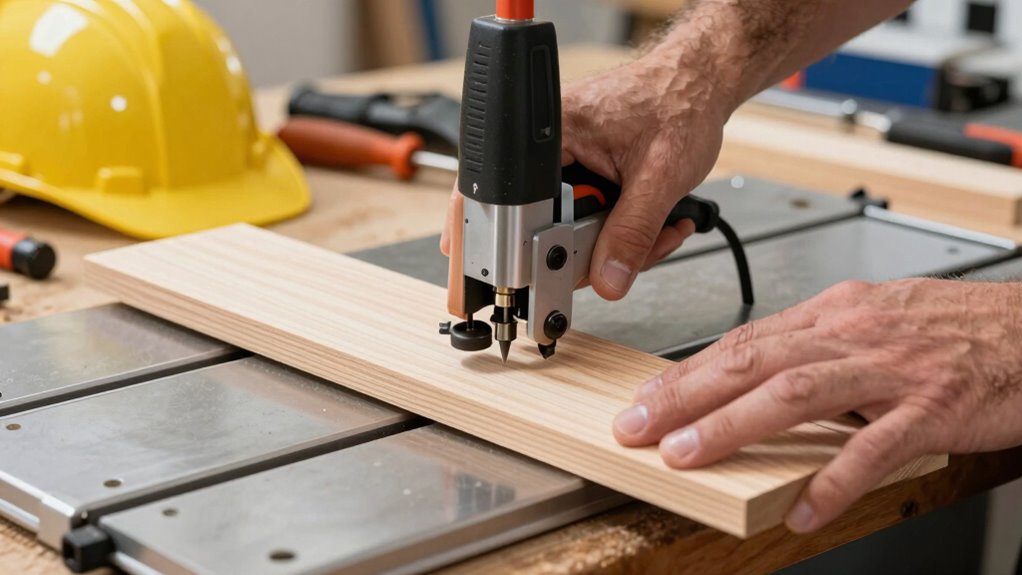
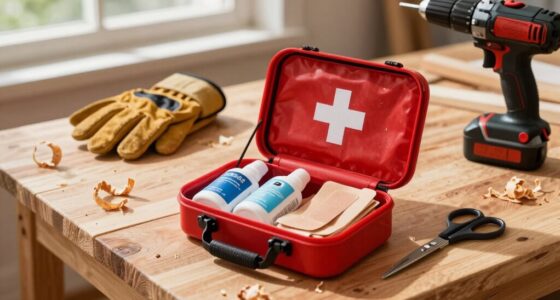
Even with all the safety precautions in place, accidents can still happen. If you experience a mishap, your first step is to stay calm and guarantee your safety. Immediately disconnect the router table from the power source to prevent further injury. Quickly assess the injury—if it’s minor, apply appropriate first aid, such as cleaning and bandaging a cut. For serious injuries, seek emergency response right away—call emergency services and do not attempt to move someone with a severe wound. Keep a well-stocked first aid kit nearby and know how to use it. Remember, quick and proper first aid can make a difference before professional help arrives. Staying calm and acting swiftly are key to minimizing damage and assure your safety.
Tips for Maintaining a Safe, Injury-Free Workshop
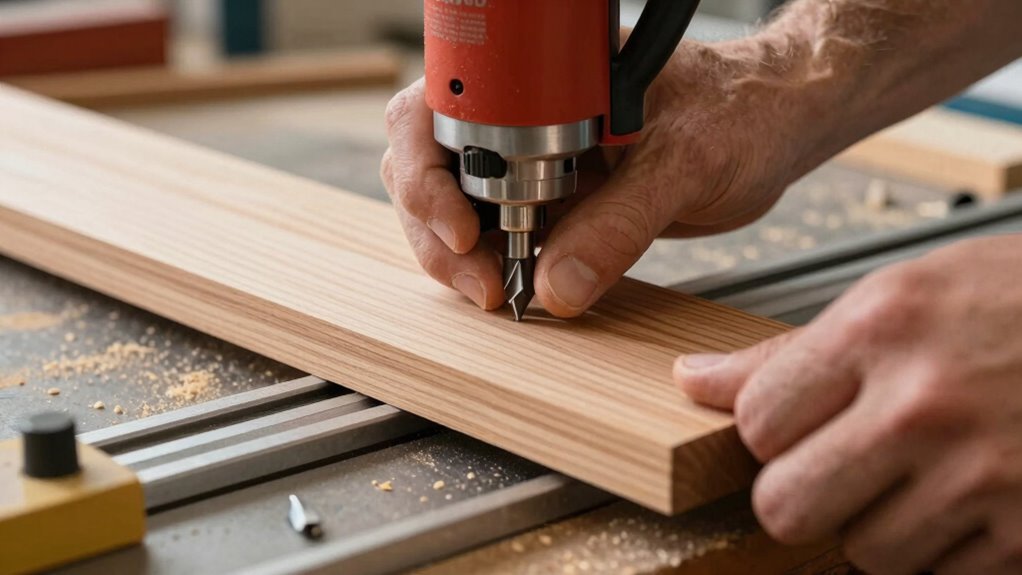
Maintaining a safe and injury-free workshop starts with consistent good practices and awareness. Regularly check that your router table blade alignment is accurate to prevent kickbacks and ensure smooth cuts. Keep your workspace clean by using effective dust collection; dust buildup can obscure hazards and cause slips. Always wear appropriate personal protective equipment, such as safety glasses and hearing protection. Keep tools sharp and well-maintained to reduce the risk of accidents. Additionally, stay focused and avoid distractions when operating the router table.
- Verify blade alignment before each use
- Use dust collection to keep the workspace clear
- Maintain sharp, properly adjusted tools
- Stay attentive and avoid rushing
Frequently Asked Questions
Can Using Push Sticks Replace the Hand Position Rule?
Using push sticks can be a safe alternative to the hand position rule, but they shouldn’t fully substitute it. Push sticks help keep your hands away from the cutter, improving hand safety techniques, but they still require proper handling and attention. Always combine push sticks with other safety practices, like maintaining a safe hand position and using guards, to ensure maximum safety while operating a router table.
What Are the Signs of Developing Unsafe Routing Habits?
Like a flickering flame warning of danger, developing unsafe routing habits signal potential router table injuries. You might find yourself neglecting hazard awareness, inching closer to blades with your fingers or rushing through tasks. Signs include inconsistent hand placement, ignoring push sticks, or feeling overly confident. Stay vigilant, keep your focus sharp, and always follow safety rules. Recognizing these signs helps prevent accidents and keeps your fingers safe from harm.
How Often Should Safety Equipment Be Inspected?
You should inspect your safety equipment before each use to ensure proper functioning. Regular inspection frequency is vital—check it weekly or after any heavy use to spot signs of wear or damage. Proper equipment maintenance keeps your tools reliable and safe. By maintaining a routine, you reduce risks, prevent accidents, and protect yourself from injuries during routing tasks. Never skip these inspections; they’re essential for a safe work environment.
Are There Specific Gloves Suitable for Router Table Use?
You should use protective gloves designed for grip enhancement, like nitrile gloves, when working on a router table. Imagine a woodworker slipping slightly and catching their tool—gloves provide that extra grip, preventing accidents. These gloves are lightweight, flexible, and offer good dexterity, ensuring safety without sacrificing control. Always choose gloves specifically made for woodworking to protect your hands and improve your grip during intricate router table tasks.
How Does Proper Lighting Improve Routing Safety?
Proper lighting improves routing safety by ensuring you see your workspace clearly. Use good lighting techniques like bright, even illumination and adjustable lights to eliminate shadows and glare. Proper workspace illumination helps you maintain control and accuracy, reducing the risk of mistakes or accidents. When your eyes can easily track the bit and material, you’re less likely to make errors, keeping your fingers safe and the project on track.
Conclusion
Remember, your fingers aren’t fans of close encounters with spinning bits. Stick to the hand position rule like it’s your new best friend—because it is. Practice safe routing, stay alert, and keep those digits intact. After all, no project is worth a trip to the emergency room. So, lock in those safe habits, and let your workshop be a place of creativity, not catastrophe. Keep your fingers, and your sense of humor, intact!
Fall Picks
fall essentials
As an affiliate, we earn on qualifying purchases.