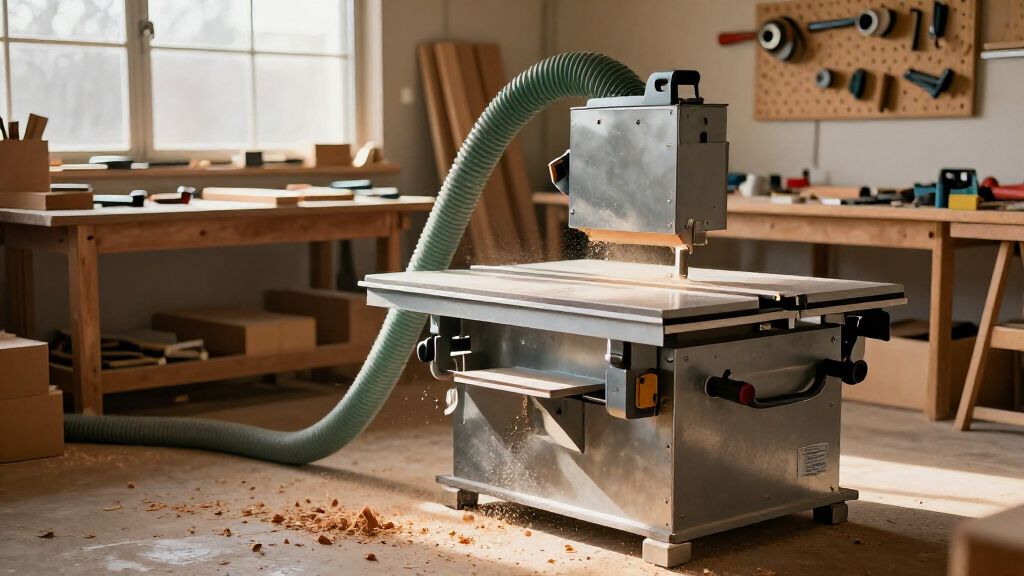
For most small and midsize shops, I’d start with the WEN DC1300: its stated 1,300 CFM and 50-gallon bag make it the strongest all-around central collector in this group. The VEVOR 1.5 HP Vortex Cone is a higher-capacity alternative with a cyclone-style separator, while the POWERTEC DC1081 suits buyers who want a mobile base and 1-micron filtration. The main tradeoffs are airflow versus floor space, fixed versus portable installation, and collection capacity versus filtration and convenience. Smaller units such as the WEN 12-gallon collector serve focused or occasional tasks, but they are not direct substitutes for a central system serving several machines. Read on for the full comparison and guidance on matching a collector to your tools and shop.

Get business pricing on tools and workshop supplies
- Business-only prices and quantity discounts
- Tax-exempt purchasing
- Multiple users, one account, clear invoices
Complete the kit

Key Takeaways
- The WEN DC1300 leads for central collection: its stated 1,300 CFM and 50-gallon bag give it the highest listed airflow and collection capacity in this lineup.
- The VEVOR pairs higher listed airflow with cyclone-style separation: its 1,100 CFM and vortex cone distinguish it from basic bag collectors, though its stated 2.5-micron filtration is less fine than the 1-micron options.
- Filtration and portability point to POWERTEC DC1081: its 1-micron filter and mobile base make it a more flexible shop-floor choice than wall-mounted collectors.
- Small-space setups have two different routes: the POWERTEC DC5371 and Rockler Dust Right 650 CFM mount on a wall, while the WEN 12-gallon unit is a compact, task-focused option.
- Automation and capacity are separate priorities: Bucktool’s 750 CFM auto-start feature favors convenient tool activation, while the DC1300’s larger bag and higher stated airflow suit broader collection demands.


| woodworking dust collection system | Motor | Airflow | Voltage |
|---|---|---|---|
| WEN DC1300 1,300 CFM Woodworki | 14 amps | Up to 1,300 CFM | — |
| POWERTEC 1 HP Dust Collector w | — | — | 120/240 V |
| WEN 12-Gallon Woodworking Dust | 5.7-amp brushed | Up to 660 CFM | — |
| POWERTEC DC5371 1 HP Wall-Moun | 1 HP induction | — | 120V/240V |
| Rockler Dust Right 650 CFM Wal | 0.75 HP | — | 110 V |
| VEVOR 1.5 HP Vortex Cone Dust | 1.5 HP induction motor | 1,100 CFM | 120 V |
| Bucktool DC50 1.2 HP Auto-Star | 1.2 HP, 120 V, 3,450 RPM | 750 CFM | — |
More Details on Our Top Picks
WEN DC1300 1,300 CFM Woodworking Dust Collector with 50-Gallon Collection Bag
I rank the WEN DC1300 first for shops that need to serve more than one machine: its 1,300 CFM airflow and two 4-inch inlets give it more connection flexibility than the single-inlet POWERTEC DC1081. The 50-gallon bag also means fewer interruptions to empty it than with the smaller collection setups in this group. Four swivel casters help when the collector needs to move between machines rather than stay in one corner.
That capacity comes with a larger-shop tradeoff: this is a 14-amp machine with a substantial collection bag, not the compact, easy-to-store choice. The WEN 12-gallon model is a better fit for a small shop or occasional cleanup, while the DC1300 suits buyers who can give a more capable collector room to work. Its two ports do not by themselves create a full multi-branch duct system.
Pros:- Up to 1,300 CFM supports higher-demand dust collection than the smaller units in this group.
- Two 4-inch inlets allow connections to two tools at once.
- 50-gallon collection bag reduces how often collection needs to be emptied.
- Four swivel casters make it easier to reposition around the shop.
Cons:- The large bag and mobile base need more shop space than compact or wall-mounted options.
- The listed dual inlets do not establish compatibility with a plumbed multi-branch system.
- A 14-amp motor may be more capacity than a small shop needs.
Best for: Woodworkers with several machines who want strong airflow, two 4-inch connection points, and less frequent bag emptying.
Not ideal for: Small-shop owners who need a compact or wall-mounted collector, or anyone expecting the dual inlets to replace a designed duct network.
- Airflow:Up to 1,300 CFM
- Inlets:Two 4-inch
- Collection bag capacity:50 gallons
- Motor:14 amps
- Impeller:10-inch steel
- Impeller speed:Up to 3,450 RPM
- Mobility:Base with four swivel casters
Our verdict“Choose the DC1300 if you need the lineup’s strongest stated airflow and two tool connections; choose a smaller collector if space and simplicity matter more.”
POWERTEC 1 HP Dust Collector with 1-Micron Filtration and Mobile Base (DC1081)
The POWERTEC DC1081 stands apart by pairing 800 CFM airflow with a stated 1-micron filter bag. That filtration spec makes it a more compelling choice for buyers focused on finer dust capture than the WEN DC1300, whose supplied data emphasizes airflow and capacity instead. Its quick-release collection bag clamps also make emptying more straightforward, and the casters and handle support moving it to the tool in use.
It is not the high-capacity pick here: the DC1300 moves more air and has a much larger stated collection bag, while the DC1081 has one 4-inch intake and a 1 HP motor. Assembly is required, and the unit is designated for indoor use, so it is a less natural fit for a shop setup exposed to outdoor conditions. I would pick it for portable, single-machine collection where the filter specification matters more than maximum throughput.
Pros:- Stated 1-micron filter bag offers finer filtration than the WEN 12-gallon model’s 5-micron bag.
- 800 CFM provides more stated airflow than the compact WEN 12-gallon collector.
- Quick-release clamps simplify removing the collection bag.
- Four casters and a handle support portable use around an indoor shop.
Cons:- One 4-inch intake offers less connection flexibility than the WEN DC1300’s two inlets.
- Requires assembly before use.
- Designed for indoor use, limiting placement options.
Best for: Indoor-shop woodworkers who move a collector between machines and want a stated 1-micron filter bag with convenient bag removal.
Not ideal for: Buyers managing several high-demand machines at once or looking for the roundup’s highest airflow and largest collection capacity.
- Motor power:1 HP
- Air suction capacity:800 CFM
- Filtration:1 micron
- Voltage:120/240 V
- Motor speed:3,450 RPM
- Intake port:4 inches
- Item weight:55 pounds
- Base dimensions:15-1/4 x 25-1/2 inches
Our verdict“Pick the DC1081 for mobile, indoor collection with a stated 1-micron bag, but choose the DC1300 if airflow and simultaneous connections take priority.”
WEN 12-Gallon Woodworking Dust Collector, 5.7-Amp Motor, 660 CFM
For a crowded garage shop or a collector that needs to tuck away between sessions, I would start with the WEN 12-gallon model. At 17 pounds, with a carrying handle, lockable casters, and an optional wall mount, it is much easier to store or reposition than the 50-pound Rockler Dust Right. Its stated 660 CFM is also above the Rockler’s 650 CFM, though those figures alone do not show how either unit will perform on a particular tool or hose run.
The compact footprint comes with clear limits: the 12-gallon bag fills sooner than the WEN DC1300’s 50-gallon bag, and the included bag is rated at 5 microns rather than the POWERTEC DC1081’s stated 1 micron. It also runs at a single speed and needs a standard 4-inch hose. This is a space-saving, modest-capacity choice, not a substitute for a larger collector serving multiple demanding machines.
Pros:- 17-pound weight and carrying handle make it easier to move than the Rockler Dust Right.
- Up to 660 CFM provides useful stated airflow for a compact collector.
- Lockable swivel casters and optional wall mounting offer flexible storage.
- Two-year warranty is specified.
Cons:- 12-gallon capacity requires more frequent emptying than the WEN DC1300’s 50-gallon bag.
- 5-micron bag is less fine than the POWERTEC DC1081’s stated 1-micron filtration.
- Single speed and a standard 4-inch hose limit setup flexibility.
Best for: Garage-shop woodworkers who need a lightweight collector they can roll away, carry, or optionally mount on a wall.
Not ideal for: Woodworkers who need a large collection bag, finer stated filtration, or adjustable speed for varied shop tasks.
- Airflow:Up to 660 CFM
- Motor:5.7-amp brushed
- Impeller:6-inch nylon
- Dust port:4 inches
- Collection bag:12-gallon, 5-micron zippered
- Dimensions:34.25 x 13 x 14.2 inches
- Weight:17 pounds
- Mounting and mobility:Four lockable swivel casters; optional wall mount
- Warranty:Two years
Our verdict“Choose this WEN when low weight and flexible storage matter more than large-bag capacity or finer filtration.”
POWERTEC DC5371 1 HP Wall-Mount Dust Collector with 1-Micron Filter Bag
The POWERTEC DC5371 is the space-saving choice for woodworkers who want a fixed collector and a stated 1-micron reusable filter bag. It can mount to a wall, workbench, or floor, giving it more placement options than the Rockler Dust Right, which is presented as a wall-mount unit. Its viewing window and bottom zipper help users monitor and empty the bag without treating it like a disposable collection sack.
The compromise is airflow: its 560 CFM is below the Rockler’s 650 CFM and the WEN 12-gallon collector’s 660 CFM, so I would not rank it for maximum throughput. The 4-inch inlet also has a grate that can collect debris and needs checking, while the specified 80 dB noise level may be a concern in a shared workspace. Choose it for compact placement and finer stated filtration, not for the highest airflow.
Pros:- Wall, workbench, or floor mounting provides more placement options than the Rockler wall-mount unit.
- Reusable 1-micron bag includes a viewing window and bottom zipper.
- Included bracket and hardware support mounting.
- Vortex Base is designed to improve airflow and dust removal.
Cons:- 560 CFM is lower than the Rockler Dust Right’s 650 CFM and the WEN 12-gallon model’s 660 CFM.
- The 4-inch inlet grate can collect debris and needs regular checking.
- Specified 80 dB noise level may be loud in a shared workspace.
Best for: Woodworkers with limited floor space who want a fixed, compact collector with a reusable 1-micron bag and several mounting choices.
Not ideal for: Buyers prioritizing maximum airflow, quiet operation, or a setup that can be left unchecked for long periods.
- Motor:1 HP induction
- Voltage:120V/240V
- Current:12 A at 120V; 6 A at 240V
- Airflow capacity:560 CFM
- Inlet size:4 inches
- Filter:Reusable 1-micron cloth bag
- Mounting options:Wall, workbench, or floor
- Noise level:80 dB
- Motor speed:3,450 RPM
Our verdict“Choose the DC5371 for flexible fixed mounting and a reusable 1-micron bag, but look to the Rockler or WEN 12-gallon model for higher stated airflow.”
Rockler Dust Right 650 CFM Wall Mount Dust Collector for Woodworking Shops
The Rockler Dust Right makes sense when a shop needs a wall-mounted collector with more stated airflow than the POWERTEC DC5371. Its 650 CFM rating edges the DC5371’s 560 CFM and is close to the lightweight WEN 12-gallon model’s 660 CFM, while the wall-mount design frees floor space. A clear 15-gallon bag makes fill level visible, and its zippered closure supports easier emptying. Rockler also lists finer bag and canister filtration upgrades, giving buyers a way to change the filtration setup later.
The supplied bag is rated at 30 microns, so buyers who want finer stated filtration out of the box should favor the POWERTEC DC5371 or DC1081. At about 50 pounds, this is not a collector to reposition casually, and Rockler states it is not compatible with plumbed-in multi-branch systems. It suits a fixed shop station better than a networked collection layout.
Pros:- 650 CFM exceeds the POWERTEC DC5371’s stated 560 CFM.
- Wall mounting saves floor space in a fixed shop layout.
- Clear 15-gallon bag and zipper make fill monitoring and emptying easier.
- Finer filtration upgrades are listed, including a 1-micron canister option.
Cons:- Supplied 30-micron bag is less fine than the POWERTEC DC5371’s 1-micron bag.
- At about 50 pounds, it is difficult to relocate frequently.
- Not compatible with plumbed-in multi-branch dust collection systems.
Best for: Woodworkers who want a fixed wall-mounted collector with a clear bag, moderate collection capacity, and upgradeable filtration options.
Not ideal for: Buyers who need a plumbed multi-branch system, finer filtration without an upgrade, or a lightweight unit they can move often.
- Flow rate:650 CFM
- Motor:0.75 HP
- Amperage:12 A
- Voltage:110 V
- Bag capacity:15 gallons
- Filter type:30-micron bag; finer filtration upgrades available
- Static pressure:5.00 inches of water
- Height:48 inches
- Weight:About 50 pounds
Our verdict“Choose the Rockler for a fixed wall-mounted station with higher stated airflow than the DC5371, provided its supplied filtration and ducting limits suit your setup.”
VEVOR 1.5 HP Vortex Cone Dust Collector, 1100 CFM, 2.5-Micron Filtration
The VEVOR pairs 1,100 CFM airflow with a 42-gallon bag, making it a strong fit for a shop that generates steady sawdust and wants fewer collection-bag changes. Its 2.5-micron filtration adds fine-particle capture, though it is not as fine a stated rating as the 1-micron filtration on the POWERTEC DC1081. Compared with the WEN DC1300, the VEVOR gives up 200 CFM but still offers substantial airflow and a large bag in a 120-volt setup. The tradeoff is its tall, nearly 76-inch footprint, which can be awkward in a low-ceiling or crowded shop. Operation is listed below 90 dB, but that may still be loud in a shared workspace.
Pros:- 1,100 CFM airflow supports collection at dust-producing woodworking tools.
- 2.5-micron filtration captures fine particles as well as coarse sawdust.
- 42-gallon bag reduces how often the collector needs emptying.
- Clip-style bag access makes removal and emptying more straightforward.
Cons:- Nearly 76 inches tall, so it may not suit shops with limited vertical clearance.
- Listed noise level below 90 dB may still be disruptive in a shared or noise-sensitive workspace.
Best for: Woodworkers with floor space and ceiling clearance who routinely produce substantial sawdust and prefer a large bag over frequent emptying.
Not ideal for: Small or noise-sensitive shops, or buyers who prioritize finer stated filtration over bag capacity and airflow.
- Airflow:1,100 CFM
- Filtration:2.5 microns
- Motor:1.5 HP induction motor
- Filter bag capacity:42 gallons (159 L)
- Noise level:Under 90 dB
- Voltage:120 V
- Item weight:68.1 lbs
- Dimensions:36.22 x 29.13 x 75.59 inches
Our verdict“Choose the VEVOR if your shop can accommodate its tall frame and you want high airflow with a large collection bag.”
Bucktool DC50 1.2 HP Auto-Start Dust Collector, 750 CFM
The Bucktool DC50 puts tool-linked auto-start and four caster wheels ahead of maximum airflow. Its 750 CFM is below the VEVOR’s 1,100 CFM and the WEN DC1300’s 1,300 CFM, so I’d favor those higher-airflow options for a central collector serving demanding machines. The DC50 makes more sense for a smaller shop where the collector can move between tools; the included five-foot hose and reducer set help connect to different ports. Auto-start can save a separate trip to the switch, but connected tools must stay within its 7A limit. Its cloth/HEPA filter setup lists 2.5-micron upper-bag filtration, and the unit is designed for indoor use, not outdoor collection.
Pros:- Auto-start can switch on with compatible connected tools rated up to 7A.
- Four caster wheels make it easier to move between machines.
- Includes three collection bags, a reducer set, and a flexible extraction hose.
- 2.5-micron upper-bag filtration is specified for fine-dust collection.
Cons:- 750 CFM is lower than the VEVOR and WEN DC1300, limiting its appeal for higher-demand collection.
- Auto-start supports connected tools only up to 7A.
- Designed for indoor use.
Best for: Small-shop woodworkers who move a collector between a table saw, sander, or other compatible tools and want the unit to start with the connected tool.
Not ideal for: Shops needing higher airflow for multiple demanding machines, users whose tools exceed the 7A auto-start limit, or anyone seeking outdoor operation.
- Model:DC50
- Airflow:750 CFM
- Motor:1.2 HP, 120 V, 3,450 RPM
- Full load current:6.5 A
- Auto-start tool capacity:Up to 7 A
- Bag capacity:5.4 cubic feet
- Upper bag filtration:2.5 microns
- Hose:5 ft x 4 in flexible dust extraction hose
- Base and wheels:16-1/2 x 26-3/8 inches; 4 caster wheels
Our verdict“Pick the DC50 for mobile, single-tool collection with convenient auto-start, but choose a higher-airflow system for demanding fixed-shop setups.”

How We Picked
I compared these woodworking dust collection systems by the demands they can address in a real shop: stated airflow, filtration information, collection capacity, footprint, mobility, and useful operating features. I also looked at whether each design is better suited to a central ducted setup, a movable collector, a wall-mounted station, or a single-tool task. Those distinctions matter because a high CFM figure alone does not establish how well a system will perform through long duct runs, restrictive fittings, or a poorly matched hood.
The ranking reflects versatility for woodworking first, then the fit for narrower shop needs. The WEN DC1300 ranks highest for its listed airflow and large bag; the VEVOR follows for its vortex-cone design and strong stated airflow, with filtration as a tradeoff. POWERTEC DC1081 earns a place for mobility and 1-micron filtration. Wall-mounted and compact units rank lower as all-purpose choices, not because they lack a use, but because their form and stated capacity suit more specific layouts or workloads. I treat manufacturer specifications as comparison points, not guarantees of performance in every installation.
Factors to Consider When Choosing Woodworking Dust Collection Systems
Before choosing among these systems, I’d map the dust problem to the shop rather than shop by motor size alone. A collector that fits one tool and a short hose may be a poor match for several machines on long ductwork. These factors help clarify what to prioritize before you compare models.
Match the Collector to the Tool and Duct Path
Start by listing the machines you expect to connect and checking their dust-port sizes and collection requirements. A planer or wide-belt sander can produce a very different volume of chips from a small benchtop sander, so one collector does not automatically suit both. Long runs, narrow hoses, sharp bends, and restrictive fittings can reduce airflow at the tool even when a product lists a high CFM figure. Measure the planned route and favor smooth, appropriately sized ducting where practical. A common mistake is buying by the largest advertised airflow number without accounting for the duct path. For a multi-machine network, layout and branch control matter as much as the collector itself.
Separate Chip Collection From Fine-Dust Control
A dust collector’s bag or filter is only one part of managing airborne particles. Compare the stated filtration rating, but also check how the filter is sealed, how it is cleaned, and whether replacement filters are available for the model. Fine ratings can be useful, yet a loose connection or a poorly fitting machine hood can send dust into the shop before it reaches the filter. Do not treat a collector as a substitute for suitable respiratory protection or general shop ventilation. Buyers often focus on chip volume and overlook the dust escaping at the tool or during bag emptying. Think about the full path from the cutter to the collection container, including leaks and cleanup.
Choose a Layout Before Choosing a Footprint
Floor-standing units can provide larger collection capacity but take up space that may be needed for lumber, assembly, or machine access. Wall-mounted collectors free floor area and can work well when one machine or a compact zone drives most of the dust load. A mobile base offers another kind of flexibility: it lets a collector serve separate tools without permanent ductwork, though moving and reconnecting hoses adds friction to daily use. Check wall strength, clearance for bags, filter access, and the route for emptying dust before settling on a mounting style. A frequent mistake is measuring only the machine body and forgetting the space needed to remove a full bag. Choose around the shop’s movement and maintenance needs, not just the collector’s dimensions.
Think Through Bag Capacity and Emptying
Collection capacity affects how often work stops for emptying, but a larger bag also needs room beneath the unit and a safe way to handle its contents. Consider the kind of waste your tools produce: fine sanding dust fills bags differently from bulky planer shavings. A separator or vortex-style design can change how material reaches the filter, but buyers should still review the unit’s collection arrangement and cleaning instructions. Look for a bag attachment that can be removed and resealed without spilling dust. If several people share the shop, easy emptying can matter more than a small difference in nominal capacity. Plan where the waste will go and how often you can realistically service the system.
Check Electrical Fit and Operating Convenience
Confirm the collector’s voltage, current requirements, plug type, and circuit needs against the shop before ordering. A powerful unit may need a suitable dedicated circuit, and sharing a circuit with a saw can lead to nuisance trips or constrain how the equipment is used. Features such as auto-start can reduce the chance of forgetting to switch on collection, but check which tools or control devices the feature supports. Noise and the location of the collector also affect whether you will want to run it during routine work. A less convenient system can encourage users to skip dust collection, even when its specifications look strong. Make electrical planning part of the purchase decision rather than an afterthought.
Budget for Ducting, Hoses, and Upkeep
The collector is not the whole system: hoses, adapters, blast gates, ducting, filter maintenance, and replacement bags can add work and expense. Price out the fittings needed to connect your actual machines, since ports vary and improvised reductions can create restrictions. Check how often the filter needs cleaning, how dust is removed, and whether consumable parts remain available. Paying more can make sense when a better fit, easier maintenance, or more useful capacity will support regular shop use. It may not pay off if the system will serve only one small tool occasionally. Compare the cost and effort of a complete working setup, not just the main unit.
Frequently Asked Questions
Can one dust collector serve several woodworking machines?
It can, if the collector, duct layout, and tool ports are matched to the machines you plan to run. In many shop setups, users operate one machine at a time and close branches to tools that are not in use. Long runs, undersized ducts, and multiple open branches can cut useful airflow at the active tool. Check the requirements for the machines with the heaviest dust or chip output, then design around those rather than the easiest connection. If your tools need collection simultaneously, size the system for that operating pattern instead of assuming a single listed CFM figure covers every arrangement.
Is a 1-micron filter automatically the right choice for a woodworking shop?
A finer stated filtration rating can be a useful point of comparison, but it does not by itself determine how much dust stays out of the air. Filter fit, housing seals, duct leaks, the machine hood, and filter maintenance all affect the result. A system with a coarser stated rating may still collect chips effectively at the source, while fine dust can escape through a poor connection on any setup. Review the complete collection path and follow the manufacturer’s cleaning and replacement guidance. Keep appropriate respiratory protection and ventilation in mind, especially for sanding and other fine-dust work.
Should I choose a wall-mounted collector or a mobile floor unit?
A wall-mounted model can preserve floor space and suit a fixed machine or a compact work zone. A mobile collector gives you more flexibility when machines are spread across the shop or used in different locations, but you may need to move hoses and reconnect fittings regularly. Wall mounting also requires a suitable structure and enough clearance for filter access and bag changes. Think about which tools generate the most dust and where they sit during normal work. If you expect to build a permanent duct network, plan the route and branch controls before deciding where the collector will live.
Is a portable shop vacuum enough, or do I need a dedicated dust collector?
A shop vacuum can be convenient for smaller tools, cleanup, or applications that use a vacuum-style dust port. Dedicated collectors are generally aimed at moving the larger volumes of chips and dust produced by machines such as planers, jointers, and table saws. The right choice depends on the tool’s collection needs, the port size, and how long the system must run. A vacuum hose may restrict airflow on a machine designed for a larger collector connection. Check the tool maker’s guidance and consider using separate systems for fine dust at small tools and high-volume chip collection.
What should I budget for beyond the dust collector itself?
Include the parts needed to make a complete connection: hose or duct, adapters, clamps, blast gates, mounting hardware, and any needed electrical work. You may also need replacement bags or filters over time, so check availability and maintenance instructions before choosing a model. The layout can affect costs: a portable setup may use more flexible hose, while a fixed network may need ductwork and several branches. Avoid buying a collector first and assuming every machine will connect directly. A quick inventory of tool ports and duct distances helps reveal the real setup requirements.
Conclusion
For the best overall balance of listed airflow and collection capacity, I’d choose the WEN DC1300 for a shop that can accommodate a floor-standing central collector. The VEVOR is my best premium-style choice for higher-capacity, cyclone-oriented collection, while buyers who value mobility and a finer stated filter rating should compare it with the POWERTEC DC1081. For best value in a compact, task-focused setup, the WEN 12-gallon model is the simpler fit, and the POWERTEC DC5371 or Rockler Dust Right makes more sense when wall space is available and preserving floor area is a priority. Beginners should start by matching the collector to their first machines and shop layout rather than buying the largest unit they can fit. Choose the Bucktool if auto-start convenience is the specific feature you want; choose a larger central unit if several machines and higher chip volume define your needs.
Halloween Picks
halloween
As an affiliate, we earn on qualifying purchases.