
For the best Woodpeckers woodworking tools, I’d start with the in-DEXable 6-Inch Combination Square System: it brings several layout functions into one adaptable tool. The Table Saw Gauge and Alignment Tool stands out for dialing in machine setup, while the 3D Multi-Marking Square is a strong choice for repeatable marks across multiple faces. The main tradeoff is between specialized precision tools and versatile tools that cover more tasks but may be less convenient for a particular operation. Size, shop workflow, and the kind of accuracy you need matter more than collecting every tool in the lineup. Read on for the full comparison and recommendations by buyer type.

Get business pricing on tools and workshop supplies
- Business-only prices and quantity discounts
- Tax-exempt purchasing
- Multiple users, one account, clear invoices
Complete the kit


Key Takeaways
- Versatility favors the in-DEXable 6-Inch Combination Square System: it serves more layout tasks than a dedicated square, making it a strong first pick for a mixed-use shop.
- Machine setup tools fill a different role from layout tools: the Table Saw Gauge and Alignment Tool and the SERX Straight Edge address calibration and alignment rather than marking workpieces.
- Tool size changes how often a square gets used: the Mini Square suits compact checks, while the 12-Inch Square and T-Squares cover longer references and broader layouts.
- Repeatable dimensions are the setup-block set’s advantage: the 7-piece set is aimed at establishing or checking fixed heights, not replacing a ruler or square.
- Several tools overlap by design: edge rules, rulers, squares, triangles, and T-Squares all support layout, but the best choice depends on the reference length and marking task.
| Woodpeckers 3D Multi-Marking Square, Inch Version |  | Best for Versatile Layout | Material: Aircraft-grade aluminum | Measurement version: Inch | Marking steps: 1/4 in, 3/8 in, and 1/2 in | VIEW LATEST PRICE | See Our Full Breakdown |
| Woodpeckers Mini Aluminum Woodworking Square |  | Best Compact Shop Square | Material: Aluminum | Product dimensions: 2.5 in L x 1.5 in W | Inside dimensions: 1-1/8 in x 2 in | VIEW LATEST PRICE | See Our Full Breakdown |
| Woodpeckers inDexable 6-Inch Combination Square System |  | Best for Repeatable Short Layouts | Rule length: 6 inches | Material: Stainless steel | Graduation range: 0–6 inches | VIEW LATEST PRICE | See Our Full Breakdown |
| Woodpeckers SERX Precision Straight Edge Tool, 36-Inch Freestanding Woodworking Machine Setup Rule | 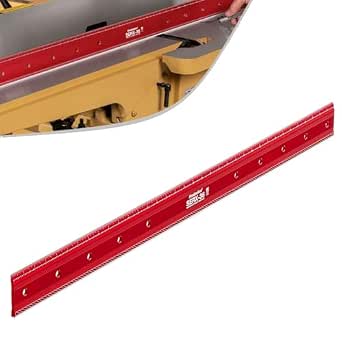 | Best for Machine Alignment | Length: 36 inches | Material: Aluminum | Tolerance: .0015 in per foot | VIEW LATEST PRICE | See Our Full Breakdown |
| Woodpeckers 32-Inch Precision Woodworking T-Square |  | Best for Panel Layout | Blade length: 32 inches | Material: Aluminum | Graduation range: 1/32 inch | VIEW LATEST PRICE | See Our Full Breakdown |
| Woodpeckers 3D Setup Blocks, 7-Piece Aluminum Set |  | Best for Repeatable Machine Setups | Set size: 7 blocks | Material: Aircraft-grade aluminum | Block sizes: 1/8, 3/16, 1/4, 5/16, 3/8, 7/16, and 1/2 inch | VIEW LATEST PRICE | See Our Full Breakdown |
| Woodpeckers 12-Inch Precision Aluminum Woodworking Square |  | Best for Bench and Cabinet Layout | Length: 12 inches | Material: Aluminum | Accuracy: Within 0.001 inch | VIEW LATEST PRICE | See Our Full Breakdown |
| Woodpeckers Router Plane WRP |  | Best for Fine Joinery Cleanup | Model: WRP | Material: Ductile iron | Cutting width: 3.5 inches | VIEW LATEST PRICE | See Our Full Breakdown |
| Woodpeckers Table Saw Gauge and Alignment Tool – Auto-Adjusts to Miter Slot, Includes Dial Indicator & Storage Case (SG-WP) |  | Best for Table Saw Alignment | Model: SG-WP | Material: Aluminum | Item weight: 2.2 pounds | VIEW LATEST PRICE | See Our Full Breakdown |
| Woodpeckers Aluminum Edge Rule Set, Inch |  | Best for Repeatable Edge Marking | Material: Aluminum | Scale: Inch | Short-side width: 3/8 inch | VIEW LATEST PRICE | See Our Full Breakdown |
| Woodpeckers 24-Inch Precision Woodworking T-Square |  | Best for Cabinet Layout | Length: 24 inches | Material: Aluminum | Dimensions: 24 × 2.5 inches | VIEW LATEST PRICE | See Our Full Breakdown |
| Woodpeckers Precision Woodworking Triangle Set, 4 and 6 Inch |  | Best for Compact Squareness Checks | Material: Aluminum | Sizes: 4 inches and 6 inches | Tolerance: ±0.0085° | VIEW LATEST PRICE | See Our Full Breakdown |
| Woodpeckers in-DEXABLE Precision Miter Gauge with Extendable Fence and Flip Stop |  | Best for Repeatable Table-Saw Crosscuts | Model: IMG-I | Miter slot compatibility: Nominal 3/8 × 3/4 inches | Fence length: 18 to 31 inches | VIEW LATEST PRICE | See Our Full Breakdown |
| Woodpeckers 12-Inch Precision Aluminum Woodworking Ruler with Beveled Edges and Laser Engraved Scales |  | Best Everyday Precision Ruler | Model: WWR12 | Material: Aluminum | Length: 12 inches | VIEW LATEST PRICE | See Our Full Breakdown |
| Woodpeckers woodworking tool | Material |
|---|---|
| Woodpeckers 3D Multi-Marking S | Aircraft-grade aluminum |
| Woodpeckers Mini Aluminum Wood | Aluminum |
| Woodpeckers inDexable 6-Inch C | Stainless steel |
| Woodpeckers SERX Precision Str | Aluminum |
| Woodpeckers 32-Inch Precision | Aluminum |
| Woodpeckers 3D Setup Blocks | Aircraft-grade aluminum |
| Woodpeckers 12-Inch Precision | Aluminum |
| Woodpeckers Router Plane WRP | Ductile iron |
| Woodpeckers Table Saw Gauge an | Aluminum |
| Woodpeckers Aluminum Edge Rule | Aluminum |
| Woodpeckers 24-Inch Precision | Aluminum |
| Woodpeckers Precision Woodwork | Aluminum |
| Woodpeckers in-DEXABLE Precisi | — |
| Woodpeckers 12-Inch Precision | Aluminum |
More Details on Our Top Picks
Woodpeckers 3D Multi-Marking Square, Inch Version
The 3D Multi-Marking Square earns its place for woodworkers who want one compact reference tool for marking faces and edges, checking corners, and laying out joinery. Its steps for 1/4-inch, 3/8-inch, and 1/2-inch increments make common offsets quicker to repeat, while the center groove helps keep the blade perpendicular. The stable legs also let it stand for machine setup without needing a hand to hold it. Compared with the Mini Aluminum Woodworking Square, this model handles a broader range of layout tasks, but it takes more space and has more specialized geometry. Its engraved setup scales and aircraft-grade aluminum construction favor repeatable shop work; the tradeoff is that it is inch-only, so metric users should choose another reference.
Pros:- Supports face and edge marking, corner checking, and joinery layout
- Stable legs allow hands-free machine setup
- Increment steps cover common fractional offsets
- Precision-milled aluminum body with engraved scales
Cons:- Inch version does not suit metric-first layout
- More specialized and larger than a pocket square for simple edge checks
Best for: Woodworkers who routinely mark joinery and need a square that can also stand independently during machine setup
Not ideal for: Metric-first users or anyone who only needs a small square for quick edge checks
- Material:Aircraft-grade aluminum
- Measurement version:Inch
- Marking steps:1/4 in, 3/8 in, and 1/2 in
- Center feature:Groove to keep the blade perpendicular
- Color:Red and white
- Country of manufacture:USA
- Part number:3D-MMS-I
Our verdict“Choose this for varied inch-based layout and setup work; pick the Mini Square if compact edge checking is the priority.”
Woodpeckers Mini Aluminum Woodworking Square
For quick checks at the bench or beside a machine, the Mini Aluminum Woodworking Square is the most portable option in this group. At 3.2 ounces and 2.5 inches long, it can stay close at hand rather than being fetched from a tool rack. Its red anodized finish helps make gaps easier to spot when checking whether an edge is square. Compared with the 3D Multi-Marking Square, this mini model is simpler and easier to store, but it does not offer the same joinery-marking steps or freestanding setup support. The compact dimensions are a real advantage for tool-edge checks and assembly touch-ups, yet they also limit reach: this is not a general measuring square for broad layout work.
Pros:- Compact size fits easily in a pocket or small tool tray
- Lightweight at 3.2 ounces
- Red finish helps reveal gaps during square checks
- Machined aluminum construction
Cons:- Small dimensions limit reach on larger workpieces
- Designed mainly for checking edges, not broad layout tasks
Best for: Cabinetmakers and shop users who want a lightweight square for checking tool edges and small assemblies
Not ideal for: Woodworkers laying out large panels or needing a square for general-purpose measuring and marking
- Material:Aluminum
- Product dimensions:2.5 in L x 1.5 in W
- Inside dimensions:1-1/8 in x 2 in
- Weight:3.2 ounces
- Color:Red
- Country of manufacture:USA
- Model:MINISQUARE
Our verdict“Pick this for portable edge checks and small assemblies, not as a substitute for a full-size layout square.”
Woodpeckers inDexable 6-Inch Combination Square System
The inDexable 6-Inch Combination Square System is aimed at short, repeatable layout jobs where setting the head at a known position matters more than having a long rule. Its head indexes and locks at 1-inch intervals, reducing the need to reposition it by eye, while laser-cut scribing guides support more controlled marking. The 45° and 90° faces cover common angle checks, and the sliding tab helps keep the square aligned on the workpiece. Compared with the 3D Multi-Marking Square, this model brings a sliding rule and indexed settings; the 3D square offers more purpose-built fractional marking steps. The limitation is clear: a 6-inch rule is handy for small parts but can feel restrictive on wider stock. Rack-It storage is useful, though it takes wall space.
Pros:- Head locks at repeatable 1-inch intervals
- Laser-cut scribing guides and engraved graduations support controlled layout
- Provides both 45° and 90° reference angles
- Includes wall-mountable Rack-It storage
Cons:- Six-inch rule limits reach on larger projects
- Indexed settings may be less useful for users who mainly need fractional marking steps
Best for: Woodworkers who regularly mark small parts and want repeatable 1-inch settings plus 45° and 90° checks
Not ideal for: Anyone laying out large panels or needing a longer rule for measurements beyond six inches
- Rule length:6 inches
- Material:Stainless steel
- Graduation range:0–6 inches
- Indexing intervals:1 inch
- Angles:45° and 90°
- Included components:inDexable Combination Square and Rack-It wall-mountable storage
- Made in:USA
Our verdict“Choose it for compact, repeatable combination-square work; opt for a longer rule when your layouts span wider stock.”
Woodpeckers SERX Precision Straight Edge Tool, 36-Inch Freestanding Woodworking Machine Setup Rule
When the job is checking a machine bed or aligning shop equipment, the SERX 36-Inch Precision Straight Edge brings more reach and setup-focused features than the squares in this group. Its stated tolerance of .0015 inch per foot suits checks where small deviations matter, and the vee-groove base lets it stand steadily while leaving the reference edge visible. A beveled 30° edge keeps scale markings readable close to the workpiece, useful when locating irregularities on a table saw or jointer. The 32-Inch Precision T-Square is better suited to marking and panel layout; the SERX is the more specialized choice for machine alignment. That focus comes with a substantial 5.5-pound weight, making it less convenient to carry between sites.
Pros:- Stated straightness tolerance of .0015 inch per foot
- Vee-groove base provides stable freestanding positioning
- Thirty-six-inch length spans machine surfaces and setup points
- Beveled edge and laser-engraved scale aid close readings
Cons:- Weighs 5.5 pounds, limiting portability
- Specialized for setup checks rather than everyday square and marking tasks
Best for: Shop owners aligning table saws, jointers, router tables, and other stationary woodworking machines
Not ideal for: Mobile woodworkers or buyers who need a square primarily for marking panels and joinery
- Length:36 inches
- Material:Aluminum
- Tolerance:.0015 in per foot
- Scale accuracy:±.004 in total accumulated error
- Graduation range:1/32 inches
- Item weight:5.5 pounds
- Made in:USA
Our verdict“Choose the SERX for precise, stationary machine setup; choose the T-square for marking and layout across panels.”
Woodpeckers 32-Inch Precision Woodworking T-Square
The 32-Inch Precision Woodworking T-Square is the layout pick for marking long, straight lines across sheet goods and large panels. Its blade and solid billet handle form a broad reference, while the support lips help keep it from tipping or rolling as it is positioned. Scribing holes spaced every 1/16 inch make repeated parallel marks easier, and the 1/4-inch shelf-pin holes add a dedicated cabinetmaking use. Compared with the SERX 36-Inch Straight Edge, this T-square is built for marking and repeatable layout rather than machine flatness checks. Its scale is specified within 0.004 inch, but the tool weighs 10 pounds and needs more storage space than a compact square.
Pros:- Thirty-two-inch blade covers broad panel layouts
- Support lips help prevent tipping and rolling
- Scribing holes support repeated marks at 1/16-inch spacing
- Includes shelf-pin holes and a Rack-It mounting kit
Cons:- Listed item weight of 10 pounds makes repositioning less convenient
- Large dimensions require dedicated storage space
- Designed for layout rather than checking machine flatness
Best for: Cabinetmakers and furniture makers marking long lines, shelf-pin layouts, and repeated offsets on panels
Not ideal for: Woodworkers with limited storage or anyone seeking a lightweight tool for portable layout and quick checks
- Blade length:32 inches
- Material:Aluminum
- Graduation range:1/32 inch
- Scale accuracy:Within 0.004 inch
- Scribing holes:1 mm holes spaced every 1/16 inch
- Shelf-pin holes:1/4-inch holes on 1-inch centers
- Item weight:10 pounds
- Included components:32-inch T-square and mounting kit
Our verdict“Choose this T-square for long panel and cabinet layouts if its weight and storage needs fit your shop.”
Woodpeckers 3D Setup Blocks, 7-Piece Aluminum Set
For dialling in a table saw, router table, or other shop machine, this set covers more setup tasks than a single-purpose measuring tool. Each of the seven blocks has four measuring surfaces, with sizes from 1/8 to 1/2 inch and several bevel angles, so one set can help check height, depth, fence position, and angle. The engraved, anodized aluminum surfaces make the markings easy to read, while the wall rack keeps the pieces together between adjustments. Compared with the Woodpeckers Table Saw Gauge, these blocks serve a broader range of shop setups but do not provide a dial indicator for fine blade-to-slot alignment. Their value is highest for woodworkers who regularly change machine settings; for occasional measuring, they are a specialized purchase with limited use beyond setup work.
Pros:- Seven block sizes cover common height and depth settings.
- Four measuring surfaces per block support several kinds of setup.
- Engraved markings and anodized surfaces aid legibility.
- Wall-mountable rack keeps the set organized.
Cons:- Specialized for setup work, with limited usefulness for general measuring.
- Does not replace a dial-indicator tool for precise table-saw alignment.
Best for: Woodworkers who frequently set blade or bit heights, fence positions, and bevel angles on shop machines.
Not ideal for: Occasional hobbyists who mainly need a ruler or square and rarely adjust machine settings.
- Set size:7 blocks
- Material:Aircraft-grade aluminum
- Block sizes:1/8, 3/16, 1/4, 5/16, 3/8, 7/16, and 1/2 inch
- Bevel angles:90°, 85°, 80°, 70°, 60°, 45°, and 30°
- Included accessories:Wall-mountable rack and mounting screws
- Weight:1.98 pounds
- Model:3D-SUB7
- Made in:Strongsville, Ohio, USA
Our verdict“Choose this set if repeatable machine adjustments matter more to you than having a general-purpose measuring tool.”
Woodpeckers 12-Inch Precision Aluminum Woodworking Square
This square makes the most sense when your work calls for accurate right-angle checks and clear layout lines on stock that fits within its 12-inch reach. Its single-piece machined aluminum construction is specified accurate within 0.001 inch along its length, and the self-standing base lets you check an edge without holding the tool upright. A shoulder for marking either edge, a corner notch for starting layout lines, and scales on both sides give it more layout utility than a basic square. Compared with the Woodpeckers 32-Inch Precision Woodworking T-Square, this model is easier to handle on smaller parts but cannot span wide panels. The 1/16-inch graduations also suit ordinary woodworking layout better than very fine incremental measurement. Its size is a practical strength until workpieces outgrow it.
Pros:- Specified accuracy of 0.001 inch along its length.
- Self-standing base supports hands-free checking.
- Scales on both sides and a shoulder support marking from either edge.
- Corner notch helps start layout lines at a reference point.
Cons:- Twelve-inch reach is limiting on broad panels and long workpieces.
- 1/16-inch graduations are less suited to very fine incremental measurements.
Best for: Cabinetmakers and furniture builders who need a precise, self-standing square for parts up to 12 inches.
Not ideal for: Woodworkers laying out wide sheets or checking long edges, where a longer T-square or straight edge is a better fit.
- Length:12 inches
- Material:Aluminum
- Accuracy:Within 0.001 inch
- Graduation:1/16 inch
- Item thickness:0.25 inches
- Dimensions:14.5 × 10 inches
- Country of manufacture:USA
- Included component:Rack-It wall mount
Our verdict“Pick this square for precise everyday layout on modest-size parts, not for spanning large panels.”
Woodpeckers Router Plane WRP
When a shoulder or recess needs to finish at a controlled depth, this hand-powered router plane offers a different kind of precision from the lineup’s squares and setup gauges. Its backlash-free thumbwheel supports repeatable depth adjustments, while the ductile iron base gives the tool a stable reference as the blade trims a joint. The included square and spearpoint blades broaden its reach across different cleanup tasks, and three mounting positions plus a reversible carriage help adapt the tool to the cut. Unlike the Woodpeckers 3D Setup Blocks, which help establish machine settings, the WRP removes material directly and is meant for hands-on joinery work. The tradeoff is that it is a specialized plane, not a general measuring tool, and its optional fence is sold separately for added guidance.
Pros:- Backlash-free thumbwheel supports repeatable cutting-depth adjustments.
- Includes pre-lapped square and spearpoint blades.
- Three mounting positions and a reversible carriage offer setup flexibility.
- Ductile iron base provides a stable working reference.
Cons:- Optional fence is sold separately.
- Specialized for controlled recess and joinery cleanup rather than general shop tasks.
Best for: Furniture makers and hand-tool woodworkers refining dadoes, grooves, and other joinery to a controlled depth.
Not ideal for: Woodworkers who mainly need layout or machine-calibration tools, or who require a fence included in the package.
- Model:WRP
- Material:Ductile iron
- Cutting width:3.5 inches
- Power source:Hand-powered
- Included components:Router plane and 2 blades
- Blade types:Square and spearpoint
- Carriage positions:Three mounting positions; reversible carriage
- Origin:Made in USA, Strongsville, Ohio
Our verdict“Choose the WRP if you want controlled hand-powered depth trimming for joinery and do not need an included fence.”
Woodpeckers Table Saw Gauge and Alignment Tool – Auto-Adjusts to Miter Slot, Includes Dial Indicator & Storage Case (SG-WP)
This is the lineup’s focused choice for aligning a table-saw blade and rip fence to the miter slot. Precision steel pins automatically adjust to fit 5/8- and 3/4-inch slots, reducing the need to match the tool to a particular saw width. Its dial indicator uses 0.001-inch graduations, giving users a way to track small alignment differences rather than relying only on a visual check. The fitted case protects the gauge between tune-ups, though its 2.2-pound weight makes it less appealing for carrying around the shop. Compared with the Woodpeckers 3D Setup Blocks, this tool is narrower in purpose but better suited to measuring alignment along a miter slot. The dial indicator is not made in the USA, unlike the rest of the tool as described.
Pros:- Auto-adjusting pins accommodate 5/8- and 3/4-inch miter slots.
- Dial indicator has 0.001-inch graduations.
- Fitted case protects the gauge during storage and transport.
- Made in the USA except for the dial indicator.
Cons:- At 2.2 pounds, it is relatively heavy for a tool carried between work areas.
- Its specialized alignment function offers little value for other measuring tasks.
- Dial indicator is not manufactured in the USA.
Best for: Table-saw owners who want to check blade and rip-fence alignment across 5/8- or 3/4-inch miter slots.
Not ideal for: Woodworkers seeking a portable general-purpose measuring tool or a gauge for tasks beyond table-saw alignment.
- Model:SG-WP
- Material:Aluminum
- Item weight:2.2 pounds
- Product dimensions:10 × 8.5 × 3.5 inches
- Dial indicator graduations:0.001 inch
- Compatible miter-slot widths:5/8 inch and 3/4 inch
- Included accessory:Fitted storage case
- Part number:SG-WP
Our verdict“Buy this gauge for precise table-saw alignment; choose the Setup Blocks instead if you need broader machine-setting support.”
Woodpeckers Aluminum Edge Rule Set, Inch
These rules are built for measuring and marking across a board edge and its face without changing tools or guessing where the scale sits. The wrap-around profile presents 3/8-inch and 3/4-inch-wide measuring surfaces, while the 89° angle helps the rule sit against stock. Laser-engraved inch scales and beveled edges support clear readings, and the four included stops make repeated marks more consistent across multiple pieces. Compared with the Woodpeckers 12-Inch Precision Aluminum Woodworking Square, this set is more adaptable for edge-based measuring and batch marking, while the square is the more direct choice for checking right angles. The rules come with a rack and stops, but that added organization and repeatability may be unnecessary for someone who measures only now and then.
Pros:- Wrap-around design measures both stock edges and faces.
- Dual-sided widths provide 3/8-inch and 3/4-inch measuring surfaces.
- Four stops support repeatable marking across multiple pieces.
- Laser-engraved inch scales and beveled edges aid reading.
Cons:- Stops and rack may be unnecessary for occasional measuring.
- An 89° profile is not a substitute for a dedicated square when checking a true right angle.
Best for: Woodworkers who frequently measure and mark board edges or repeat the same layout across several parts.
Not ideal for: Occasional users who need only a basic ruler or square and will not use the stops or storage rack.
- Material:Aluminum
- Scale:Inch
- Short-side width:3/8 inch
- Long-side width:3/4 inch
- Scale accuracy:±0.004 inch total accumulated error
- Angle:89°
- Included components:4 rules, Rack-It, and 4 stops
- Country of manufacture:USA
Our verdict“Choose this set for frequent edge measurements and repeat marking, but skip the bundled stops if your layout work is occasional.”
Woodpeckers 24-Inch Precision Woodworking T-Square
This T-square earns its place for long, repeatable layout lines, especially on cabinet parts where its 24-inch blade and 1/4-inch shelf-pin holes can speed up marking. The support lips help keep the tool from tipping as you work along an edge, while 1 mm scribing holes spaced every 1/16 inch provide a consistent guide for parallel marks. Compared with the Woodpeckers 12-Inch Precision Aluminum Woodworking Ruler, it covers much longer spans and registers against an edge; the ruler is easier to handle for general measuring. Its stated scale accuracy is within 0.004 inches, and a wall mount is included. The tradeoff is substantial: at 8.3 pounds, this is a dedicated bench layout tool, not a lightweight rule to carry around. Its specialized hole pattern may also matter little outside cabinetry work.
Pros:- Support lips help stabilize the blade against an edge while marking.
- Scribing holes spaced every 1/16 inch support evenly spaced parallel lines.
- Shelf-pin holes and laser-engraved scales suit repeatable cabinet layout.
- Includes a wall mount for dedicated shop storage.
Cons:- At 8.3 pounds, it is heavy to handle and transport.
- Its edge-registration and hole features are less useful for general measuring tasks.
Best for: Cabinetmakers and shop woodworkers who lay out long, straight lines or repeated shelf-pin locations on panel edges.
Not ideal for: Woodworkers who mainly need a portable measuring rule or work on small pieces; the 24-inch, 8.3-pound body is cumbersome for quick handheld checks.
- Length:24 inches
- Material:Aluminum
- Dimensions:24 × 2.5 inches
- Graduation range:1/32 inch
- Scale accuracy:Within 0.004 inches
- Scribing holes:1 mm holes spaced every 1/16 inch
- Shelf-pin holes:1/4 inch on 1-inch centers
- Weight:8.3 pounds
- Included components:24-inch T-square and mounting kit
Our verdict“Choose this for edge-referenced cabinet layout and long marks, but pick the 12-inch ruler for lighter, more general measuring.”
Woodpeckers Precision Woodworking Triangle Set, 4 and 6 Inch
This pair is the most compact choice here for checking square corners and short reference edges. CNC-machined aluminum triangles carry a stated ±0.0085° tolerance, and their flat profiles can sit against cabinet interiors or a table saw surface without the bulk of a larger layout tool. The 4- and 6-inch sizes share a zero point on their sixteenths scales, making it easier to read from either direction. Compared with the Woodpeckers 24-Inch Precision Woodworking T-Square, these are easier to place in confined spaces but cannot guide long, edge-referenced marks. Brass knobs join the triangles, and the wall-mountable MDF case keeps the pair together. The main limitation is the size range: there is no larger triangle for checking broad assemblies, so this set complements rather than replaces longer squares.
Pros:- CNC-machined aluminum with a stated ±0.0085° tolerance.
- Flat profiles work for checking corners and setting a miter gauge.
- Shared-zero scales graduated in sixteenths support readings in two directions.
- Brass joining knobs and a wall-mountable MDF case are included.
Cons:- Only two compact sizes are included, limiting reach on larger work.
- The triangles do not replace a long rule or edge-referenced layout square.
Best for: Cabinetmakers and table-saw users who need compact tools for checking small assemblies, corners, and machine setups.
Not ideal for: Woodworkers who routinely check large panels or need a long straightedge; the set includes only 4-inch and 6-inch triangles.
- Material:Aluminum
- Sizes:4 inches and 6 inches
- Tolerance:±0.0085°
- Scale graduations:Sixteenths
- Set contents:2 triangles, brass knobs, and wall-mountable MDF case
- Country of manufacture:USA
Our verdict“Pick this set for accurate, compact checks around machines and small assemblies, not for laying out full-size panels.”
Woodpeckers in-DEXABLE Precision Miter Gauge with Extendable Fence and Flip Stop
For table-saw owners focused on repeat cuts, this miter gauge combines indexed angle settings with a long, adjustable fence and a tool-free micro-adjustable flip stop. The fence extends from 18 to 31 inches, giving workpieces more support than a compact setup, while the leaf-spring bar adapts to variation in nominal 3/8 × 3/4-inch miter slots. That slot fit makes it a more purpose-built cutting aid than the Woodpeckers Precision Woodworking Triangle Set, which checks angles but does not guide a cut. Inch or metric fence graduations add flexibility for shop conventions. The tradeoff is that this is a specialized table-saw accessory, not a general layout tool, and slot compatibility still needs to match the saw. The Flop Stop and Miter Sled Upgrade Kit are optional, so buyers seeking those functions should account for separate accessories.
Pros:- Indexed stops and a hairline reticle support repeatable angle settings.
- Fence extends from 18 to 31 inches for added workpiece support.
- Tool-free micro-adjustable flip stop helps set repeat cut lengths.
- Leaf-spring bar adapts to variations in compatible miter slots.
Cons:- Compatibility is limited to nominal 3/8 × 3/4-inch miter slots.
- Flop Stop and Miter Sled Upgrade Kit are optional accessories.
- Its table-saw-specific design offers little value for general layout work.
Best for: Table-saw owners making repeated crosscuts at indexed angles who want an adjustable fence and fine-tunable stop.
Not ideal for: Woodworkers whose saw lacks nominal 3/8 × 3/4-inch miter slots or who need a versatile measuring and layout tool rather than a cutting guide.
- Model:IMG-I
- Miter slot compatibility:Nominal 3/8 × 3/4 inches
- Fence length:18 to 31 inches
- Angle adjustment:Indexed stops and hairline reticle
- Flip stop:Tool-free micro-adjustable
- Fence graduations:Inch or metric
- Handle material:Metal
- Country of manufacture:USA
Our verdict“Choose this for repeatable, supported table-saw cuts if your miter slot is compatible; skip it for a general-purpose shop measuring tool.”
Woodpeckers 12-Inch Precision Aluminum Woodworking Ruler with Beveled Edges and Laser Engraved Scales
This ruler is the straightforward pick for everyday bench measuring when a loose, flexible rule is not stable enough. Its precision aluminum body is designed to sit straight and flat in the hand, and beveled edges help keep the tool from catching or marking a workpiece. Laser-engraved left-to-right and center scales carry a stated ±0.004-inch total accumulated error, making it a more focused measuring choice than the Woodpeckers 24-Inch Precision Woodworking T-Square, which is better for long edge-referenced layout and shelf-pin work. At 12 inches and 5.6 ounces, this ruler is far easier to move around the bench than that T-square. Its reach is the tradeoff: it cannot span longer cabinet parts, and the single length limits its usefulness when a project calls for a longer straight reference.
Pros:- Rigid aluminum body is designed to stay straight and sit flat in the hand.
- Laser-engraved left-to-right and center scales support different measuring approaches.
- Stated engraving tolerance is ±0.004 inches total accumulated error.
- Beveled edges help avoid catching or damaging workpieces.
Cons:- The 12-inch length does not cover long layout spans.
- At 5.6 ounces, it is heavier than a lightweight flexible rule for prolonged handheld measuring.
Best for: Woodworkers who want a sturdy, accurate 12-inch ruler for frequent bench measurements and short layout tasks.
Not ideal for: Cabinetmakers laying out long panels or buyers who need multiple ruler lengths; this model is limited to 12 inches.
- Model:WWR12
- Material:Aluminum
- Length:12 inches
- Width:1.5 inches
- Weight:5.6 ounces
- Graduation range:1/16 inch, left-to-right and center scales
- Engraving tolerance:±0.004 inches total accumulated error
- Color:Red
Our verdict“Choose this for accurate short measurements around the bench, but use the 24-inch T-square when longer edge-referenced layout is the priority.”

How We Picked
I compared these 14 tools by the work they help a woodworker complete: layout and marking, checking square, setting machine geometry, establishing repeatable heights, and cutting or fitting operations. I gave greater weight to clear task fit, useful range, and the chance a tool can serve more than one common shop need. Build and scale details mattered when they could affect reading, positioning, or repeatability; I also considered storage, setup demands, and whether a tool’s specialized function justified dedicating space to it.
The order reflects usefulness across a broad woodworking shop, not a claim that one tool is best for every task. Versatile layout tools rank ahead of more specialized options for general buyers, while machine-specific gauges and routing tools remain strong picks for the users who need them. I treated overlapping products as alternatives with distinct scale or function, rather than assuming that more tools automatically means better coverage.
| Woodpeckers woodworking tool | Material |
|---|---|
| Woodpeckers 3D Multi-Marking S | Aircraft-grade aluminum |
| Woodpeckers Mini Aluminum Wood | Aluminum |
| Woodpeckers inDexable 6-Inch C | Stainless steel |
| Woodpeckers SERX Precision Str | Aluminum |
| Woodpeckers 32-Inch Precision | Aluminum |
| Woodpeckers 3D Setup Blocks | Aircraft-grade aluminum |
| Woodpeckers 12-Inch Precision | Aluminum |
| Woodpeckers Router Plane WRP | Ductile iron |
| Woodpeckers Table Saw Gauge an | Aluminum |
| Woodpeckers Aluminum Edge Rule | Aluminum |
| Woodpeckers 24-Inch Precision | Aluminum |
| Woodpeckers Precision Woodwork | Aluminum |
| Woodpeckers in-DEXABLE Precisi | — |
| Woodpeckers 12-Inch Precision | Aluminum |
Factors to Consider When Choosing Best Woodpeckers Woodworking Tools
Choosing among Woodpeckers tools is less about brand or precision claims alone and more about matching a tool to the references and operations in your shop. I’d start with the work you repeat most often, then decide which tool can improve that workflow without duplicating equipment you already own.
Start With the Job, Not the Tool Type
Make a short list of recurring tasks before choosing between a square, rule, setup gauge, or router plane. Marking cabinet parts calls for different capabilities than aligning a table saw or trimming a stopped recess. A common mistake is buying a precision tool because its name sounds broadly useful, then finding that it rarely comes off the shelf. Match the tool’s contact surfaces and measuring range to the workpiece and machine you actually use. If one tool covers several frequent tasks, that flexibility can matter more than a specialized feature you’ll use occasionally. For a single recurring operation, a dedicated tool may be easier to position and read.
Choose Reference Length for Your Workpieces
Short squares and compact rules are easy to handle for small parts, but they cannot reference a long edge as readily as a larger tool. Longer T-Squares and straight edges help span larger panels or machine surfaces, though they require more storage and a stable area for use. Do not assume that the largest measuring tool is automatically the most useful; oversized tools can be awkward on small stock. Think about the dimensions of the projects you build most, plus whether you need to check an entire edge or only a local point. Buyers who work across varied scales may prefer a compact tool for daily marking and a longer reference for setup checks. This is a practical way to avoid paying for reach you seldom need.
Separate Layout Accuracy From Machine Calibration
A square can help check a workpiece or fence, but machine alignment often calls for a more controlled measuring method. A table-saw gauge with an indicator and a precision straight edge serve calibration tasks that a basic marking rule does not. Before buying either, check that your machine has compatible reference points and that you have a repeatable way to position the tool. One frequent error is treating a measurement tool as a correction system: it can reveal alignment, but adjustments still depend on the machine and the operator. If your cuts are already consistent and your setup is stable, a dedicated gauge may add less value than a layout tool. Prioritize calibration equipment when setup drift is a known source of errors.
Look for Useful Overlap, Not Duplicate Coverage
This lineup includes several tools that support measuring or layout, but they do not all replace one another. A ruler reads distance, a square checks or marks an angle, and a triangle offers fixed-angle references; a T-Square provides a longer perpendicular guide. Compare the task each tool performs at the bench rather than counting how many measuring tools you own. If two tools solve the same problem, choose based on reach, readability, and ease of positioning. Buying a set can make sense when its pieces support different repeatable operations, as with setup blocks, but not simply because more pieces appear to offer more coverage. A focused kit is often easier to store and reach for.
Pay More for Repeatability You Will Use
Precision-oriented tools make the strongest case when a small setup difference can affect many cuts or parts. A machine gauge, indexed system, or setup block set can save repeated measuring and reduce reliance on memory, provided you use it consistently. For occasional home projects, a simpler layout tool may cover the work without adding setup steps or storage needs. Consider whether the tool’s graduations, stops, or adjustment system fit your working habits; a feature that slows you down may not improve your results. Keep tools clean and protected so reference surfaces remain dependable, especially after use around dust, pitch, or metal chips. Pay for repeatability when it improves a recurring process, not just for the promise of precision.
Frequently Asked Questions
Which Woodpeckers tool makes the most sense as a first purchase?
I’d begin with a versatile layout tool if your shop handles a mix of projects. The in-DEXable 6-Inch Combination Square System is the broadest starting point in this lineup because it supports several layout tasks in one system. If you mainly mark small parts, the Mini Aluminum Square may be easier to handle; if you regularly work on larger panels, a longer square or T-Square may suit you better. A machine-calibration tool is a less flexible first purchase unless setup accuracy is already a recurring problem. Choose by the task you perform most often, not by the tool with the longest feature list.
Should I choose the 24-inch or 32-inch T-Square?
Base the choice on the width of the panels and sheet goods you commonly lay out. The 32-inch version gives you more reach for broad references, while the 24-inch version is easier to store and may be more manageable on smaller benches. Longer reach is useful only when the tool can sit securely and remain easy to position. If most of your work is with narrow stock, the larger option may occupy space without improving your everyday workflow. Measure your common workpieces and storage location before deciding.
Do I need both a table-saw alignment gauge and a precision straight edge?
Not necessarily; they address related but distinct checks. The table-saw gauge is aimed at measuring alignment around the saw’s miter slot and blade, while a long straight edge can serve broader checks on machine surfaces and other shop references. If table-saw calibration is your main concern, the gauge is the more task-specific choice. If you need a long reference across multiple machines or work areas, the straight edge may offer wider use. Consider the checks you actually perform and whether you have a reliable setup method for each tool.
Are the 3D Multi-Marking Square and the Precision Triangle Set interchangeable?
No. The Multi-Marking Square is suited to transferring or repeating marks across faces, while the triangle set provides fixed-angle references for layout and checking. They may both appear in a layout kit, but they answer different questions at the bench. Pick the multi-marking tool when consistent marks around stock are a frequent need; choose the triangles when fixed-angle drawing or checking is more common. If you already own a dependable square and mainly need angle references, the triangle set may fill a clearer gap. Your existing tools should guide this choice.
When is a dedicated setup-block set more useful than a ruler?
Setup blocks make sense when you repeatedly need fixed heights or repeatable machine settings and want to reduce repeated reading and adjustment. A ruler is more flexible for measuring varied dimensions, but it depends on careful alignment and interpretation each time. The 7-piece set is most useful when its available increments match the setups you perform; a set that does not cover your common dimensions can sit unused. Think through your router, fence, or blade-height routines before buying. If your measurements change constantly, a ruler or combination square is likely to earn more bench time.
Conclusion
For the best overall pick, I’d choose the in-DEXable 6-Inch Combination Square System for its broad layout role. The best value in function is the Mini Aluminum Square for buyers who mainly need compact checks and marks, while the best premium specialist is the Table Saw Gauge and Alignment Tool for woodworkers who regularly calibrate a table saw. Beginners should start with a versatile square or the 3D Multi-Marking Square if repeatable face-to-face marking is their main need. For specific tasks, choose the SERX Straight Edge for long alignment references, the setup blocks for repeatable heights, or the WRP Router Plane for controlled fitting and trimming work. Match your purchase to the task you repeat most; a well-chosen tool is more useful than a collection of overlapping ones.
Fall yard work Picks
leaf blowers
As an affiliate, we earn on qualifying purchases.