TL;DR

Get tools and workshop supplies delivered free — and shop member deals
- Fast, free delivery on millions of items
- Access to Prime Big Deal Days deals on October 6–7
- Prime Video, Amazon Music and more included
For most woodworking, choose a cordless drill/driver with two speed ranges, variable speed, a mechanical clutch, and a comfortable balance; 12V models handle many furniture and cabinetry jobs, while 18V/20V-max models suit larger bits and heavier, repeated work. Match the bit to the hole, clamp your stock, and prioritize control over headline torque for cleaner, safer results.
A cordless drill can make a clean, centered hole—or leave you with a split board and a screw buried past the surface. The difference often comes down to control, the right bit, and a sensible setup, not a bigger number printed on the tool.
This guide helps you choose among 12V and 18V/20V-max drills, understand when an impact driver helps, and match wood bits to the job. You’ll also get a practical buying checklist and safe steps for drilling and driving screws, whether you’re assembling a pine bookshelf or fitting cabinet hardware.
The aim is simple: pick a tool that feels steady in your hand and gives you repeatable results. Think of a good drill/driver as a careful paintbrush with a motor—power matters, but a light touch makes the finish.
Choose a drill/driver with two speed ranges, variable speed, and a mechanical clutch for controlled woodworking.
Use a compact 12V drill for many furniture and cabinetry tasks; step up to 18V/20V-max for frequent large-bit or heavy work.
Match bits to the hole: brad-point for accurate wood holes, Forstner for flat-bottomed recesses, and auger for deeper, larger bores.
Clamp the work, use sharp bits, and back the board with scrap to reduce movement and tear-out.
Remove the battery before changing bits, wear eye protection, and use pilot holes and the clutch to protect wood and screws.
Choose a drill/driver when you need both clean holes and controlled screws
Cordless power drills for woodworking are most useful when they let you switch smoothly between drilling holes and driving screws. A drill/driver rotates steadily and usually includes a mechanical clutch; an impact driver adds rotational blows to push stubborn fasteners. For furniture and cabinetry, that smoother control often matters more than brute force.
The distinction matters because wood gives you little warning before damage occurs. A screw can suddenly bite into dense grain, and the extra force can crush fibers or pull its head below the surface. For example, when you attach a hinge to a maple cabinet door, an impact driver can drive the screw too far before you react. A drill/driver set to a low clutch setting is easier to stop at the right depth. The clutch is not a precision depth stop, so test the setting on scrap first; different screws and wood can reach the slip point at different moments. For long deck screws or a long run of structural fasteners, an impact driver can save your wrist—but that’s a different job and may call for different materials and hardware.
A drill with two speed ranges and a variable-speed trigger gives you more ways to control the work. Use low speed for driving screws or working with larger bits, where the tool needs torque and a slower cutting pace; use high speed for smaller drill bits, which generally cut efficiently at faster rotation. The trigger lets you start gradually, reducing the chance that a bit skates off its mark or a screw enters at an angle. The clutch acts like a mechanical limit: it slips when resistance reaches the selected setting, helping prevent overdriven screws and split stock. Start low and increase only until the fastener seats reliably, since a setting that is too low can leave screws proud while one that is too high can still damage the wood.
Match the tool to the task, not the trend. A drill/driver is versatile enough for pilot holes, assembly, and many general woodworking jobs. An impact driver can be useful alongside it, but its hammering action and high torque can strip screw heads or mark softer wood. A drill press or a drilling guide still offers better repeatability when a hole must be square and precisely placed. The tradeoff is portability: a handheld drill reaches awkward locations, while a press or guide takes setup but helps keep holes consistent across parts.
As an affiliate, we earn on qualifying purchases.
Compare 12V and 18V/20V-max drills by the work you actually do
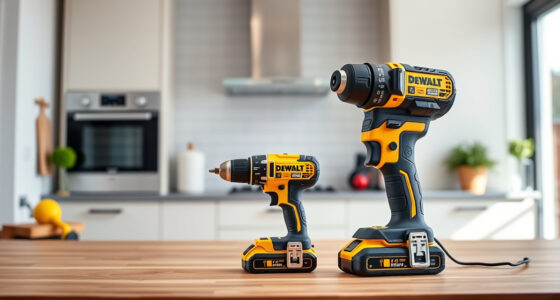
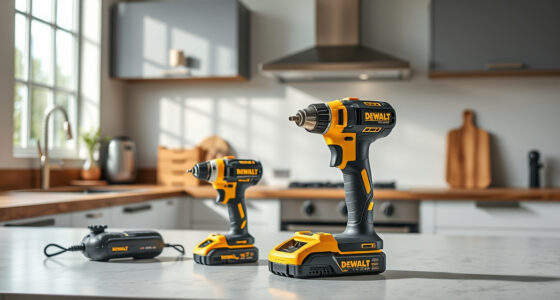
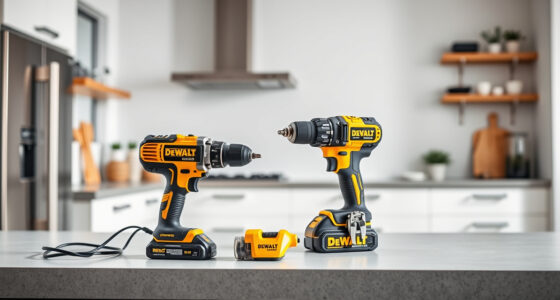
Cordless power drills for woodworking come in compact 12V and higher-output 18V/20V-max battery classes. A 12V drill is often enough for household repairs, small furniture, and cabinet hardware; 18V/20V-max tools generally suit larger bits, thicker hardwood, and repeated heavy work. The right choice depends on the workload and how comfortably you can control the tool. A larger tool may keep demanding work moving, but extra weight can make it harder to hold square during delicate work or overhead assembly.
| Feature | 12V drill/driver | 18V/20V-max drill/driver |
|---|---|---|
| Best fit | Furniture, cabinetry, light repairs | Large bits, frequent work, tougher jobs |
| Feel in hand | Often lighter and compact | Often heavier, especially with a large battery |
| Battery platform | Check tool range and compatibility | Often offers more tools within the same system |
| Tradeoff | May work harder with large bits | Extra weight can tire your arm during detailed work |
Voltage labels alone don’t tell you which drill is stronger: “20V max” and “18V” commonly describe the same nominal battery class using different rating conventions. Torque figures also may be measured or presented differently between brands, so compare a tool’s speed settings, weight, balance, and feel rather than treating the advertised number as a universal score. In practice, a tool that is easy to keep steady may produce cleaner holes than a more powerful one that pulls your wrist off line.
Imagine you’re drilling a dozen holes for shelf pins in plywood. A light 12V drill may feel nimble and less tiring, which helps you keep the bit aligned through repetitive work. If you regularly bore large holes in thick hardwood, an 18V/20V-max model may maintain a more comfortable pace and avoid bogging down as readily. That added capacity is most useful when the work is frequent; for occasional small holes, the added weight may be a poor trade. A larger amp-hour battery can extend runtime, but it also adds weight; amp-hours describe stored capacity, not drill power by themselves. Consider whether you need to finish long sessions without charging or would rather have a lighter tool in hand.
best 18V cordless drill for furniture
As an affiliate, we earn on qualifying purchases.
As an affiliate, we earn on qualifying purchases.
Pick a wood bit that leaves the hole you want
The right bit makes cleaner holes and gives you better control than simply pushing harder with a powerful drill. Twist bits suit general-purpose holes, brad-point bits help center a hole in wood, Forstner bits create flat-bottomed holes, and auger bits suit larger or deeper holes. Choose by the hole’s shape and size, not by whatever bit happens to be closest. Each bit removes wood differently, so matching it to the task affects the hole’s finish, the force needed, and how easily you can keep the drill on course.
For example, a brad-point bit is a good choice when you need a neat, accurately placed hole for a shelf pin. Its sharp center point helps it stay on your mark, while the outer spurs cut the edges. If you’re making a flat-bottomed recess for a concealed hinge, a Forstner bit is often a better fit; its broad cutting rim can leave a clean, flat seat, but the larger cutting area also creates more resistance and heat than a small twist bit. An auger bit can help bore deeper holes, but its size and cutting action call for a secure workpiece and a steady grip. On a handheld drill, that increased resistance can cause the tool to twist if the bit catches, so use a suitable low speed and avoid forcing it.
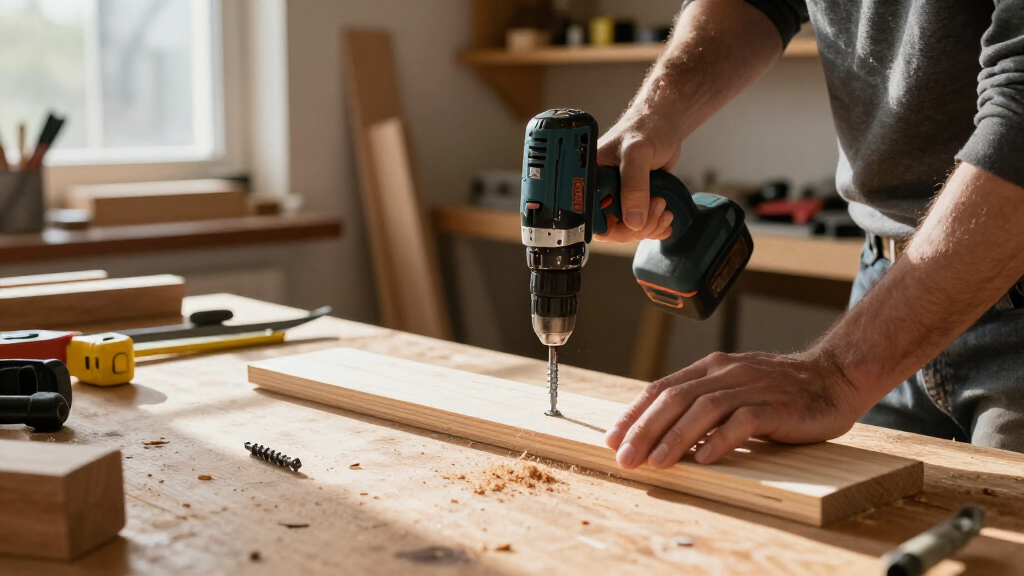
Use a sharp bit and support the back of the board with scrap wood to reduce tear-out as the bit exits. The backing supports the fibers that would otherwise break away when the bit pushes through, improving the hidden back face without changing the visible entry. Mark the center clearly, start at a suitable speed, and ease off pressure near the far side. For a visible face, plan which side the bit enters and exits; a splintered back edge can spoil an otherwise tidy panel.
Keep the drill’s chuck capacity in perspective. It describes the largest bit shank the chuck accepts, not a promise that the drill can bore an equally large hole in any wood. The chuck holds the bit; it does not determine the cutting capacity of the motor or bit. Hard maple, a dull bit, and a wide diameter demand more than soft pine and a small sharp bit. If the drill slows, strains, or the bit starts to wander, stop and check the setup rather than leaning harder on the tool. If you’re fitting a drill with cordless drills for multiple projects, a small, useful starter set of sharp brad-point and twist bits can serve you better than a crowded case of low-quality extras.
As an affiliate, we earn on qualifying purchases.
Use this five-step routine for cleaner holes and screws
Clean woodworking results start before you pull the trigger. Secure the work, choose the right bit, and set the drill for control. Each step reduces a different source of error: movement can cause injury or an angled hole, the wrong bit can tear fibers, and excessive speed or clutch force can damage the work. This short routine helps prevent wandering holes, tear-out, stripped screws, and injuries when you move between drilling and assembly.
- Clamp the workpiece. Keep the board from spinning or lifting. Clamping also lets you guide the drill with both hands when needed. Clamp a scrap backing board behind it when you can.
- Mark and select the bit. Mark the hole center and choose a sharp bit for the hole shape and size. A bit suited to the cut needs less force, making it easier to stay on the mark.
- Set speed and clutch. Use low speed for screws and larger bits, and start the clutch low for delicate assembly. If the clutch slips before the screw seats, increase the setting gradually rather than jumping to maximum.
- Drill steadily. Hold the drill square or use a guide; ease pressure as the bit exits the far face. Pushing harder when a bit slows can make it bind or wander instead of cutting more cleanly.
- Test, then finish. Try a screw in scrap of the same wood, adjust the clutch, and stop once the screw head seats. A scrap test accounts for differences in wood hardness and screw size without risking the finished piece.
Say you’re attaching a cleat near the edge of a hardwood shelf. A pilot hole reduces the force needed to drive the screw and lowers the chance of splitting the wood. Starting slowly helps the bit stay on its mark, while the clutch gives you a chance to stop before the screw head chews up the surface. Near an edge, this preparation matters even more because there is less wood available to absorb the screw’s outward pressure.
Before changing bits or making adjustments, remove the battery. Wear eye protection, keep hands away from the bit, secure long hair, and avoid loose clothing. Don’t rely on gloves near rotating parts; fabric can catch and pull your hand toward the tool. If the bit binds, release the trigger and secure the work again rather than wrestling a spinning drill. A caught bit can make the drill body rotate suddenly, so stopping and correcting the cause is safer than trying to muscle through it.
As an affiliate, we earn on qualifying purchases.
Prioritize comfort, battery fit, and features you’ll really use
Comfort and balance can matter as much as power when you’re drilling a row of holes or working inside a cabinet. A secure grip, a variable-speed trigger, clear forward/reverse controls, and a useful work light all make accurate work easier. A keyless chuck saves time when you change between a pilot bit and a driver bit. These features are not just conveniences: a tool that is comfortable to hold is easier to keep square and steady, which can improve the result and reduce fatigue over a long session.
Try holding a drill as if you were driving a screw overhead or reaching into a cabinet. A model that feels fine at the store can feel nose-heavy after ten minutes with a large battery. A compact battery may make detailed work more comfortable, while a higher-capacity battery can reduce mid-project charging. The tradeoff is weight in your hand, so choose based on the kind of sessions you actually have. Keep a spare charged if you’re working through a large assembly job.
Check the manufacturer’s battery platform before you buy. Battery and charger compatibility can make a system more useful over time, but brands generally don’t share batteries across platforms. A drill bought as part of a platform you already own may cost less overall than a standalone tool, while a new platform can mean buying chargers and batteries as well as the drill. For a new woodworker, the most important aspects are a drill/driver with a clutch, two speeds, variable speed, a suitable chuck, and a battery system that also fits tools you expect to use.
Brushless motors can improve efficiency, runtime, and service life compared with brushed designs, so they may be worth the extra cost if you work often. For occasional shelf repairs, a brushed drill may still do the job. The value depends on use: spending more for efficiency pays off most when the tool sees frequent or demanding work, not simply because brushless is a newer label. Connected features such as tracking or app-based settings are optional conveniences for most home shops; spend first on a comfortable tool and sharp bits. Check current manufacturer specifications, since tool features and battery compatibility can change.
Avoid the mistakes that split wood or strip screws
Most damaged wood comes from poor control, a poor bit match, or skipping a pilot hole. Screws near an edge and screws driven into hardwood deserve extra care. A pilot hole removes some of the material the screw would otherwise force aside, reducing the chance that the board splits along its grain. It also lowers the resistance while driving, which gives the clutch and your hand more opportunity to control the screw’s depth.
For example, if you’re fastening a narrow oak rail, test a pilot hole in an offcut before drilling the finished piece. Choose a hole that fits the screw’s core, then start slowly and use the clutch. The right pilot size depends on the screw and wood: too small may still force the fibers apart, while too large can leave too little wood for the threads to grip. Stop when the head seats; driving farther can crush fibers, strip the screw, or leave a crater in the surface.
Wood hardness, bit sharpness, bit diameter, and drilling technique all affect how hard the drill works and how quickly it uses battery. A dull, oversized bit in dense wood can make a capable tool feel weak because it takes more effort to cut and may generate extra heat. If the drill strains or the bit wanders, stop and reassess rather than pushing harder. Check that the bit is sharp and appropriate, and that the workpiece is held securely. Strain is useful feedback: it can signal a mismatch between the bit, material, speed, and tool, not simply a need for more power.
A cordless drill can handle many portable holes, but it doesn’t replace a drill press for every job. A drill press offers better repeatability and perpendicular holes, especially when you need several matching parts. A handheld guide can improve accuracy when you need mobility. The tradeoff is convenience versus precision: a press takes space and setup, while a handheld drill is easier to move to the work. Choose the tool for the tolerance your project demands: cabinet hardware may need a clean, consistent hole, while a rough utility hole may allow more flexibility.
Frequently Asked Questions
Is a 12V drill powerful enough for woodworking?
Often, yes. A 12V drill can handle many furniture, cabinet, and household jobs, especially with sharp bits and sensible pilot holes. If you regularly use large bits or work thick hardwood, an 18V/20V-max model may suit you better.
Should I buy an 18V or 20V-max drill?
Those labels commonly refer to the same nominal battery class. Compare the specific drill’s weight, balance, speed range, performance, battery platform, and price instead of choosing by voltage label alone.
Can I use an impact driver to drill wood?
Many impact drivers accept compatible hex-shank drill bits, but a drill/driver is usually easier to control for accurate holes. The impact action can be too aggressive for fine woodworking, so use it with care and follow the tool and bit makers’ instructions.
Which drill bits are best for wood?
Use brad-point bits for accurately placed holes, twist bits for general drilling, Forstner bits for flat-bottomed recesses, and auger bits for larger or deeper holes. A sharp, appropriate bit usually beats extra force.
How do I keep wood from splintering when I drill?
Choose a sharp bit, support the back of the board with scrap wood, and ease pressure as the bit exits. For a visible surface, plan which side the bit enters and exits, and consider drilling from the face you want to keep clean.
Conclusion
Choose the drill that gives you steady control, a useful clutch, and a comfortable grip for the work you actually do. For many woodworkers, that’s a drill/driver with two speeds, good bits, and batteries that fit a practical tool system—not the most powerful model on the shelf.
Clamp the board, let the bit do the cutting, and stop when the screw seats. The best mark of a good drill isn’t its torque number; it’s a clean hole and a finished project with no splinters left behind.
Halloween Picks
halloween
As an affiliate, we earn on qualifying purchases.