Woodworking project kits for students vary widely in how much actual building they involve — some are closer to assembly toys, while others teach real joinery, sanding, and finishing skills. After comparing eight popular options, the Lakeshore Build-It-Yourself Woodworking Kit stands out as the best overall pick because it behaves like a genuine starter toolset and building system rather than a one-off craft project. The SparkJump Candy Dispenser Kit is the strongest choice for a satisfying single-project build with real materials, and the 6-Set STEM Wood Building Crafts Kits offers the best value for classrooms buying in bulk. The main tradeoff readers face is between kits that emphasize creative freedom and kits that emphasize guided, step-by-step construction. Read on for the full breakdown of what each kit does well and who should skip it.

Get business pricing on tools and workshop supplies
- Business-only prices and quantity discounts
- Tax-exempt purchasing
- Multiple users, one account, clear invoices
Complete the kit

Key Takeaways
- Three of the eight kits are near-duplicates from the same brand (SainSmart Jr.), differing mainly in project themes and included accessories — buyers should compare those variations closely instead of assuming they’re identical.
- The Lakeshore kit was the only option that functions as a reusable building system with child-safe tools, making it the best long-term investment for repeated classroom use.
- Candy dispenser kits (two in this lineup) consistently deliver the highest engagement payoff, but they’re single-build projects with little replay value once completed.
- Most kits in this price range use pre-cut, pre-drilled wood, so the actual skill learned is assembly and finishing — not cutting or measuring. Only the Lakeshore kit includes tools that support open-ended building.
- Bulk multi-project sets (the 6-set and 4-in-1 options) are the clear value play for teachers, but they typically have thinner instructions and lighter wood than single-project premium kits.
| SainSmart Jr. Woodworking Building Kits for Kids with Birdhouse, 4-in-1 STEM Projects Set |  | Best Overall | Models Included: Birdhouse, helicopter, off-road car, tow truck | Materials: Real wood, non-toxic paints | Tools Included: Screwdriver | VIEW LATEST PRICE | See Our Full Breakdown |
| SainSmart Jr. Woodworking Building Kit, 4-in-1 Kids STEM Projects Set |  | Best Value Pick | Number of Projects: 4 | Models Included: Birdhouse, helicopter, off-road car, tow truck | Material: Wood | VIEW LATEST PRICE | See Our Full Breakdown |
| SainSmart Jr. Woodworking Building Kits for Kids, 4-in-1 STEM Projects Set |  | Best for Creative Builders | Number of Models: 4 | Models Included: 2 robots, dog, motorcycle | Materials: Real wood, acrylic paint | VIEW LATEST PRICE | See Our Full Breakdown |
| Lakeshore Build-It-Yourself Woodworking Kit |  | Best for Youngest Builders | Number of Pieces: Over 80 | Materials: Smooth pine | Tools Included: Lightweight hammer, nails | VIEW LATEST PRICE | See Our Full Breakdown |
| STEM Kits for Kids Age 8-12, 6 Set Wood Building Projects Crafts |  | Best for Engineering-Minded Students | Number of Kits: 6 | Vehicle Types: Car, tank, wind-powered vehicle, off-road vehicle, solar helicopter, biplane | Materials: Non-toxic plywood | VIEW LATEST PRICE | See Our Full Breakdown |
| DIY Wooden Candy Dispenser – STEM Building Kit for Kids with Paint and Stickers | 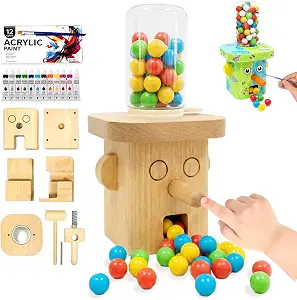 | Most Complete Out-of-Box Experience | Material: Beech wood | Assembly: No-screw, pre-cut panels with wooden dowels | Mechanism: Press-to-dispense with spring-loaded nose and lever pin | VIEW LATEST PRICE | See Our Full Breakdown |
| SparkJump Candy Dispenser Woodworking Kit – STEM Building Kit for Kids with FSC-Certified Wood, Paints & Tools, DIY Gumball Machine Craft for Ages 6+ |  | Best for Eco-Conscious Classrooms | Material: FSC-certified wood | Project Type: Candy dispenser / gumball machine | Included Extras: Paints and tools | VIEW LATEST PRICE | See Our Full Breakdown |
| STEM Wood Building Crafts Kits for Kids Ages 8-12 |  | Best Multi-Project Value for Older Students | Brand: Yutin | Model Number: YT1005 | Projects Included: Tower crane, hydraulic loader, solar-powered truck, road roller | VIEW LATEST PRICE | See Our Full Breakdown |
| woodworking project kits for student | Materials | Tools Included | Material | Recommended Age |
|---|---|---|---|---|
| SainSmart Jr. Woodworking Buil | Real wood, non-toxic paints | Screwdriver | — | — |
| SainSmart Jr. Woodworking Buil | — | — | Wood | — |
| SainSmart Jr. Woodworking Buil | Real wood, acrylic paint | Screwdriver, paints, brushes | — | — |
| Lakeshore Build-It-Yourself Wo | Smooth pine | Lightweight hammer, nails | — | 4-11 years |
| STEM Kits for Kids Age 8-12 | Non-toxic plywood | Screwdriver | — | 8-12 years |
| DIY Wooden Candy Dispenser | — | — | Beech wood | 6+ |
| SparkJump Candy Dispenser Wood | — | — | FSC-certified wood | 6+ |
| STEM Wood Building Crafts Kits | — | — | Non-toxic wood (plywood) | — |
More Details on Our Top Picks
SainSmart Jr. Woodworking Building Kits for Kids with Birdhouse, 4-in-1 STEM Projects Set
This is the most complete package in the lineup because it bundles real wood, real tools, and a full painting and decorating kit in one box. Compared with the SainSmart Jr. 4-in-1 Kit (B09WN29K3J), which leans on stickers instead of paint, this version gives students a fuller creative arc: build, assemble, then customize the birdhouse, helicopter, off-road car, and tow truck with their own color choices. The ASTM F963 and CPSIA certifications matter here — this pick makes the most sense for classroom and group settings where safety documentation is expected. The tradeoff is that the paint stage adds cleanup time and adult involvement, and once all four models are built, there’s nothing left to construct. The included birdhouse also gives it a practical edge the vehicle-only kits lack.
Pros:- Includes paints and brushes, not just stickers, for genuine customization
- Real wood and a real screwdriver create an authentic first woodworking experience
- The birdhouse is a functional finished project kids can actually use outdoors
- ASTM F963 and CPSIA certified for safe classroom and home use
Cons:- Requires adult supervision throughout assembly, especially for younger students
- Only four models included, so the kit has a short lifespan for eager builders
Best for: Parents and teachers who want a build-and-decorate experience with safety certifications for group or classroom use
Not ideal for: Students who already own the sticker-based SainSmart 4-in-1 kit — the model lineup overlaps almost entirely
- Models Included:Birdhouse, helicopter, off-road car, tow truck
- Materials:Real wood, non-toxic paints
- Tools Included:Screwdriver
- Decorating Supplies:Paints and brushes
- Certifications:ASTM F963, CPSIA
- Number of Projects:4
Our verdict“The best all-around choice for students who want to build, paint, and finish real wood projects in one sitting.”
SainSmart Jr. Woodworking Building Kit, 4-in-1 Kids STEM Projects Set
If budget is the deciding factor, this option stands out as the lower-cost route to the same four SainSmart models — birdhouse, helicopter, off-road car, and tow truck — without paying for paint supplies. Compared with the B0FJMBVP29 birdhouse kit, this version swaps paint for decorative stickers, which means faster cleanup and less mess, an outcome that matters for busy classrooms or siblings sharing one table. The flat head screws and counterbore design are a thoughtful safety touch: the screws sit flush so there are no sharp protrusions on finished models. The tradeoff is obvious — sticker decoration is less creative than painting, and the finished projects feel more like toys than handcrafted pieces. For a first woodworking kit or a gift that won’t break the bank, this is the smarter buy.
Pros:- Same four-model variety as the premium SainSmart kit at a lower price
- Sticker decoration means no paint mess or drying time
- Counterbore and flat head screw design keeps finished models smooth and safe
- Clear instructions make it approachable for first-time builders
Cons:- Stickers offer far less creative expression than the painted version
- Assembly still requires adult supervision despite the child-safe design
Best for: Budget-conscious buyers and classroom teachers buying multiple kits who can live without paint
Not ideal for: Kids who want a craft-level finished product — stickers look generic compared to hand-painted models
- Number of Projects:4
- Models Included:Birdhouse, helicopter, off-road car, tow truck
- Material:Wood
- Decoration:Decorative stickers
- Safety Features:Flat head screws, counterbore design
- Instructions:Included
Our verdict“The smart pick when you need real woodworking projects at the lowest cost per kit.”
SainSmart Jr. Woodworking Building Kits for Kids, 4-in-1 STEM Projects Set
This model differentiates itself with a robot-and-vehicle theme — two robots, a dog, and a motorcycle — which appeals to students who find birdhouses and trucks less exciting. Like the B0FJMBVP29 kit, it includes real wood, a screwdriver, paints, and brushes, plus ASTM F963 and CPSIA certifications, so nothing is sacrificed on safety or creative finish. The acrylic paint here is a genuine upgrade over the sticker-only approach in the value SainSmart kit: students learn that a project isn’t done until it’s personalized. The tradeoff is difficulty. Compared with the vehicle models in the other kits, the robots involve more pieces and finer assembly, so this option is better suited to older elementary students who have already completed a simpler kit. Very young builders will need hands-on adult help from start to finish.
Pros:- Unique robot, dog, and motorcycle models avoid overlap with the vehicle-themed kits
- Acrylic paints and brushes included for full customization
- Real wood and real tools deliver an authentic building experience
- Certified non-toxic under ASTM F963 and CPSIA
Cons:- Assembly can frustrate very young children without step-by-step adult help
- Limited to four models with no expansion packs available
Best for: Kids ages 7-10 who love robots and want to paint their builds, especially those with one kit already under their belt
Not ideal for: First-time or very young builders — the robot assemblies are the most demanding in this SainSmart trio
- Number of Models:4
- Models Included:2 robots, dog, motorcycle
- Materials:Real wood, acrylic paint
- Tools Included:Screwdriver, paints, brushes
- Certifications:ASTM F963, CPSIA
- Skill Level:Intermediate — best for experienced young builders
Our verdict“The right pick for creative kids who want robots instead of trucks and are ready for slightly harder builds.”
Lakeshore Build-It-Yourself Woodworking Kit
Every other kit in this roundup is a fixed-model build — assemble the pieces, done. The Lakeshore kit takes the opposite approach: over 80 smooth pine pieces, a lightweight hammer, and nails, with no prescribed model at all. That open-ended format is what makes it the standout choice for the youngest students, ages 4-11, because it teaches actual hammering and joining skills rather than screwdriver assembly. Compared with the SainSmart kits, which produce polished finished models, this one produces wobbly, wonderful, kid-designed creations — and that’s the point. The tradeoffs are real: there’s no instruction booklet for guidance, so students who need structure may stall out, and loose nails mean close adult supervision is non-negotiable. Small parts also rule it out for any child still mouthing objects.
Pros:- Open-ended format develops creativity and problem-solving instead of following fixed steps
- Real hammer and nails teach genuine woodworking technique
- Over 80 pre-cut smooth pine pieces offer long-term repeat use
- Wide 4-11 age range makes it usable across siblings or grade levels
Cons:- Loose nails and small parts demand constant adult supervision
- No instructions or project guides, which can leave some students unsure where to start
Best for: Young children ages 4-7 who benefit from open-ended building rather than step-by-step model kits
Not ideal for: Kids who want a defined finished product — with no instructions or model designs, directionless builders lose interest
- Number of Pieces:Over 80
- Materials:Smooth pine
- Tools Included:Lightweight hammer, nails
- Recommended Age:4-11 years
- Project Style:Open-ended, no fixed models
- Skill Focus:Hammering, joining, motor skills
Our verdict“The best first woodworking kit for young kids who learn by inventing rather than replicating.”
STEM Kits for Kids Age 8-12, 6 Set Wood Building Projects Crafts
This is the only kit in the lineup that moves past static models into functional engineering: a wind-powered vehicle, a solar helicopter, and motorized builds that demonstrate energy conversion rather than just assembly. With six kits versus the four in any SainSmart option, it also offers the most building time per dollar for older students. Compared with the Lakeshore kit, this set trades open-ended creativity for structured engineering lessons — each vehicle teaches a specific principle, which makes it the stronger fit for a STEM curriculum or science fair project. The tradeoffs are that the battery for motorized vehicles isn’t included, so have AAs on hand before gifting, and there’s no paint or decoration — the finish is bare plywood. Younger builders in the 8-12 range may still need adult help with the motorized assemblies.
Pros:- Six separate kits provide the most build value in the roundup
- Wind, solar, and motorized models teach genuine engineering and energy concepts
- Non-toxic plywood construction is durable and safe
- Screwdriver included so no additional tools are needed
Cons:- Battery for motorized vehicles is not included
- No paints or stickers, so finished models look plain compared to SainSmart builds
- Motorized assemblies may require adult help for younger end of the age range
Best for: Students ages 8-12 studying STEM concepts who want to see energy conversion and motors actually work
Not ideal for: Kids who want a craft-style keepsake — bare plywood with no painting supplies means a utilitarian finish
- Number of Kits:6
- Vehicle Types:Car, tank, wind-powered vehicle, off-road vehicle, solar helicopter, biplane
- Materials:Non-toxic plywood
- Tools Included:Screwdriver
- Recommended Age:8-12 years
- STEM Concepts:Engineering, energy conversion, motor functions
- Battery:Not included for motorized vehicles
Our verdict“The clear choice for older students who care more about how things work than how they look.”
DIY Wooden Candy Dispenser – STEM Building Kit for Kids with Paint and Stickers
Most candy dispenser kits make you source your own finishing supplies, but this one arrives with everything except the candy: a 12-color acrylic paint set, stickers, a mallet, and pre-cut beech wood panels. That completeness is what sets it apart from the SparkJump Candy Dispenser Kit, which includes paints and tools but lacks the personalization extras that keep kids engaged after the build. The no-screw assembly means younger students can participate without a screwdriver, and the finished dispenser actually works, giving the project a payoff beyond the craft table. The tradeoff is specificity — unlike the Yutin 4-in-1 STEM kit, this builds exactly one thing, and it only dispenses candies under 0.6 inches, so standard gumballs may jam. Budget for candy separately.
Pros:- 12-color paint set and stickers included, so decorating starts immediately
- No-screw assembly with pre-cut beech wood keeps young builders safe and independent
- Functional press-to-dispense mechanism gives a rewarding, usable end product
- Mallet and all hardware included in the box
Cons:- Candy is not included, adding an extra purchase
- Dispenser only handles candies under 0.6 inches, limiting candy choices
- Adult supervision still required during assembly despite the simple design
Best for: Parents and teachers running a single-session craft activity who want paints, stickers, and tools in one box with no extra shopping
Not ideal for: Buyers wanting variety or multi-week projects — this builds one model only, and older students will finish it quickly
- Material:Beech wood
- Assembly:No-screw, pre-cut panels with wooden dowels
- Mechanism:Press-to-dispense with spring-loaded nose and lever pin
- Included Extras:Candy jar, mallet, 12-color acrylic paint set, stickers
- Candy Size Limit:Under 0.6 in (15 mm)
- Recommended Age:6+
Our verdict“This pick makes the most sense for families who want a single fun build with everything supplied, as long as one project is enough.”
SparkJump Candy Dispenser Woodworking Kit – STEM Building Kit for Kids with FSC-Certified Wood, Paints & Tools, DIY Gumball Machine Craft for Ages 6+
Where most student kits in this roundup use generic plywood, SparkJump builds its gumball machine from FSC-certified wood, which matters for schools and programs with sustainability requirements or green procurement policies. Compared with the DIY Wooden Candy Dispenser, it is the more traditional woodworking build — closer to a real craft project than a snap-together toy — which makes it a better fit for classroom or scout-group settings where the building process is the lesson. The generous age floor of 6+ keeps it accessible, and the family-bonding framing is honest: this is a project an adult and child genuinely do together. The compromise is that the accessory bundle is thinner than the candy dispenser kit above, and like that kit, it produces one project rather than the four models in Yutin’s engineering set.
Pros:- FSC-certified wood satisfies sustainability and classroom procurement standards
- Paints and tools included so the project runs without extra supplies
- True collaborative build that works well for parent-child or small-group bonding
- Accessible 6+ age rating with a classic gumball machine payoff
Cons:- Single-project kit with no variety across repeated sessions
- Fewer personalization extras than competing candy dispenser kits
- Assembly requires consistent adult supervision
Best for: Teachers, scout leaders, and eco-conscious families who want sustainably sourced wood and a genuine collaborative build
Not ideal for: Independent young builders — adult supervision is expected, and solo 6-year-olds will struggle without help
- Material:FSC-certified wood
- Project Type:Candy dispenser / gumball machine
- Included Extras:Paints and tools
- Recommended Age:6+
- Skill Focus:STEM learning and hands-on assembly
- Supervision:Adult supervision recommended
Our verdict“This model is better suited to educators and eco-minded families who value certified materials and shared building time over included frills.”
STEM Wood Building Crafts Kits for Kids Ages 8-12
Instead of one polished build, Yutin’s kit delivers four working engineering models — a tower crane, hydraulic loader, solar-powered truck, and road roller — which stretches a single purchase across multiple sessions or several students. That variety is the direct counterpoint to the single-model candy dispenser kits: the SparkJump kit produces a prettier shelf piece, but Yutin teaches more actual engineering, with hydraulics and solar power introducing concepts neither candy dispenser touches. The non-toxic plywood and detailed instructions keep the difficulty manageable, though this is firmly an 8-14 kit — a 6-year-old who could handle the no-screw candy dispenser will likely stall here. Note that the models are functional toys rather than display crafts: there is no painting or personalization stage, so creative kids may find it less expressive than the sticker-and-paint kits above.
Pros:- Four separate models provide varied builds and better cost per project
- Hydraulic and solar mechanisms teach concepts beyond basic assembly
- Non-toxic plywood with detailed, kid-friendly instructions
- Works well split among siblings or small groups
Cons:- Assembly can frustrate some kids without adult help
- No painting or personalization stage for creative-minded students
- Age range of 8-14 excludes the younger builders candy dispenser kits serve
Best for: Parents of 8-12 year olds who want repeated builds and real engineering concepts over a single decorative project
Not ideal for: Children under 8 or kids who love decorating — there are no paints or stickers, and assembly is demanding for younger hands
- Brand:Yutin
- Model Number:YT1005
- Projects Included:Tower crane, hydraulic loader, solar-powered truck, road roller
- Material:Non-toxic wood (plywood)
- Age Range:8-14 years
- Skill Focus:STEM, engineering, hands-on assembly
- Instructions:Detailed assembly guide included
Our verdict“Compared with the single-build kits here, this option stands out for older students who want multiple engineering challenges at a lower per-project cost.”

How We Picked
I evaluated each kit against four criteria that matter most for student woodworking: skill-building depth (does the student learn construction techniques, or just glue pieces together?), instruction clarity (can an 8- to 12-year-old follow along with minimal adult help?), material and tool quality (wood thickness, pre-drilling accuracy, and whether included tools actually work), and value per build (cost divided by number of projects and replay potential). Classroom practicality — how well a kit scales to group settings — factored into the rankings as well.
The ranking logic favors kits that teach transferable skills over one-off crafts, which is why the Lakeshore system claims the top spot despite a higher entry price. Single-project kits like the candy dispensers rank high on engagement but lower on long-term value. The multi-project SainSmart sets slot into the middle: they’re affordable and varied, but their near-identical designs meant I differentiated them by included accessories and project themes rather than overall quality.
| woodworking project kits for student | Materials | Tools Included | Material |
|---|---|---|---|
| SainSmart Jr. Woodworking Buil | Real wood, non-toxic paints | Screwdriver | — |
| SainSmart Jr. Woodworking Buil | — | — | Wood |
| SainSmart Jr. Woodworking Buil | Real wood, acrylic paint | Screwdriver, paints, brushes | — |
| Lakeshore Build-It-Yourself Wo | Smooth pine | Lightweight hammer, nails | — |
| STEM Kits for Kids Age 8-12 | Non-toxic plywood | Screwdriver | — |
| DIY Wooden Candy Dispenser | — | — | Beech wood |
| SparkJump Candy Dispenser Wood | — | — | FSC-certified wood |
| STEM Wood Building Crafts Kits | — | — | Non-toxic wood (plywood) |
Factors to Consider When Choosing Woodworking Project Kits For Students
Choosing a woodworking kit for a student involves more than picking an age rating off the box. These are the factors that most often separate a rewarding build from a frustrating afternoon.Assembly Kit vs. True Woodworking Kit
The biggest misconception in this category is that every “woodworking kit” teaches woodworking. Most options under $30 arrive with pre-cut, pre-drilled pieces that snap or glue together — the student learns sequencing and finishing, but never touches a saw, a file, or a measuring tape. That’s not a flaw; assembly-style kits are safer and better suited to younger students and classroom time limits. But if the goal is building actual craft skills, look for kits that include real (child-safe) tools or that leave sanding, nailing, and decorating as genuine steps rather than afterthoughts. The Lakeshore kit sits in this second camp, which is part of why it commands a premium. Buyers should decide upfront which outcome they want, because the two kit styles rarely overlap.
Age Range and Supervision Requirements
Manufacturer age ratings are a starting point, not a guarantee. A kit labeled for ages 6+ may still require an adult to hammer nails straight or interpret a diagram with no written instructions — a common pattern I found across the candy dispenser kits. For classroom teachers managing 20+ students, the practical question isn’t the label but how many kids can finish without one-on-one help. Kits ages 8-12 with illustrated step-by-step guides generally hit that sweet spot. For homeschooling parents, a slightly harder kit with adult involvement can be a feature rather than a drawback, since the build becomes collaborative time. Match the difficulty to the adult-to-student ratio you actually have.
Single Project vs. Multi-Project Value
Price-per-project is the single easiest way to compare value here, but it hides a tradeoff. Multi-project sets keep costs down and give students choice, yet the individual builds tend to be simpler and the wood flimsier. Single-project kits concentrate the entire budget into one satisfying, display-worthy result — the candy dispensers are the clearest example, producing something a student will actually keep and use. A common buying mistake is choosing the 6-project set for a student who only has patience for one build, or vice versa buying a single-project kit for a kid who finishes it in an hour and wants more. Estimate the student’s attention span before counting projects, not after.
Included Materials: Paint, Stickers, and Finishing Supplies
What comes in the box beyond the wood varies more than most buyers expect. Some kits include full paint sets, brushes, and sticker sheets; others ship bare wood and assume you have supplies at home — a hidden cost that matters for classrooms buying twenty units. Decorative supplies aren’t filler, either: the finishing stage is where many students get most invested, and it extends the activity by 30-60 minutes. Check whether glue is included and whether it’s wood glue or generic craft glue, since the latter fails on load-bearing joints like dispensers and birdhouse perches. If painting is part of the plan, budget for newspaper, cups, and drying space, none of which any kit in this roundup includes.
Classroom and Group Buying Considerations
Teachers face constraints home buyers don’t: bulk pricing, storage, and whether missing one screw ruins the whole lesson. Kits with pre-sorted, labeled parts bags survive a classroom far better than kits where components arrive loose in one bag. Also worth checking is whether the manufacturer sells replacement parts or bulk packs — the STEM 6-set is structured with group buying in mind, while single-unit premium kits usually aren’t. Finally, consider build time against your class period. Builds that can’t be completed in one session need to hold partially assembled pieces safely, and glue-drying time is the most common reason projects spill into a second session. Plan for it before the day of the lesson.
Wood Quality and Safety
Not all kit wood is equal. Premium kits use thicker, splinter-smoothed pine or FSC-certified lumber; budget sets often use thin plywood that cracks when over-tightened or dropped. Splinters are the most common minor injury in this category, so kits with pre-sanded edges justify a small price bump, especially for younger students. Check for certification claims — FSC-certified wood, as in the SparkJump kit, signals sourcing accountability, though it doesn’t automatically mean better build quality. Also verify whether any cutting or sanding is required by the student; if it is, the kit should specify what tool and whether it’s included. Vague product descriptions on this point are a reliable red flag.
Frequently Asked Questions
Are these woodworking kits actually teaching woodworking skills, or are they just crafts?
Most kits in this roundup are better described as assembly-and-finish kits: the wood arrives pre-cut and pre-drilled, and the student’s job is fitting, gluing, hammering, and decorating. That still builds valuable skills — following instructions, spatial reasoning, patience, and fine motor control — but it isn’t carpentry in the traditional sense. The Lakeshore kit is the main exception, functioning as an open-ended building system with real child-safe tools. If genuine woodworking skills are the priority, look for kits that leave measuring, sanding, or nailing as required steps rather than optional ones, and be prepared to supply more supervision.
Which kit is best for a classroom with 20-30 students?
For group settings, the multi-project sets win on logistics. The 6-set STEM crafts kits and the SainSmart 4-in-1 sets offer the lowest cost per student and spread variety across a semester. Before ordering, verify whether the seller offers bulk pricing and confirm each unit ships with individually bagged parts — mixing loose components across twenty boxes is a classroom-management headache. The Lakeshore kit works well as a shared classroom station rather than a per-student purchase, since its tools and materials are reusable. Single-project premium kits like the SparkJump dispenser are better reserved for small groups, clubs, or end-of-term rewards.
How much adult supervision do these kits realistically need?
Plan on an adult being present for any kit involving hammering, and expect closer supervision for students under 8 regardless of the label. Kits rated 6+ often assume a parent helping hold pieces, read diagrams, and manage glue — the candy dispenser builds fall into this pattern. Kits aimed at ages 8-12 with illustrated instructions are usually manageable independently by strong readers, though a first-time builder may still need help identifying part orientation. A useful rule of thumb: the fewer written instructions and the more nails involved, the more hands-on the adult needs to be. Budget your time accordingly rather than treating the kit as self-directed entertainment.
The SainSmart Jr. kits look nearly identical — which one should I buy?
The three SainSmart Jr. 4-in-1 sets in this roundup share the same core format, so the differences come down to project themes and included extras. One centers on a birdhouse, another emphasizes different build types, and the third varies in accessory contents like paint or stickers. My advice: pick based on which projects the student would actually want to display or use, since engagement drives completion more than kit quality here. If you’re deciding between two sets with overlapping projects, choose the one that includes more finishing supplies — that’s the stage kids enjoy most, and it saves a separate craft-supply purchase. Don’t pay extra for a set whose projects duplicate something they’ve already built.
Is it worth paying more for FSC-certified wood and premium single-project kits?
It depends on what you’re buying the finished product for. A premium kit like the SparkJump dispenser makes sense when the result needs to survive daily use — a functioning gumball machine gets handled constantly, and thin budget plywood won’t hold up. FSC certification matters if sustainably sourced materials are a value you want to teach or an institutional purchasing requirement, though it doesn’t guarantee better fit or finish. For display-only projects or short-lived crafts, certification adds little practical value and the budget multi-sets deliver more happiness per dollar. Pay more when durability and the build experience are the point; save when volume and variety are.
Conclusion
For most buyers, the Lakeshore Build-It-Yourself Woodworking Kit is the best overall pick — it’s the only option here that works as a reusable system with real tools, giving it staying power beyond a single afternoon. For best value, the 6-Set STEM Wood Building Crafts Kits deliver the lowest cost per project and are the obvious choice for classrooms and multi-child households. The SparkJump Candy Dispenser earns the premium slot: FSC-certified wood, included paints and tools, and a finished product students actually use. For beginners and younger builders, the SainSmart Jr. birdhouse 4-in-1 set offers gentle, guided builds with a payoff kids can hang in the yard. And for a specific gift or reward, the DIY Wooden Candy Dispenser is the safest crowd-pleaser in the lineup. Whichever direction you choose, match the kit to the student’s patience and your supervision budget — that pairing matters more than any single feature on the box.
Halloween Picks
halloween
As an affiliate, we earn on qualifying purchases.