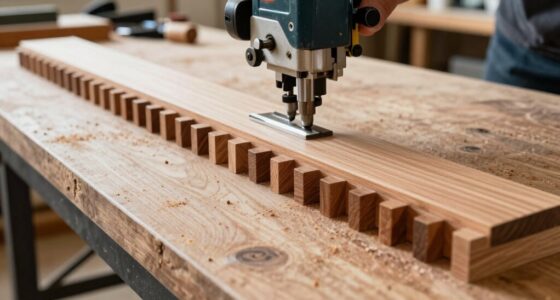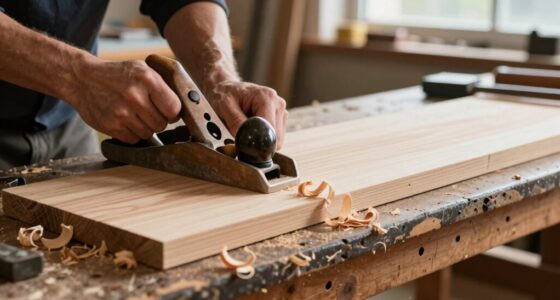
To prevent thin strips from slipping while clamping, you should use clamps with wide, flat jaws and add non-slip padding or tape to increase friction. Position the clamps just outside the edges for stability, and apply gentle, even pressure to avoid warping or damage. Using padded or soft-lined clamps guarantees a secure hold without deformation. If you follow these tips, you’ll achieve a tight, slip-free grip—keep exploring for more techniques.

Get business pricing on tools and workshop supplies
- Business-only prices and quantity discounts
- Tax-exempt purchasing
- Multiple users, one account, clear invoices
Key Takeaways
- Use soft, padded clamps or protective accessories to evenly distribute pressure and prevent slipping.
- Position clamps just outside the strip edges for stable, secure holding without deformation.
- Apply gentle, gradual tightening to maintain even pressure and avoid damaging delicate strips.
- Incorporate non-slip padding or tape to increase friction and prevent sliding during clamping.
- Choose clamps with wide, flat jaws and avoid sharp edges to minimize risk of surface damage.
As an affiliate, we earn on qualifying purchases.
Clamping Thin Strips Is Tricky: Here’s How to Do It Right
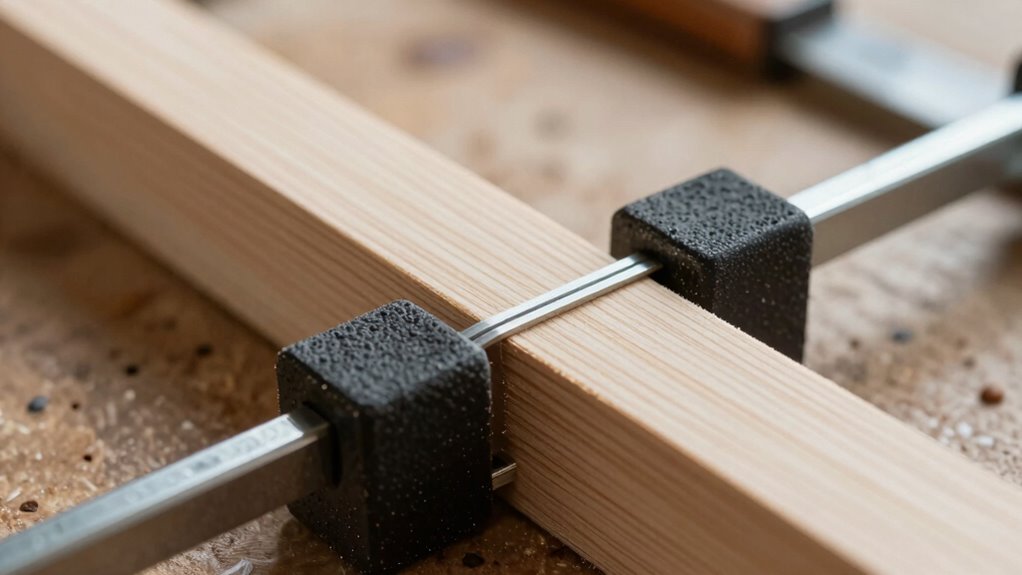
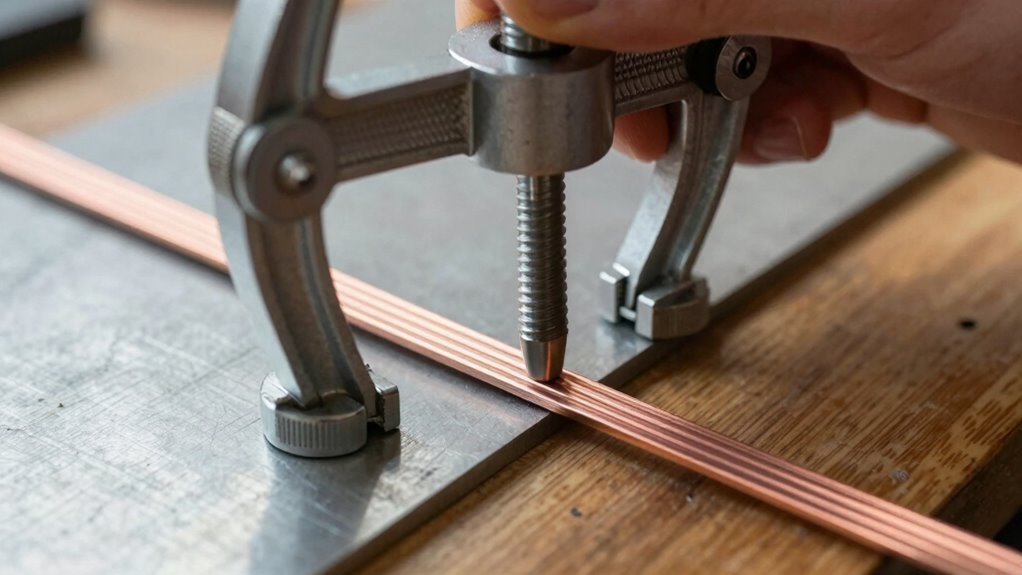
Why is clamping thin strips so challenging? The main issue is achieving proper clamp positioning to prevent slipping and ensure stability. Thin strips are more prone to movement because they don’t provide enough surface area for the clamp to grip securely. If the pressure distribution isn’t even, the strip can warp or slide out of place. To do it right, you need to carefully position your clamp so that pressure is distributed uniformly along the strip’s length. Avoid applying excessive force to prevent damage or deformation. Instead, focus on gentle, even pressure, making sure the clamp’s jaws contact the material firmly without crushing it. Proper clamp positioning combined with balanced pressure distribution is the key to holding thin strips securely during your project. Additionally, using innovative clamping techniques can significantly improve your results by ensuring consistent pressure and stability.
As an affiliate, we earn on qualifying purchases.
Choosing the Best Clamps and Accessories for Thin Materials
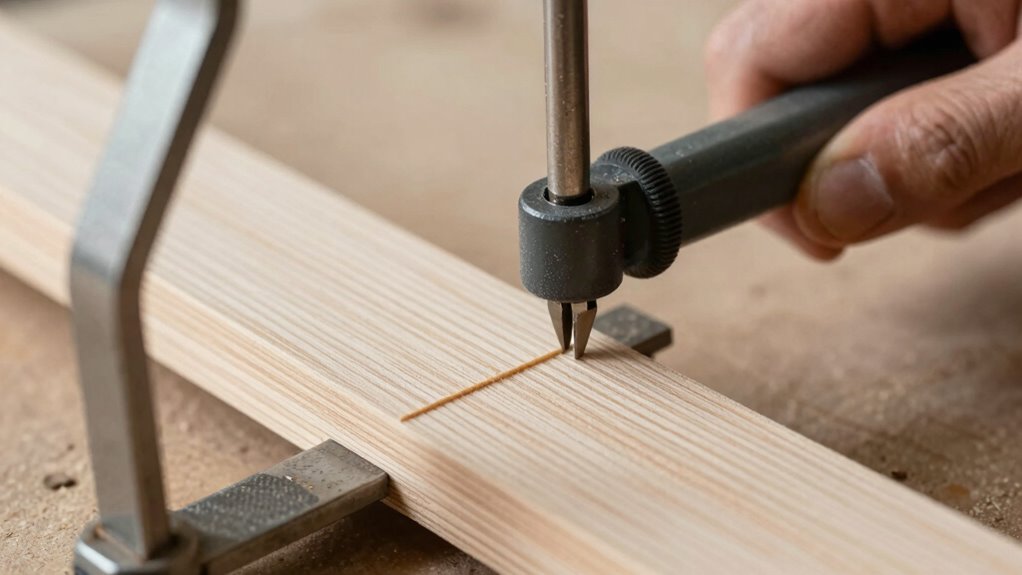
When selecting clamps for thin materials, you need to consider compatibility to avoid damage. Different clamp types, like spring clamps or C-clamps, offer unique advantages for lightweight work. Additionally, accessories such as pads or stops can help secure your strips more effectively; knowing which ones suit your project makes all the difference. Using the right clamping techniques can further prevent slipping and ensure safety during your work.
Material Compatibility Tips
Choosing the right clamps and accessories for thin materials requires careful consideration of their compatibility to prevent damage or slipping. You need to account for material stress and ensure clamping ergonomics to avoid warping or breakage. Here’s what to keep in mind:
- Use padded or rubber-lined clamps to distribute pressure evenly and reduce material stress.
- Opt for lightweight, ergonomic clamps that are easy to handle, minimizing fatigue during use.
- Select accessories with gentle grip mechanisms to avoid deforming delicate surfaces.
- Match clamp size to the width of your thin strip, ensuring a secure hold without over-tightening.
- Consider material compatibility when selecting clamps to ensure they are suitable for the specific fine rug fibers and backing materials.
Clamp Types for Thinwork
Selecting the right clamp type is essential for working with thin materials, as improper choices can lead to damage or slipping. When choosing clamps, consider their design to guarantee even pressure distribution without crushing the material. Clamps with a wide, flat jaw surface help prevent dents and distribute force more evenly, reducing the risk of damage. Material flexibility also matters; flexible clamps can conform better to delicate surfaces and provide a gentler grip. Spring clamps and corner clamps are excellent for thin strips because they apply consistent pressure without excessive force. Avoid clamps with sharp edges or rigid designs that might damage or deform the workpiece. By selecting clamps with appropriate design features and flexibility, you ensure a secure hold without compromising your thin material’s integrity. Proper clamp selection is also crucial for maintaining consistent pressure across delicate surfaces.
Accessory Recommendations
To guarantee a secure and damage-free hold on thin materials, it’s important to choose the right clamps and accessories designed specifically for delicate workpieces. Proper clamp accessories help distribute pressure evenly, preventing dents or warping. Consider these options:
- Soft jaw pads that cushion the material and reduce slippage.
- Clamping sleeves or protective strips to shield delicate surfaces.
- Specialized clamp accessories like spring-loaded or toggle clamps for quick, gentle pressure.
- Alternative tools such as vacuum fixtures or double-sided tape for ultra-thin strips that can’t handle traditional clamps.
Each accessory enhances control and minimizes damage, making your work more precise. Selecting the right clamp accessories or alternative tools ensures your thin strips stay in place safely and accurately during projects. Proper clamping techniques are essential for maintaining the integrity of delicate materials.
soft-lined clamps for delicate materials
As an affiliate, we earn on qualifying purchases.
As an affiliate, we earn on qualifying purchases.
Use Non-Slip Padding or Tape to Prevent Slipping
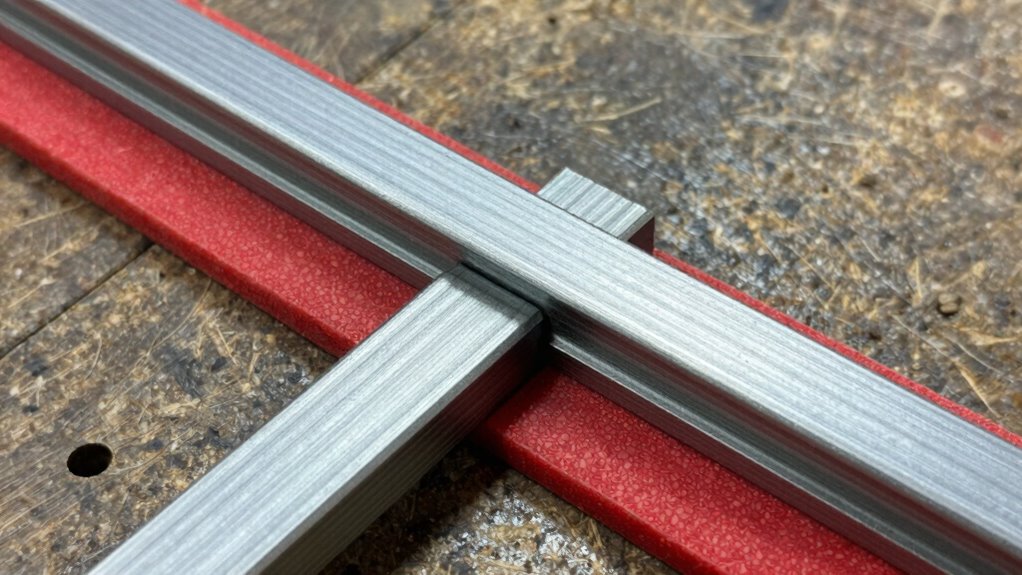
Using non-slip padding or tape can help keep your thin strips secure while clamping. Make sure the padding is compatible with your material to avoid damage or slipping. Properly applying the tape or padding guarantees a stable hold without marring the surface. Incorporating smart appliances with automated clamping features can further enhance precision and safety during the process.
Material Compatibility Tips
When working with thin strips, slipping can be a major challenge that affects accuracy and safety. To prevent this, consider material compatibility tips. First, ensure your clamp material is compatible with your workpiece to avoid damage. Second, select non-slip padding or tape that bonds well without slipping or damaging the strip. Third, check the surface texture—rougher surfaces grip better, but smooth surfaces may need additional padding. Fourth, test small areas first to confirm that the clamp material and padding won’t cause discoloration or deformation. Additionally, understanding the material compatibility between your clamp and workpiece can significantly improve grip and reduce slippage. By paying attention to compatibility considerations, you reduce the risk of slipping and protect your material. Proper matching of clamp material and padding ensures a secure grip, giving you more control during your project.
Proper Application Techniques
Applying non-slip padding or tape correctly is essential for preventing strips from slipping during clamping. Start by carefully positioning your padding or tape directly where the clamp contacts the strip. Proper clamp placement ensures even pressure distribution across the entire surface, reducing the risk of slipping or warping. Firmly press the padding or tape onto the strip to create a secure barrier that increases friction. When tightening the clamp, do so gradually, checking that the pressure remains evenly spread. Avoid over-tightening, which can cause deformation or damage. Consistently applying these techniques ensures your thin strips stay securely in place, resulting in a cleaner, more precise finish. Proper application of non-slip padding and attentive clamp placement are key to preventing slipping during your project. Understanding pressure distribution can help optimize your clamping technique for better results.
As an affiliate, we earn on qualifying purchases.
Position and Apply Pressure Correctly for a Secure Clamp
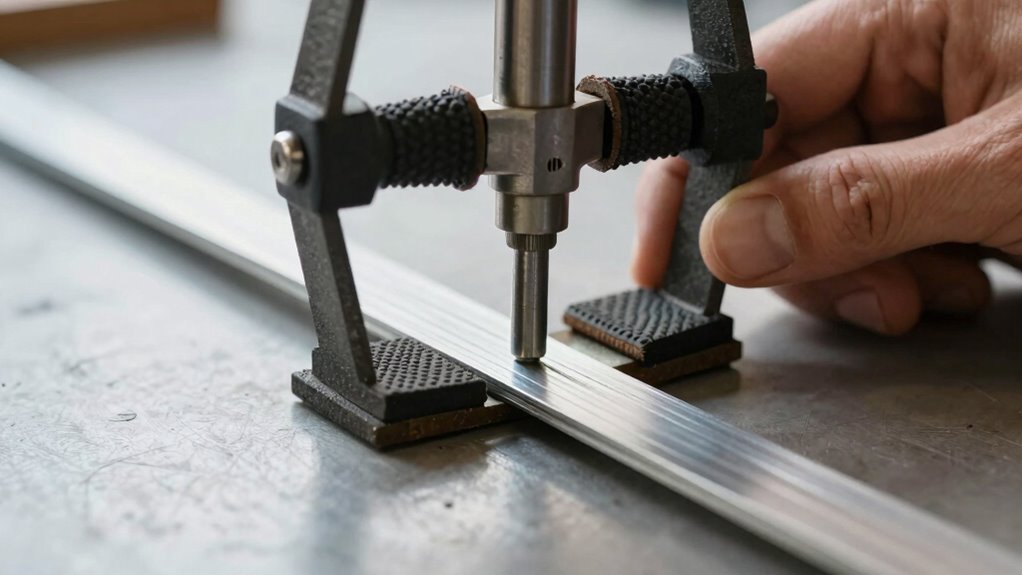
To guarantee your clamp holds securely, you need to position it correctly on the thin strip before applying pressure. Proper clamp positioning ensures even pressure application and prevents slipping. First, place the clamp so its jaws align just outside the edges of the strip, avoiding any overhang. Next, tighten the clamp gradually, ensuring the pressure is evenly distributed across the surface. Keep your fingers close to feel for consistent pressure. Then, verify the clamp’s position is firm and stable before fully tightening. Finally, make small adjustments if needed, maintaining correct pressure application. Remember, a well-positioned clamp with balanced pressure is key to securing your thin strip without damage or slipping. Focus on proper positioning and gentle, even pressure for best results. Ensuring correct clamp placement contributes significantly to safe and effective securing.
How to Prevent Damage and Ensure Even Clamping Pressure
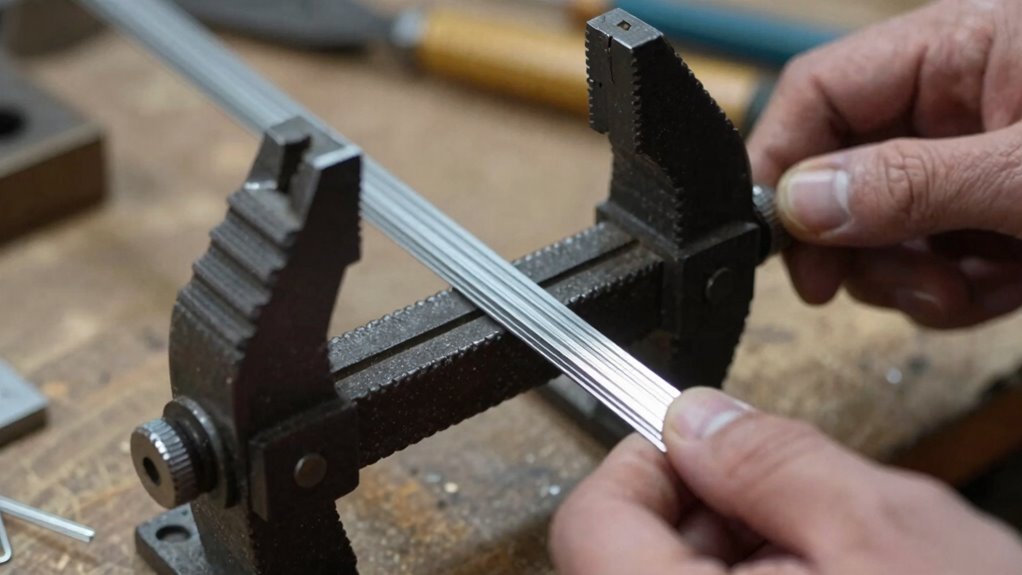
Ensuring even clamping pressure is essential to prevent damage to your thin strip. Too much clamp pressure can cause dents, warping, or tears, compromising material safety. To avoid this, apply gradual pressure, checking frequently to distribute force evenly across the surface. Use padded or soft-jawed clamps to protect delicate materials, reducing the risk of damage. Always verify that the clamp pressure is firm but not excessive; too tight can crush or deform the strip, while too loose risks slipping. Consistent, gentle tightening guarantees even clamping pressure, safeguarding your material’s integrity. Remember, a careful approach maintains material safety and results in a cleaner, more precise finish. Proper technique prevents damage and ensures your project proceeds smoothly. Additionally, understanding the importance of sustainable practices can help you select eco-friendly materials and methods for long-term success.
Common Mistakes When Clamping Thin Strips: and How to Avoid Them
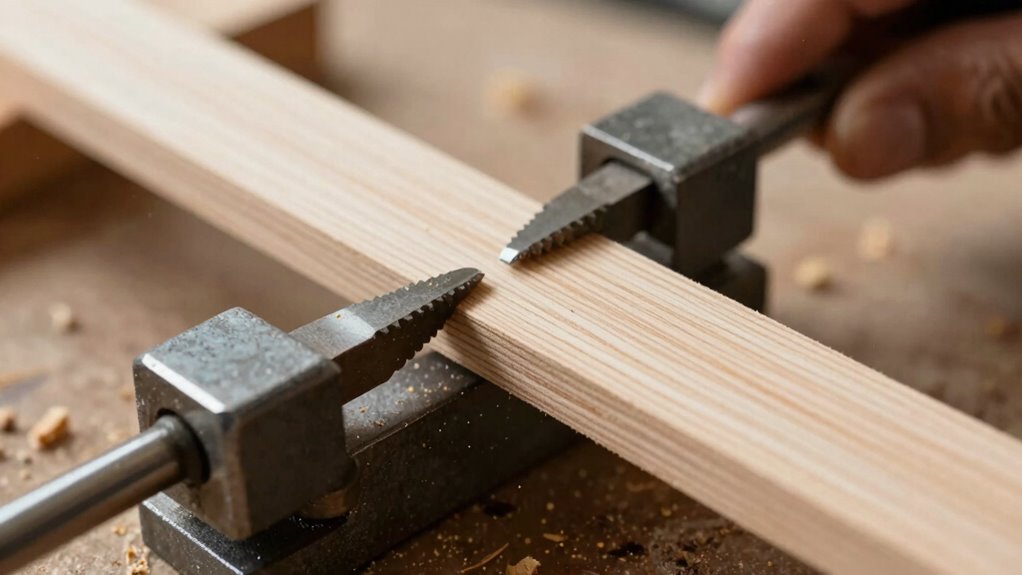
One common mistake when clamping thin strips is applying uneven pressure, which can lead to warping or damage. Poor clamp placement or inconsistent pressure adjustment often cause this problem. To avoid it, keep these points in mind:
Applying even pressure and proper clamp placement prevents warping or damage when working with thin strips.
- Place clamps evenly along the strip to distribute pressure uniformly.
- Avoid over-tightening clamps, which can cause bending or crushing.
- Check clamp placement for stability before tightening fully.
- Adjust pressure gradually, ensuring no spot bears too much force.
Proper clamp placement ensures the strip stays flat, while careful pressure adjustment prevents damage. Rushing the process or misplacing clamps risks warping or slipping. Focus on even distribution and gentle tightening to get a perfect, damage-free hold on your thin strips.
What to Do When the Trick Isn’t Enough: Troubleshooting Clamping Issues
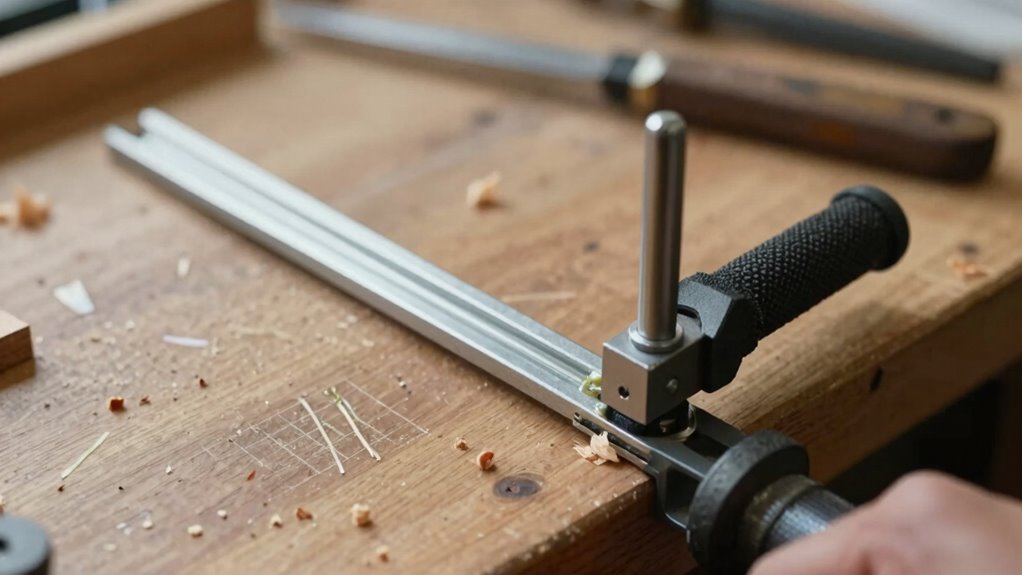
Sometimes, despite following proper clamping techniques, thin strips still shift or warp during the process. When this happens, it’s time to check your clamp adjustment. Confirm the clamp is applying even pressure without over-tightening, which can cause material expansion and lead to slipping. If the clamp is too tight, the strip may bow or shift, so loosen it slightly and re-tighten gradually. Consider using additional support, like a caul or scrap wood, to distribute pressure evenly. Also, double-check the material’s stability—if it’s prone to expansion under pressure, clamp it in stages, allowing it to settle before applying full force. Troubleshooting these issues helps maintain control and prevents slipping, ensuring your thin strips stay securely in place during gluing or assembly.
Frequently Asked Questions
Can I Use Homemade Tools for Clamping Thin Strips Effectively?
Yes, you can use homemade solutions for clamping thin strips effectively. DIY clamps are a great option when commercial ones are unavailable or expensive. You can repurpose materials like rubber bands, clothespins, or custom-made wooden jigs to hold your strips securely. Just guarantee your DIY clamps provide enough pressure without damaging the material. With some creativity and proper design, homemade tools can work just as well as store-bought clamps.
What Are Alternative Methods if Clamps Damage Delicate Materials?
If clamps might damage delicate materials, try using magnetic clamps or vacuum fixtures instead. For example, you’re working with fragile veneer, and traditional clamps risk dents. Magnetic clamps hold the veneer securely without pressure points, while vacuum fixtures evenly distribute force, preventing damage. These alternatives keep your material safe while providing steady, reliable hold, making them ideal choices for delicate projects where traditional clamps could cause harm.
How Do Temperature and Humidity Affect Clamping Thin Strips?
You should consider humidity effects and temperature considerations when clamping thin strips. High humidity can cause materials to swell, making clamping more challenging and potentially damaging the strips. Conversely, low humidity can make materials brittle. Temperature changes can also affect material expansion or contraction, impacting the clamp’s grip. To prevent issues, work in a stable environment, maintain consistent humidity and temperature, and adjust your clamping pressure accordingly for ideal results.
Are There Specific Safety Precautions for Clamping Very Fragile Materials?
When clamping fragile material, you should take extra safety precautions to prevent breakage. Use gentle pressure and choose clamps with padded or soft jaws to avoid damaging the delicate surface. Always inspect the clamps for stability before tightening and avoid over-tightening, which can cause cracks. Wearing safety gloves can also protect your hands from sharp edges or accidental slips. These precautions make sure you handle fragile materials safely and effectively.
How Long Should I Leave Clamps on Thin Strips for Optimal Results?
You should leave clamps on thin strips for about 30 minutes to an hour, depending on the material and glue drying time. Studies show that most adhesives reach 80% strength within this period, ensuring ideal results. Keep in mind, longer clamp durations don’t necessarily improve bonding and can cause warping. Check your specific glue’s drying time and avoid rushing, as proper clamp duration is key for a secure, damage-free hold.
Conclusion
Mastering the art of clamping thin strips can feel like taming a wild beast, but with these tricks, you’ll conquer it effortlessly. Say goodbye to slipping nightmares and uneven pressures—your projects will turn out so perfectly that even the most skeptical will think you have superpowers. Just remember, a little patience and the right techniques will make you unstoppable. Soon, clamping thin strips will be as easy as snapping your fingers—no more chaos, only flawless results!
Fall Picks
fall essentials
As an affiliate, we earn on qualifying purchases.