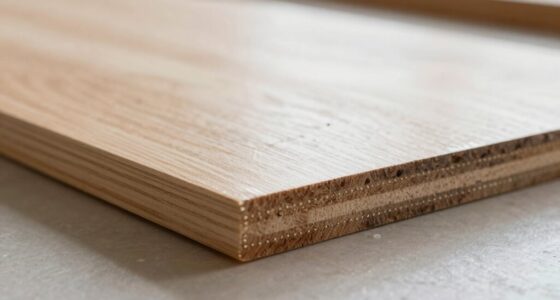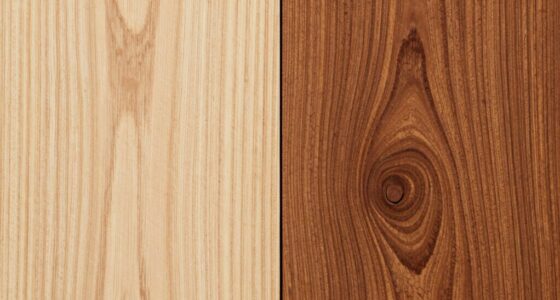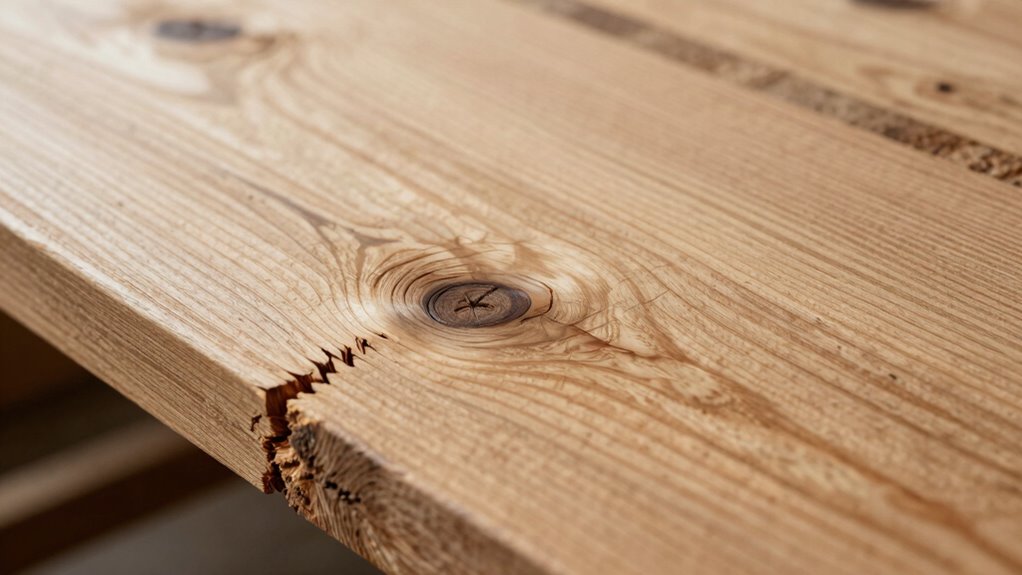
One common mistake that causes “perfect” boards to twist is assuming they’re fully acclimated before installation. If you don’t give them enough time to reach equilibrium moisture content, the wood will still respond to environmental changes, leading to warping or twisting once installed. Proper acclimation involves monitoring moisture levels and allowing ample time for moisture balance. Keep going to discover how to guarantee your wood stays flat and stable over time.
Key Takeaways
- Failing to properly acclimate wood to the environment causes uneven moisture content, leading to twisting over time.
- Not allowing sufficient time for moisture equilibration results in internal stresses that induce warping.
- Ignoring grain orientation during acclimation creates uneven expansion, causing boards to twist.
- Storing boards in environments with fluctuating humidity prevents proper moisture balance, promoting twisting.
- Skipping consistent moisture content checks before installation leaves boards prone to movement and distortion.
Why Does Lumber Warp After Installation: And How Can You Prevent It?
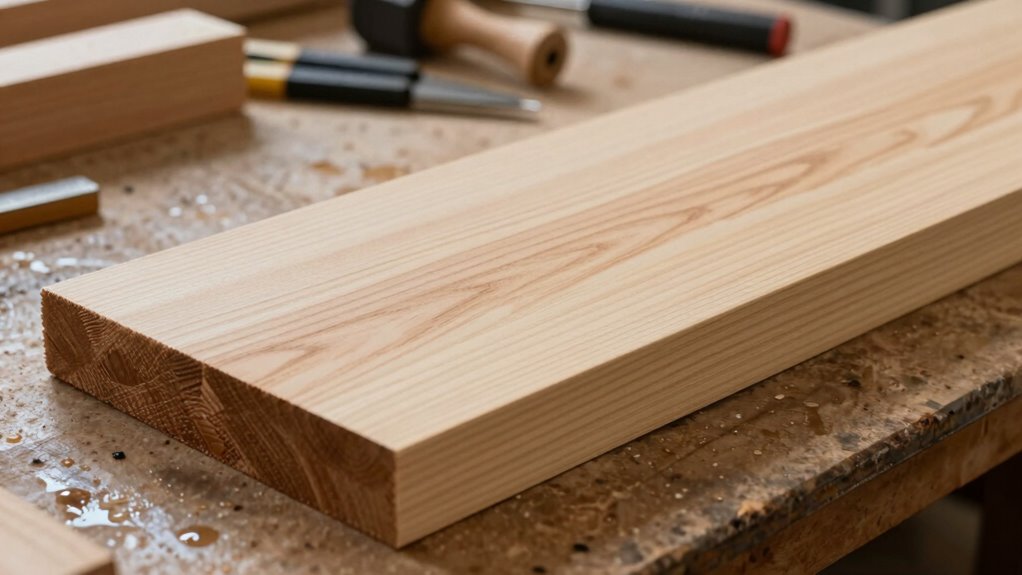
Lumber often warps after installation because it wasn’t properly acclimated to the environment. One key factor is the wood grain, which influences how the board responds to moisture changes. If the grain is straight and tight, the wood is less likely to warp, but if it’s irregular, expansion and contraction become unpredictable. Wood density also plays a role; denser wood tends to resist movement better, while less dense wood expands and contracts more easily. When you skip proper acclimation, the moisture content of the lumber remains mismatched with the surrounding environment, causing uneven shrinkage or swelling. This imbalance leads to warping or twisting over time, especially if the moisture fluctuations are significant. Proper acclimation guarantees stable moisture levels, reducing the chances of warping after installation. Additionally, understanding Free Floating techniques can help in managing moisture levels more effectively during installation.
How to Properly Acclimate Your Lumber Before Building
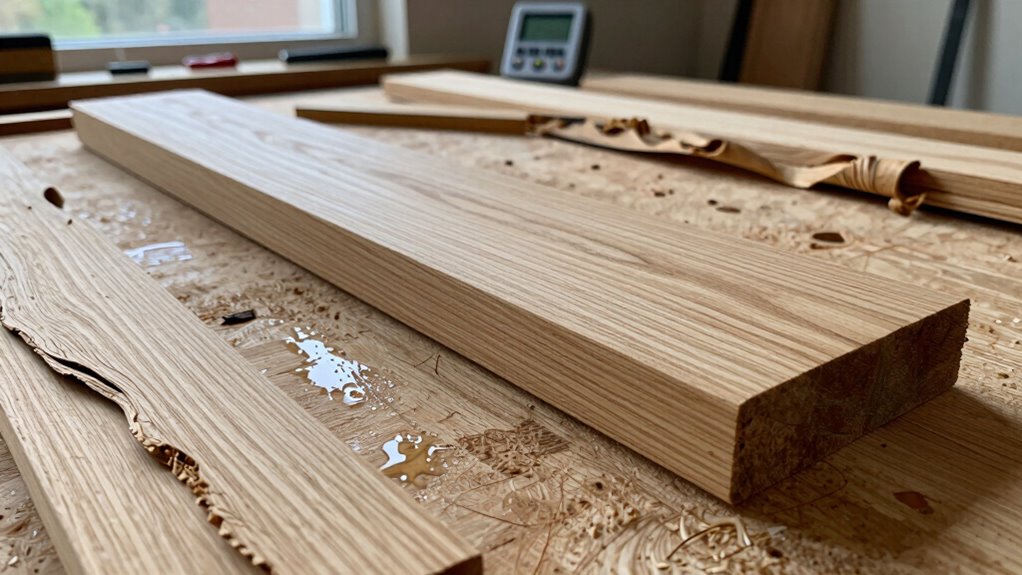
To guarantee your wood doesn’t warp after installation, it’s vital to properly acclimate it beforehand. Start by selecting lumber with appropriate wood grading for your project. Then, check the lumber sizing to ensure consistent dimensions. Store the boards in a dry, climate-controlled space similar to your project’s environment for at least one week. This helps the wood reach equilibrium moisture content. Visualize how different factors influence your lumber with this table:
| Lumber Sizing | Wood Grading | Environment |
|---|---|---|
| 2×4, 1×12 | Grade A, B | Room temperature & humidity |
| Consistent thickness | Quality of cut | Avoid extreme dryness or dampness |
| Proper storage | Correct handling | Minimize warping risks |
| Allow time for acclimation | Ensure stability | Achieve flat, stable boards |
Additionally, understanding how moisture content impacts wood stability can help you make better acclimation decisions.
How to Spot When Your Wood Isn’t Fully Acclimated
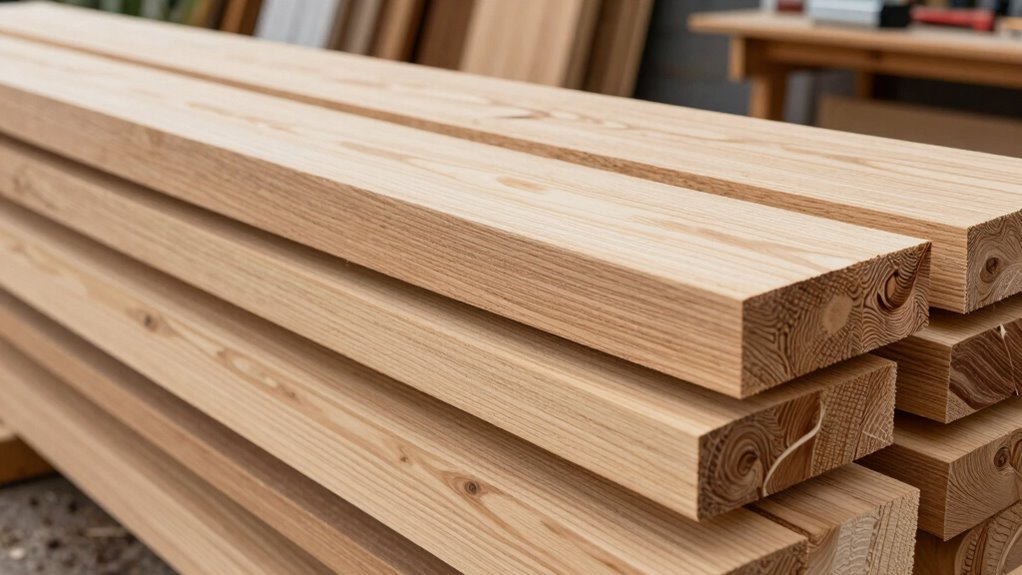
Look closely at your lumber’s surface—if you notice warping, cracking, or uneven coloring, it’s a sign it might not be fully acclimated. You should also check the moisture content with a meter; significant differences from the environment suggest it’s still adjusting. Recognizing these signs helps make certain your wood is prepared for use and prevents future issues. Additionally, understanding the importance of moisture content and its impact on wood stability can guide you in selecting properly acclimated boards.
Visible Surface Changes
Since fully acclimated wood reaches a stable moisture level, any visible surface changes can signal it’s still adjusting. Watch for irregularities in grain orientation, such as warping or cupping, which often indicate uneven moisture content. These surface distortions may become more noticeable during finishing techniques, like sanding or staining, revealing that the wood is still settling. You might see slight cracks or separations along the grain, especially if the board wasn’t properly acclimated beforehand. Keep an eye out for uneven coloration or gloss differences, which can also signal ongoing moisture movement. Recognizing these surface signs helps you determine if your wood needs more time to stabilize, reducing the risk of future twisting or warping in your project.
Moisture Content Signs
When your wood isn’t fully acclimated, its moisture content will reveal it. You can often tell by checking the wood’s density—if it feels unusually heavy or light, it might still contain excess moisture or be too dry. Moisture content impacts finish compatibility; if the wood’s moisture is too high, finishes may not adhere properly, leading to problems down the line. Look for signs like warping, cupping, or uneven surfaces, which indicate uneven moisture distribution. A moisture meter can give you an accurate reading, helping you determine if the wood has reached the proper moisture level for your project. Ensuring the wood is fully acclimated prevents twisting and other issues caused by residual moisture imbalance. Additionally, understanding breed traits and temperaments can help select the right type of wood for specific environments and uses.
Common Mistakes That Cause Warping During Acclimation
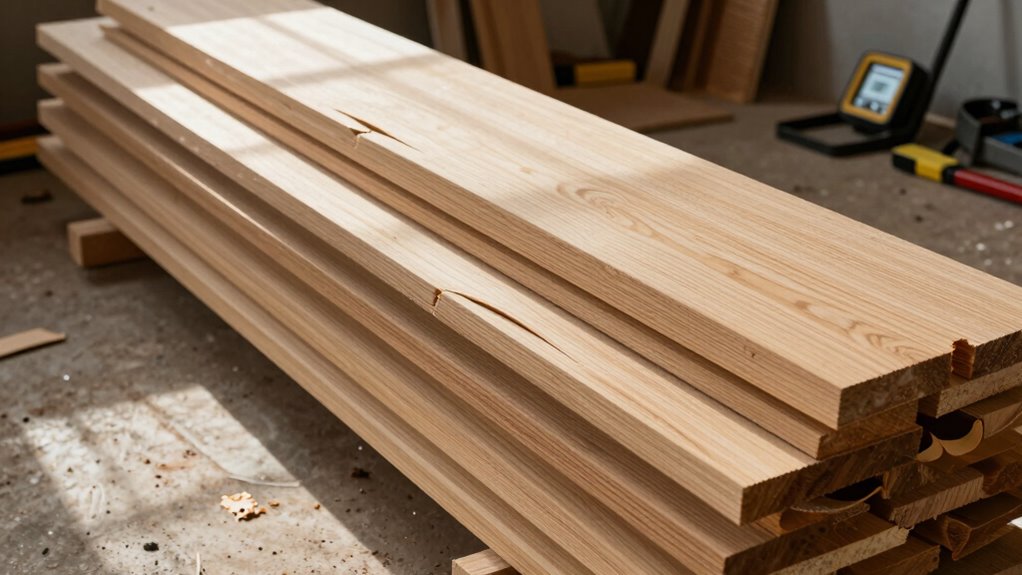
One of the most common mistakes that leads to warping during acclimation is failing to control the environment properly. Sudden temperature fluctuations can cause uneven drying, leading to twists and bows. Ignoring grain orientation can also contribute, as boards cut against the grain dry unevenly and warp more easily. To avoid these issues, keep the environment stable and consistent. Additionally, understanding whole‑home backup power principles can help ensure your workshop environment remains stable during critical stages of wood acclimation.
Avoid warping by maintaining stable temperature and proper grain orientation during wood acclimation.
Here are some mistakes to watch out for:
- Ignoring temperature fluctuations during acclimation
- Improperly aligning grain orientation before acclimating
- Exposing wood to direct sunlight or drafts
- Not allowing enough time for even moisture distribution
- Storing boards in high-humidity or dry areas without regulation
Control temperature and pay attention to grain orientation to prevent warping during acclimation.
Tips for Monitoring and Controlling Moisture Content in Your Wood
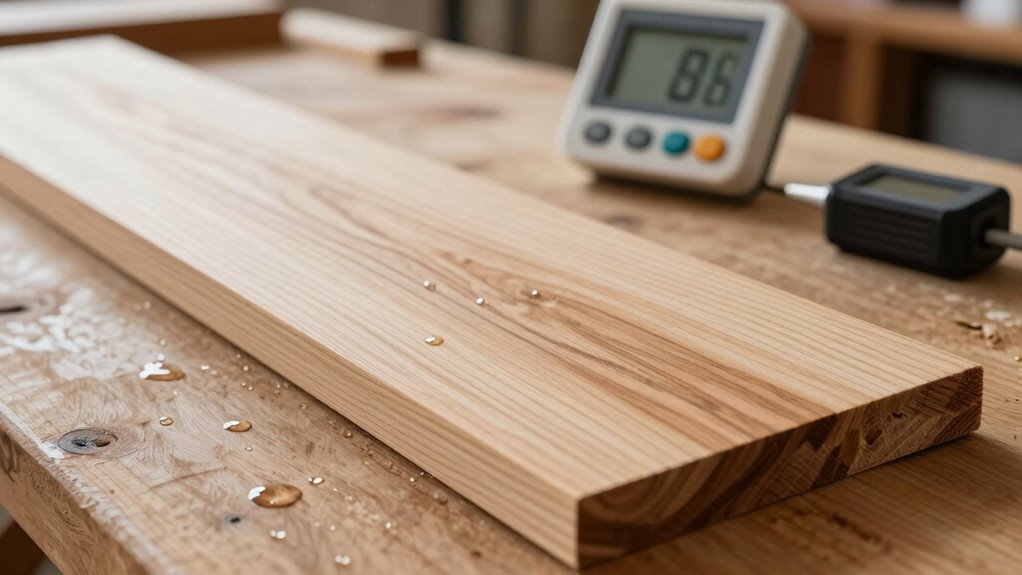
To keep your wood stable, start by using moisture meters to check its moisture content regularly. Proper storage and air-drying also help prevent unexpected warping or cracking. Implementing simple storage techniques ensures your wood remains in optimal condition. By following these tips, you can better control moisture levels and make certain your wood stays in shape.
Use Moisture Meters
Using moisture meters is essential for accurately monitoring the moisture content of your wood, preventing costly mistakes during installation or finishing. Proper use guarantees you maintain wood stability and avoid warping or twisting. Regularly check your wood with moisture meters, especially before installation, to confirm it’s within the ideal moisture range. This proactive approach helps you catch potential issues early. Additionally, understanding the air quality considerations can aid in maintaining stable moisture levels in your environment, further reducing the risk of wood distortion. To maximize results, keep these tips in mind:
- Calibrate your moisture meter regularly
- Take multiple readings across the board
- Measure in different spots for consistency
- Use the appropriate type of moisture meter for your wood
- Record moisture levels to track changes over time
Store Properly and Air-Dry
Properly storing and air-drying your wood is essential for achieving the right moisture content. Good wood storage involves keeping boards in a dry, well-ventilated area to prevent excess moisture absorption. Use air drying techniques such as stacking lumber with spacers or stickers to allow even airflow around each piece. This promotes uniform drying and minimizes warping or twisting. Avoid direct contact with ground or concrete, which can introduce moisture. Regularly check the moisture content using a moisture meter to ensure it reaches the desired level before installation. Proper air drying reduces internal stresses and prepares your wood for finishing or further processing. By controlling moisture during storage and air drying, you help prevent future twisting and ensure your boards stay flat and stable. Monitoring moisture content with a moisture meter is crucial for achieving consistent results.
Tools and Techniques to Keep Your Wood Flat Over Time
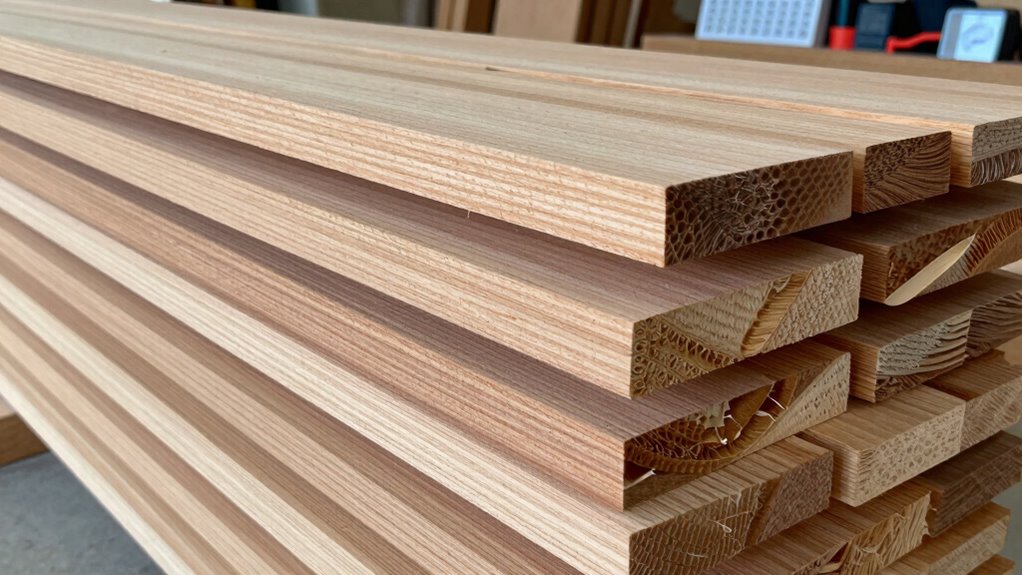
Maintaining a flat surface on your wood over time requires the right tools and techniques. First, pay attention to grain orientation when stacking and storing your boards; stacking with the grain parallel helps prevent warping. Use clamps or weight distribution to keep your boards flat during drying and storage. Applying sealing techniques, like sealing the ends and edges, minimizes moisture exchange. You can also employ moisture meters to monitor wood humidity levels regularly. Additionally, consider using a planer or sander to correct minor warps early. Properly sealing and maintaining consistent moisture levels are essential for long-term flatness. Being aware of wood acclimation and its impact on stability helps prevent future twists and warps. Keeping these tools and techniques in mind helps guarantee your boards stay flat and true, avoiding future twists and warps.
How to Fix Twisted or Warped Boards and Prevent Future Issues
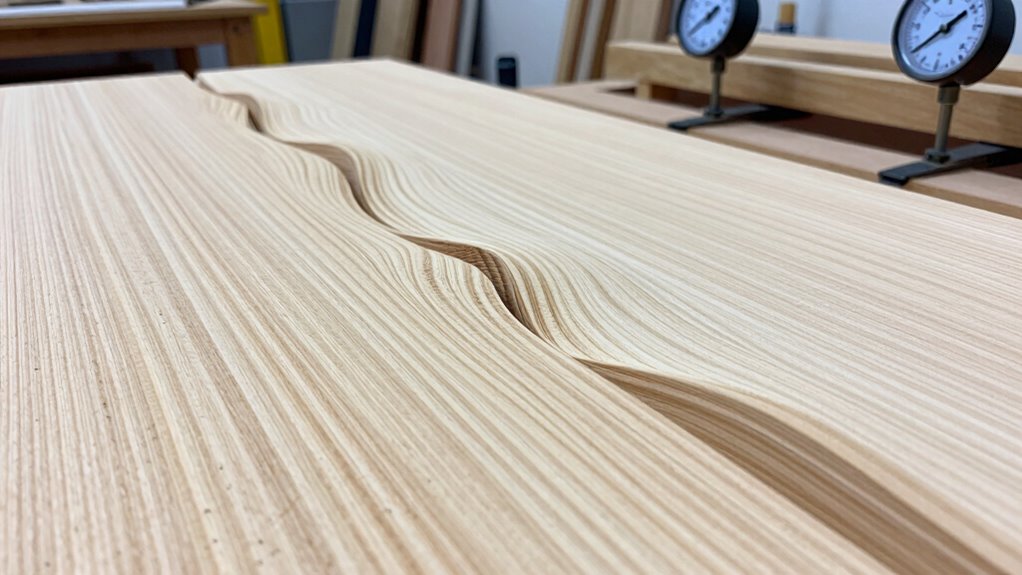
When you notice a board has twisted or warped, addressing the issue promptly can save it from further damage. Start by gently flattening the board using weights or clamps to counteract the warp, but avoid forcing it too hard, which can cause cracks. To fix existing warping, you might also consider planing or sanding the high spots carefully. Prevent future issues by controlling wood expansion: store your lumber in a stable environment with consistent humidity and temperature. This minimizes movement caused by moisture changes. Additionally, applying a finish or sealant helps protect the wood from moisture intrusion, reducing the risk of warping over time. Proper acclimation and handling are key to maintaining flat, stable boards that resist twisting and warping. Natural ingredients in your woodworking supplies can also influence the longevity of your projects by affecting how the wood responds to environmental changes.
Frequently Asked Questions
Can Climate Change Affect Lumber’s Tendency to Warp After Installation?
Think of your lumber as a dancer waiting for the right rhythm. Climate change, with its unpredictable temperature fluctuations and rising moisture content, throws off that rhythm. These changes cause the wood’s moisture levels to fluctuate, making it more prone to warping after installation. To keep your boards steady and true, monitor moisture content and avoid drastic temperature swings, allowing your lumber to adapt gracefully to its environment.
Does the Type of Wood Species Influence How It Acclimates and Warps?
Yes, the wood species markedly influences how it acclimates and warps. Different species have unique moisture content and density, affecting their response during the acclimation process. You need to contemplate the specific wood species when preparing your lumber, ensuring proper acclimation to your environment. This helps prevent twisting or warping later. Properly understanding these differences allows you to select the right wood and follow the correct acclimation process for stable, durable boards.
Are There Specific Storage Conditions That Minimize Warping Risks?
Your best bet is to control moisture levels diligently; improper storage conditions are like a ticking time bomb for warping. Keep your wood in a stable, climate-controlled environment with consistent humidity and temperature. Use proper ventilation and avoid direct sunlight or damp areas. By maintaining a balanced storage environment and moisture control, you considerably reduce the risk of your beautiful, perfect boards twisting or warping over time.
How Long Should Lumber Be Acclimated for Optimal Stability?
You should acclimate lumber for at least two to four weeks, making sure its moisture content stabilizes. During this time, keep the environment consistent in temperature and humidity, avoiding fluctuations that can cause moisture content changes. Monitoring the moisture content regularly helps you determine when the wood reaches equilibrium, reducing the risk of warping or twisting later. Proper acclimation ensures your boards stay straight and stable during use.
Can Using Sealants or Finishes Prevent Wood Warping Over Time?
Yes, using sealants or finishes can help prevent wood warping over time, but only if they effectively control wood moisture. If the sealant isn’t properly applied or lacks durability, moisture can still seep in, causing twists and bows. So, while sealants improve wood moisture management, their effectiveness depends on correct application and the product’s quality. Don’t rely solely on finishes; proper acclimation remains essential.
Conclusion
Remember, proper acclimation is the gentle handshake that sets your wood on the right path. Skip this step, and your perfect boards could twist like a restless dancer. Treat your lumber like a sleeping giant—give it time, monitor its moisture, and avoid rushing the process. With patience and care, you’ll turn raw timber into a masterpiece that stays true, standing tall and proud—no surprises, just beautifully stable wood at your side.