This checklist is for DIY woodworkers choosing sanding supplies for projects at home, from broad surface prep to detail work. It can help you match each tool to the kind of sanding task you have in mind.

Get business pricing on tools and workshop supplies
- Business-only prices and quantity discounts
- Tax-exempt purchasing
- Multiple users, one account, clear invoices
The sections follow the listed categories: power sanders, abrasives, then advice-only entries for sanding blocks and an abrasive cleaning stick. Each pick is presented by its supplied product name, so check the listing details before deciding whether it fits your tools and project.
Use the checklist to compare the intended task, abrasive format, and compatibility requirements. Confirm dimensions and attachment style against your equipment, and make sure a product is actually sanding-related before buying. Verify the fit with the manufacturer’s specifications.
Random Orbital Sander
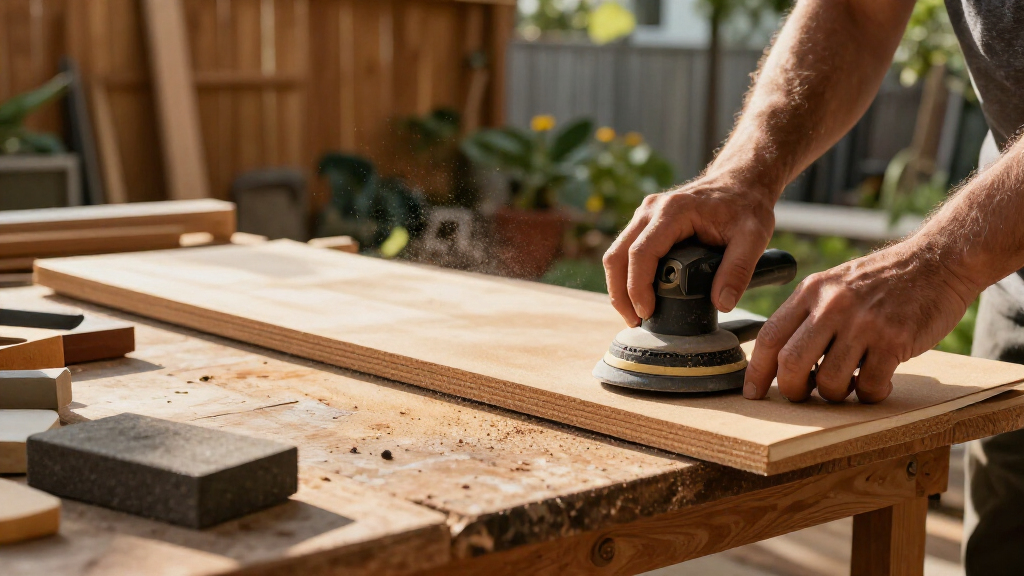
A random orbital sander is a power-tool option to consider for sanding broader areas. The listed pick is the Bosch GET65-5N 5-Inch Dual-Mode Random Orbit Sander. Its name identifies a 5-inch format and dual-mode operation; consult the product documentation to understand the modes and whether they suit your work. Match the tool to the surfaces and tasks you expect to tackle.
A common buying mistake is focusing only on the sander while overlooking the abrasive attachment and dust-collection setup. Before choosing, verify the pad size, abrasive attachment pattern, and any required accessories with the manufacturer. Check that your available sanding discs are compatible, and consider whether the tool’s size is comfortable for the areas you need to reach. Confirm compatibility before assembling a sanding system.
What to look for:
- Confirm the pad diameter and abrasive attachment style.
- Check which operating modes are described in the product documentation.
- Verify dust-collection connections and included accessories.
- Compare the tool’s size with the surfaces and spaces you will sand.
Bosch GET65-5N 5-Inch Dual-Mode Random Orbit Sander

This corded 5-inch sander offers standard random-orbit sanding for finishing and a direct-drive turbo mode for more aggressive stock removal. It features variable speed, a multi-hole pad compatible with a wide range of abrasive discs, and a vacuum-based dust collection system.
Pros:
- Two sanding modes support both fine finishing and aggressive stock removal.
- Multi-hole pad system works with a wide variety of 5-inch abrasive discs.
- Auxiliary handle can be mounted on either side.
- Pad-dampening brake helps prevent swirl marks.
Cons:
- Dust collection requires a vacuum cleaner and hose.
- Some compatible vacuum hoses are sold separately.
Best for: Woodworkers seeking a 5-inch random orbital sander
Not ideal for: Anyone who has not confirmed pad and abrasive compatibility
Bottom line: Check the manufacturer’s specifications and your abrasive setup before choosing the Bosch sander.
Detail Sander
Detail sanding calls for a tool that can reach smaller areas, and the supplied pick is named DEWALT 20V MAX XR Brushless Cordless 1/4-Sheet Variable-Speed Sander. The name specifies a cordless, variable-speed, quarter-sheet format. Read the listing carefully to establish what is included and how the sheet is secured. Check the format against the corners and narrow areas you need to work.
One frequent mistake is assuming that a product’s name answers battery, charger, and abrasive questions. Confirm whether those items are included, then check the manufacturer’s instructions for battery compatibility and the supported sanding-sheet type. A quarter-sheet format may call for different abrasive pieces than a disc sander, so compare the attachment method before purchasing supplies. The supplied product name ends with an opening parenthesis, so verify the complete listing and exact model details before buying.
What to look for:
- Confirm the complete product name and model from the listing.
- Check whether a battery and charger are included or compatible.
- Verify the quarter-sheet attachment style and supported abrasives.
- Review variable-speed instructions and fit for the areas you plan to sand.
DEWALT 20V MAX XR Brushless Cordless 1/4-Sheet Variable-Speed Sander (Tool Only,

This cordless 1/4-sheet sander has a brushless motor and variable speed control from 8,000 to 14,000 OPM. Its low-profile design, rubber overmold grip, paper clamp, and dust collection options support controlled sanding and convenient paper changes.
Pros:
- Brushless motor provides runtime and efficiency.
- Variable speed control accommodates different applications.
- Low-profile design helps reach close to the work surface.
- Dust bag and compatible dust collector connections support dust collection.
Cons:
- Battery and charger are sold separately.
- DWV010 or DWV012 dust collectors and the DWV9000 connector for other vacuum systems are sold separately.
Best for: Shoppers looking for a variable-speed quarter-sheet sander
Not ideal for: Anyone unable to verify the incomplete product listing
Bottom line: Confirm the exact model, battery details, and abrasive format before selecting this sander.
Sanding Belts
The supplied pick is named Sanding Belts & PSA Sanding Discs Set – 10 Pack 4×36 Inch Aluminum Oxi. Its name combines belts and PSA sanding discs and specifies a 4-by-36-inch dimension. Those details make careful compatibility checks essential: verify which dimension applies to which item and whether the belt size matches your sander. Match dimensions to the tool’s requirements before ordering.
A common mistake is treating belts and discs as interchangeable because they appear in one set. They use different attachment approaches, so confirm the belt’s fit and the disc’s PSA backing requirements separately. The supplied name does not identify the full grit assortment or other specifications; consult the complete listing for those details. Also confirm the exact quantity and contents, since the name alone may not clarify how the pack is divided. Read the listing closely to ensure the set covers the abrasive format you need.
What to look for:
- Verify that the belt dimensions match your belt sander.
- Check the PSA disc size and required backing surface.
- Confirm the grit assortment and quantities in the complete listing.
- Make sure the set contains the abrasive format you intend to use.
Sanding Belts & PSA Sanding Discs Set – 10 Pack 4×36 Inch Aluminum Oxide Belts a

This comprehensive sanding set includes belts and discs suitable for wood, metal, and non-metallic materials. Made from durable aluminum oxide, it offers a wide range of grits for various sanding and polishing tasks, ideal for both DIY and professional use.
Pros:
- Includes a wide range of grits for versatile sanding and polishing
- Durable aluminum oxide material ensures long-lasting performance
- Self-adhesive discs for easy attachment and replacement
- Suitable for both flat and curved surfaces
Cons:
- May be too coarse for very fine finishing without additional polishing
- Requires compatible tools for use with belts and discs
- No specific price information provided
Best for: Shoppers comparing a set of belts and PSA discs
Not ideal for: Anyone who needs confirmed grit or contents without checking the listing
Bottom line: Verify the dimensions, attachment methods, and set contents against your equipment.
Sanding Discs
The listed pick for sanding discs is named Hook-and-Loop Sleeping Headphones 2-Pack Bluetooth Headband. That name describes headphones rather than a sanding abrasive, so it does not establish that the item is a usable sanding disc. Check the category match before treating it as a woodworking supply.
A common buying mistake is relying on a section label when the product title points to a different kind of item. For a sanding-disc purchase, compare the actual listing with your sander’s pad diameter and attachment style, such as hook-and-loop if that is what the tool requires. Confirm the abrasive material and grit from the product details. Verify the item itself and its compatibility before adding it to a sanding setup.
What to look for:
- Confirm the listing is for sanding discs.
- Match the disc diameter to your sander’s pad.
- Check that the attachment style matches your tool.
- Review grit and abrasive details in the complete listing.
Hook-and-Loop Sleeping Headphones 2-Pack Bluetooth Headband

These Bluetooth headband headphones feature an adjustable hook-and-loop strap for a secure, comfortable fit. Thin low-profile speakers rest over the ears, making them ideal for side sleepers, while Bluetooth 5.4 provides stable wireless connectivity and up to 14 hours of playtime.
Pros:
- Adjustable hook-and-loop strap ensures a secure, comfortable fit
- Thin low-profile speakers are comfortable for side sleepers
- Bluetooth 5.4 provides stable connection and up to 14 hours of playtime
- Washable headband with removable electronics
Cons:
- No active noise cancellation
- Hand wash only for the headband
- Speakers rest over ears, not in ear, which may reduce sound isolation
Best for: Readers checking whether a listing matches the category
Not ideal for: Anyone seeking confirmed sanding discs from this product name
Bottom line: The supplied name describes headphones, so confirm the listing before considering it for sanding.
Sanding Blocks
No specific product is listed for sanding blocks, so use this slot to choose a block that suits the surface and abrasive you plan to use. A block can provide a hand-held way to support sanding material; consider whether the work calls for a flat face, a smaller profile, or access to a particular edge. Choose for the workpiece and the areas you need to reach.
A common mistake is buying a block without checking how it holds the abrasive. Confirm the supported sheet dimensions and attachment method, then compare the block’s shape with the contours of your project. For flat surfaces, make sure the working face can sit evenly; for tighter areas, consider whether the block’s size allows control. Check the manufacturer’s specifications rather than assuming that sheets will fit across different blocks. Match block and abrasive before starting.
What to look for:
- Check supported abrasive dimensions.
- Confirm how the block secures the abrasive.
- Choose a shape that reaches the work area comfortably.
- Look for a flat working face when sanding broad flat surfaces.
Abrasive Cleaning Stick
No product is listed for an abrasive cleaning stick, so treat this as a reminder to check whether your sanding setup calls for one. The appropriate choice depends on the abrasive and equipment you intend to use. Consult the tool and abrasive instructions to determine whether a cleaning stick is suitable, and follow their guidance for use. Check compatibility first rather than assuming every abrasive can be cleaned the same way.
A common mistake is choosing a cleaning accessory without confirming its intended use or the abrasive it supports. Read the product information for compatible materials and instructions, then compare that information with your sanding supplies. If the listing does not clearly state compatibility, seek a manufacturer specification before using it. Follow the instructions for both the abrasive and the cleaning accessory.
What to look for:
- Confirm which abrasives the stick is intended to clean.
- Check compatibility with your sanding equipment and supplies.
- Read the manufacturer’s use instructions.
- Avoid assuming a cleaning accessory suits every abrasive.
Use the product names as a starting point and verify the full listing details, especially where the name is incomplete or appears unrelated to its section. With a little careful matching, you can build a checklist that reflects your actual projects and equipment. Take it one category at a time and choose supplies with confidence.