The best Milwaukee circular saw blades depend on what you cut and how clean the edge needs to be. I rank the 7-1/4-inch 40-tooth Fine-Finish 10-Pack as the best overall for woodworkers who want a versatile supply of cleaner-cutting blades. For fast framing cuts, the 24-tooth Framing 2-Pack is a practical choice, while the 8-inch Cermet-Tipped Metal-Cutting Blade is the standout for compatible metal-cutting saws. The main tradeoffs are cut speed versus finish, blade size versus saw compatibility, and buying one blade versus a multipack. Read on for the full breakdown and help matching each blade to your work.

Get business pricing on tools and workshop supplies
- Business-only prices and quantity discounts
- Tax-exempt purchasing
- Multiple users, one account, clear invoices
Complete the kit


Key Takeaways
- The 7-1/4-inch 40-tooth Fine-Finish 10-Pack stands out as the most versatile wood choice in this lineup, balancing smoother cuts with a useful supply for repeat work.
- For rough framing, the 24-tooth blades are the more suitable group; the 2-pack favors a smaller commitment, while the 3-pack suits buyers who want more spares.
- The 60-tooth Ultra Fine Finish and 12-inch 80-tooth blade prioritize cleaner wood cuts, but their tooth counts and larger diameters are not substitutes for a fast framing blade.
- Metal cutting calls for a dedicated blade: the 8-inch Cermet-Tipped and 5-3/8-inch carbide options differ in size and construction, so saw compatibility should decide between them.
- A blade’s diameter, arbor fit, kerf, and intended material matter as much as its tooth count; the 10-inch general-purpose blade and thick-kerf framing blade are not automatic fits for every circular saw.


| Milwaukee circular saw blade | Blade diameter | Model | Number of teeth | Material |
|---|---|---|---|---|
| Milwaukee 12-Inch 80-Tooth Fin | 12 in | — | 80 | — |
| Milwaukee 8-Inch 50-Tooth Cerm | 8 in | 48-40-4520 | 50 | — |
| Milwaukee 7-1/4-Inch 24-Tooth | 7-1/4 in | 48-40-0722 | 24 | — |
| Milwaukee 7-1/4-Inch 40-Tooth | 7.25 in | 48-41-0726 | 40 | High-speed steel |
| Milwaukee 10-Inch 40-Tooth Gen | 10 in | 48-40-1024 | 40 in title; 24 in specifications | — |
| Milwaukee 7-1/4-Inch 24-Tooth | 7-1/4 inches | — | — | Carbide-tipped |
| Milwaukee 48-41-0730 7-1/4-Inc | 7.25 inches | 48-41-0730 | — | High-speed steel |
| Milwaukee 5-3/8-Inch 30-Tooth | 5-3/8 inches | 48-40-4205 | — | Alloy steel with cobalt-infused tungsten carbide |
| Milwaukee 7-1/4-Inch 24-Tooth | 7-1/4 inches | 48-40-0720 | — | High-speed steel |
More Details on Our Top Picks
Milwaukee 12-Inch 80-Tooth Fine-Finish Circular Saw Blade
For buyers who need a fine finish on a larger saw, this blade pairs an 80-tooth ATB grind with a 12-inch diameter, making it the finish-focused choice in this group. Its 12-degree hook angle and carbide tips suit controlled wood cutting, while the stated 4-inch maximum cutting depth gives it more reach than the 7-1/4-inch blades listed here. Compared with the Milwaukee 7-1/4-Inch 40-Tooth Fine-Finish Circular Saw Blades, 10-Pack, this blade has twice as many teeth and a larger diameter, but it is a single blade for a different saw size—not a bulk replacement option. The tradeoff is narrow application: it is specified for wood, and its 1-inch round arbor must match the saw. Buyers needing metal cutting or a diamond-knockout arbor should choose another blade.
Pros:- 80-tooth ATB design is suited to fine-finish wood cuts.
- 12-inch diameter and stated 4-inch maximum cutting depth provide greater reach than the listed 7-1/4-inch blades.
- Carbide tips provide a durable cutting edge.
- 1-inch round arbor fits compatible circular saws.
Cons:- Specified for wood cutting rather than metal or other materials.
- The 1-inch round arbor limits fit to compatible saws.
- Sold as one blade, unlike the 10-pack fine-finish option.
Best for: Woodworkers with a compatible 12-inch circular saw who prioritize fine-finish cuts and need greater cutting depth than a 7-1/4-inch blade provides.
Not ideal for: Users with saws that require a different arbor size, or anyone seeking a metal-cutting blade or a multi-blade pack.
- Blade diameter:12 in
- Number of teeth:80
- Tooth grind:ATB
- Arbor:1 in, round
- Maximum blade speed:6,000 RPM
- Maximum cutting depth:4 in
- Cut width:0.12 in
- Cutting material and type:Wood; fine finish
Our verdict“Choose this blade for fine-finish woodwork on a compatible 12-inch saw; skip it if your saw needs another arbor size or you want a multipack.”
Milwaukee 8-Inch 50-Tooth Cermet-Tipped Metal-Cutting Circular Saw Blade
This is the metal specialist in the group, rather than an all-purpose alternative to Milwaukee’s wood blades. Its 50 cermet-tipped teeth and vibration-dampening body are designed for smoother cuts with less heat, sparks, and noise when cutting ferrous material up to 3/32 inch thick. That makes it a more focused pick than the Milwaukee 5-3/8-Inch 30-Tooth Carbide Metal Cutting Circular Saw Blade, with a stated capacity for thin ferrous stock and a specific saw compatibility requirement. The main tradeoff is that narrow operating window: the listed material limit is ferrous material up to 3/32 inch, and the blade is specified for the Milwaukee 6370-20 dry cut saw. Its 8-inch diameter and fit requirements make checking saw compatibility especially important before choosing it.
Pros:- Cermet-tipped teeth are designed for extended wear.
- Vibration-dampening design supports smoother cutting with reduced heat, sparks, and noise.
- Designed for burr-free cuts in its specified metal-cutting application.
- Hardened-steel body.
Cons:- Cutting capacity is limited to ferrous materials up to 3/32 inch thick.
- Specified for use with the Milwaukee 6370-20 dry cut saw.
- Not suited to the wood-cutting tasks covered by the other blades in this roundup.
Best for: Metalworkers cutting thin ferrous stock who own the Milwaukee 6370-20 dry cut saw and want a blade designed to limit heat, sparks, and vibration.
Not ideal for: Woodcutters, users working with ferrous material thicker than 3/32 inch, or owners of saws outside the stated compatibility.
- Blade diameter:8 in
- Number of teeth:50
- Cutting material:Metal
- Stated cutting capacity:Ferrous materials up to 3/32 in thick
- Tooth material:Cermet-tipped
- Body:Hardened steel
- Compatible saw:Milwaukee 6370-20 dry cut saw
- Model:48-40-4520
Our verdict“Pick this blade for thin ferrous stock only if your saw matches the stated Milwaukee 6370-20 compatibility.”
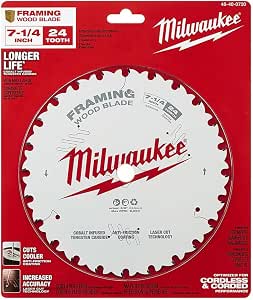
Milwaukee 7-1/4-Inch 24-Tooth Framing Circular Saw Blades, 2-Pack
For routine framing, this two-blade set favors speed and broad wood compatibility over a polished finish. The 24-tooth thin-kerf design is intended to cut with less resistance, which can be useful on cordless saws as well as corded models. Cobalt-infused carbide teeth are designed to stay sharp longer, and the listed materials include softwood, hardwood, wet or treated lumber, and engineered wood. Compared with the Milwaukee 7-1/4-Inch 24-Tooth Framing Circular Saw Blades, 3-Pack, this is the same basic tooth count and diameter in a smaller pack; its thin-kerf design is also a clearer fit for buyers focused on lower cutting resistance. The tradeoff is finish quality: 24 teeth suit framing work better than fine trim, where the 40- or 60-tooth options are more appropriate.
Pros:- Thin-kerf design is intended to reduce cutting resistance and support faster cuts.
- Cobalt-infused carbide teeth are designed to stay sharp longer.
- Suitable for softwoods, hardwoods, wet or treated lumber, and engineered wood.
- Two blades provide a spare without requiring a larger multipack.
Cons:- The 24-tooth framing design is less suited to fine-finish work than higher-tooth-count options.
- Specified for wood cutting, limiting use with other materials.
- Arbor fit requires compatibility with a 5/8-inch hole and diamond knockout.
Best for: Framers and remodelers using 7-1/4-inch corded or cordless saws who cut varied lumber and want a spare blade on hand.
Not ideal for: Finish carpenters seeking clean trim cuts, or buyers whose saw does not accept a 5/8-inch arbor with diamond knockout.
- Blade diameter:7-1/4 in
- Number of teeth:24
- Pack count:2
- Arbor:5/8 in with diamond knockout
- Blade design:Thin kerf
- Tooth material:Cobalt-infused carbide
- Compatible materials:Softwood, hardwood, wet or treated lumber, engineered wood
- Model:48-40-0722
Our verdict“Choose this two-pack for fast, general framing cuts across common lumber types, not for finish work or non-wood materials.”
Milwaukee 7-1/4-Inch 40-Tooth Fine-Finish Circular Saw Blades, 10-Pack
This ten-blade pack is aimed at crews or frequent users who want multiple 7-1/4-inch, 40-tooth blades for finish-oriented cuts. The higher tooth count gives it a different job from the Milwaukee 7-1/4-Inch 24-Tooth Framing Circular Saw Blades, 2-Pack: the 24-tooth blade prioritizes framing speed, while this option is labeled for fine-finish cutting. Its biggest practical distinction is quantity, which suits shops that need replacements on hand rather than a single specialist blade. There is a notable qualification, though: the supplied data lists high-speed steel construction and compatibility with alloy steel, so buyers should verify that this material listing fits their intended saw and work before ordering. The source does not provide arbor or maximum-speed details, making fit checks less straightforward than with several other blades here.
Pros:- 40-tooth design is listed for fine-finish cutting.
- Ten blades suit frequent use or maintaining replacement stock.
- High-speed steel construction is specified in the product data.
- Alloy steel is listed as a compatible material.
Cons:- The product data lists alloy steel compatibility, which may limit suitability for other materials.
- Arbor size and maximum speed are not provided in the supplied specifications.
- A ten-pack may be more blades than occasional users need.
Best for: Busy workshops or crews that regularly use compatible 7-1/4-inch saws for fine-finish work and want a larger supply of blades.
Not ideal for: Occasional users who need only one blade, or buyers who need clearly specified arbor and speed details before confirming saw compatibility.
- Blade diameter:7.25 in
- Number of teeth:40
- Pack quantity:10
- Material:High-speed steel
- Listed compatible material:Alloy steel
- Model:48-41-0726
- Item weight:16 oz
Our verdict“Choose this pack when you need repeated fine-finish blade replacements and can confirm the listed material and saw fit.”
Milwaukee 10-Inch 40-Tooth General Purpose Circular Saw Blade
This refurbished blade is the broad-use wood pick for buyers who need a 10-inch format, but the listing carries an important data conflict: the title says 40 teeth, while the specifications say 24 teeth. That uncertainty makes it harder to predict whether the blade will favor a smoother cut or faster framing-style work. Compared with the Milwaukee 12-Inch 80-Tooth Fine-Finish Circular Saw Blade, it is presented as general purpose rather than a high-tooth-count finish specialist, and it is a smaller diameter. The product is described as tested, cleaned, inspected, and repackaged, but refurbished condition may not suit buyers who want a new blade or consistent packaging. I would confirm the tooth count and saw fit with the seller before relying on this as a specific finish or framing blade.
Pros:- General-purpose design is intended for wood cutting.
- Refurbished unit is described as tested, cleaned, and inspected.
- 10-inch diameter suits compatible saws that require this blade size.
- Relevant accessories are stated to be included.
Cons:- Tooth count conflicts between the title and specifications: 40 versus 24.
- Refurbished condition may not suit buyers seeking a new blade.
- The supplied data does not state arbor size or maximum blade speed.
Best for: Woodcutters who need a refurbished 10-inch Milwaukee blade for general-purpose work and are willing to verify the tooth count before purchase.
Not ideal for: Buyers who require a confirmed tooth count, a new blade, or a clearly specified arbor and operating-speed match.
- Blade diameter:10 in
- Number of teeth:40 in title; 24 in specifications
- Cutting material:Wood
- Condition:Refurbished
- Model:48-40-1024
- Item weight:16 oz
- Packaging:May arrive in a generic box
Our verdict“Consider this refurbished blade for general woodcutting only after confirming its tooth count and compatibility with your saw.”
Milwaukee 7-1/4-Inch 24-Tooth Thick-Kerf Framing Circular Saw Blade
This blade suits framing work where straight, steady cuts matter more than minimizing cutting effort. Its 0.071-inch thick kerf is designed to resist flex, while cobalt-infused carbide teeth and diamond vents support durability and heat management through repeated cuts in softwood, hardwood, and laminated wood. Compared with the Milwaukee 7-1/4-Inch 24-Tooth Framing Circular Saw Blades, 3-Pack, this single blade emphasizes a stable thick-kerf build rather than giving you multiple blades for rotation. That makes it a focused choice for users who value cut control over pack quantity. The tradeoff is that a thicker kerf can demand more from the saw than a thinner blade, and this is a wood-only option, not a general-purpose choice for metal or plastic.
Pros:- Thick kerf is designed to support stable, straight cuts.
- Cobalt-infused carbide teeth are suited to repeated wood cutting.
- Diamond vent pattern helps move chips and manage heat.
- Compatible with softwood, hardwood, and laminated wood.
Cons:- Thicker kerf may require more cutting effort than a thinner-kerf blade.
- Limited to wood cutting.
- Includes one blade rather than a multi-pack.
Best for: Framers and remodelers who want a single 7-1/4-inch blade designed for stable cuts across solid and laminated wood.
Not ideal for: Users prioritizing lower cutting effort, a multi-blade pack, or a blade for metal and plastic.
- Brand:Milwaukee
- Part number:48-40-0740
- Blade diameter:7-1/4 inches
- Tooth count:24
- Kerf thickness:0.071 inches
- Material:Carbide-tipped
- Compatible material:Wood
- Pack quantity:1 blade
Our verdict“Choose this single blade if cut stability in varied wood matters more than a thinner kerf or extra blades.”
Milwaukee 48-41-0730 7-1/4-Inch 60-Tooth Ultra Fine Finish Circular Saw Blade
With 60 teeth on a 7-1/4-inch blade, this pick favors cleaner, finer cuts over the fast material removal of the 24-tooth Milwaukee framing blades. That makes it better suited to finish tasks where a rougher edge would mean more cleanup. Its listed compatibility with wood, plastic, and soft metals also gives it broader material coverage than the wood-only 7-1/4-inch thick-kerf framing blade. The description identifies high-speed steel construction, but provides little detail on cutting performance or blade life, so I would not choose it when those specifics are central to the job. Fine-tooth blades are also less aligned with rapid framing cuts. Choose it for finish-focused work and material flexibility, not as a replacement for a dedicated framing blade.
Pros:- 60-tooth design is intended for ultra-fine finish cuts.
- Listed for use with wood, plastic, and soft metals.
- High-speed steel construction.
- 7-1/4-inch diameter fits compatible saws using that blade size.
Cons:- Product details provide little information about cutting performance or blade life.
- Fine-tooth design is less suited to fast framing cuts than a 24-tooth blade.
- Only one blade is included.
Best for: Finish carpenters and DIYers seeking a 7-1/4-inch blade for finer cuts in wood, plastic, or soft metals.
Not ideal for: Framers who need a fast, rough-cutting blade or buyers who want clearly specified durability and cutting-performance details.
- Brand:Milwaukee
- Model:48-41-0730
- Blade diameter:7.25 inches
- Tooth count:60
- Material:High-speed steel
- Compatible materials:Wood, plastic, soft metals
- Thickness:0.06 inches
- Pack count:1
Our verdict“Pick this blade for finer cuts and broader listed material compatibility, but choose a 24-tooth framing blade for faster rough work.”
Milwaukee 5-3/8-Inch 30-Tooth Carbide Metal Cutting Circular Saw Blade
This is the lineup’s specialized compact metal blade, not an alternative to the wood-focused 7-1/4-inch framing options. Its 5-3/8-inch diameter and 30-tooth design are aimed at metal cutting, while cobalt-infused tungsten carbide is intended to retain tip sharpness. Laser-cut vibration-dampening slots are designed to reduce heat and noise, and the blade is described as producing a burr-free finish with cooler operation—useful when cleaner edges and less downtime matter. Compared with Milwaukee’s 8-inch cermet-tipped metal-cutting blade in this roundup, this one is the smaller-format choice; the larger blade may better suit saws designed for that size. Check your saw’s permitted blade diameter and arbor fit before buying. Its main limitation is clear: it is designed for metal, so it does not replace a wood blade.
Pros:- Cobalt-infused tungsten carbide is designed to help retain tip sharpness.
- Vibration-dampening slots are intended to reduce heat and noise.
- Designed to produce clean metal cuts with a burr-free finish.
- Compact 5-3/8-inch size suits compatible smaller saws.
Cons:- Metal-specific design limits its usefulness for wood and other materials.
- Only fits saws compatible with a 5-3/8-inch blade.
- The supplied product details do not list arbor size or other fit dimensions.
Best for: Metalworkers with a compatible 5-3/8-inch circular saw who want a blade designed for cooler, cleaner metal cuts.
Not ideal for: Woodworkers or users whose saw requires a different blade diameter; this blade is specified for metal cutting.
- Brand:Milwaukee
- Model:48-40-4205
- Blade diameter:5-3/8 inches
- Tooth count:30
- Material:Alloy steel with cobalt-infused tungsten carbide
- Compatible material:Metal
- Item weight:6.72 ounces
- Item thickness:0.63 inches
Our verdict“Choose this compact blade for metal work only when your saw accepts a 5-3/8-inch blade.”
Milwaukee 7-1/4-Inch 24-Tooth Framing Circular Saw Blades, 3-Pack
For buyers who want spare framing blades on hand, this three-pack is the practical alternative to the single Milwaukee 7-1/4-inch 24-tooth thick-kerf blade. All three blades share a 7-1/4-inch diameter and 24-tooth count, with compatibility listed for wood and engineered wood, making them a straightforward fit for routine framing tasks on compatible saws. The key advantage is quantity: keeping replacements available can reduce interruptions when a blade needs changing. The tradeoff is that the supplied details do not specify a thick kerf, carbide teeth, or the chip-management vent pattern described for the single thick-kerf model. These blades are made of high-speed steel, so buyers seeking those stated carbide features should choose the single blade instead. The material range is also limited to wood and engineered wood.
Pros:- Includes three blades for keeping replacements available.
- 24-tooth design is suited to framing cuts.
- Compatible with wood and engineered wood.
- 7-1/4-inch diameter fits compatible saws using that blade size.
Cons:- High-speed steel construction lacks the listed cobalt-infused carbide features of the single thick-kerf blade.
- Specified for wood and engineered wood rather than metal or plastic.
- The product details do not state kerf thickness or a vent design.
Best for: Framing crews and frequent DIY builders who want three 7-1/4-inch blades for wood and engineered-wood work.
Not ideal for: Buyers specifically seeking carbide-tipped teeth, a stated thick-kerf design, or a blade for cutting metal.
- Brand:Milwaukee
- Model:48-40-0720
- Part number:48-40-0720
- Pack count:3
- Blade diameter:7-1/4 inches
- Tooth count:24
- Material:High-speed steel
- Compatible materials:Wood, engineered wood
Our verdict“Choose this pack for multiple framing blades, but select the single thick-kerf model if its specified carbide and stability features matter more.”

How We Picked
I compared the nine blades by intended material, diameter, tooth count, and blade construction, then considered what those choices mean for cut speed, finish, and saw compatibility. Wood blades were judged against their likely roles: framing, general-purpose cutting, fine finishing, or ultra-fine finishing. The two metal-cutting blades were assessed separately because their intended material and sizes make them poor stand-ins for wood-cutting options.
The ranking favors useful fit for a defined buyer need, not the highest tooth count or largest pack. That puts the 7-1/4-inch 40-tooth 10-pack first as a broadly useful wood option, while dedicated framing and metal blades rank higher for buyers doing those specific jobs. Pack size, thick versus standard kerf, and diameter affect the order because they can shape blade choice and saw fit; I do not treat a larger pack or a finer cut as a universal advantage.
| Milwaukee circular saw blade | Material |
|---|---|
| Milwaukee 12-Inch 80-Tooth Fin | — |
| Milwaukee 8-Inch 50-Tooth Cerm | — |
| Milwaukee 7-1/4-Inch 24-Tooth | — |
| Milwaukee 7-1/4-Inch 40-Tooth | High-speed steel |
| Milwaukee 10-Inch 40-Tooth Gen | — |
| Milwaukee 7-1/4-Inch 24-Tooth | Carbide-tipped |
| Milwaukee 48-41-0730 7-1/4-Inc | High-speed steel |
| Milwaukee 5-3/8-Inch 30-Tooth | Alloy steel with cobalt-infused tungsten carbide |
| Milwaukee 7-1/4-Inch 24-Tooth | High-speed steel |
Factors to Consider When Choosing Best Milwaukee Circular Saw Blades
Before choosing among these Milwaukee blades, I would start with the saw and material, then decide how much cut quality matters for the task. These checks can prevent a common mismatch: buying a blade that looks right by tooth count but does not fit the saw or suit the work.
Match Blade Diameter and Arbor to Your Saw
Blade diameter is a hard compatibility limit, not just a preference. A 12-inch or 10-inch blade should not be treated as an upgrade for a 7-1/4-inch saw; the saw’s guard, spindle, and rated capacity determine what it can accept. Check the tool manual for both the allowed diameter and arbor size before ordering. Also confirm the blade’s rotation direction and any required reducer or adapter rather than assuming a similar-looking arbor will fit safely. A smaller blade, such as the 5-3/8-inch metal cutter, belongs on a compatible saw designed for that size. If the blade and saw specifications do not match, choose a correctly sized blade instead of trying to make the fit work.
Choose Tooth Count for the Job, Not as a Quality Score
Tooth count changes the balance between cutting speed and edge quality, but it does not rank blades from inferior to superior. A lower-tooth framing blade is geared toward efficient rough cuts, while higher-tooth options are better suited to finish work where tear-out matters more. A fine-tooth blade may cut more slowly and can be a poor match for repeated rough framing. Conversely, using a framing blade for visible finish cuts can leave more cleanup. Think about the workpiece and whether the cut edge will be exposed, covered, or sanded. For mixed jobs, choose the blade that fits the work you do most rather than expecting one tooth count to excel at every task.
Use a Dedicated Blade for Metal
Do not choose a wood blade for metal just because its diameter matches your saw. The two metal-cutting picks in this roundup use purpose-specific designs, and their distinct sizes mean the correct choice depends on the tool and material. Check the saw maker’s guidance for permitted blade types and the material thickness the setup can handle. Secure the workpiece and follow the tool and blade instructions, including any direction on speed and protective equipment. A metal blade is a specialized purchase, so it may not make sense for occasional work if a suitable alternative cutting method is already available. If metal is a regular task, the dedicated blade is a better match than trying to stretch a wood blade beyond its intended use.
Understand Kerf and the Thick-Kerf Tradeoff
Kerf is the width of material removed by the blade, and it can affect cut width, waste, and the saw’s workload. A thick-kerf framing blade may be suited to a compatible setup but should not be assumed to fit or perform like a standard-kerf blade. Check the saw’s documentation and blade specifications before switching kerf styles. A wider cut can matter when making repeated cuts to a tight layout, while blade stiffness and intended use may be relevant for other jobs. Do not judge kerf by appearance alone: confirm the stated measurement and any tool requirements. If you are replacing a blade, matching the existing specification is a sensible starting point unless you have a clear reason to change it.
Weigh Multipacks Against How Often You Cut
A multipack can be convenient for a crew or for projects that consume blades, but it is not automatically the better choice for every buyer. The 10-pack of fine-finish blades offers a larger supply than the 2-pack or 3-pack framing options, yet it only makes sense if that blade type matches recurring work. Buying several blades in a style you rarely use ties up storage and leaves you with the wrong option when the job changes. Occasional users may prefer a smaller pack so they can choose a different tooth count or material-specific blade later. Check how the pack is labeled and whether every blade is the same model. Base the decision on repeat use, not just the number of blades in the box.
Frequently Asked Questions
Which Milwaukee blade should I choose for a mix of framing and finish cuts?
I would choose based on which cuts make up most of the work, because a framing blade and a finish blade make different compromises. The 7-1/4-inch 40-tooth Fine-Finish option is the more versatile wood pick here when cleaner edges matter across varied projects. For frequent rough framing, the 24-tooth blades are more closely matched to that job, with less emphasis on finish quality. If both tasks are common, changing blades for the cut is more sensible than expecting one blade to handle both equally well. Confirm that the blade diameter and arbor match your saw before deciding.
Can I use the 8-inch metal-cutting blade on my 7-1/4-inch circular saw?
Do not assume it will fit or be safe simply because both are circular saw blades. The 8-inch blade requires a saw that permits its diameter, arbor, and intended metal-cutting application. Check the tool manual and the blade specifications before use, including any limits on blade type and material. If your saw is designed for 7-1/4-inch blades, choose a compatible option rather than fitting an oversized blade. The 5-3/8-inch carbide metal blade is a different size, but it also requires a compatible saw.
Is a 60-tooth blade a better choice than a 40-tooth blade for every finish cut?
No. More teeth generally indicate a stronger focus on a cleaner finish, but cut quality also depends on the material, saw setup, feed, and blade condition. In this lineup, the 60-tooth Ultra Fine Finish is the more specialized choice, while the 40-tooth 10-pack offers a broader balance for buyers who need several wood blades. A finer blade can be less suitable when speed matters or the cut is rough and hidden. Match the blade to the visible edge and the type of work rather than choosing by tooth count alone.
Should I buy the 2-pack or 3-pack of 24-tooth framing blades?
Both options serve the same general framing role, so pack size is the clearest distinction in this roundup. The 2-pack makes more sense if you need a replacement or only frame occasionally and want to limit spare inventory. The 3-pack suits repeated work where having another blade available is useful. Before choosing, confirm that the specific blade is compatible with your saw and that its kerf matches your needs; the separate thick-kerf framing blade is not automatically interchangeable. If you rarely use framing blades, a larger pack may leave you with more spares than you need.
When is the thick-kerf framing blade the right pick?
It is worth considering when its stated kerf matches the requirements of your saw and the type of framing cuts you make. Kerf affects the width of the cut and how much material is removed, so it can matter for repeated layout work and fit. Do not assume thick kerf means better performance or broader compatibility. Compare its specifications with your saw manual and with the standard framing blade before buying. If you have no specific need for a thick kerf, the regular 24-tooth framing options are the simpler starting point.
Conclusion
For most buyers choosing a wood blade, I recommend the 7-1/4-inch 40-tooth Fine-Finish 10-Pack as the best overall, especially when a steady supply and cleaner cuts matter. The 24-tooth Framing 2-Pack is the best value for occasional framing needs, while the 3-pack better fits repeated framing work. For beginners, I would start with a blade matched to the saw and the most common job—usually the 40-tooth option for mixed wood projects, or a 24-tooth blade for rough framing—rather than buying a specialty blade without a clear use. The 12-inch 80-tooth and 7-1/4-inch 60-tooth blades are premium finish-focused choices for compatible saws and visible cuts. For metal, choose the 8-inch Cermet-Tipped or 5-3/8-inch carbide blade only after confirming the saw fit and intended application; for general-purpose wood cutting, the 10-inch blade is a separate option for a compatible 10-inch saw.