Finding the right woodworking hand saw comes down to one big choice: Western push saws that cut fast and shrug off abuse, or Japanese pull saws with thinner blades that deliver cleaner, more precise joinery cuts. The 9.5-inch Ryoba pull saw earns my best overall pick because its double-edged blade handles both rip and crosscut work, making it the most versatile tool in this lineup. For rough framing and fast stock breakdown, the 14-inch 11 TPI fine-cut hardpoint saw is the better fit, while the SUIZAN 5-inch flush cut saw is unmatched for trimming dowels and plugs without marring the surface. Budget plays a role too — you can spend under $20 on a capable pull saw or four times that on a multi-piece set. Keep reading for the full breakdown of all 13 saws and which one fits your bench.

Get business pricing on tools and workshop supplies
- Business-only prices and quantity discounts
- Tax-exempt purchasing
- Multiple users, one account, clear invoices
Complete the kit


Key Takeaways
- Japanese pull saws dominated this comparison for joinery work — the 9.5-inch Ryoba and SUIZAN Ryoba outperformed every Western-style saw on cut cleanliness and control for dovetails and tenons.
- The 14-inch hardpoint saws (11 TPI) are the fastest option for breaking down boards but leave rougher edges that need planing or sanding afterward.
- Six-inch pull saws like the RUITOOL and the 2-pack double edge saw are incredible values, but their short blades struggle with longer crosscuts — they are detail tools, not all-purpose saws.
- Multi-piece sets (the 3-piece set and GARTOL 2-piece) only make sense if you need a flush-cut blade; buying a single quality Ryoba covers more woodworking tasks for less money.
- Replaceable-blade designs such as the SUIZAN 9.5-inch assembly version cost more upfront but avoid the disposable fate of hardened Western teeth that cannot be sharpened.
| 14-inch Pro Hand Saw, 11 TPI Fine-Cut, Soft-Grip Hardpoint Handsaw |  | Best General-Purpose Western Saw | Blade Length: 14 inches | Teeth: 11 TPI fine-cut | Blade Material: Heat-treated alloy steel | VIEW LATEST PRICE | See Our Full Breakdown |
| SUIZAN 5-inch Japanese Flush Cut Pull Saw |  | Best for Flush Cuts and Trimming | Blade Length: 5 inches | Blade Material: Japanese steel | Blade Type: Flush cut pull saw | VIEW LATEST PRICE | See Our Full Breakdown |
| Japanese Pull Saw – 9.5 Ryoba Hand Saw with Rip-cut and Crosscut |  | Best for Joinery and Fine Woodworking | Blade Length: 9.5 inches | Blade Material: Japanese steel | Cut Type: Rip-cut and crosscut (double edge) | VIEW LATEST PRICE | See Our Full Breakdown |
| Japanese Pull Saw 6 Inch, SK5 Double Edge 14/17 TPI |  | Best Beginner Pull Saw | Blade Length: 6 inches | Teeth: 14/17 TPI double edge | Blade Material: SK5 steel | VIEW LATEST PRICE | See Our Full Breakdown |
| Hautmec 14-Inch Hand Saw, 11 TPI Crosscut with Triple-Ground Teeth |  | Best Value All-Rounder | Blade Length: 14 inches | Teeth: 11 TPI triple-ground crosscut | Blade Material: 65Mn high-carbon steel | VIEW LATEST PRICE | See Our Full Breakdown |
| Jorgensen 15-Inch Hand Saw with 8 TPI Coarse Blade |  | Best for Fast Rough Cuts | Blade Length: 15 inches | Teeth Per Inch: 8 TPI | Blade Material: SK5 high-carbon steel | VIEW LATEST PRICE | See Our Full Breakdown |
| 2 Pack Japanese Pull Saw, 6-Inch Double Edge Hand Saw for Wood Cutting |  | Best Value Two-Pack | Blade Length: 6 inches | TPI: 17 and 11 | Material: SK5 high-carbon steel | VIEW LATEST PRICE | See Our Full Breakdown |
| RUITOOL Japanese Hand Saw 6 Inch Double Edge Ryoba Pull Saw for Flush Cuts |  | Best for Flush Cuts | Blade Length: 6 inches | Material: SK5 high-carbon steel | Teeth Per Inch: 17 TPI (hardwood), 14 TPI (softwood) | VIEW LATEST PRICE | See Our Full Breakdown |
| Jorgensen Ryoba 7 Inch Double Edge Japanese Pull Saw |  | Best Upgrade Pick | Blade Length: 7 inches | Teeth Per Inch: 18 TPI and 7-12 TPI | Blade Material: SK5 Japanese steel | VIEW LATEST PRICE | See Our Full Breakdown |
| Frocopo 6-Inch Hand Saw for Woodworking and Garden Trimming | 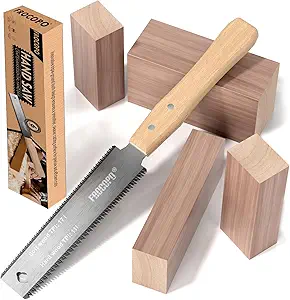 | Best Lightweight Pick | Blade Length: 6 inches | Teeth Per Inch: 11/17 TPI | Blade Material: SK5 steel | VIEW LATEST PRICE | See Our Full Breakdown |
| SUIZAN Ryoba Double Edge Saw 9.5″ Assembly Version |  | Best Premium Japanese Pull Saw | Blade Length: 9.5 inches | Blade Thickness: 0.02 inches | Overall Length: 23.2 inches | VIEW LATEST PRICE | See Our Full Breakdown |
| Japanese Hand Saw Set, 3-Piece Pull Saw with 6″ Ryoba, 6″ Flush Cut & 8″ Pruning Blade |  | Best Multi-Task Set | Number of Pieces: 3 | Blade Lengths: 6 inches (ryoba and flush cut), 8 inches (pruning) | Blade Material: SK5 high-carbon steel | VIEW LATEST PRICE | See Our Full Breakdown |
| GARTOL Hand Saw for Wood Cutting, 2-Piece Japanese Pull Saw Set with 6-Inch Flush Cut & Double-Edged SK5 Blade |  | Best Value Starter Set | Number of Pieces: 2 | Blade Length: 6 inches | Blade Material: SK5 steel | VIEW LATEST PRICE | See Our Full Breakdown |
| woodworking hand saw | Blade Length | Blade Material |
|---|---|---|
| 14-inch Pro Hand Saw | 14 inches | Heat-treated alloy steel |
| SUIZAN 5-inch Japanese Flush C | 5 inches | Japanese steel |
| Japanese Pull Saw | 9.5 inches | Japanese steel |
| Japanese Pull Saw 6 Inch | 6 inches | SK5 steel |
| Hautmec 14-Inch Hand Saw | 14 inches | 65Mn high-carbon steel |
| Jorgensen 15-Inch Hand Saw wit | 15 inches | SK5 high-carbon steel |
| 2 Pack Japanese Pull Saw | 6 inches | — |
| RUITOOL Japanese Hand Saw 6 In | 6 inches | — |
| Jorgensen Ryoba 7 Inch Double | 7 inches | SK5 Japanese steel |
| Frocopo 6-Inch Hand Saw for Wo | 6 inches | SK5 steel |
| SUIZAN Ryoba Double Edge Saw 9 | 9.5 inches | Japanese steel |
| Japanese Hand Saw Set | — | SK5 high-carbon steel |
| GARTOL Hand Saw for Wood Cutti | 6 inches | SK5 steel |
More Details on Our Top Picks
14-inch Pro Hand Saw, 11 TPI Fine-Cut, Soft-Grip Hardpoint Handsaw
When a job calls for one saw that can handle rough carpentry, drywall, and even plastic pipe, this 14-inch hardpoint model is the most sensible choice in this lineup. Unlike the Japanese pull saws like the SUIZAN 5-inch, which demand technique and excel at fine joinery, this Western-style push saw prioritizes speed and forgiveness. The 11 TPI fine-cut teeth with deep gullets clear chips quickly, so cuts feel fast without tearing out the wood. At 12 ounces, it is light enough for all-day use, and the soft-grip thermoplastic handle keeps control steady when hands get sweaty. The tradeoff is precision: it will never match a ryoba for dovetails, and the blade cannot be resharpened. Compared with the Hautmec 14-inch, it cuts a similar range of materials but feels slightly more utilitarian and less refined.
Pros:- Sharp heat-treated blade that stays keen through rough use
- Ergonomic non-slip handle reduces fatigue on long cuts
- Genuine versatility across wood, drywall, and plastic pipe
- Deep gullets clear chips fast for quicker cuts
Cons:- Disposable hardpoint blade cannot be resharpened
- Handle durability may degrade under heavy daily use
- Too coarse for delicate finish work
Best for: Homeowners and general contractors who need one durable saw for mixed carpentry, drywall, and pipe-cutting chores
Not ideal for: Fine woodworkers chasing joinery-grade precision — the tooth geometry and 14-inch length are built for speed, not surgical accuracy
- Blade Length:14 inches
- Teeth:11 TPI fine-cut
- Blade Material:Heat-treated alloy steel
- Blade Thickness:0.9mm
- Handle:Thermoplastic rubber, soft-grip
- Weight:12 ounces
Our verdict“The most practical pick for buyers who want a single hardworking saw for everyday jobs rather than a specialist joinery tool.”
SUIZAN 5-inch Japanese Flush Cut Pull Saw
For anyone trimming dowels, pegs, or protruding tenons flush with a surface, this little SUIZAN is the tool for the job. Its razor-sharp Japanese steel blade slices rather than tears, leaving a surface that often needs no sanding — something neither the Hautmec 14-inch crosscut nor the Pro 14-inch hardpoint can claim, as both leave visible kerf marks. The pull-stroke cutting action keeps the thin blade under tension, so it will not buckle mid-cut the way a floppy push saw can. Being made in Japan by hand gives it a fit-and-finish level that budget pull saws rarely match. The honest tradeoff: the blade is not replaceable, so once it dulls, the whole saw is done. And at 5 inches, it is strictly a finishing tool — keep a larger saw nearby for stock breakdown.
Pros:- Razor-sharp Japanese steel leaves glass-smooth flush cuts
- Lightweight and highly maneuverable in tight spots
- Excellent craftsmanship and build quality
- Works on both hardwoods and softwoods
Cons:- Blade is not replaceable when it dulls
- Only 5 inches of cutting capacity
- Pull-saw technique takes practice for newcomers
Best for: Furniture makers and detail woodworkers who regularly trim joinery, dowels, and protruding pins flush
Not ideal for: Buyers expecting one saw to do everything — 5 inches of blade cannot rip boards or handle construction work
- Blade Length:5 inches
- Blade Material:Japanese steel
- Blade Type:Flush cut pull saw
- Made in:Japan
- Suitable For:Hardwood and softwood
Our verdict“A specialist finishing saw worth owning alongside a general-purpose blade, not instead of one.”
Japanese Pull Saw – 9.5 Ryoba Hand Saw with Rip-cut and Crosscut
This 9.5-inch ryoba is the serious woodworker’s pick of the batch. Its double-edged blade pairs rip teeth for cutting with the grain and crosscut teeth for cutting across it, meaning dovetails, tenons, and trimming cutting boards to size all happen with one tool. Compared with the 6-inch SK5 double-edge pull saw, the extra blade length makes it far more efficient at longer cuts, while the wingnut wood handle gives it a traditional feel that mass-market plastic-handled saws like the Pro 14-inch simply lack. Cuts are clean, thin, and accurate thanks to the pull-stroke design and high-quality Japanese steel. The catch: a ryoba rewards skill. Beginners will bend the thin blade or wander off the line until their technique matures, and this saw is overkill — and over-budget — for anyone just trimming branches or cutting PVC.
Pros:- Dual rip and crosscut edges eliminate the need for two saws
- Premium Japanese steel holds a fine edge
- Handcrafted wooden handle is comfortable and attractive
- Thin kerf produces exceptionally accurate joinery cuts
Cons:- Demands developed technique to use effectively
- Limited availability outside Japan can make replacement difficult
- Too specialized for rough general-purpose work
Best for: Intermediate and advanced woodworkers who cut joinery like dovetails and tenons regularly
Not ideal for: Casual DIYers doing rough jobs — the thin blade and fine teeth are wasted on construction lumber and yard work
- Blade Length:9.5 inches
- Blade Material:Japanese steel
- Cut Type:Rip-cut and crosscut (double edge)
- Handle Material:Wingnut wood (walnut family)
- Made in:Japan
Our verdict“The best choice in this roundup for dedicated joinery work, provided your saw skills can keep up with the blade.”
Japanese Pull Saw 6 Inch, SK5 Double Edge 14/17 TPI
This 6-inch SK5 pull saw is the gentlest entry point into Japanese-style cutting in this roundup. Its 14/17 TPI double edges mean fine and finer — the blade moves slowly enough that mistakes are correctable, which is exactly what a newcomer needs. Set against the 9.5-inch ryoba, it is less intimidating, cheaper to try, and easier to steer along a pencil line, though it lacks the reach for longer cuts. The pull-cut action requires less physical force than the push-stroke Hautmec 14-inch, so users with smaller hands or less upper-body strength often find it more comfortable. SK5 steel holds a respectable edge for the price. The limitations are real: it is strictly a small-project tool, the blade demands careful handling, and anyone doing anything beyond light joinery and trimming will outgrow it quickly.
Pros:- Two tooth pitches (14/17 TPI) cover coarse and fine cuts in one blade
- Durable SK5 steel at an accessible price
- Pull-cut action improves control and reduces effort
- Compact and easy to maneuver for detailed work
Cons:- Limited capacity for anything beyond small projects
- Very sharp blade punishes careless handling
- Not built for heavy-duty or repetitive cutting
Best for: Beginners and hobbyists wanting an affordable first pull saw for small joinery and DIY projects
Not ideal for: Anyone cutting large stock or doing frequent heavy work — 6 inches and fine teeth cap its capacity
- Blade Length:6 inches
- Teeth:14/17 TPI double edge
- Blade Material:SK5 steel
- Cut Design:Pull-cut
- Handle:Wood
Our verdict“The low-risk way to learn pull-saw technique without paying ryoba prices for skills you don’t have yet.”
Hautmec 14-Inch Hand Saw, 11 TPI Crosscut with Triple-Ground Teeth
Of the two 14-inch Western saws in this lineup, the Hautmec edges out the Pro hardpoint 14-inch on refinement for similar money. Its 1.0mm 65Mn high-carbon steel blade is thicker and stiffer than the Pro’s 0.9mm, which resists bending when cutting denser stock, and the triple-ground tooth geometry leaves noticeably smoother surfaces than conventional teeth. It shares the same 11 TPI crosscut configuration, so like the Pro it handles wood, PVC, and plastic — but the one-year warranty signals more manufacturer confidence. The ABS handle with TPR rubber overlay is comfortable for most hands, though very large or small hands may find the grip shape awkward. This option makes the most sense for the buyer who wants a dependable do-most-things saw with the best cut quality per dollar; it gives up nothing meaningful to the Pro while adding a stiffer blade.
Pros:- Stiffer 1.0mm high-carbon blade resists bending and rust
- Triple-ground teeth produce smoother cuts than standard tooth patterns
- Comfortable rubberized handle reduces fatigue
- Backed by a 1-year warranty
Cons:- Blade too short for heavy-duty or construction-scale work
- Handle shape may not fit all hand sizes
- Light-to-medium duty limits only
Best for: Budget-conscious DIYers and hobbyist woodworkers who want clean crosscuts in wood and plastic without overspending
Not ideal for: Users with very large or small hands who may find the fixed grip uncomfortable, or anyone needing to rip long boards
- Blade Length:14 inches
- Teeth:11 TPI triple-ground crosscut
- Blade Material:65Mn high-carbon steel
- Blade Thickness:1.0mm
- Handle:ABS with TPR rubber
- Weight:13 ounces
- Warranty:1 year
Our verdict“The smartest value in the Western-saw group — smoother cuts and a stiffer blade than rivals at the same price point.”
Jorgensen 15-Inch Hand Saw with 8 TPI Coarse Blade
When a job calls for speed over finesse, this is the saw I’d point to first. The 8 TPI coarse tooth pattern chews through dimensional lumber, PVC, and pruning work far faster than the fine-toothed Japanese pull saws in this lineup — the RUITOOL 6-inch flush saw simply can’t match its pace on thick stock. The Teflon-coated SK5 blade resists friction and rust, which translates to smoother strokes and less binding in green wood. The molded handle includes built-in guides for marking cut lines, a small but genuinely useful touch for rough carpentry. The tradeoff is accuracy: an aggressive Western push stroke like this leaves a rougher kerf than any pull saw here, so it’s the wrong tool for joinery or dovetails.
Pros:- 8 TPI coarse teeth cut thick stock remarkably fast
- Teflon coating reduces friction and prevents rust
- Handle with built-in guides helps mark accurate cut lines
- Versatile enough for woodworking, pruning, and PVC
Cons:- Rough kerf quality unsuitable for fine or finish work
- Handle shape may not fit smaller or larger hands comfortably
Best for: DIYers and rough carpenters who need to rip through framing lumber, PVC pipe, and branches quickly without caring about finish quality
Not ideal for: Woodworkers doing joinery, dovetails, or finish work — the coarse 8 TPI teeth leave a rough cut that needs cleanup
- Blade Length:15 inches
- Teeth Per Inch:8 TPI
- Blade Material:SK5 high-carbon steel
- Coating:Teflon
- Handle Material:Aluminum, TPE, ABS
- Intended Use:Woodworking, pruning, PVC cutting
Our verdict“Buy this if speed on rough cuts matters more than surface finish; skip it for anything requiring precision joinery.”
2 Pack Japanese Pull Saw, 6-Inch Double Edge Hand Saw for Wood Cutting
Getting two complete saws for the price most competitors charge for one is the whole argument here, and it’s a good one. Each 6-inch blade carries double edges at 17 TPI and 11 TPI, so one tool handles both fine trimming and faster rougher cuts — the same versatility as the single RUITOOL flush saw, but with a spare in the drawer. The hardened SK5 steel at 60-63 HRC holds an edge well, though that hardness also makes teeth more brittle if you twist the blade mid-cut. Compared with the Jorgensen Ryoba 7-inch, you lose the replaceable blade system and the beech handle, but you gain redundancy — ideal if you work on job sites where tools walk away or you want one for the shop and one for the truck.
Pros:- Two full saws included at a budget-friendly price
- Double-edge design covers both fine (17 TPI) and fast (11 TPI) cuts
- Hardened SK5 steel at 60-63 HRC holds sharpness well
- Compact size suits trim work and tight spaces
Cons:- Hardened teeth can snap if the blade is twisted during cuts
- No replaceable blade option — dull or broken saws must be replaced whole
Best for: Budget-conscious hobbyists and DIYers who want a backup saw or need to outfit two workspaces without doubling the spend
Not ideal for: Anyone tackling large panels or thick stock — the 6-inch blade limits you to small-scale and detail work
- Blade Length:6 inches
- TPI:17 and 11
- Material:SK5 high-carbon steel
- Hardness:60-63 HRC
- Teeth Grind:Triple-ground
- Number of Pieces:2
Our verdict“A smart buy for value hunters who want pull-saw precision in two places at once, as long as their projects stay small.”
RUITOOL Japanese Hand Saw 6 Inch Double Edge Ryoba Pull Saw for Flush Cuts
Flush cutting is a niche job that punishes general-purpose saws, and this RUITOOL is built specifically for it. The three-sided ground teeth slice dowels, pegs, and protruding tenons flush to the surface without marring the surrounding wood — something the coarse Jorgensen 15-inch simply cannot do without gouging your workpiece. Its dual edges are tuned differently: 17 TPI for hardwood and 14 TPI for softwood, a smarter split than the generic 11/17 pairing on the Frocopo because each edge matches grain behavior rather than just cut speed. The thin blade flexes deliberately, letting it ride flat against a surface. That same thinness demands a careful hand; rushing a cut or bending the blade sideways will kink it permanently.
Pros:- Three-sided tooth grind produces exceptionally clean flush cuts
- Separate edges optimized for hardwood (17 TPI) and softwood (14 TPI)
- Flexible blade rides flat against surfaces without marring
- SK5 steel balances sharpness and edge life
Cons:- Thin blade kinks easily if twisted or forced
- Extremely sharp teeth demand careful, deliberate handling
Best for: Furniture makers and finish carpenters who regularly trim dowels, pegs, and tenons flush and need a clean, scar-free surface
Not ideal for: Rough construction or demolition work — the flexible blade and fine teeth will slow you down and risk damage
- Blade Length:6 inches
- Material:SK5 high-carbon steel
- Teeth Per Inch:17 TPI (hardwood), 14 TPI (softwood)
- Design:Double-edged, three-sided grinding gear
- Intended Use:Flush cuts, hardwood and softwood woodworking
Our verdict“The pick for anyone whose work regularly ends with trimming proud joinery flush — precision is the entire point here.”
Jorgensen Ryoba 7 Inch Double Edge Japanese Pull Saw
This is the most refined pull saw in this batch. The replaceable blade system is the headline: when teeth dull, you swap in a fresh blade instead of buying a whole new tool, a long-term economy neither the two-pack option nor the RUITOOL offers. Its edge pairing is also the most thoughtful here — 18 TPI for crosscutting and a variable 7-12 TPI rip edge, meaning it can genuinely rip along the grain, not just crosscut, which most small ryobas in this roundup struggle with. The beech wood handle feels warmer and more substantial than the plastic grips on cheaper models, reducing fatigue during longer sessions. The catch is cost — blades are an ongoing expense, and at 7 inches it still won’t replace a full-size Western saw for breaking down stock.
Pros:- Replaceable blades extend the tool’s life indefinitely
- Variable 7-12 TPI rip edge handles ripping, not just crosscutting
- Beech wood handle offers superior comfort over molded plastic
- Geometric tooth design cuts cleanly in hard and soft woods
Cons:- Replacement blades are a recurring cost
- Higher price than most 6-inch competitors in this category
Best for: Serious hobbyists and joinery-focused woodworkers who want a durable platform they can keep sharp indefinitely with fresh blades
Not ideal for: Casual one-project buyers — the higher upfront cost and blade-replacement system are wasted on occasional use
- Blade Length:7 inches
- Teeth Per Inch:18 TPI and 7-12 TPI
- Blade Material:SK5 Japanese steel
- Handle Material:European beech wood
- Replaceable Blade:Yes
- Intended Use:Woodworking, rip and crosscut joinery
Our verdict“Worth the premium if woodworking is a regular pursuit — the replaceable blade system pays for itself over years of use.”
Frocopo 6-Inch Hand Saw for Woodworking and Garden Trimming
At 2.82 ounces, this is the featherweight of the lineup, and that weight is its entire selling proposition. Fatigue simply disappears during detail work, overhead trimming, or long sessions where the heavier Jorgensen 15-inch would tire your forearm. The flexible double-edged blade pairs 11 and 17 TPI edges, giving it crossover appeal the RUITOOL lacks — it handles garden branches as comfortably as shop woodwork, straddling the indoor/outdoor line better than any dedicated woodworking saw here. The wooden handle keeps the tool feeling balanced rather than blade-heavy. Tradeoffs are real, though: the flexible blade trades stiffness for control, so precision joinery is harder than with the Jorgensen Ryoba, and there’s no replacement blade available — when it dulls, the tool is finished.
Pros:- Ultra-light 2.82 oz build eliminates fatigue in extended use
- Coarse/fine double edges handle both garden and shop tasks
- Wooden handle balances the tool nicely in hand
- Flexible blade accesses awkward angles when trimming
Cons:- Blade flexibility reduces accuracy on precise joinery cuts
- No replacement blades offered — a dulled saw must be replaced entirely
Best for: Gardeners and light-DIY users who split time between pruning branches and small woodworking tasks and want one featherweight tool for both
Not ideal for: Joinery-focused woodworkers — the flexible blade wanders on precision cuts, and the dull-then-discard design limits lifespan
- Blade Length:6 inches
- Teeth Per Inch:11/17 TPI
- Blade Material:SK5 steel
- Handle:Wooden
- Weight:2.82 ounces
- Edge:Double-edged
- Intended Use:Woodworking, garden trimming
Our verdict“The right choice for buyers who value a single ultralight tool for mixed garden and woodworking duty over precision or longevity.”
SUIZAN Ryoba Double Edge Saw 9.5″ Assembly Version
Among the Japanese pull saws in this roundup, this SUIZAN Ryoba stands out for its full-size 9.5-inch blade and the quality control that comes from being made in Japan. Where the GARTOL 2-piece set and the 3-piece SK5 set offer short 6-inch blades sized for trim work, this saw has the stroke length to rip boards and crosscut stock at actual project scale. The double-edge layout — rip teeth on one side, crosscut on the other — means one tool covers joinery and breaking down lumber, something the flush-cut saws in this lineup simply cannot do.
The tradeoff is friction with convenience: it ships as an assembly version, so you’re fitting the blade to the wooden handle yourself, and some buyers report cosmetic handle cracking from the factory. At 7 ounces it’s a featherweight, but the ultra-thin 0.02-inch blade demands a gentler touch than a Western saw like the Jorgensen 15-inch.
Pros:- High-quality Japanese steel produces exceptionally clean, narrow-kerf cuts
- 9.5-inch blade handles both joinery and larger rip/crosscut work
- Featherlight at 7 ounces, reducing fatigue on long sessions
- Rip and crosscut teeth on one blade replace two dedicated saws
Cons:- Self-assembly required, and fit can be fiddly for first-timers
- Handle finish can vary, with occasional cracking from the factory
- Wood-only blade with no tolerance for PVC, drywall, or abrasive materials
Best for: Woodworkers who want one full-size Japanese saw capable of both joinery detail and ripping or crosscutting real stock
Not ideal for: Buyers who want a ready-to-use tool out of the box — the required assembly and thin blade demand patience and careful handling
- Blade Length:9.5 inches
- Blade Thickness:0.02 inches
- Overall Length:23.2 inches
- Blade Material:Japanese steel
- Handle Material:Wood
- Number of Teeth:15
- Kerf Width:0.03 inches
- Weight:7.04 ounces
- Assembly:Self-assemble
Our verdict“If you want a single full-size Japanese saw that does fine joinery and real dimensional cutting, this is the upgrade pick in the lineup.”
Japanese Hand Saw Set, 3-Piece Pull Saw with 6″ Ryoba, 6″ Flush Cut & 8″ Pruning Blade
Most saws in this roundup do one job well; this set bets that you’d rather own three purpose-built blades than one generalist. Alongside the expected 6-inch ryoba and flush cut saws — which overlap with the GARTOL 2-piece set — you get an 8-inch pruning blade that no other woodworking entry here provides. That makes it the rare kit that serves the shop and the garden, and the SK5 steel also tolerates PVC and drywall, materials the wood-only SUIZAN Ryoba above can’t touch.
The catch is depth of capability. These 6-inch blades are shorter than the SUIZAN’s 9.5-inch blade, so ripping or resawing stock is off the table, and there’s no storage case to keep three loose blades organized in a crowded toolbox. This is a set built for variety of tasks, not scale of work.
Pros:- Three dedicated blades cover joinery, flush cuts, and pruning in one purchase
- SK5 high-carbon steel holds an edge and cuts wood, bamboo, PVC, and drywall
- Pull-cut action gives cleaner, more controlled results than push saws
- Low-cost way to sample Japanese saw styles before committing to a premium model
Cons:- No case or pouch, so storing and protecting three blades is on you
- Manual cutting only — slower than powered options for repeated cuts
- Blades limit you to light and medium-duty tasks
Best for: Homeowners and hobbyists who want one kit covering woodworking, dowel trimming, drywall cuts, and light yard pruning
Not ideal for: Furniture makers who need long stroke length for ripping and resawing — the 6-inch blades are too short for dimensioning stock
- Number of Pieces:3
- Blade Lengths:6 inches (ryoba and flush cut), 8 inches (pruning)
- Blade Material:SK5 high-carbon steel
- Blade Types:Ryoba double edge, flush cut, pruning
- Suitable Materials:Wood, bamboo, PVC, drywall, light branches
- Cutting Action:Pull cut
Our verdict“The most versatile kit here for someone splitting time between the workbench and the backyard, as long as no single task involves big stock.”
GARTOL Hand Saw for Wood Cutting, 2-Piece Japanese Pull Saw Set with 6-Inch Flush Cut & Double-Edged SK5 Blade
This GARTOL pairing strips the Japanese pull saw down to the two blades a beginner actually uses: a 6-inch ryoba for joinery cuts and a 6-inch flush cut saw for trimming pegs and dowels. Compared with the 3-piece set above, you give up the pruning blade — a fair trade if your projects stay indoors and you’d rather spend the difference on wood. And compared with the SUIZAN Ryoba, this set skips assembly entirely: both saws arrive ready to cut, which matters when you’re learning and don’t want to fight the tool.
The compromises are predictable at this price. The 6-inch blades cap you at small and medium projects — no ripping boards to width — and the thin SK5 steel will kink if you force it the way you might a beefier Western saw like the Jorgensen 15-inch. Treated gently, it’s a lot of capability per dollar.
Pros:- Two essential blade types included at a very accessible price point
- Arrives fully assembled and ready to use immediately
- Ergonomic wooden handles give confident grip for technique-building
- Compact enough to store in a drawer or small toolbox
Cons:- Thin SK5 blades bend or dull quickly if forced or used on hard, thick stock
- Limited to small and medium woodworking projects
- Not built for heavy-duty or construction-grade cutting
Best for: Beginners and DIYers wanting a low-risk, ready-to-use introduction to Japanese pull saws without assembly hassle
Not ideal for: Anyone cutting large stock or working heavy-duty jobs — the short blades and thin steel aren’t built for it
- Number of Pieces:2
- Blade Length:6 inches
- Blade Material:SK5 steel
- Blade Types:Flush cut and Ryoba double-edged
- Handle Material:Wood
- Suitable Materials:Hardwood and softwood
- Assembly:Pre-assembled
Our verdict“The smartest low-commitment entry point into pull-saw woodworking, provided your projects stay on the smaller side.”

How We Picked
My ranking logic starts with cut quality and tooth geometry, because that is what separates a saw you reach for from one that lives in a drawer. I looked at TPI counts, whether blades offer dedicated rip and crosscut edges, and how each saw handles the tasks woodworkers actually perform: crosscutting stock to length, ripping, and cutting joinery like dovetails and tenons. Japanese double-edged Ryoba saws scored well here because one tool covers multiple cut types, while single-purpose flush cut saws were judged only on how well they do their narrow job.
The second tier of criteria covered build quality, blade longevity, and value. Hardened Western blades cut aggressively but cannot be resharpened, so I weighed how long each saw stays useful versus its price. Blade steel (SK5 was a consistent marker of quality among the pull saws), handle comfort during long sessions, and whether replacement blades exist all affected placement. Finally, I considered versatility per dollar: saws that cover a wide range of woodworking tasks ranked above one-trick tools unless that trick — like flush cutting — justifies a spot in the lineup.
Factors to Consider When Choosing Woodworking Hand Saws
Before clicking buy on any of these saws, it helps to understand what actually drives performance differences in this category. These are the factors that shaped my rankings and the ones most buyers get wrong.Push vs. Pull: The Fundamental Design Choice
Western saws cut on the push stroke, which puts the blade under compression and allows a thicker, stiffer plate that resists binding in thick stock. Japanese saws cut on the pull stroke, keeping the blade under tension so it can be much thinner — which is why they leave a narrower kerf and a cleaner surface. Neither design is objectively better; the mistake buyers make is assuming one saw can excel at both jobs. If your work leans toward joinery, trim, and fine cuts, a pull saw rewards precision because the blade practically tracks itself. If you’re cutting construction lumber, plywood, or dirty recycled wood, a thick push saw tolerates knots and embedded grit that would destroy a thin Japanese blade.
TPI and Tooth Geometry Explained
Teeth per inch determines the tradeoff between speed and finish more than any other spec. The 8 TPI Jorgensen clears material fast but leaves a coarse edge, while 11 TPI hardpoint saws split the difference for general work. Joinery-grade pull saws run 14–22 TPI or finer, producing surfaces that need little cleanup. Also pay attention to tooth geometry: triple-ground teeth (like the Hautmec’s) cut aggressively on both strokes and suit fast crosscutting, while traditional Japanese rip teeth are designed to slice long grain cleanly. A common mistake is buying a fine-tooth saw for rough work — it will cut slowly, clog with dust, and frustrate you. Match the tooth count to your coarsest common task, not your finest rare one.
Double-Edged Ryoba Blades: One Saw, Two Jobs
Several saws in this lineup are Ryoba-style with a crosscut edge on one side and a rip edge on the other. This is genuinely useful for woodworkers because ripping with a crosscut-only blade burns wood and wanders off line. The catch: on cheap Ryobas, the two edges are often nearly identical, so you pay for a feature that doesn’t deliver. Check that the rip side has visibly larger, coarser teeth than the crosscut side. Also note that double edges mean both sides dull together over time — you can’t replace just one. If you rip boards regularly, a dedicated Western-style saw or the longer 9.5-inch Ryoba will serve you better than a 6-inch double-edge blade.
Hardened vs. Resharpenable Teeth
Most Western saws under $40 use induction-hardened teeth — extremely hard, very durable, and completely impossible to sharpen. When they dull, the saw is done. Japanese pull saws with replaceable blades flip this equation: the blades are cheap and thin, but you refresh the saw for a fraction of a new tool’s cost. Over years of use, a replaceable-blade saw often costs less despite the higher upfront price. The buyer mistake here is treating a hardpoint saw as a lifetime tool. Buy it for speed and toughness now, but know that it’s consumable. Woodworkers who cut daily should lean replaceable; occasional DIYers get full value from hardened teeth anyway.
Blade Length and Practical Reach
Blade length dictates your maximum comfortable stroke, and short blades fatigue you on long cuts. A 6-inch pull saw forces short, choppy strokes when crosscutting a 6-inch-wide board, while a 9.5-inch or 14-inch blade lets the saw’s own teeth do the work. My guidance: your blade should be at least twice the thickness of the stock you regularly cut, and ideally more. The 6-inch saws in this roundup shine at detail work precisely because shortness adds control there — the same trait becomes a liability at the miter saw substitute stage. If you can only own one saw, longer beats shorter for all-around woodworking.
Sets vs. Single Saws: When Bundles Pay Off
Two of the thirteen options are multi-saw bundles, and bundles only earn their price if you’d genuinely use every blade. A flush-cut saw earns its slot in any kit — trimming dowels, plugs, and protruding joinery is constant work. Pruning blades, by contrast, belong in the garden shed, not the woodworking bench, so a bundle that includes one dilutes its value for shop use. My rule: buy the best single Ryoba you can afford first, then add a flush-cut saw as your second tool. That two-saw combination covers roughly 90% of hand-saw woodworking tasks. Bundles make sense for beginners building a starter kit from zero, or for someone who wants shop and garden coverage in one purchase.
Frequently Asked Questions
Can one hand saw handle both rip cuts and crosscuts, or do I need two?
A Ryoba-style double-edge saw genuinely handles both, which is why the 9.5-inch Ryoba models top this roundup. The key is that the two edges have different tooth patterns — coarse teeth for ripping along the grain, finer teeth for cutting across it. Using a crosscut-only saw for ripping is the fastest way to burn wood and wander off your line, so if you do both regularly, a Ryoba or a two-saw setup is the honest answer. Where one saw falls short is scale: ripping long or thick boards by hand is slow, hard work no matter which saw you own, and that job usually belongs to a bandsaw or circular saw. For furniture-scale work, though, a good Ryoba alone covers both cut types admirably.
Why do Japanese pull saws cut cleaner than Western saws?
The pull stroke puts the blade under tension rather than compression, which means the steel can be dramatically thinner without buckling. A thinner plate removes less wood, so the kerf is narrower, the cut wanders less, and the surface left behind needs minimal cleanup. Western push saws compensate by using thicker, stiffer blades that can handle rougher treatment and thicker stock — that’s not a flaw, just a different design priority. The practical tradeoff is that a thin pull saw blade can kink or snap if you twist it mid-cut or force it through a knot. Pull saws reward a light touch; if you tend to muscle through cuts, a Western saw will survive your technique better.
Is a 6-inch pull saw big enough for general woodworking?
For joinery and detail work, yes — for board breakdown, no. A 6-inch blade excels at dovetails, tenon cheeks, small crosscuts, and trim work, where its short length adds control rather than limiting you. The moment you try to crosscut a board wider than about 4 inches or rip any real distance, the short stroke becomes tedious and the saw can drift. That’s why I ranked the 6-inch saws like the RUITOOL and the 2-pack as value or detail picks rather than overall winners. If your bench work is small-scale — boxes, drawers, small furniture parts — a 6-inch saw may honestly be all you need. Anyone cutting panels or wide boards should step up to the 9.5-inch Ryoba or a 14-inch Western saw.
What’s the advantage of a replaceable-blade saw like the SUIZAN assembly version?
Replaceable blades turn the saw from a consumable into a long-term platform. Hardened Western teeth dull permanently — once they’re done, the whole saw goes in the bin. With a replaceable-blade pull saw, you spend $10–15 on a fresh blade and the tool cuts like new again. Over years, that typically costs less than repeatedly buying budget hardpoint saws, and it means your handle stays broken-in and familiar. The assembly-style SUIZAN adds another benefit: you can swap blade types to match the job. The drawback is a higher initial price and blades that are model-specific, so confirm replacement availability before you buy — an orphaned handle with no blade supply is worse than a disposable saw.
Do I need a dedicated flush-cut saw, or can my regular saw handle that work?
A dedicated flush-cut saw earns its place because its teeth are set with little or no offset — the blade can lie flat against a surface without scratching it while you trim a dowel or plug flush. A standard saw’s teeth flare outward from the plate, so laying it against finished wood gouges the surface even if the cut itself is fine. The SUIZAN 5-inch flush cut saw costs less than a pizza and solves the problem completely, which is why it holds a spot despite being single-purpose. If you do any amount of joinery with pegs, dowels, or splines, this is one of the highest value-per-dollar purchases in woodworking. Without one, you’ll end up chiseling plugs flush, which works but takes longer and risks digging in.
Conclusion
After comparing all thirteen saws, my recommendations split cleanly by buyer type. For the best overall pick, the 9.5-inch Ryoba pull saw stands out — its dual rip and crosscut edges handle the widest range of woodworking tasks with the cleanest results. The SUIZAN 5-inch flush cut saw is the best value in the lineup: it costs almost nothing and performs a job no other saw here can do. For buyers wanting a premium long-term platform, the SUIZAN 9.5-inch Ryoba assembly version with its replaceable blades is the smarter investment. Beginners get the most from either the 6-inch double-edge Ryoba — cheap, forgiving, and great for learning joinery — or the 3-piece starter set if building a kit from scratch. For specific needs: the Jorgensen 15-inch 8 TPI for fast rough work, the 14-inch hardpoint saws for general construction-grade cutting, and the Frocopo if your cutting straddles the shop and the garden. Whatever you choose, match the saw to your coarsest regular task and let fine work come second — that single rule makes the right pick obvious.
Halloween Picks

3 ft. Halloween Groundbreaker Skeleton for Outdoor Decoration

Kalolary 12ft Halloween Witch Haunted House Inflatable Archway

HOPOCO Halloween Pumpkin Fog Machine with 12 LED Colors & 4 Light Modes
As an affiliate, we earn on qualifying purchases.