
To control overspray during your spray finish, set up your booth with proper airflow and exhaust placement to direct fumes away from surfaces. Use high-quality filtration, seal leaks, and maintain filters regularly for maximum efficiency. Practice consistent spray techniques and masking to contain overspray. Regular maintenance and troubleshooting ensure your setup stays effective. Keep these strategies in mind, and you’ll discover how to achieve cleaner, better finishes—plus, more tips to optimize your booth environment.
Key Takeaways
- Optimize booth airflow and exhaust placement to direct overspray away from surfaces effectively.
- Use high-quality filters and regularly maintain ventilation systems for efficient overspray removal.
- Seal gaps and leaks to prevent overspray escape and ensure containment within the booth.
- Implement routine cleaning and calibration of equipment to minimize overspray buildup.
- Utilize proper spray techniques and masking to reduce excess paint and control overspray spread.

VEVOR Air Mover Blower Fan 12 Inch, 3198CFM 585W with 33ft Flexible Duct, Industrial Portable Ventilator Blower/Exhaust, Orange
Efficient Ventilation: Powerful 585W AC motor features 3198 CFM airflow, swiftly clearing smoke and odors. Its flexible PVC…
As an affiliate, we earn on qualifying purchases.
As an affiliate, we earn on qualifying purchases.
Why Spray Overspray Matters and How It Affects Your Finish
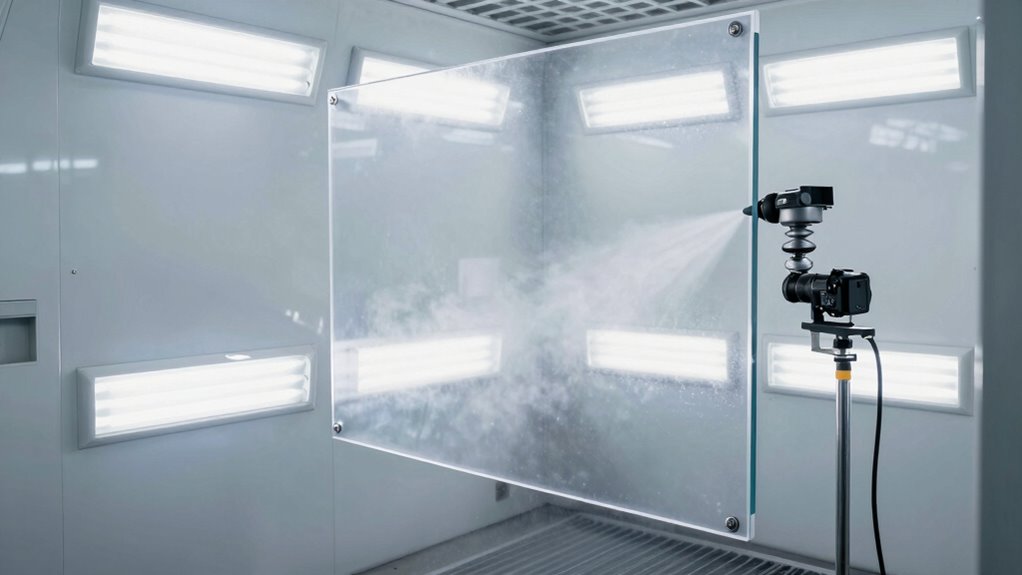
Spray overspray might seem like a minor issue, but it can substantially impact your project’s quality. When overspray drifts onto unintended surfaces, it compromises paint adhesion, leading to uneven finishes and potential peeling down the line. Poor adhesion forces you to redo work, wasting time and materials. Additionally, overspray contributes to environmental impact by releasing volatile organic compounds (VOCs) into the air, harming ecosystems and air quality. Proper setup and techniques help prevent overspray from settling on unwanted areas, improving both the quality of your work and its ecological footprint. Paying attention to overspray is essential for professional results and responsible practices. Using proper ventilation can further reduce airborne overspray particles and VOCs, ensuring a safer workspace and better finish quality. Incorporating advanced spray booth setups with containment systems can also significantly minimize overspray spread and environmental impact. Implementing containment barriers helps isolate the spraying area and further reduces overspray dispersion. Additionally, understanding airless paint sprayer operation principles can aid in controlling spray patterns and reducing excess overspray. Moreover, considering the contrast ratio of your projectors can help you evaluate how lighting conditions may affect the visibility of imperfections in your work, ensuring a more precise finish.

Tacky BoothCoat 3228 Soft Clear Surface Coating – for Industrial Paint Booths, Water Based, Protective Barrier Against Paint Overspray, Captures Dirt Particles, Easily Removed with Water, 1 Gallon
PAINT OVERSPRAY PROTECTION: General Chemical’s Tacky Booth Coating 3228 is a water-based, soft, clear tacky coating designed to…
As an affiliate, we earn on qualifying purchases.
As an affiliate, we earn on qualifying purchases.
How to Set Up Your Spray Booth to Minimize Overspray

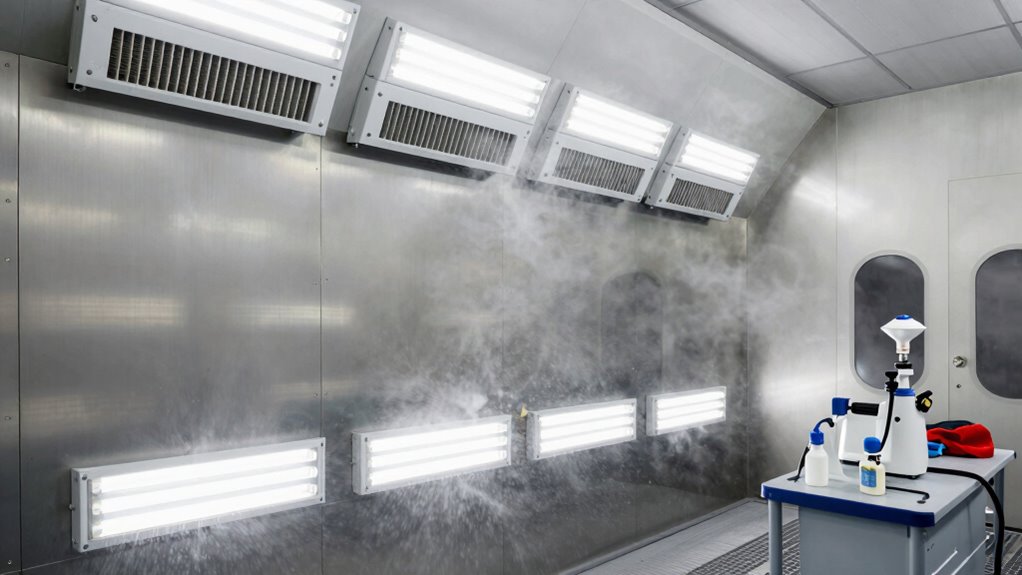
Setting up your spray booth properly is the first step toward controlling overspray and achieving a professional finish. To do this effectively, focus on optimizing airflow patterns, which direct overspray away from surfaces and reduce waste. Make certain your booth has proper exhaust placement to maintain consistent airflow. Check that filters are clean and have high filter efficiency, capturing overspray particles before they escape. Keep these in mind:
Proper spray booth setup ensures optimal airflow, reduces overspray, and delivers a professional finish.
- Position exhaust fans to create a downward airflow, minimizing overspray drift
- Use high-quality filters to improve filter efficiency and catch finer particles
- Seal gaps and leaks to prevent unintentional airflow disruptions
- Consider airflow management techniques to further enhance overspray control and improve the overall quality of your painting project, ensuring that your setup promotes proper airflow patterns for optimal results. Additionally, understanding glycolic acid exfoliation can help you appreciate the importance of controlled environments in achieving smooth, flawless finishes. Maintaining proper ventilation systems is crucial for safety and for maintaining consistent airflow in your spray booth. Proper filter maintenance also plays a significant role in sustaining effective overspray control over time.

Xcwdtdr Cartridge Filters For Powder Coating And Dust Collection, High-Efficiency Replacement Filter for Industrial Spray Booths and Dust Extraction Systems
High-Efficiency Electrostatic Overspray Filtration: Engineered to capture fine electrostatic paint particles, dust, and powder, delivering cleaner air and…
As an affiliate, we earn on qualifying purchases.
As an affiliate, we earn on qualifying purchases.
Must-Have Features in a Spray Booth for Better Overspray Control

To effectively control overspray, your spray booth should include several key features that promote proper airflow and trap particles. A well-designed airflow system ensures consistent airflow patterns, preventing overspray from escaping and settling on unwanted surfaces. Look for an optimized airflow design that directs fumes and particles toward the exhaust system efficiently. Ventilation efficiency is vital; a high-quality ventilation system quickly removes overspray-laden air, reducing buildup and improving finish quality. Features like baffle filters, proper exhaust placement, and adjustable airflow controls help maintain steady airflow and prevent turbulence. These components work together to keep overspray confined within the booth, making cleanup easier and results more professional. Prioritizing airflow design and ventilation efficiency is essential for achieving better overspray control. Additionally, incorporating proper airflow management techniques ensures the booth maintains a steady environment, further enhancing overspray containment and airflow optimization for consistent results. Implementing regular maintenance of filters and exhaust systems also plays a crucial role in sustaining optimal performance over time, ensuring continuous overspray control and efficiency. Furthermore, understanding how to balance airflow helps prevent pressure imbalances that could compromise overspray containment.
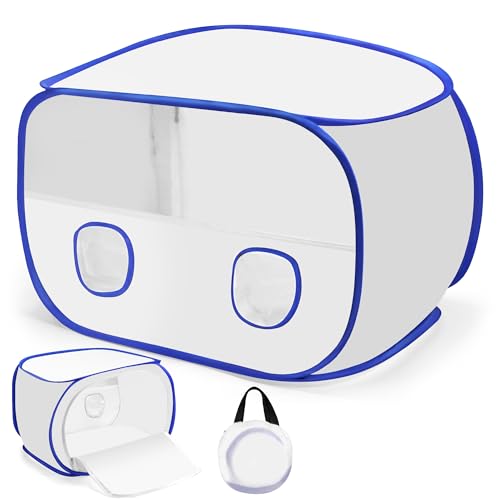
PP OPOUNT Pop Up Spray Paint Tent for Spray Painting, 23x15x15 in Portable Paint Booth Small Spray Shelter with Storage Bag Paint Booth for Furniture DIY Hobby Tool Small Projects Model Nail Toy Part
Pop Up Design, No Setup Needed: This paint booth pops open automatically right out of the storage bag—no…
As an affiliate, we earn on qualifying purchases.
As an affiliate, we earn on qualifying purchases.
Simple Tips for Maintaining Your Booth and Managing Overspray

Keeping your spray booth clean and well-maintained is key to controlling overspray. Make sure to perform regular inspections and cleanings to prevent buildup that can affect your finish. Proper overspray management also means using the right techniques and equipment to minimize waste and keep your workspace tidy.
Regular Booth Maintenance
Regular booth maintenance is essential for controlling overspray and ensuring a clean, efficient painting environment. A well-maintained paint booth prevents buildup that can worsen overspray and clutter your workspace. To keep your booth in top shape, make routine checks and perform regular overspray cleanup. Consider these tips: – Regularly clean filters and exhaust systems to prevent dust and overspray buildup. – Inspect and wipe down walls and surfaces to remove residual paint particles. – Schedule deep cleanings to maintain ideal airflow and reduce overspray spread. Incorporating proper ventilation systems is also vital to controlling overspray and ensuring a safe, high-quality finish. Proper ventilation helps to reduce airborne particles and improve overall paint quality. Additionally, maintaining airflow balance can prevent uneven paint application and overspray dispersion. Using airflow management techniques can further enhance overspray control. Staying on top of these tasks ensures your overspray stays manageable and your paint job remains flawless.
Proper Overspray Management
Effective overspray management starts with simple, proactive steps to keep your paint booth clean and functioning smoothly. Regularly inspect and clean your filters and ventilation systems to guarantee optimal airflow and prevent paint fumes from accumulating. Proper ventilation is vital for dispersing overspray and reducing hazardous fumes, which improves safety and air quality. Use masking techniques to contain overspray and avoid buildup on surfaces that don’t require painting. Maintain consistent spray techniques to minimize excess paint and overspray. Promptly clean any overspray on booth walls and equipment to prevent it from spreading. Additionally, monitoring regulatory compliance ensures your booth meets safety standards and avoids potential penalties. Implementing Proper ventilation techniques can significantly reduce overspray and improve overall booth performance. By managing overspray effectively, you’ll extend equipment lifespan, improve paint quality, and create a safer working environment. Regular maintenance of ventilation systems is crucial for ongoing overspray control and safety. Proper oversight of ventilation systems and overspray control keeps your booth efficient and compliant. Incorporating quality paint and equipment can also help reduce overspray and enhance finish quality over time.
Troubleshooting Common Spray Overspray Problems

When spray overspray becomes a problem, identifying the root cause is essential to fixing it quickly. Common issues often stem from airflow problems or improper filter selection. To troubleshoot effectively, check for:
Identify airflow issues and filter problems to quickly reduce spray overspray and improve finish quality.
- Insufficient airflow optimization, which can cause uneven spray patterns and excess overspray
- Clogged or poorly maintained filters that fail to trap overspray particles
- Incorrect spray distance or angle, increasing the likelihood of overspray escaping the booth
Adjusting airflow balance ensures overspray stays within the booth, while selecting the right filters captures particles early. You might also need to recalibrate your spray technique or improve booth sealing. Regular maintenance and inspection of filters and ventilation systems are key to maintaining controlled overspray levels and achieving a clean finish.
Maximize Safety and Efficiency With the Right Spray Booth Setup
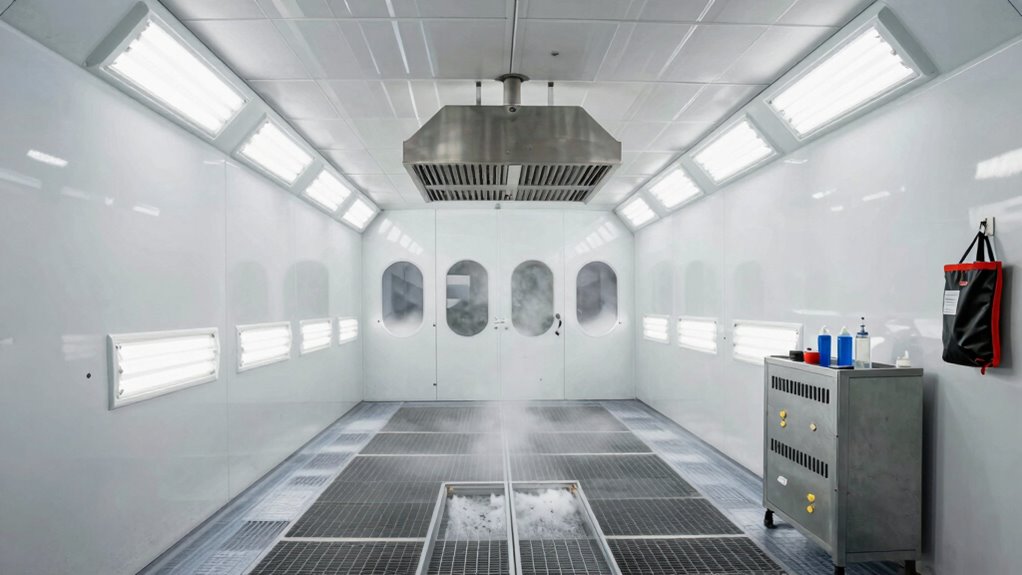
Optimizing your spray booth setup is key to enhancing both safety and efficiency during your finishing projects. Proper ventilation systems ensure continuous airflow, removing overspray and fumes quickly, reducing health risks, and maintaining a clean work environment. Make sure your ventilation setup is well-maintained and appropriately rated for your spray volume. Air filtration is equally essential; it traps airborne overspray and contaminants, preventing them from escaping into the workspace or settling on finished surfaces. High-quality filters improve air quality, speed up project completion, and prevent defects caused by dust or debris. When your spray booth is equipped with effective ventilation and air filtration, you’ll work faster, safer, and achieve a higher-quality finish. A well-designed setup minimizes waste and maximizes productivity.
Frequently Asked Questions
What Are the Most Common Mistakes When Setting up a Spray Booth?
You often make mistakes in spray booth setup by neglecting equipment calibration, which can lead to uneven spray patterns and overspray issues. You might also overlook ventilation efficiency, causing poor airflow and overspray control problems. To avoid these, regularly calibrate your equipment and make sure your ventilation system is properly balanced. Proper setup improves spray quality, reduces overspray, and maintains a safer, cleaner workspace.
How Often Should I Clean or Replace Filters in My Spray Booth?
You should clean or replace filters in your spray booth every 1-2 weeks, depending on usage. Regular filter maintenance guarantees ideal air quality and prevents overspray buildup. Skipping this step might seem convenient, but it risks poor air quality and compromised finish quality. Keep an eye on filter performance, and when filters look dirty or airflow decreases, it’s time for maintenance. This keeps your booth running smoothly and your finishes flawless.
Can DIY Modifications Improve Overspray Control in My Existing Booth?
Yes, DIY modifications can improve overspray mitigation in your existing booth. You might add custom baffles, install adjustable air vents, or create barriers with inexpensive materials to better control airflow and reduce overspray. These modifications help direct paint particles away from unintended areas, enhancing efficiency. Just verify your adjustments don’t compromise ventilation or safety, and test them thoroughly to find the most effective setup for your specific booth.
What Safety Precautions Are Essential During Spray Booth Maintenance?
Think of your safety gear as your shield in a battle. During booth maintenance, you must wear personal protective equipment like gloves, goggles, and masks to guard against harmful fumes and particles. Always make certain your ventilation system is functioning properly to prevent buildup of hazardous vapors. Turn off the system before cleaning, and work in well-ventilated areas, staying vigilant to protect yourself from potential hazards.
How Do Environmental Factors Like Humidity Affect Overspray Management?
Humidity effects can considerably impact overspray management in your spray booth. High humidity levels can cause paint to dry more slowly, increasing overspray and reducing finish quality. To maintain ideal environmental control, monitor humidity regularly and use dehumidifiers or HVAC systems to keep levels consistent. Proper environmental control ensures your booth operates efficiently, minimizes overspray, and delivers smooth, professional finishes every time.
Conclusion
By setting up your spray booth properly and staying on top of maintenance, you’ll keep overspray under control and guarantee a flawless finish. Remember, a well-ventilated and equipped booth is your best friend—no need to channel your inner Leonardo da Vinci to get it right. With a little know-how and some elbow grease, you’ll avoid messy mishaps and finish like a pro, just like they did in the good ol’ days of craftsmanship.