
TL;DR

Get tools and workshop supplies delivered free — and shop member deals
- Fast, free delivery on millions of items
- Access to Prime Big Deal Days deals on October 6–7
- Prime Video, Amazon Music and more included
A generator wattage calculator estimates the total power your appliances need, helping you select a generator that’s not too small or too large. Adding a safety margin of 20-25% ensures reliable, safe operation. Accurate calculations prevent overloads and future-proof your backup power plan.
Always check appliance labels or use a wattmeter for accurate wattage readings.
Add at least 20-25% safety margin to your total load to prevent overloads.
Use a generator size that matches or slightly exceeds your total wattage needs.
Understanding surge vs. running wattage helps avoid choosing a generator that’s too weak.
Online calculators are helpful but always double-check with manual data for critical loads.
What a Generator Wattage Calculator Does for You
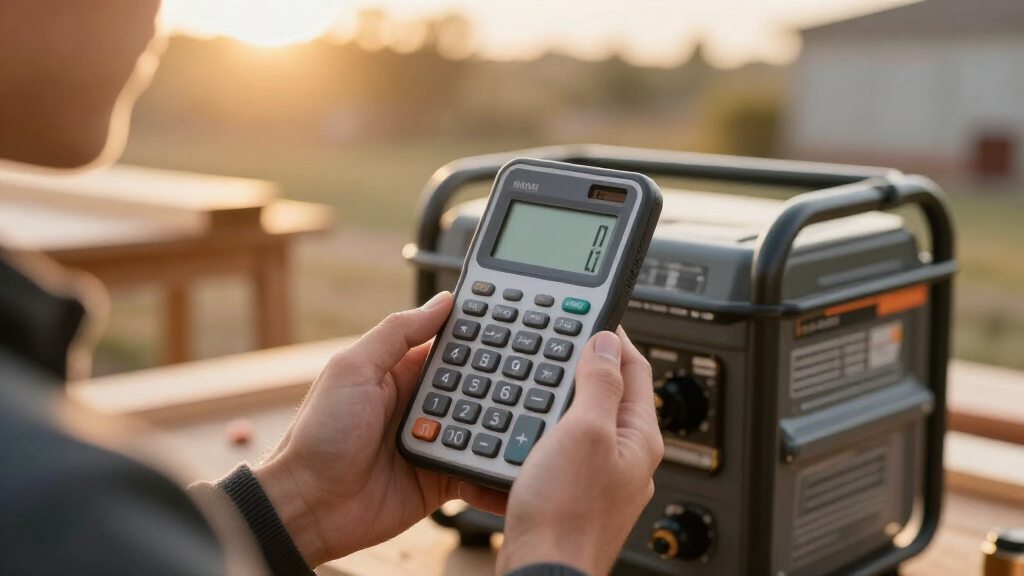
A generator wattage calculator is a tool that helps you figure out the perfect size generator for your needs. It considers every device you want to run—like your fridge, TV, or power tools—and totals their wattage. The goal? Avoid buying a generator that’s too weak or unnecessarily large.
For example, if your fridge demands 800 watts to run but needs 2,000 watts to start, the calculator factors in both numbers. It then suggests a generator that can handle those surges without breaking a sweat. This way, you get peace of mind during outages, knowing your power source is just right.
However, understanding the importance of this calculation goes beyond just matching wattage. It’s about ensuring your appliances operate safely and efficiently. An undersized generator might trip or fail to start devices with high startup wattage, risking damage or interruptions. Conversely, an oversized generator can lead to unnecessary fuel consumption and higher costs. The calculator helps find a balanced capacity, taking into account both continuous and surge power needs, which is crucial for reliable operation and cost-effectiveness.
portable generator with 2000 watt capacity
As an affiliate, we earn on qualifying purchases.
As an affiliate, we earn on qualifying purchases.
How to Use a Generator Wattage Calculator in 3 Simple Steps
- List all appliances and devices you want to power. Check their labels or manuals for wattage info.
- Input each item’s running and starting wattage into the calculator. For unknowns, estimate or use a wattmeter for accuracy.
- Review the total suggested generator capacity. Add 20-25% safety margin to handle surges and future needs.
Imagine you’re preparing for a storm. You list your fridge (800W), a couple of LED lights (50W each), and your laptop (100W). The calculator sums these and recommends a 1500W to 2000W generator, giving you a clear target.
Adding a safety margin isn’t just about extra capacity—it’s about ensuring your generator can handle unexpected surges and future expansion. For instance, appliances like refrigerators and sump pumps often have high startup wattages that can momentarily spike well above their running wattage. Without a buffer, your generator might trip or shut down during these surges, risking appliance damage or failure. Additionally, as your needs grow or if you add new devices, this margin provides flexibility, preventing you from constantly upgrading your backup system. It’s a strategic choice that balances cost, safety, and future-proofing—crucial for maintaining a reliable power backup that adapts over time.
As an affiliate, we earn on qualifying purchases.
Compare Common Generator Sizes to Your Power Needs
| Generator Size | Typical Use | Approximate Wattage |
|---|---|---|
| 2000 watt portable | Small appliances, RVs, camping | Up to 2000W |
| 3500 watt inverter | Home backup for essentials | 3500W |
| 5000 watt portable | Whole house backup, power tools | 5000W |
Choosing the right size depends on what you plan to run. For lightweight needs, a 2000W generator suffices. For larger emergencies, a 3500W or 5000W model might be necessary. It’s essential to match capacity with your actual load because an undersized generator can cause frequent overloads, leading to interruptions or damage, while an oversized one can waste fuel and increase costs. Think about your current and future power requirements, including the possibility of adding new devices, to ensure your generator provides both safety and efficiency over time. Proper sizing not only prevents immediate operational issues but also reduces long-term costs and environmental impact, making your backup system more sustainable and reliable.
As an affiliate, we earn on qualifying purchases.
Why a 20-25% Safety Buffer Matters When Picking Your Generator
Adding a safety margin of 20-25% to your total wattage calculation isn’t just extra caution—it’s a smart move. Appliances like refrigerators or sump pumps often demand higher starting wattage than their running wattage, sometimes up to double. If your generator is too close to your total load, it risks tripping or damage during these surges. The safety buffer acts as a cushion, absorbing these transient spikes and preventing immediate shutdowns or appliance harm.
For example, if your total running wattage is 3000W, choosing a generator rated at around 3750W to 3750W gives enough headroom to handle startup surges and future expansion. This extra capacity ensures that your generator can handle unexpected power spikes without shutdowns, which is critical during emergencies when reliable power is essential. Without this margin, your system is vulnerable to overloads, which can cause costly damage or complete failure at crucial moments. The safety buffer not only enhances reliability but also extends the lifespan of your generator by reducing strain during surges and overload conditions. It’s a key consideration that balances immediate safety with long-term durability and adaptability, ensuring your backup power remains dependable as your needs evolve.
As an affiliate, we earn on qualifying purchases.
What Questions Are People Really Asking About Wattage Calculators?
- How do I find out the wattage of my appliances? Check labels, manuals, or use a wattmeter for accurate readings. Understanding the actual wattage helps prevent overloading your generator and ensures smooth operation.
- Can I rely on online calculators? They give good estimates but always verify with labels and manual specs for critical loads. Inaccurate inputs can lead to undersized or oversized generators, affecting safety and efficiency.
- How do I handle appliances with variable power needs? Use the highest wattage estimate for safety, and plan for future expansion. This approach avoids surprises and maintains system reliability.
- What if my appliances are old or lack labels? Estimate based on similar models or use a wattmeter for precise measurement. Inaccurate estimates can lead to improper sizing, risking overloads or unnecessary costs.
- Why is adding a safety margin important? It prevents overloads, accounts for surges, and ensures reliable operation during unexpected power spikes. Neglecting this can cause frequent generator shutdowns or damage to appliances.
Frequently Asked Questions
How do I determine the wattage of my appliances if labels are missing?
Use a wattmeter for precise measurement or estimate based on similar models and motor size. When in doubt, choose a slightly higher capacity to stay safe.Can I run my entire home on a 2000-watt generator?
Probably not. Most homes need at least 3000-5000 watts for essential loads. Use a wattage calculator to verify your specific needs before buying.Is it better to buy a larger generator just in case?
Larger is safer, but also more expensive and less fuel-efficient. Match your needs closely, and add a safety margin to strike the right balance.Are online wattage calculators accurate enough?
They provide solid estimates, but always verify with appliance labels or a wattmeter, especially for critical or high-power devices.Conclusion
Choosing the right generator size isn’t about guesswork. Use a wattage calculator, add a safety buffer, and confirm your appliance wattages. It’s a simple step that saves you from headaches—and keeps your lights on when it counts most. Think of it as giving your home a reliable power handshake during blackouts.Generator Wattage Calculator
Estimate running and starting watts for a short list of common backup loads.
Your selected load fits the small-generator range. Compare 2,000 watt portable generators for essentials-only backup.
See small-generator matchesYour surge load points to a mid-size inverter generator. Compare 3,500 watt options and verify each appliance label.
See mid-size generator matchesYour list needs a larger generator class. Compare 5,000 watt portable generators and plan circuits with a qualified pro.
See larger generator matchesEstimate only. Check product specs, local rates, and site conditions before buying or planning around these numbers.
Halloween Picks
halloween
As an affiliate, we earn on qualifying purchases.