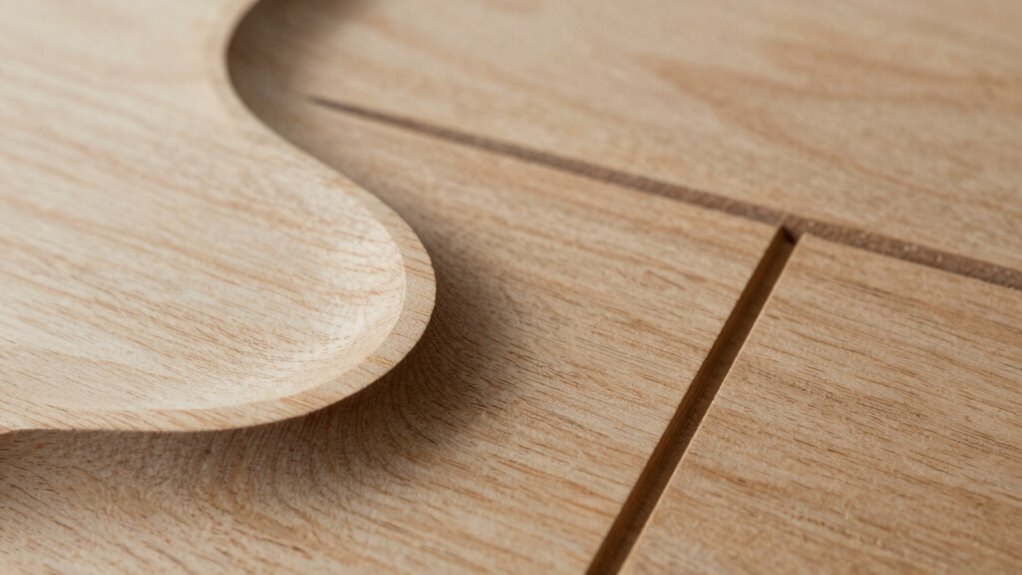

Curved cuts demand different expectations because they are less predictable and harder to control than straight cuts. You need to stay more focused, making constant adjustments to stay true to the shape. Small mistakes are more noticeable, and working slowly helps you achieve smoother results. It takes patience, practice, and careful tool setup. If you keep exploring, you’ll discover how mastering these challenges leads to better, cleaner curves.

Get business pricing on tools and workshop supplies
- Business-only prices and quantity discounts
- Tax-exempt purchasing
- Multiple users, one account, clear invoices
Key Takeaways
- Curved cuts are less predictable and require constant adjustments, unlike the straightforward nature of straight cuts.
- Achieving smooth, accurate curves demands higher precision and patience, increasing complexity.
- Tool setup, such as proper blades and templates, is more critical for curves to prevent deviations.
- Curved cuts take longer and need more careful planning and incremental refinements.
- Mastery of curved cuts involves developing specific techniques and managing inherent control challenges.
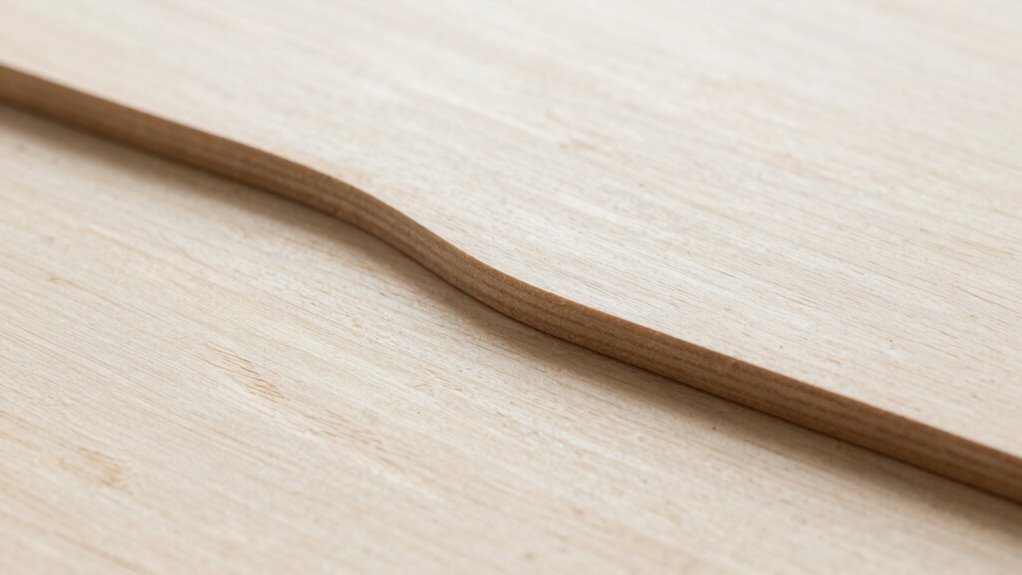
When making cuts, understanding the fundamental differences between curved and straight cuts can save you time and frustration. Straight cuts are generally predictable; they follow a linear path that’s easier to control and measure. Curved cuts, however, introduce a level of complexity that demands different expectations. You’ll find that achieving a smooth, accurate curve requires more attention to detail, especially when it comes to precision challenges and tool adjustments.
Mastering curved cuts requires patience, precision, and proper tool adjustments for smooth, accurate results.
One of the key reasons curved cuts are more demanding is because of precision challenges. Unlike straight cuts, where the cut aligns directly with your guide or measurement, curved cuts need constant adjustments to stay true to the intended shape. Small deviations can become more noticeable, especially over longer or tighter curves. It’s easy to get caught up in the urge to push the tool harder, but that often results in uneven edges or jagged lines. Instead, you need to anticipate these challenges and work slowly, making incremental adjustments as you go. This approach helps you maintain control and avoid mistakes that can compromise the final look. Recognizing how precision challenges affect your work can help you develop better techniques for controlling your tools.
Tool adjustments become critical when tackling curved cuts. Your tools, whether it’s a jigsaw, router, or carving knife, need to be properly set up for the task. For example, a jigsaw blade should be sharp and suited for curves; dull blades tend to veer off course or cause uneven cuts. You might find that adjusting the speed or pressure of your tool makes a significant difference in the quality of the cut. Slower speeds often give you better control, reducing vibrations that can lead to inaccuracies. Additionally, guiding tools with a steady hand and using appropriate jigs or templates can help you follow the curve more precisely. Don’t forget to test your setup on scrap material first. Making small adjustments based on that trial run can save you frustration later and help you achieve smoother, more accurate results. Understanding the importance of proper tool setup and technique mastery can greatly improve your results. Moreover, becoming familiar with different cutting techniques tailored for curves can enhance your precision and efficiency.
Expect that curved cuts will take longer than straight ones. They require patience, careful planning, and a willingness to make frequent adjustments. Your initial cuts might not be perfect, but that’s okay—refining your technique with practice is part of the process. As you gain experience, you’ll learn how to anticipate the tool’s behavior around curves, which will make your cuts cleaner and more precise. Remember, mastering curved cuts isn’t about rushing; it’s about understanding your tools, managing precision challenges, and making thoughtful tool adjustments. With this mindset, you’ll find that what once seemed daunting becomes a manageable, even enjoyable part of your woodworking or crafting projects.
As an affiliate, we earn on qualifying purchases.
Frequently Asked Questions
How Do Curved Cuts Affect Material Strength?
Curved cuts can weaken material strength because they alter stress distribution, creating points where stress concentrates. This may reduce the overall structural integrity, especially if the curve is sharp or deep. You need to be cautious, as the change in shape can make the material more prone to cracking or failure under load. Properly designed curved cuts help maintain strength, but poor execution can compromise the material’s durability.
What Tools Are Best for Precise Curved Cuts?
Think of crafting decorative patterns or artistic designs as painting with a brush. For precise curved cuts, you’ll want tools like a fret saw, rotary tool, or a flexible coping saw. These tools give you fine control, allowing smooth, intricate curves that bring your vision to life. With patience and the right tools, you can turn simple materials into works of art, creating flowing, elegant shapes that captivate the eye.
Can Curved Cuts Be Automated?
Yes, curved cuts can be automated, especially for artistic applications and decorative edges. You can use CNC machines, laser cutters, or automated saws designed for precision curves. These tools allow you to create intricate, consistent designs efficiently, reducing manual effort. Automation guarantees smooth, accurate curved cuts, making it ideal for decorative edges and artistic projects where detail and precision are essential.
How Does Material Type Influence Curved Cut Difficulty?
Material type greatly influences how difficult curved cuts are because of its flexibility and the cutting edge’s sharpness. Flexible materials, like rubber or thin plastic, bend easily, making curved cuts smoother and easier to control. Rigid materials, such as thick metal or hardwood, resist bending and require a sharper cutting edge and steady hand. Understanding these factors helps you choose the right tools and techniques for precise curved cuts.
What Safety Precautions Are Essential for Curved Cuts?
When making curved cuts, you should always wear safety gear, including goggles and gloves, to protect against potential splinters or debris. Keep your hands away from the blade’s path, and make sure the workpiece is secured firmly. Familiarize yourself with emergency procedures in case of injury, like knowing where the first aid kit is and how to shut off power quickly. These precautions help keep you safe during intricate curved cuts.
precision woodworking router bits
As an affiliate, we earn on qualifying purchases.
As an affiliate, we earn on qualifying purchases.
Conclusion
Just like Da Vinci’s intricate sketches, curved cuts require patience and a keen eye for detail. You can’t rush them the way you might with straight cuts, because each curve tells its own story. Embrace the challenge, knowing that the journey is just as important as the result. When you approach curved cuts with this mindset, you’ll find that your craftsmanship deepens—turning a simple task into an art form, much like the masters who shaped history with their precision.
As an affiliate, we earn on qualifying purchases.
woodworking templates for curves
As an affiliate, we earn on qualifying purchases.
As an affiliate, we earn on qualifying purchases.
Fall Picks
fall essentials
As an affiliate, we earn on qualifying purchases.