To stop wandering cuts, start by ensuring your blade is properly aligned and tensioned before adjusting the guides. Set the guides just behind the blade without forcing contact, and make small, incremental adjustments to keep them parallel to the blade and each other. Regularly check the tracking and alignment during cuts, and avoid over-tightening guides, which can cause blade deformation. Proper guide setup is key, and if you keep these tips in mind, you’ll prevent wandering and achieve cleaner cuts.
Key Takeaways
- Ensure guides are parallel to the blade and each other using a straightedge or square.
- Make small, incremental adjustments to guide bearings or blocks for proper alignment.
- Confirm blade tension and tracking are correct before finalizing guide settings.
- Position guides just behind the blade’s cutting edge without forcing contact.
- Regularly check and re-align guides after blade changes or seasonal maintenance.

CARTER F-A-S-T Fence Alignment Tool
FAST bar allows for accurate measurement of the width of the blade to the fence
As an affiliate, we earn on qualifying purchases.
As an affiliate, we earn on qualifying purchases.
Why Proper Bandsaw Guide Adjustment Matters
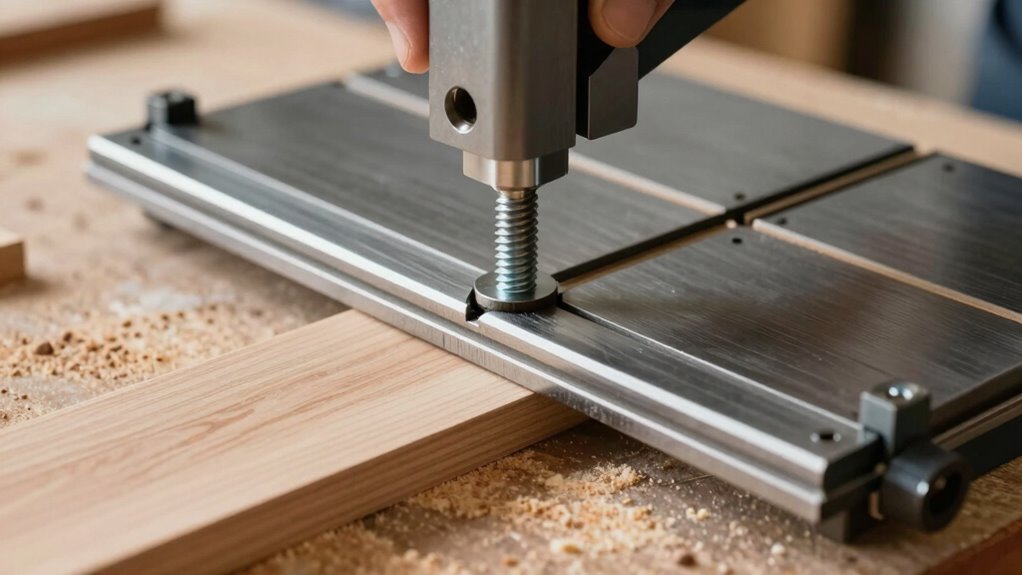
Properly adjusted bandsaw guides are essential for safe and efficient operation. They help keep the blade on track, reducing the risk of wandering cuts or blade contact with the frame. The blade material plays a vital role; a high-quality blade with the right material ensures smooth cuts and longevity. Proper guide adjustment minimizes unnecessary blade wear, which can be caused by misalignment. Additionally, guide lubrication is crucial—regular lubrication reduces friction and prevents guides from becoming sticky or worn prematurely. When guides are correctly set, you experience cleaner cuts, less blade heat, and less downtime for adjustments. Employing energy-efficient technology in your tools can further enhance performance and sustainability. Regular guide maintenance ensures your bandsaw continues to operate at peak efficiency and safety. Neglecting these adjustments can lead to dangerous blade binding and damage to your saw or workpiece. Proper maintenance of your bandsaw, including guide adjustments, is key to a safe, precise, and productive woodworking experience. Additionally, understanding the material properties of your blade can help optimize your cutting performance and prolong blade life. Incorporating blade alignment techniques can further improve cut accuracy and extend blade lifespan.

Lenox, 62126, Band Saw Blade Tension Meter
As an affiliate, we earn on qualifying purchases.
As an affiliate, we earn on qualifying purchases.
How to Check Blade Alignment and Tension Before Setting Guides

Before setting your bandsaw guides, it’s important to verify that the blade is correctly aligned and tensioned. Check the blade tension by ensuring it’s tight enough to run straight without slipping or fluttering. An overly loose blade can wander and cause inaccurate cuts, while too tight can damage the blade or the frame. To confirm proper tension, press on the blade at the midpoint; it should deflect slightly but stay firm. Next, inspect the blade’s alignment by running it along the guide material, such as a straightedge or a ruler, to see if it tracks straight. Ensure the blade teeth are centered on the wheels and that the guide material contacts the blade evenly. Proper blade tension and alignment are essential for precise, stable cuts before you adjust the guides. Additionally, regularly checking the blade tracking can help prevent wandering cuts and maintain consistent performance. Regularly inspecting the wheel alignment can also contribute to smoother operation and better cut accuracy.
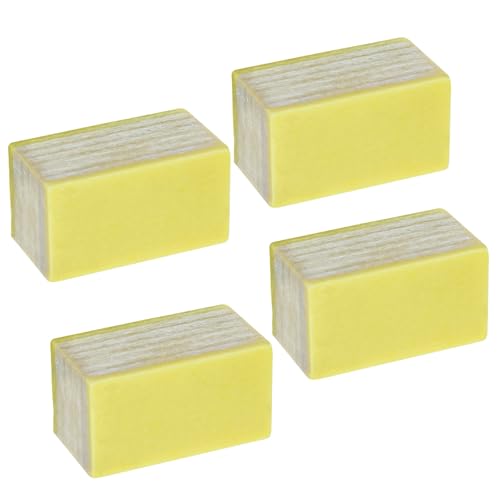
CB50050BL Band Saw Guide Rail Cooling Block Compatible with Craftsman, Jet, Delta, Grizzly, Rigid and Relian 14 inch Band Saws,Blade Cooling Block
Compatibility: Bandsaw cooling block CB50050BL Compatible with Craftsman, Jet, Delta, Grizzly, Rigid and Relian 14inch Band Saws.
As an affiliate, we earn on qualifying purchases.
As an affiliate, we earn on qualifying purchases.
How to Properly Set Your Bandsaw Guides Step-by-Step
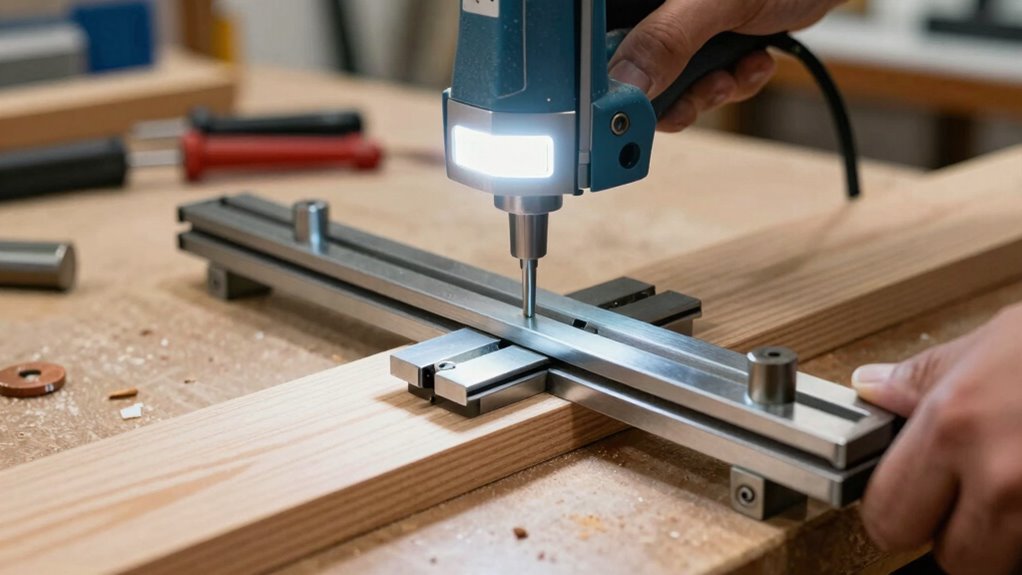
Setting your bandsaw guides correctly is essential for accurate cuts and safe operation. Begin by confirming the blade tracking is centered on the wheels and runs smoothly. Check your guide materials—whether they’re steel, cast iron, or ceramic—for proper fit and alignment. Adjust the side guides so they sit just behind the blade, close enough to prevent wandering but not so tight they hinder movement. For the blade guide bearings or blocks, position them just behind the blade’s cutting edge, supporting it without forcing contact. Use a wrench or adjustment screws to make precise changes. Double-check the blade’s position after each adjustment, ensuring it remains aligned with the wheel tracking and is stable during operation. Proper setup minimizes wandering and ensures cleaner cuts. Regular guide maintenance helps keep your bandsaw running smoothly and extends the lifespan of your components. Incorporating visual cues during setup can also improve accuracy and consistency. Paying attention to blade tension is equally important to maintain proper tracking and prevent wandering during cuts. Additionally, periodically verifying the guide clearance ensures consistent performance and reduces the risk of blade damage.

Bandsaw Ball Bearing Blade Guide Fits for Most 14" Band Saws, Upper or Lower, Easier Blade Tracking
Universal Compatibility: This blade guide is suitable for both upper and lower positions and fits for most 14"…
As an affiliate, we earn on qualifying purchases.
As an affiliate, we earn on qualifying purchases.
Common Mistakes When Adjusting Guides and How to Avoid Them

One common mistake is over-tightening the guides, which can cause unnecessary stress on the blade and lead to premature wear. Another mistake is neglecting to check blade alignment, risking poor cuts and increased guide wear. To avoid these issues, always tighten guides just enough and regularly verify your blade’s alignment. Additionally, understanding the importance of proper setting bandsaw guides can enhance your cutting accuracy and prolong blade life. Maintaining consistent guide adjustments ensures your saw operates smoothly and reduces the likelihood of wandering cuts. Being aware of blade tension is also vital, as incorrect tension can affect both the guide setup and overall cutting performance. Proper blade tracking is equally important to keep your cuts straight and your blade functioning optimally. Regularly inspecting your guides and adjusting them correctly can prevent many common issues and improve your overall saw performance.
Over-tightening Guides Risks
Over-tightening your bandsaw guides can do more harm than good, risking damage to the guides, the saw blade, and even the machine itself. When you tighten guides too much, you may deform the guide material, causing uneven support and increasing blade wear. Excessive tension can also hinder proper guide lubrication, leading to increased friction and heat, which can warp or damage the guides over time. This unnecessary pressure can cause misalignment and reduce cutting accuracy. Remember, guides should be snug enough to hold the blade securely without restricting its movement. Regularly check your guide tension, and always adjust with care. Properly adjusted guides promote smooth cuts and extend your bandsaw’s lifespan, preventing costly repairs down the line.
Ignoring Blade Alignment
Have you ever overlooked blade alignment when adjusting your bandsaw guides? Ignoring proper blade tracking can cause the blade to wander, leading to uneven cuts and increased wear. Before fine-tuning the guides, check that your blade tension is correct—too loose or too tight affects tracking and stability. Misaligned blades won’t run straight, even with perfectly adjusted guides. Failing to address blade tracking issues can result in guides that are set incorrectly, which worsens the problem over time. Always ensure your blade is tracking properly on the wheels before adjusting the guides. This simple step helps prevent wandering cuts and extends blade life. Proper blade alignment is essential for smooth operation, safe cuts, and precise results.
How to Keep Your Guides Aligned During Cutting
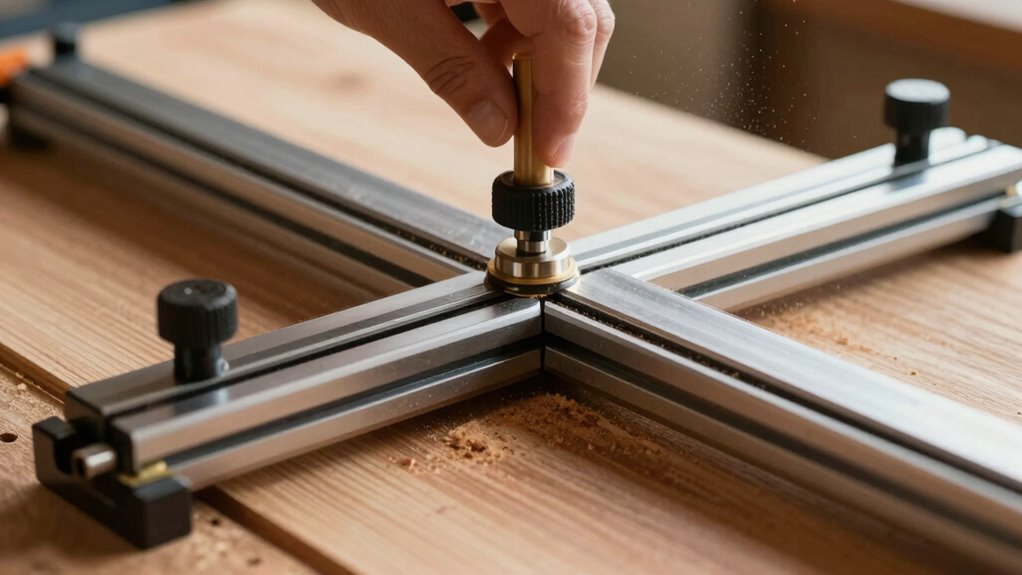
To keep your guides aligned during cutting, you need to make certain they stay parallel throughout the process. Regularly check their position and make adjustments as needed to prevent drift. Staying vigilant helps maintain accurate cuts and prolongs the life of your saw. Implementing simple organizing strategies can help you keep track of your adjustments and ensure consistent alignment. Additionally, understanding proper band saw maintenance techniques can prevent many common guide issues and improve overall performance. Proper cable management can also minimize vibrations and movement that may affect guide accuracy, and periodic alignment checks are essential to ensure continued precision during extended use.
Keep Guides Parallel
Maintaining parallel guides is essential for accurate and safe cuts on your bandsaw. To do this, ensure your guide materials are properly aligned and secure, preventing any tilt that could cause wandering cuts. When adjusting guides, double-check that they run parallel to the blade and each other. Keep dust collection in mind, as accumulated debris can influence guide positioning; clear dust regularly to maintain precise alignment. Use a straightedge or a square to verify guides are parallel, and make small, incremental adjustments until they are perfectly aligned. Proper guide materials, like quality bearings or blocks, help reduce friction and wear, maintaining consistent guide positioning. Regularly inspecting and adjusting your guides ensures your cuts stay true and your saw remains safe to operate. Additionally, periodically check your seasonal maintenance routines to keep all components functioning optimally, including guide alignment procedures to prevent wandering cuts. Consistent alignment checks are crucial for long-term precision and safety.
Check Alignment Regularly
Since guides can shift during cutting, it’s essential to check their alignment regularly to guarantee accurate results and safe operation. Misaligned guides can cause uneven cuts, increase blade wear, and complicate blade replacement. Make it a habit to stop occasionally and verify that both the upper and lower guides are parallel to the blade and aligned with each other. Check for dust buildup around the guides and dust collection ports, as debris can affect alignment and cause wandering cuts. When replacing the blade, double-check guide positions to ensure they haven’t shifted. Proper alignment minimizes blade wobble and extends the life of your saw. Regular inspections keep your bandsaw running smoothly and help you achieve precise, clean cuts every time.
Troubleshooting Wandering Cuts Despite Correct Guide Setup
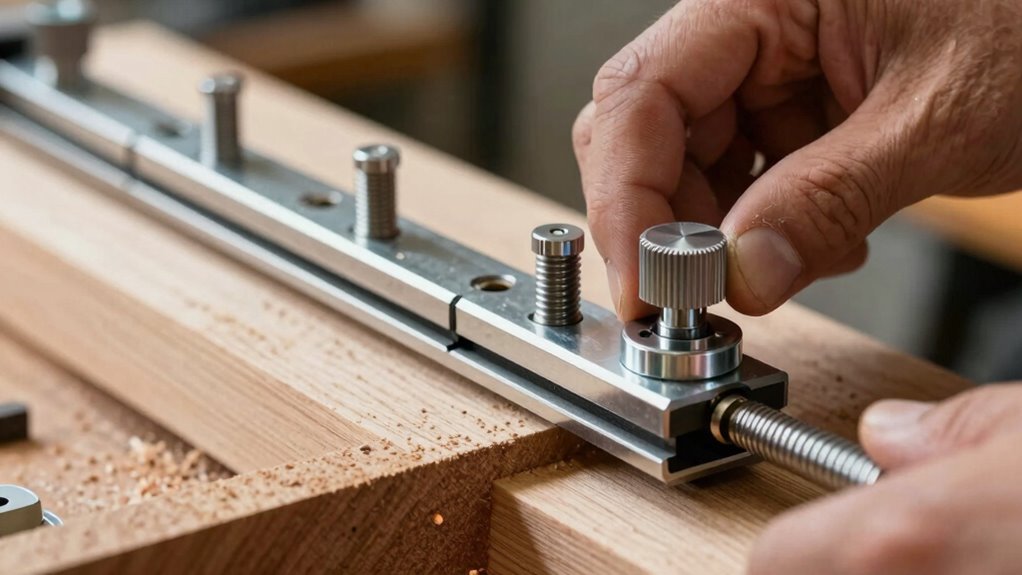
Even when your bandsaw guides are properly aligned, you might still notice the cut wandering. This often stems from issues like incorrect blade tracking or inappropriate guide materials. Blade tracking affects how well the blade stays centered; if it’s off, the cut can drift. Guide materials also matter—wear or debris can cause instability despite proper setup. Check the following:
| Issue | Solution | Impact |
|---|---|---|
| Blade tracking | Adjust the tracking wheel | Keeps blade centered |
| Guide materials | Replace worn guides | Ensures smooth operation |
| Blade tension | Correct tension | Prevents wandering cuts |
Addressing these factors helps ensure your saw cuts true, even if the guides seem perfect.
Frequently Asked Questions
How Often Should I Check and Adjust My Bandsaw Guides?
You should check and adjust your bandsaw guides every few hours of use or whenever you notice wandering cuts. As you do, verify the blade tension is correct for smooth cuts, and apply guide lubrication to reduce friction. Regularly inspecting these parts keeps your saw running accurately, prevents unnecessary wear, and ensures clean, precise cuts. Don’t forget to recheck guide alignment after adjusting blade tension or lubricating guides.
What Types of Guide Materials Are Best for Different Woods?
Choosing the right guide material can dramatically impact your cuts. For soft woods, go with durable, smooth materials like phenolic or composite guides—they resist wear and provide cleaner cuts. Hardwoods demand tougher guides, such as steel or tungsten carbide, to withstand abrasiveness. Don’t overlook the importance of wood-specific guide types; selecting the correct material guarantees precision, durability, and a smoother cutting experience, preventing guide wear and wandering cuts that could ruin your project.
Can Improper Guide Adjustment Damage the Bandsaw Blade?
Yes, improper guide adjustment can damage your bandsaw blade. If the guides are too tight or misaligned, they put unnecessary stress on the blade, increasing the risk of bending or breaking. Make sure your blade tension is correct and keep the guides well-lubricated to reduce friction. Proper adjustment prevents wandering cuts and minimizes blade wear, helping your saw operate smoothly and extend its lifespan.
How Do Temperature Changes Affect Guide Alignment?
Temperature changes cause guide alignment issues through thermal expansion of guide materials. As temperatures rise, metal guides expand, potentially misaligning the blade and causing wandering cuts. Conversely, cooling contracts guides, which can also throw off alignment. To maintain precise cuts, you must regularly check and adjust your guides, especially in environments with significant temperature fluctuations, ensuring guide materials are suitable for your working conditions.
Are There Specific Guides for Thin or Thick Blades?
You might think all guides fit every blade, but surprise—there are specific guides for thin or thick blades. You’ll want to adjust blade tension and perform guide maintenance accordingly. Thin blades need more precise, delicate guides to prevent wandering, while thick blades can handle sturdier guides. Ignoring this could lead to crooked cuts or dangerous blade misalignment. So, pick the right guides, keep them maintained, and enjoy smooth, accurate cuts every time.
Conclusion
Think of your bandsaw guides as the steady hands guiding your journey through each cut. When properly adjusted, they become the unwavering compass that keeps your blade on course, avoiding wandering paths. Keep them aligned and attentive, like a lighthouse illuminating the way through fog. With care and precision, you’ll navigate every project smoothly, transforming raw timber into art. Trust your guides—they’re the silent guardians ensuring your craftsmanship stays true and focused.