
Your choice of blade width and TPI directly impacts your cut quality and efficiency. A narrow blade with high TPI offers precise, smooth finishes ideal for delicate work, while a wide blade with low TPI speeds up rough cuts in tough materials. Balancing these factors guarantees you get the best results for your project. If you want to master how these elements work together, there’s more to discover about optimizing your cuts.

Get business pricing on tools and workshop supplies
- Business-only prices and quantity discounts
- Tax-exempt purchasing
- Multiple users, one account, clear invoices
Key Takeaways
- Narrow blades with high TPI produce smooth, precise cuts ideal for delicate or finishing work.
- Wide blades with low TPI are suitable for fast, rough cuts in thick or tough materials.
- Blade width affects material removal rate and cutting speed, influencing project efficiency.
- Matching blade material and TPI enhances durability and cutting performance based on material type.
- Proper pairing of blade width and TPI balances finish quality, cut aggressiveness, and project time.
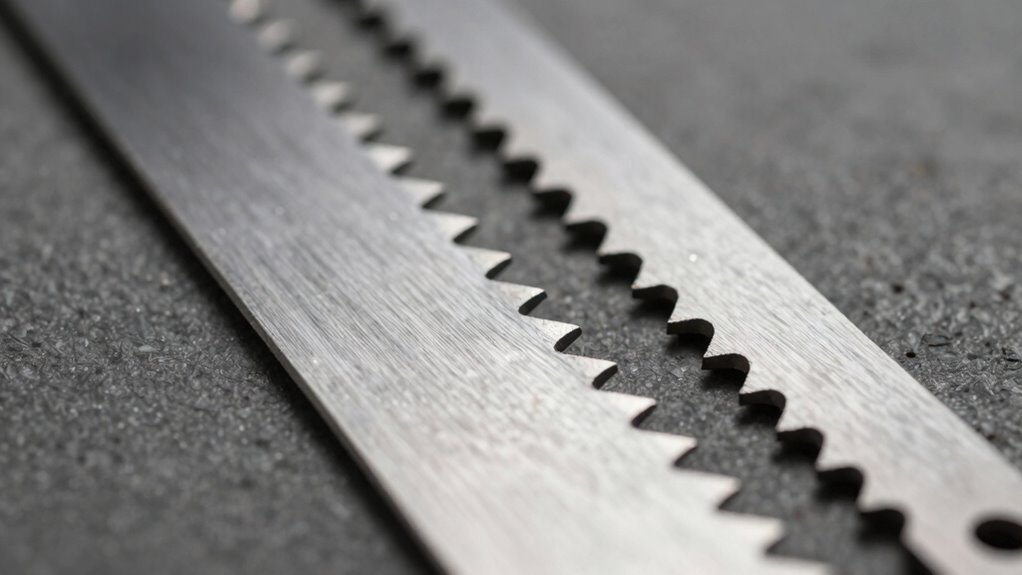
When choosing a saw blade, understanding the relationship between blade width and TPI (teeth per inch) is essential because it directly impacts cutting performance and finish quality. The blade material plays a crucial role here, as different materials—such as high-speed steel, carbide-tipped, or diamond-tipped blades—offer varying durability and cutting efficiency. Your choice of blade material affects how well the blade withstands heat, resists wear, and maintains sharpness, which in turn influences how you should approach TPI adjustments. For example, carbide-tipped blades are more durable and often used for tougher materials, allowing for a higher TPI to produce cleaner cuts without sacrificing blade longevity. Additionally, the blade material can influence the heat generated during cutting, affecting both safety and blade life.
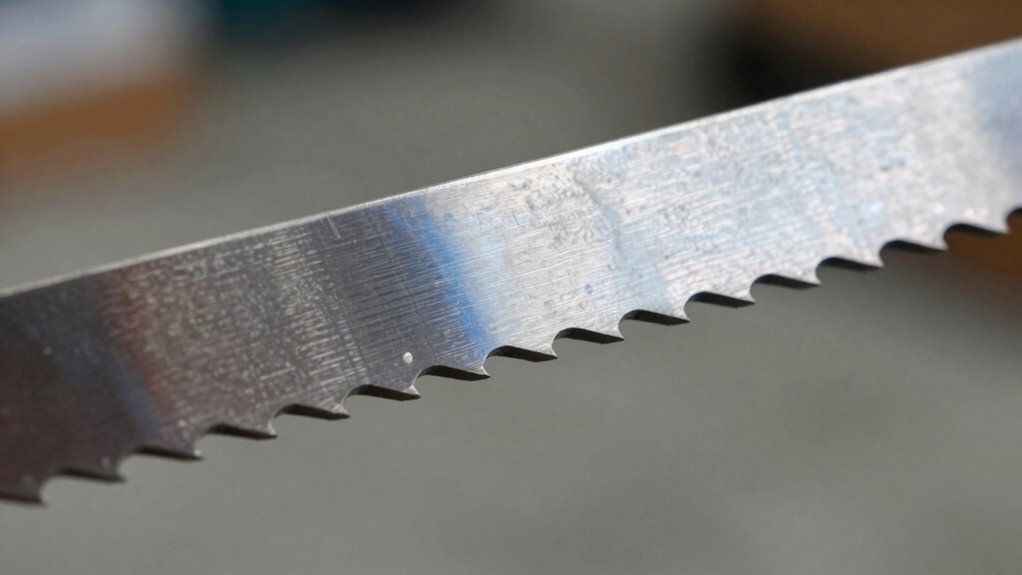
TPI adjustments are vital because they determine how aggressive or smooth your cut will be. A higher TPI means more teeth per inch, which results in a finer, cleaner finish—ideal for delicate or finishing cuts in soft materials like plywood or thin metal. Conversely, a lower TPI offers fewer teeth, making it better for rough cuts or thicker, tougher materials where speed and material removal are more critical than a pristine finish. When choosing a blade, you need to consider the material you’re working with and the desired finish, then select a TPI that balances those needs. Adjusting TPI isn’t just about swapping blades; it’s about understanding how the number of teeth influences cut quality and speed.
The blade width also plays a significant role here. Narrow blades, often called “kerf,” remove less material and require less power, making them ideal for precise, detailed cuts. Wide blades can handle more aggressive cuts and are better suited for ripping through thicker stock. When pairing blade width with TPI, think about your project’s requirements. If you need a clean, smooth finish on delicate wood, a narrow blade with a high TPI is your best bet. For rougher, faster cuts in heavy-duty materials, a wider blade with a lower TPI will serve you well. Additionally, the cutting speed can be affected by blade width, influencing how quickly your project progresses. Understanding how blade material influences the durability and cutting ability of your saw blade is also crucial in making the right choice.
Ultimately, the key to achieving the results you want lies in understanding how blade material influences the durability and cutting ability of your saw blade, and how TPI adjustments can fine-tune the cut quality. By matching the right blade width with the appropriate TPI setting, you optimize your cutting efficiency and finish quality, ensuring your project turns out just as you envision. Remember, each combination impacts the cut, so choose wisely based on your material, desired finish, and tool power.
precision saw blades for fine cuts
As an affiliate, we earn on qualifying purchases.
As an affiliate, we earn on qualifying purchases.
Frequently Asked Questions
How Does Blade Material Affect Cutting Performance?
You’ll notice that blade material directly affects cutting performance by influencing blade durability and material compatibility. A high-quality material, like carbide, resists wear longer and handles tough materials better. Conversely, softer metals may dull quickly or struggle with harder surfaces. Selecting the right blade material guarantees your cuts are precise, lasts longer, and suits your specific project needs, making your work more efficient and effective.
Can Blade Width and TPI Be Adjusted Mid-Project?
Think of your saw as a musical instrument—adjusting blade width and TPI is like tuning strings for perfect harmony. Yes, you can change blade width and TPI mid-project, but guarantee blade compatibility to maintain cutting precision. Switching these settings allows you to adapt to different materials and tasks, offering flexibility and control. Just be cautious to match blades properly to avoid compromising your project’s quality.
What Safety Precautions Are Necessary When Changing Blades?
When changing blades, you should always wear safety gear like gloves and eye protection to prevent injuries. Make certain the tool is unplugged or powered off before replacing the blade to avoid accidental activation. Proper tool maintenance is essential—inspect the blade and handle for damage, and make sure the blade is securely fastened. Following these safety precautions minimizes risks and keeps your work environment safe.
How Do Blade Width and TPI Influence Tool Lifespan?
Think of your saw blade like a race car; the right setup boosts its performance. Blade width and TPI variations directly influence your tool’s lifespan—wider blades with lower TPI handle rougher cuts but wear faster, while narrower, higher TPI blades last longer on delicate work. Ensuring proper blade compatibility means choosing the right TPI for your task, helping your tool stay sharp and effective longer.
Are Specific Blade Types Better for Certain Materials?
Yes, specific blade types work better for certain materials due to blade flexibility and material compatibility. For example, flexible blades excel with softer materials like wood, while rigid blades are better for tougher surfaces like metal or plastic. Choosing the right blade guarantees cleaner cuts, longer lifespan, and safer operation. Always match your blade type to the material you’re working on for ideal results and efficiency.
carbide-tipped saw blades for tough materials
As an affiliate, we earn on qualifying purchases.
As an affiliate, we earn on qualifying purchases.
Conclusion
Now that you understand how blade width and TPI work together, you can confidently choose the right combination for your project. Think of it like wielding a lightsaber—pick the wrong width or TPI, and your cut might be as messy as a medieval knight’s armor. Remember, a well-matched blade makes all the difference, so don’t be a jabberwock and guess your way through. Master these pairings, and you’ll be slicing through tasks like a true artisan.
As an affiliate, we earn on qualifying purchases.
As an affiliate, we earn on qualifying purchases.
Fall yard work Picks
leaf blowers
As an affiliate, we earn on qualifying purchases.