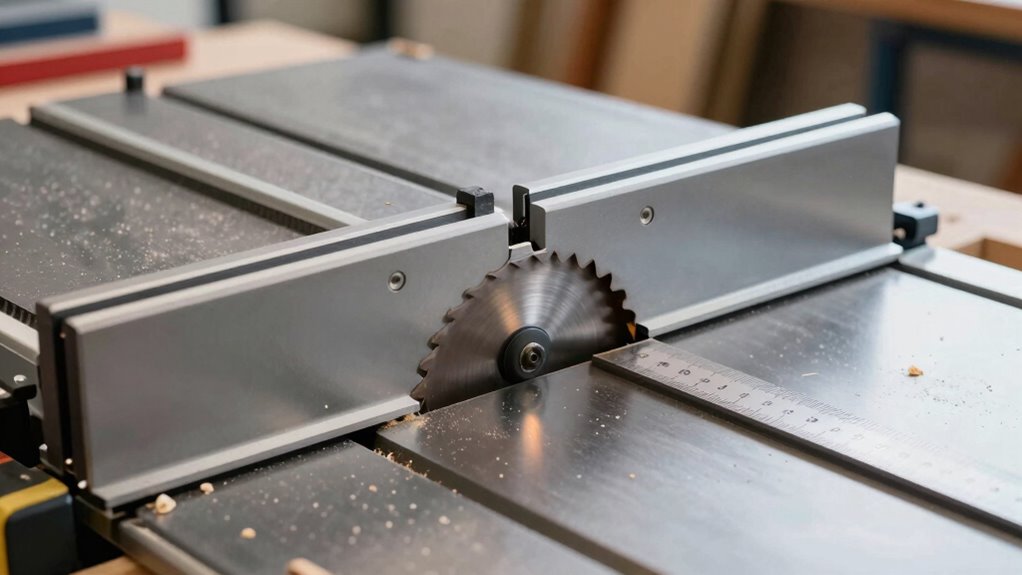
To quickly check your table saw fence alignment and prevent burning, make certain your fence is square to the blade using a combination square or straight edge. Measure the gap between the fence and blade at both ends; they should be equal. Adjust the fence until it’s perfectly parallel and at a right angle to the blade. Proper alignment keeps cuts precise and reduces burning. Keep these steps in mind, and you’ll learn more about maintaining safe, quality cuts.
Key Takeaways
- Verify the fence is perfectly square to the blade using a combination square or digital gauge.
- Check that the fence is parallel to the blade at both front and back with a straight edge or ruler.
- Ensure the fence is properly aligned and flush against the straight edge at blade height to prevent gaps.
- Recalibrate the fence after adjustments or moving the saw to maintain accurate alignment.
- Regularly inspect and maintain the fence and rails to prevent drift and ensure precise cuts that reduce burning.
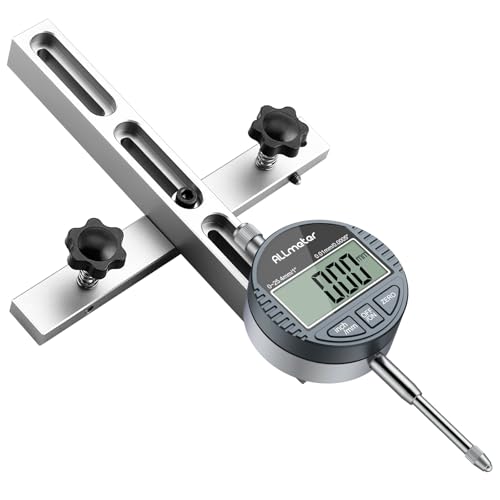
ALLmeter Digital Table Saw Gauge with Dial Indicator 0-1 Inch Range,CNC Machined Aluminum Bar for Fence Alignment on Table Saws Bandsaws (Fits 3/4" or 19mm Groove Width)
High-Precision Digital Dial Indicator: Our digital table saw gauge features a high-precision digital dial indicator with an accuracy…
As an affiliate, we earn on qualifying purchases.
As an affiliate, we earn on qualifying purchases.
Why Fence Alignment Is Key for Safe, Accurate Cuts
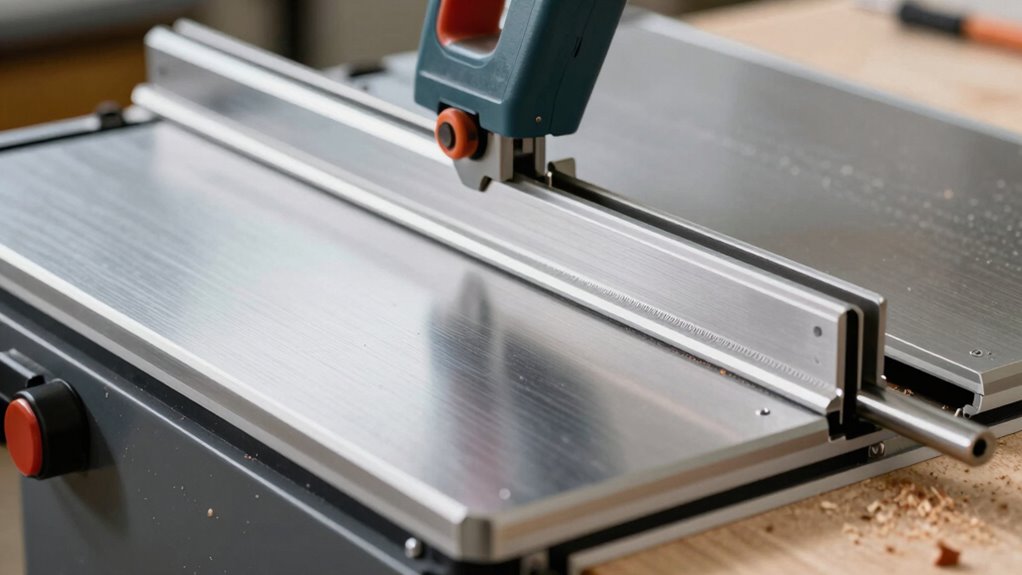
Proper fence alignment is essential because it directly affects the safety and accuracy of your cuts. When your fence isn’t properly aligned, you risk kickback, which can cause injuries, and produce uneven or inaccurate cuts that compromise your project’s quality. Ensuring the fence is square to the blade is part of good safety precautions, preventing dangerous binding or binding-related accidents. Regularly check and maintain your blade; a dull or misaligned blade worsens cut quality and increases safety risks. Proper fence alignment helps you make precise, clean cuts, reducing the chance of mistakes that could lead to unsafe situations. Keeping your fence aligned and your blade sharp allows you to work confidently, knowing your cuts are both safe and accurate. Additionally, paying attention to blade maintenance can significantly improve overall safety and cut quality.

Wixey Saw Fence Digital Readout – Easy-to-Read Accurate Table Saw Fence Upgrade – Durable Digital Dial Indicator – Perfect Precision Measuring Tools for Woodworking Projects
Precise Measurement: Enhance your saw with this reliable digital measurement tool; our Wixey system delivers digital accuracy from…
As an affiliate, we earn on qualifying purchases.
As an affiliate, we earn on qualifying purchases.
Gather Your Tools: Straight Edge, Tape Measure, and More
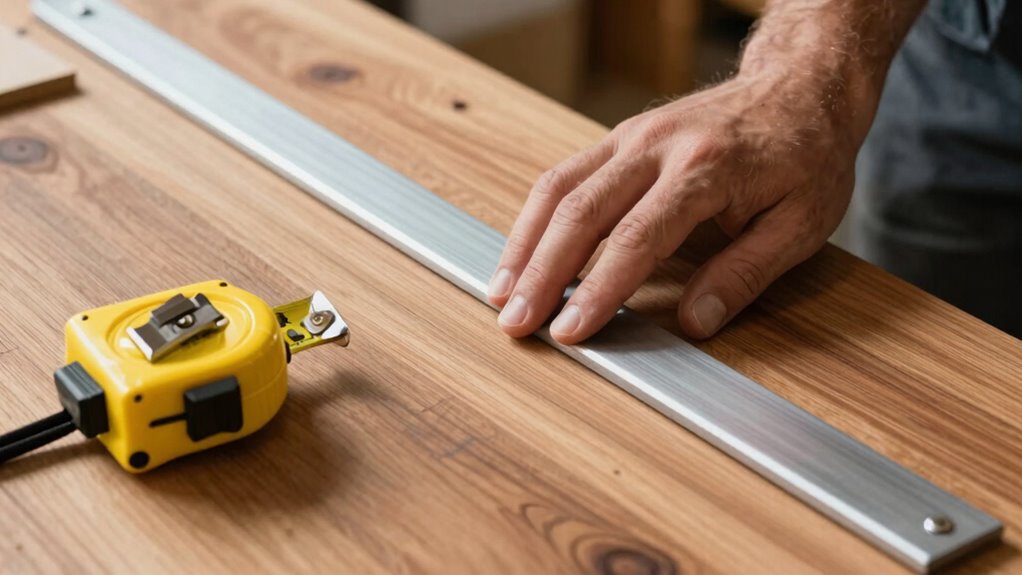
To start aligning your fence, you’ll need essential measuring tools like a straight edge and a tape measure. Handling these tools properly guarantees accurate readings and safe adjustments. Gathering everything beforehand helps you work efficiently and get the job done right. Ensuring you understand interior design principles can also help in creating a functional workspace.
Essential Measuring Tools
Before you start aligning your table saw fence, acquiring the right measuring tools is essential. Accurate measurements ensure your cuts are precise and prevent burning or binding. Vital measuring tools include various woodworking accessories designed for accuracy and ease. First, a quality straight edge helps verify fence alignment against the blade. Second, a tape measure allows you to double-check distances and fence positions. Third, a combination square or machinist square ensures your fence is square to the table and blade. These measuring tools are fundamental for precise adjustments. Using reliable woodworking accessories, you can confidently align your fence, ensuring safe, accurate cuts. Additionally, understanding the importance of contrast ratio in projectors can help in choosing equipment that provides clear and detailed images, which is crucial for detailed woodworking plans or project displays. Remember, the right measuring tools make the process smoother and help achieve professional results every time.
Proper Tool Handling
Handling your tools correctly is essential for accurate fence alignment and safe operation. Always wear appropriate safety gear, like safety glasses and ear protection, to protect yourself during setup. Before starting, organize your workshop layout to keep tools within easy reach and prevent accidents. When gathering your straight edge, tape measure, and other tools, handle them carefully to avoid damage or misalignment. Keep your tools clean and in good condition for precise measurements. Use a firm grip and steady hand when measuring or adjusting, ensuring accuracy. Proper tool handling minimizes errors and reduces safety risks. Additionally, understanding air purifier maintenance can help keep your workshop environment clean and safe. Remember, a well-structured workspace combined with cautious handling makes fence alignment quicker, safer, and more effective.

POWERTEC 24 Inch Machinist Aluminum Straight Edges, with .001'' Tolerance for Checking Surface Warp, Marking/Scribing Lines – Used w/Feeler Gauges for Automotive Repairs, Cylinder Head Checks (71227)
FUNCTION: A cost effective alternative to determining table surface flatness, engine block flatness, and can be used on…
As an affiliate, we earn on qualifying purchases.
As an affiliate, we earn on qualifying purchases.
How to Check if Your Fence Is Parallel?
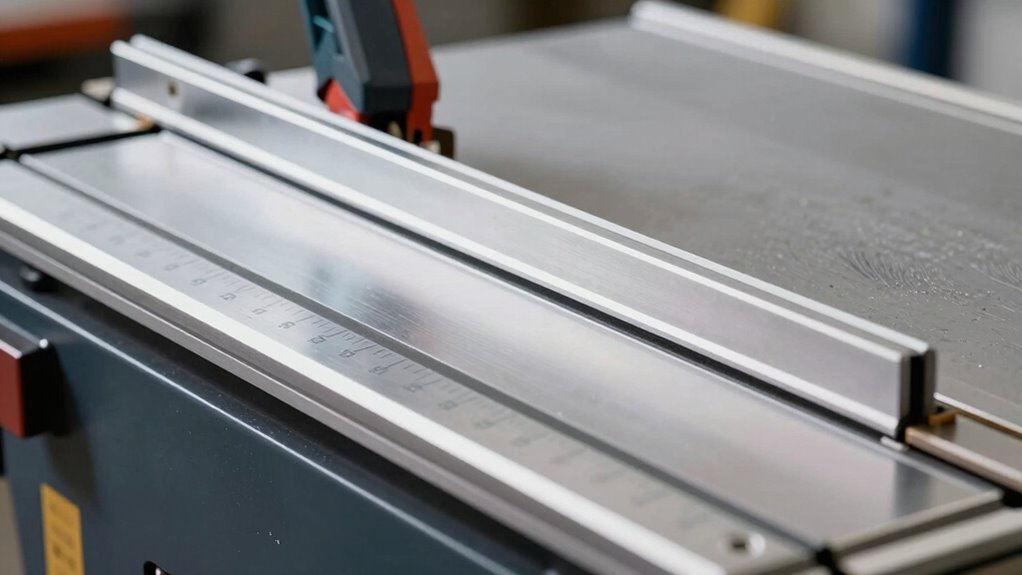
Wondering if your table saw fence runs perfectly parallel to the blade? To check, start by inspecting the fence’s alignment with the blade. Proper blade maintenance ensures accurate cuts and easy adjustments. Next, follow these steps:
- Use a straight edge or a ruler to measure the distance from the fence to the blade at both the front and back. The gaps should be equal.
- Check for any obstructions or dust buildup that could affect movement, ensuring dust collection is clear.
- Run a test cut on scrap wood, then measure the cut to see if it’s straight and parallel. Adjust the fence if needed for perfect alignment.
- Regularly verify the fence’s connected equipment to maintain overall safety and precision.
Keeping your fence parallel minimizes burning and improves overall safety and precision.

GOINGMAKE Table Saw Gauge Dia Indicator for Table Saw and Band Saw,0.01mm Accuracy Calibration Tool,Table Saw Jig Guide Fits for 3/4" T Slot U Slot,Table Saw Accessories for Woodworking,Machinery
【Precision Calibration】GOINGMAKE table saw gauge provides 0.01mm accuracy dial indicator. It is precision to use and easy to…
As an affiliate, we earn on qualifying purchases.
As an affiliate, we earn on qualifying purchases.
Using a Straight Edge to Align Your Fence Correctly
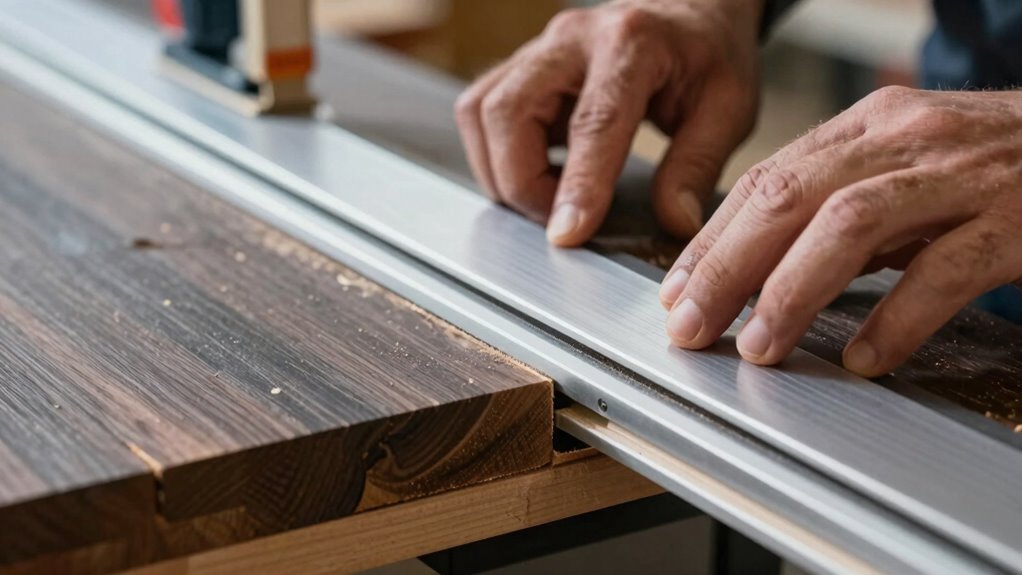
Using a straight edge is one of the simplest and most effective ways to guarantee your fence is precisely aligned with the blade. First, set your blade to the desired height, considering the thickness of your cut. Place the straight edge along the fence and check for gaps at various points. Adjust the fence until it sits flush against the straight edge at the blade height, ensuring no misalignment. Proper alignment influences dust collection efficiency and minimizes burning from uneven cuts. Additionally, regularly checking your alignment helps maintain consistent accuracy over time. Use the following table to understand key adjustments:
| Adjustment Focus | Purpose |
|---|---|
| Blade height | Ensures accurate cut and dust control |
| Fence position | Maintains parallel alignment |
| Straight edge check | Confirms fence is true to the blade |
| Final test | Verifies no gaps for clean cuts |
This process ensures your fence’s alignment for safer, cleaner cuts.
Adjust Your Fence to Achieve a 90-Degree Cut

To guarantee your cuts are perfectly square, start by checking the fence angle with a reliable square. Make sure the fence is set precisely at 90 degrees to the blade, and adjust as needed. Properly aligning your fence guarantees accurate, clean cuts every time. Additionally, regularly calibrate your fence to maintain consistent alignment and prevent cutting errors.
Check Fence Angle
Ensuring your fence is perfectly aligned at a 90-degree angle is essential for accurate cuts. To check the fence angle, follow these steps:
- Place a framing square against the fence and the table. Verify the fence tilt matches the 90-degree mark.
- Adjust the fence if the square shows any deviation from perpendicular. Tighten the locking mechanism securely.
- For more precision, use a digital angle gauge to confirm the fence tilt is exactly at 90 degrees, making small tweaks as needed.
Maintaining the correct fence angle prevents uneven cuts and burning. Regularly checking the fence tilt ensures your fence remains true, promoting safe and precise woodworking. This quick check keeps your cuts accurate and your projects professional-looking.
Use a Square Properly
A properly aligned fence is essential for making accurate 90-degree cuts. To guarantee your fence is square, use a reliable square and proper measuring techniques. Place the square against the fence and the miter slot or table edge, then check the angle at multiple points for consistency. Adjust the fence until it forms a perfect 90-degree angle with the blade. Always wear safety gear, such as goggles and hearing protection, when working on your saw. Proper measurement and cautious adjustment prevent uneven cuts and reduce the risk of kickback or binding. Double-check your measurements after each adjustment, and make small, incremental changes for precision. Using your square correctly guarantees your cuts are true, helping you complete projects accurately and safely. Additionally, regularly checking the fence alignment ensures ongoing accuracy and safety during woodworking tasks.
Make Sure Your Fence Is Square to the Blade for Precise Results
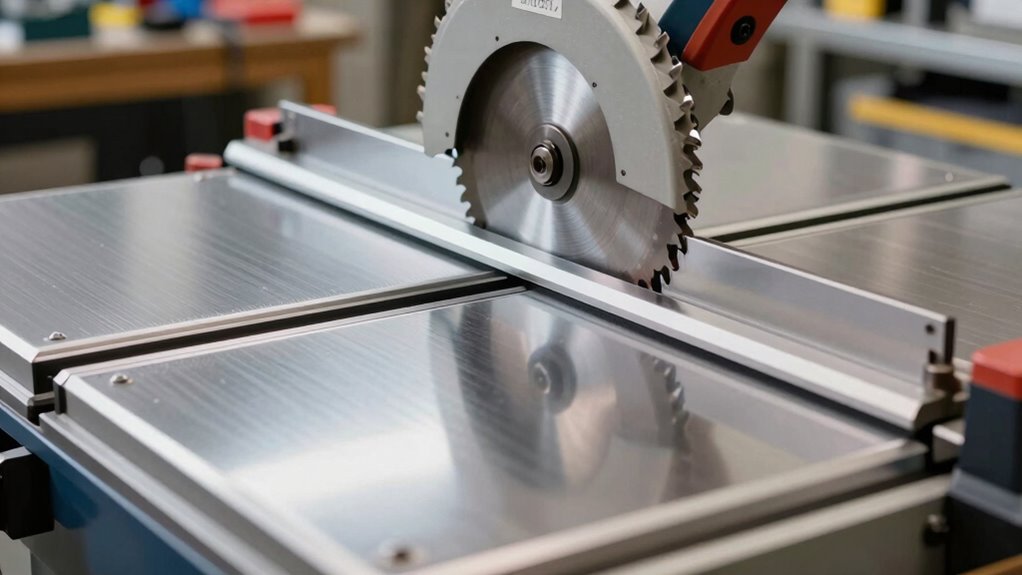
Even a small misalignment between your fence and the blade can lead to inaccurate cuts and wasted material. To guarantee precision, check that your fence is square to the blade. Start by inspecting for blade wobble, which can cause inconsistent cuts. Next, measure the fence’s distance from the blade at both the front and back to confirm proper fence clearance. Finally, use a square or a dial indicator to verify the fence is perfectly perpendicular to the blade’s edge. If you notice any misalignment, adjust the fence accordingly, and recheck until it’s square. Keeping the fence aligned prevents burning and ensures your cuts are clean and accurate every time. Proper fence alignment is key to safe, efficient woodworking.
Common Fence Alignment Mistakes and How to Fix Them
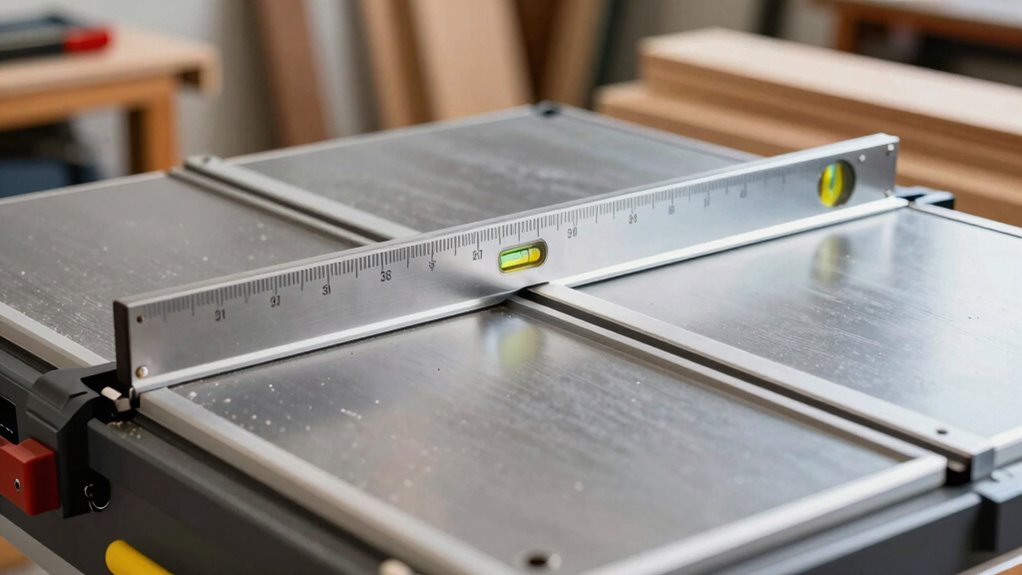
One of the most common mistakes in fence alignment is neglecting to double-check the fence’s perpendicularity to the blade after making adjustments. If you don’t verify this, your cuts may be inaccurate or cause burning. Also, verify your miter gauge calibration is correct, as an uncalibrated gauge can lead to misaligned cuts. Another mistake is overlooking blade height adjustment; setting the blade too high or too low can cause uneven cuts or burning, even if the fence is perfectly aligned. Always confirm the blade height before aligning the fence, and recheck the fence’s position after any adjustments. Additionally, ensuring your European cloud solutions are properly integrated can help maintain precise control over your tools and settings. By paying attention to these details, you prevent common errors that compromise cut quality and safety. Proper calibration and adjustment keep your cuts precise and safe.
Troubleshooting Burning and Uneven Cuts Due to Fence Issues
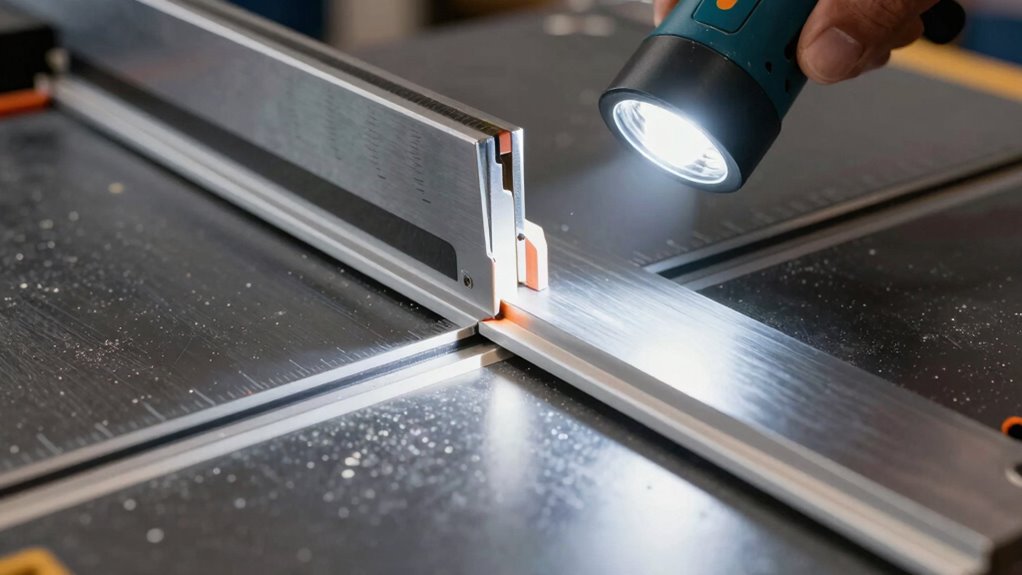
Burning and uneven cuts often stem from fence misalignment or improper setup, which can cause the blade to bind or feed improperly through the wood. To troubleshoot these issues, start by checking your fence’s alignment against the blade. Next, ensure your blade is sharp and clean, as dull blades increase burning risk. Finally, verify that you’re using the right safety gear, like gloves and eye protection, especially during adjustments. Here are three steps to help:
Check fence alignment, keep blades sharp, and use proper safety gear for better cuts.
- Re-align the fence so it’s parallel to the blade.
- Inspect and replace dull blades promptly.
- Adjust feed rate, slowing down if you notice burning or chipping.
Addressing these points guarantees safer cuts, improves finish quality, and keeps your diy projects on track.
Tips to Keep Your Fence Properly Aligned Over Time
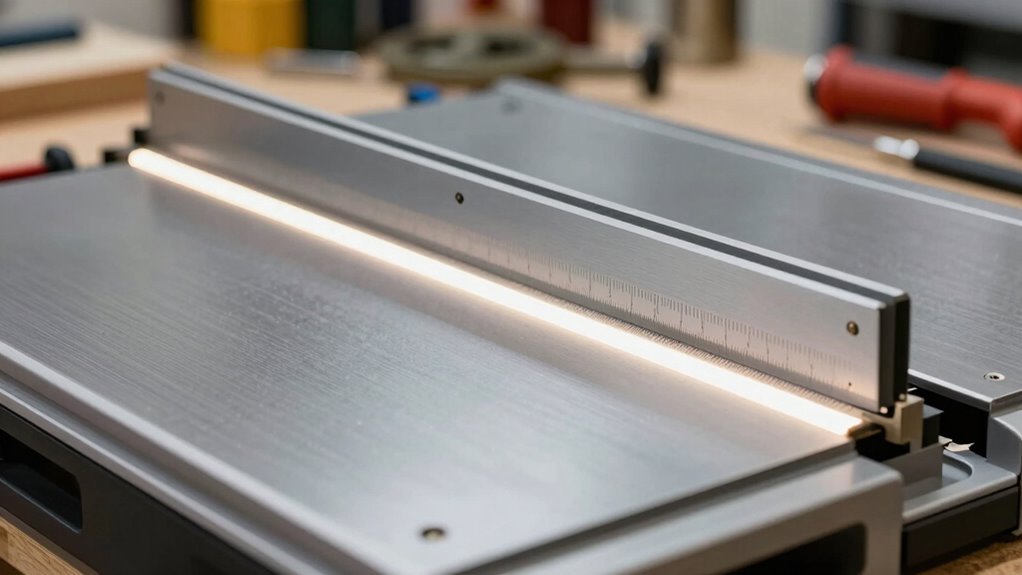
Maintaining your fence’s alignment requires regular checks and adjustments to prevent drifting out of position. Consistent fence maintenance ensures your cuts stay precise and prevents burning. To stay on top of alignment calibration, check the fence before each use and after moving it. Keep an eye on the rails, ensuring they stay true and parallel to the blade. Use the following table for quick reference:
| Tip | Action |
|---|---|
| Visual Inspection | Regularly verify fence alignment with a square. |
| Adjustment Frequency | Calibrate after each major project or move. |
| Cleaning and Lubrication | Keep rails clean and lubricated for smooth operation. |
Following these tips maintains ideal fence alignment over time, ensuring safe, accurate cuts.
When to Call a Pro or Upgrade Your Fence System
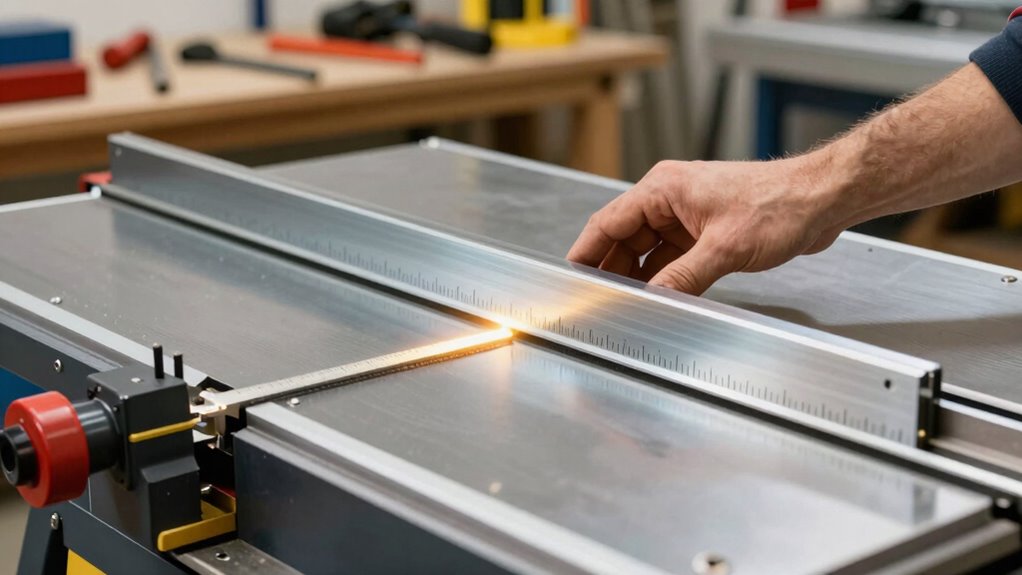
Even with regular adjustments, there comes a point when your fence system may no longer deliver the accuracy or safety you need. If you notice persistent misalignments, difficulty maintaining tight tolerances, or if the fence material shows significant wear or damage, it’s time to contemplate professional help or an upgrade.
When your fence no longer maintains accuracy or safety, it’s time to seek professional help or upgrade.
Ask yourself:
- Is the fence consistently causing burns or tear-out despite adjustments?
- Are safety gear and guard components compromised or outdated?
- Has the fence system become difficult to calibrate or too loose?
If you answered yes to any, upgrading your fence system or calling a pro ensures safety and precision. Proper alignment, quality fence material, and reliable safety gear are essential for safe, accurate cuts.
Frequently Asked Questions
How Often Should I Realign My Table Saw Fence?
You should realign your table saw fence whenever you notice inaccuracies, like uneven cuts or burning wood. Regular fence maintenance, including precision adjustments, guarantees peak performance. It’s a good idea to check your fence before each project and after any heavy use or accidental bumps. Consistent realignment helps maintain cutting accuracy, prevents burning, and extends your saw’s lifespan, making your woodworking safer and more precise.
Can a Warped Fence Affect Cut Quality?
Did you know that nearly 30% of cuts are affected by fence warping? A warped fence definitely impacts cut quality by reducing alignment accuracy, leading to rough edges or burn marks. When the fence warps, it no longer guides the wood precisely, causing inaccuracies. Regularly checking and correcting fence alignment helps make certain cleaner cuts, improves safety, and extends your saw’s lifespan. Don’t ignore warping—it’s key to perfect results.
What Signs Indicate My Fence Needs Realignment?
You’ll notice your fence needs realignment if cuts are uneven, rough, or burning the wood. Check for blade alignment first, ensuring it’s square to the fence. Then, verify motor calibration to make sure the blade spins true. If the fence wobbles or gaps when aligned, it’s time to adjust. Proper blade alignment and motor calibration help keep your fence in perfect position, preventing poor cuts and burning.
Is It Necessary to Recalibrate After Moving the Saw?
Yes, you should recalibrate your saw after moving it to maintain safety and guarantee accurate cuts. Moving your tool can affect fence alignment, so always follow safety precautions before making adjustments. Regular tool maintenance, including checking the fence alignment, helps prevent issues like burning or kickback. By recalibrating, you keep your saw performing its best and reduce the risk of accidents, making your woodworking safer and more precise.
Are Aftermarket Fences More Accurate Than Stock Ones?
Aftermarket fences often outperform stock ones because they’re built with higher-quality fence materials and tighter manufacturing tolerances. Think of them as finely tailored suits compared to off-the-rack options—they fit better and perform more precisely. While some stock fences can be accurate, aftermarket options generally offer a more reliable and consistent cut, helping you avoid burning and ensuring your projects stay crisp and clean.
Conclusion
By keeping your fence properly aligned, you’ll steer clear of burnt edges and jagged cuts, turning your saw into a precision tool rather than a fiery beast. Think of fence alignment as the backbone of safe, accurate woodworking—neglect it, and your projects could go off the rails. Regular checks and adjustments are your best defense against mishaps, ensuring your cuts stay sharp and your confidence stays high. When in doubt, don’t hesitate to call in a pro or upgrade your setup.