TL;DR

Get business pricing on tools and workshop supplies
- Business-only prices and quantity discounts
- Tax-exempt purchasing
- Multiple users, one account, clear invoices
Livingetc’s advice report outlines five storage principles drawn from Japanese kitchens: declutter before adding organizers, match containers to their contents, keep frequently used items easy to reach, choose cookware that can serve food, and limit counter items to those used often and visually orderly. The guidance is practical design advice, not a reported study or a new policy; its results will vary with each kitchen and household.
Livingetc has published a five-point guide to Japanese-inspired kitchen storage, advising readers to clear out unused items before buying organizers and to give frequently used tools accessible, defined places. The report draws on comments from London-based interior designer Yoko Kloeden and Tasuku Ogino, executive vice president of Japanese home-goods company Nakagawa; it offers design guidance rather than evidence that the methods work for every household.
The guide’s first principle is to declutter before adding storage. Kloeden advises taking one shelf at a time and asking what each item is for, rather than responding to crowded cabinets by purchasing more containers. That approach can help households identify unused equipment and avoid spending money on organizers that occupy space without solving the underlying problem.
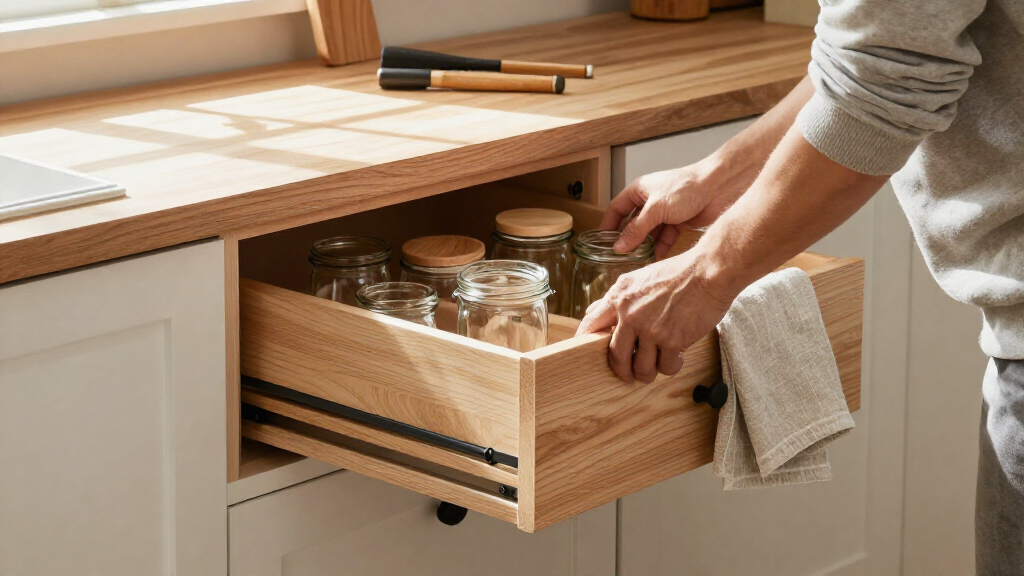
Its next two recommendations focus on function and access. Choose a container according to what it needs to do and what it holds, the report says: transparent boxes make contents visible, while Kloeden describes paulownia wood boxes as an option for dried goods and tea. Keep items used repeatedly during cooking, such as salt, sugar and utensils, within easy reach. Kloeden says containers should be simple to open, including with one hand, when they are used often.
The final lessons are to select cookware that can move from cooking to serving, and to leave counter space for a limited set of items. The guide describes this as a way to reduce transfers and washing, while keeping daily necessities handy. It also cites a two-part test attributed to Kloeden: an object should be used daily and have visual presence to earn a place on the counter. Packaging that does not meet that standard can be stored out of sight.
Less Clutter, More Usable Space
The advice matters to readers because kitchen storage problems are not always solved by adding shelves or buying matching containers. Reducing what needs to be stored can free up cabinet and counter space, while grouping daily-use items around cooking tasks may make routine preparation easier. Cookware that also serves as a serving vessel can reduce the number of dishes in circulation.
These are practical suggestions, not measured outcomes. The report does not provide comparative testing, cost estimates, or evidence that a particular container or layout will improve efficiency. Households can apply the principles selectively, based on their storage, cooking habits and food-safety needs.
Japanese style kitchen storage containers
As an affiliate, we earn on qualifying purchases.
As an affiliate, we earn on qualifying purchases.
Five Principles in the Report
The Livingetc report frames its recommendations as lessons from Japanese kitchens, where Kloeden says limited footprints make each container justify its place. The five ideas are to declutter first, choose containers for their function, keep regularly used ingredients and tools accessible, use cookware for both preparation and serving, and keep counters selective.
For the cookware point, the report invokes ichibutsu tayō, described as “one object, many uses,” and gives examples including a vessel used to store leftovers, reheat food and serve it. It also attributes the term merihari, or deliberate contrast, to Nakagawa executive vice president Tasuku Ogino in connection with visually orderly counters. These concepts are presented as design principles in the article, not as rules followed by all Japanese households.
“Before you add storage, take one shelf and ask what each thing on it is for.”
— Yoko Kloeden, interior designer, as quoted by Livingetc
As an affiliate, we earn on qualifying purchases.
How Well It Fits Each Kitchen
The report does not establish how widely these practices are used across Japan, or whether they deliver measurable improvements compared with other storage systems. It also provides no testing of the suggested materials, cost comparisons, or detailed guidance for adapting the ideas to kitchens with different layouts. Kloeden’s comments are expert advice attributed by Livingetc; readers may need to adjust the suggestions for their household’s routines, available space and safe storage requirements.
multi-purpose cookware serving bowls
As an affiliate, we earn on qualifying purchases.
As an affiliate, we earn on qualifying purchases.
A Shelf-by-Shelf Starting Point
The article proposes beginning with one shelf, identifying what is actually used, and only then deciding whether a container or storage solution is needed. Readers can next arrange everyday ingredients and tools for easy access, assess whether cookware can perform more than one role, and remove counter items that are rarely used. Livingetc offers the principles as ongoing home-organization advice; the source does not announce a follow-up study or later milestone.
As an affiliate, we earn on qualifying purchases.
Key Questions
What is the first storage step in the Livingetc guide?
Declutter before buying organizers. The report recommends reviewing one shelf and deciding what each item is for before adding more storage products.
Does the guide recommend putting everything in matching jars?
No. Kloeden says container choice should reflect its function and ease of use. Visibility, protection of contents and an easy-to-lift lid may matter more than matching appearances.
What does “one object, many uses” mean here?
The report uses the phrase ichibutsu tayō for cookware or vessels that can serve several purposes, such as storing, reheating and serving food.
Which items should remain on the kitchen counter?
The guide suggests leaving out items that are used daily and visually suit the space, such as a utensil holder or condiment jars, while storing less attractive packaging elsewhere.
Are the recommendations proven to work for every kitchen?
No. The Livingetc piece is design advice, not a comparative study. The source does not report measured results, and the usefulness of each idea depends on a household’s layout and cooking habits.
Source: rss
Fall yard work Picks
leaf blowers
As an affiliate, we earn on qualifying purchases.