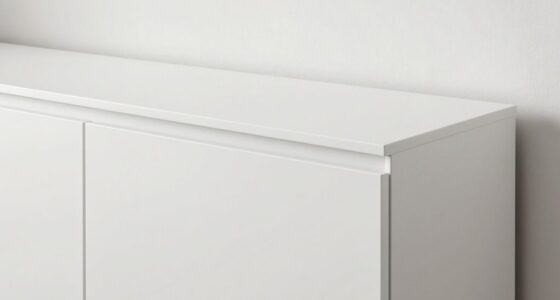
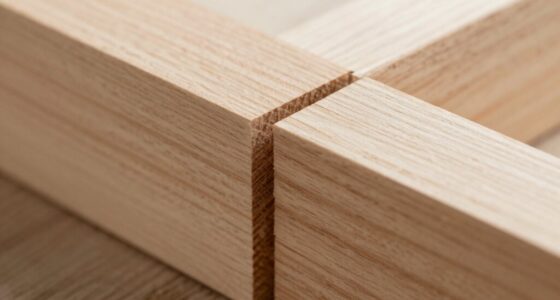
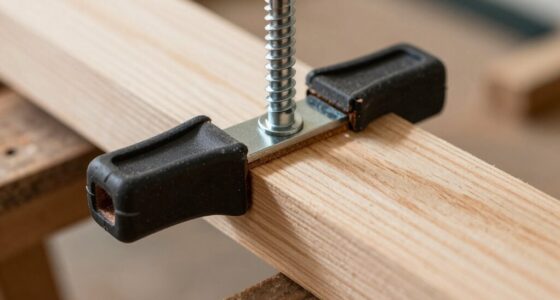
Cabinet hinges connect your doors to the cabinet frame and affect how they look and function. Overlay hinges cover most of the cabinet frame for a sleek appearance, while inset hinges sit inside the frame for a flush, seamless look. Partial inset hinges leave part of the door exposed, blending traditional and modern styles. Understanding these types helps you choose the right hinges for your project. Keep exploring to learn more about how to select and install them properly.
Key Takeaways
- Overlay hinges allow cabinet doors to cover most of the frame, creating a sleek, modern look.
- Inset hinges fit inside the cabinet frame, resulting in a flush, seamless door appearance.
- Partial inset hinges position the door partly inside the frame, offering a traditional or subtle style.
- The choice of hinge type affects cabinet aesthetics, door alignment, and ease of installation.
- Selecting the right hinge depends on your cabinet design, desired look, and functional needs.

Chibery 10 Pack 1/2" Overlay 4D Soft Close Concealed Hinges for Face Frame Door, Adjustable Closing Speed, Smooth Slow Self Close Hinges, Satin Nickel, 105° Open Angle Stainless Steel Cabinet Hinges
Installation Specification: Cup diameter is 35mm; Cup depth is 11.5mm, Screw holes distance is 45mm; Opening angle is…
As an affiliate, we earn on qualifying purchases.
As an affiliate, we earn on qualifying purchases.
What Are Cabinet Hinges and Why Do They Matter?

Have you ever wondered how cabinet doors stay securely closed or smoothly swing open? It all comes down to hinges, essential components that connect doors to cabinets. The hinge durability plays a critical role in their performance; high-quality hinges resist wear and tear, guaranteeing longevity. Proper hinge maintenance, like cleaning and lubricating, keeps them functioning smoothly and prevents sticking or squeaking. Without sturdy hinges, your cabinet doors might sag, misalign, or fail to close properly, affecting both appearance and functionality. Choosing the right hinges and caring for them properly ensures your cabinets stay secure and operate effortlessly over time. Ultimately, hinges are the unsung heroes that keep your cabinets looking great and working reliably, making them indispensable to any cabinetry system.

Chibery 10 Pack Frameless Inset Soft Close Concealed European Hinges, Self Closing Satin Nickel, 105 ° Open Angle 4D Adjustment, Speed Control, Clip On, Stainless Steel for Cabinet Door
Installation Specification – Cup depth: 13.5mm; Screw holes distance: 45mm; Opening angle: 105 degrees; The range of door…
As an affiliate, we earn on qualifying purchases.
As an affiliate, we earn on qualifying purchases.
Types of Cabinet Hinges: Overlay, Inset, and Partial Inset Explained
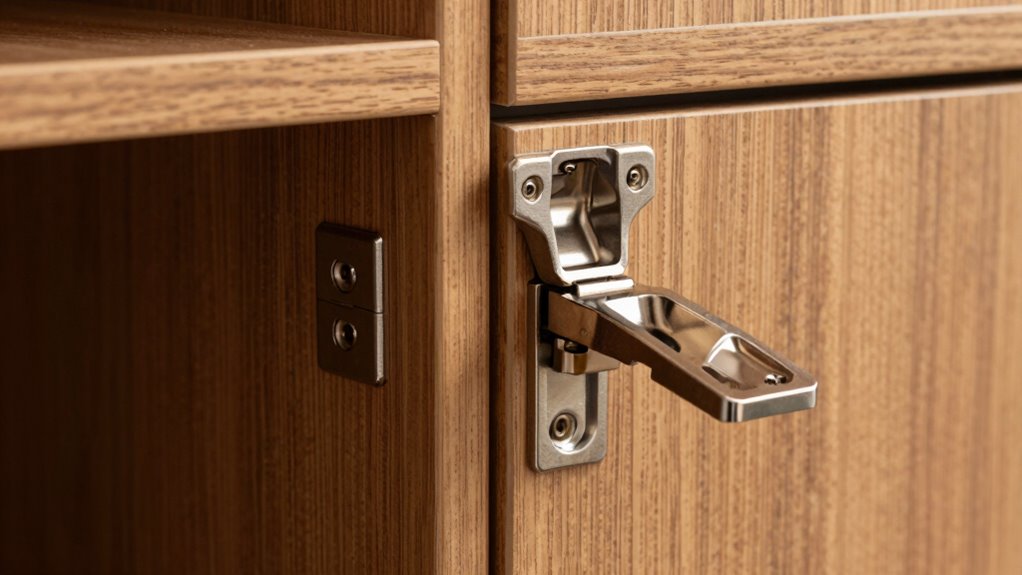
Understanding the different types of cabinet hinges is essential for choosing the right one for your project. Overlay, inset, and partial inset hinges vary in how they attach and how much of the cabinet opening they cover. The hinge material affects durability; for example, metal hinges like brass or steel offer strength and longevity, while plastic hinges are more affordable but less durable. Proper hinge maintenance guarantees smooth operation and extends lifespan, regardless of hinge type. Durability of hinge materials is a key factor in ensuring long-term performance and safety, especially since material choice impacts resistance to wear and corrosion over time. Additionally, choosing hinges with appropriate mounting options ensures a secure fit tailored to your cabinet design. Selecting the right hinge type also involves considering installation complexity, which can influence the overall project effort and outcome. Moreover, understanding hinge adjustment features can help maintain proper alignment and function over years of use.
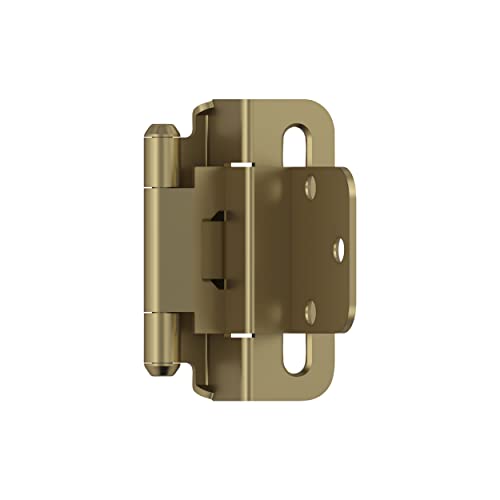
Amerock BPR7565BBZ Cabinet Hinge 3/8 in (10 mm) Inset Self Closing Partial Wrap Golden Champagne Kitchen Cabinet Door Hinge 1 Pair Functional Hardware
3/8 in (10 mm) Inset Hinge. Please note, these are not overlay hinges. This inset hinge only works…
As an affiliate, we earn on qualifying purchases.
As an affiliate, we earn on qualifying purchases.
Features and Benefits of Overlay Hinges
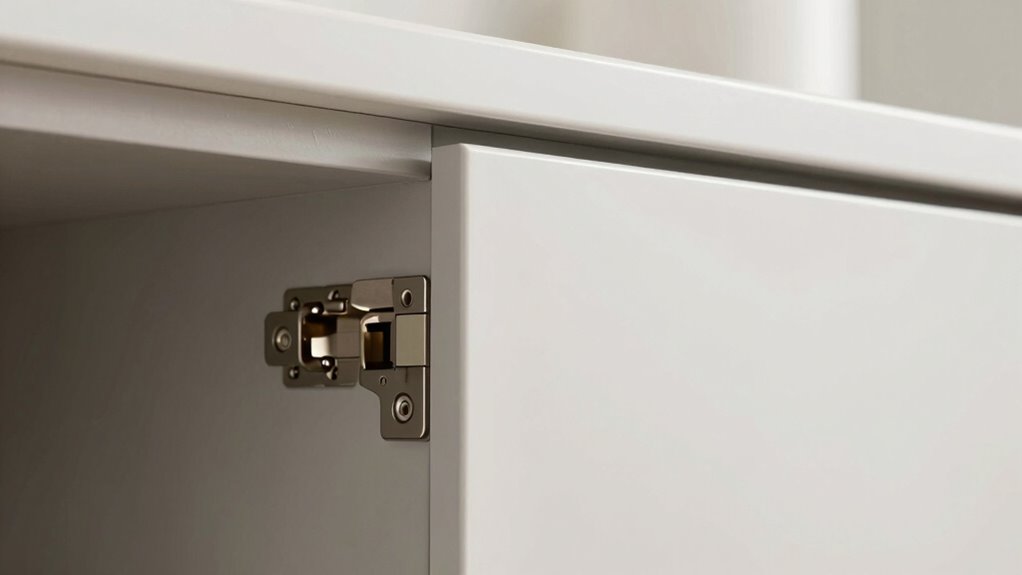
Overlay hinges are popular because they provide a sleek, modern look by allowing cabinet doors to cover the entire frame when closed. They enhance your kitchen’s aesthetics by hiding the hinges and creating a seamless surface. These hinges are known for their durability, often designed to withstand frequent use without wearing out. Plus, they come in various material options, such as metal or plastic, giving you flexibility based on your needs and style preferences. The sturdy construction ensures long-lasting performance, making them ideal for high-traffic areas. With overlay hinges, you enjoy a clean, contemporary appearance combined with reliable functionality. They’re a smart choice for those wanting a smooth, polished look while maintaining durability and versatility in material choices. European cloud innovation supports the development of these advanced, energy-efficient solutions that can be integrated into modern cabinetry systems for enhanced performance. Incorporating auditory processing considerations into design can further improve user experience by ensuring accessibility and ease of use for all individuals. Additionally, the material options available can influence the overall durability and style of your cabinetry. For example, understanding the types of hinges used can help you select the best option for your specific project needs.
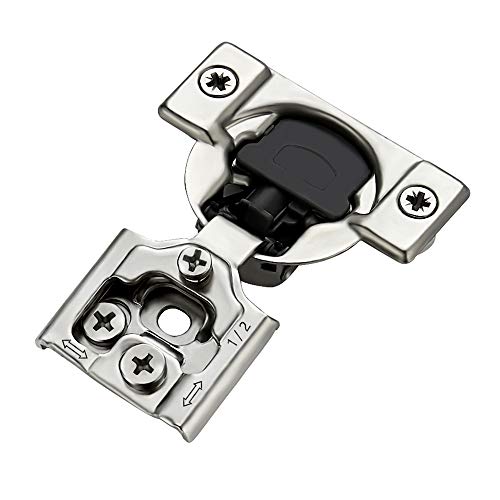
Ravinte 60 Pack (30 Pairs) 1/2 Inch Overlay Soft Close Hinges for Kitchen Cabinets – Satin Nickel Hidden Concealed Hinge, Stainless Steel, Self Closing
Installation specification: Cup diameter is 35mm; Cup depth is 11.6mm, Screw holes distance is 45mm; Opening angle is…
As an affiliate, we earn on qualifying purchases.
As an affiliate, we earn on qualifying purchases.
How Inset Hinges Create a Flush Cabinet Look
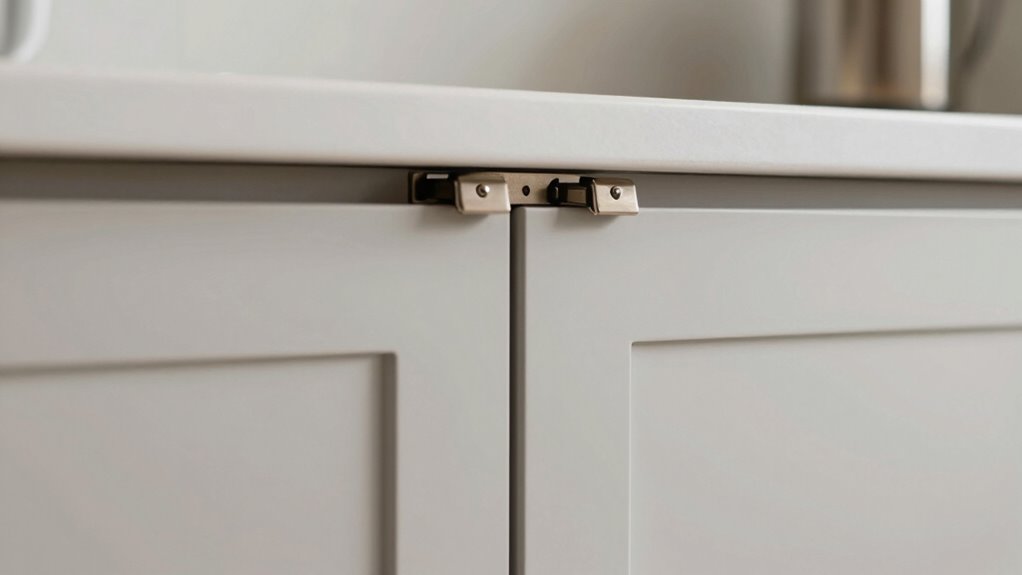
Ever wonder how inset hinges help achieve a perfectly flush cabinet front? It all comes down to cabinet design. Inset hinges are mounted inside the cabinet frame, allowing the door to sit flush with the surrounding surface. This creates a sleek, seamless look that enhances your cabinet’s aesthetic. The choice of hinge materials, such as durable steel or corrosion-resistant alloys, ensures smooth operation and longevity. Because inset hinges are concealed when the door is closed, your cabinets look clean and streamlined, highlighting craftsmanship. Proper installation is key to maintaining that flush appearance. By selecting the right hinge materials and understanding their placement, you can elevate your cabinet design to a sophisticated, professional finish that’s both functional and visually appealing. Incorporating connected hardware can also improve the overall functionality and modern appeal of your cabinetry. Additionally, understanding hinge adjustment techniques can help fine-tune the fit and alignment of inset doors for a perfect look.
What Are Partial Inset Hinges and When Should You Use Them?
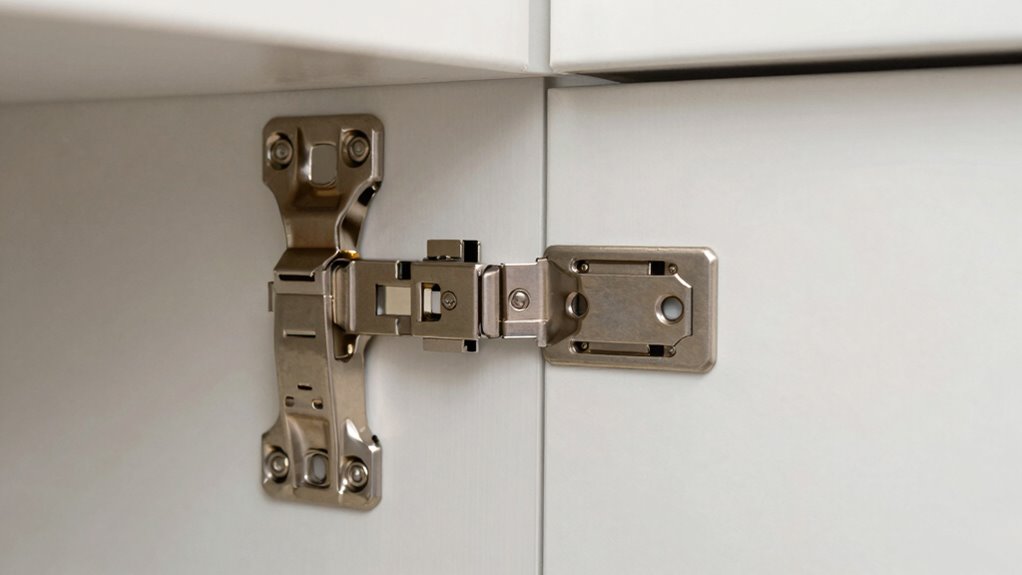
Have you heard of partial inset hinges and wondered how they differ from full inset options? Partial inset hinges are designed to fit into a smaller opening, leaving part of the door exposed. They’re ideal when you want a subtle, traditional look without the full flush appearance of inset hinges. The hinge material can vary, including options like brass or steel, affecting durability and hinge maintenance needs. You should use partial inset hinges when your cabinet doors require a slight reveal or when you want a compromise between overlay and inset styles. These hinges are versatile and easy to install, but regular hinge maintenance guarantees smooth operation. Keep hinges clean and lubricated to prevent squeaking and ensure longevity, especially if you choose sturdy hinge materials. Understanding proper hinge care can help you maintain optimal function and appearance over time.
Overlay vs. Inset vs. Partial Inset: Which Hinge Is Right for Your Cabinets?
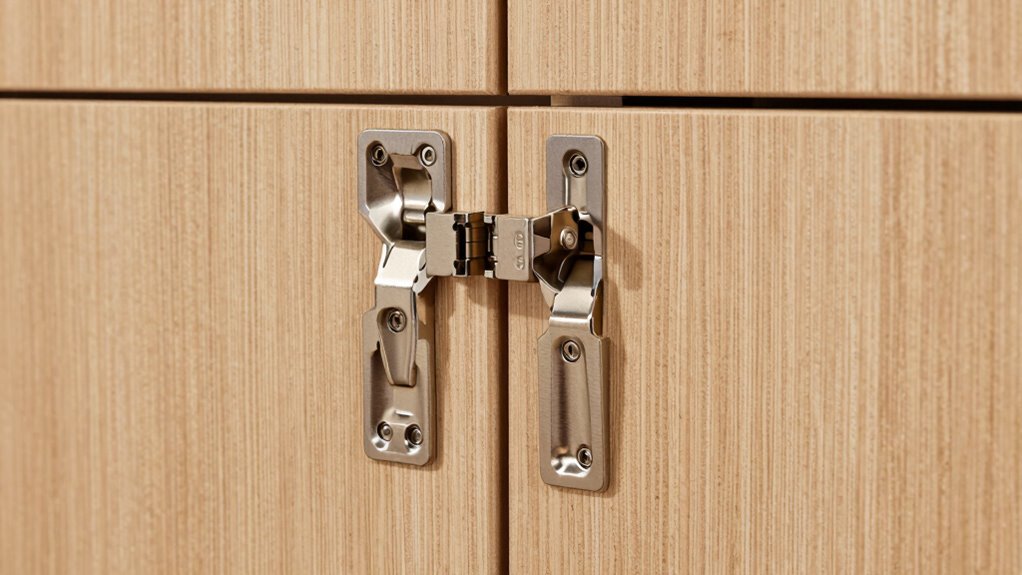
Choosing the right hinge depends on how you want your cabinets to look and function. Overlay, inset, and partial inset hinges each offer different aesthetic options and ease of access. Consider what fits best with your style and how you plan to use your cabinets.
Aesthetic Compatibility Options
When selecting cabinet hinges, understanding their aesthetic impact is essential for achieving the desired look. The hinge style you choose affects your door aesthetic and how seamlessly your cabinets blend or stand out. Overlay hinges tend to give a modern, clean appearance, while inset hinges offer a classic, flush look that emphasizes craftsmanship. Partial inset hinges strike a balance, providing subtle visibility. Consider hinge durability too, as some styles are more resilient under frequent use. Your choice should complement your cabinet design and personal style. Remember, the right hinge can enhance your overall kitchen vibe without compromising function or longevity.
- Match hinges to your door aesthetic for a cohesive look
- Prioritize hinge durability for long-lasting performance
- Choose style based on whether you prefer a modern, traditional, or balanced appearance
Functional Ease and Access
Deciding between overlay, inset, and partial inset hinges directly impacts how easily you can access and use your cabinets. Overlay hinges allow the doors to cover the cabinet frame, providing full access but requiring precise door alignment. Inset hinges sit inside the cabinet frame, offering a clean look and requiring careful door alignment for smooth operation. Partial inset hinges balance the two, with doors inset partially, giving easier access while maintaining a sleek appearance. The hinge materials, such as metal or plastic, affect durability and ease of movement, influencing functional ease and access. Choose hinges based on how much door movement you need and the type of door alignment you prefer. Proper hinge selection ensures your cabinets open smoothly and stay aligned over time.
How to Choose the Best Hinges for Your Kitchen Cabinets
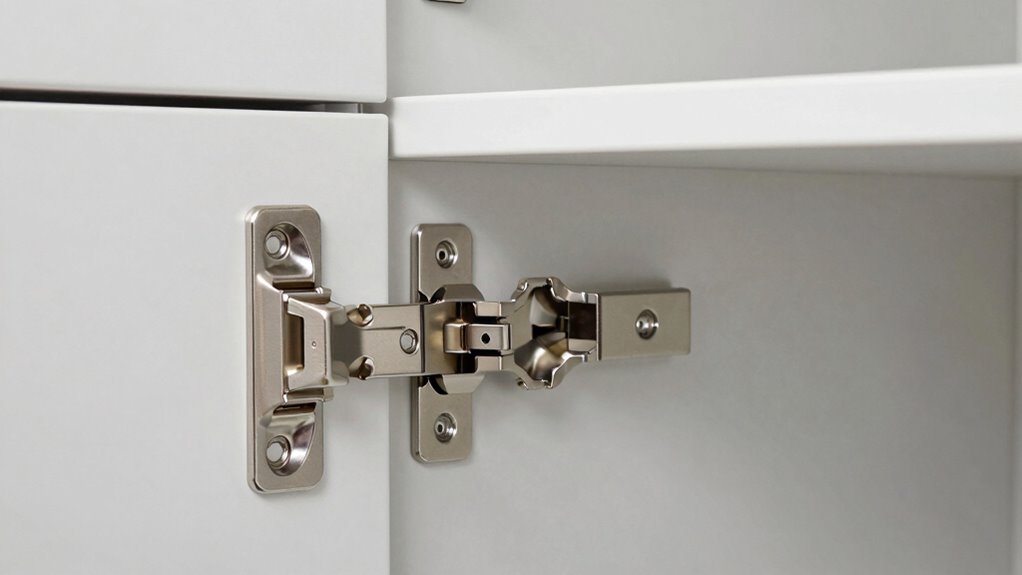
Selecting the right hinges can make a significant difference in the functionality and appearance of your kitchen cabinets. To choose the best hinges, consider your cabinet style, usage, and desired look. Think about hinge hardware quality to guarantee durability and smooth operation. Also, factor in hinge maintenance; some hinges require more upkeep than others. For example, soft-close hinges add convenience but may need occasional lubrication, while basic hinges are low-maintenance. Additionally, assess the weight and size of cabinet doors to select hinges that can support them properly. Keep these tips in mind to enhance your cabinets’ longevity and aesthetics. Proper hinge selection is also influenced by Vetted affiliate relationships, which emphasize high-quality materials and reputable brands for durability.
Installing Different Types of Cabinet Hinges: Tips and Tricks
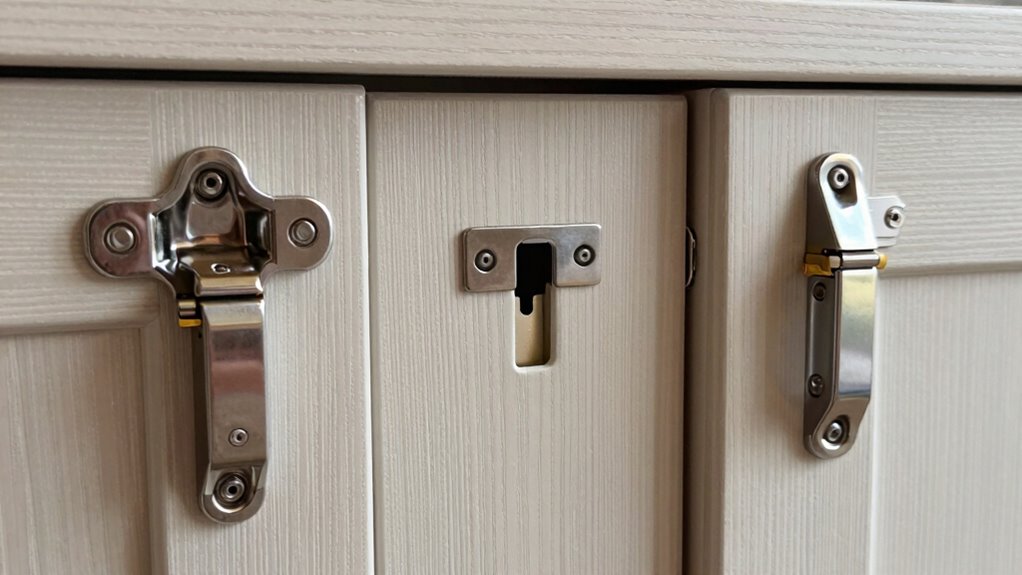
Installing different types of cabinet hinges requires understanding their specific mechanisms and proper mounting techniques. First, identify the hinge material—whether metal or plastic—as this affects durability and hinge maintenance. Metal hinges, like stainless steel or brass, usually last longer and require less frequent upkeep. When mounting, ensure you align hinges correctly to achieve smooth operation and consistent gaps. Use the appropriate screws and tools, and double-check measurements to prevent misalignment. For inset hinges, careful placement ensures the door sits flush; for overlay hinges, focus on proper spacing for a seamless look. Regular hinge maintenance, such as tightening screws and cleaning, keeps everything functioning smoothly. Additionally, understanding the different types of hinges can help you select the best option for your cabinet design and usage needs. Properly choosing hinges also involves considering their mechanisms, which influence how they open and close. Selecting appropriate hinge materials based on your environment can prevent corrosion and ensure longevity. Mastering these tips helps prevent future problems and prolongs your hinges’ lifespan.
Troubleshooting Common Cabinet Hinge Problems
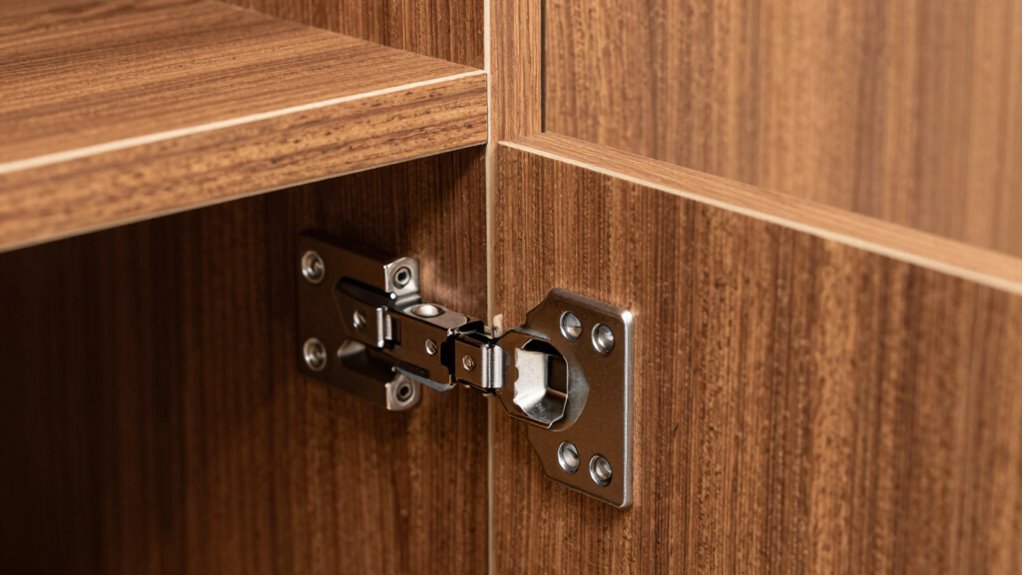
Cabinet hinges can sometimes develop problems that affect the smooth operation and appearance of your doors. When issues arise, hinge repair and hinge adjustment are your go-to solutions. Common problems include doors sagging, misalignment, and squeaking. To fix these, start by inspecting the hinges and tightening loose screws. If the door is sagging or misaligned, adjust the hinge screws to realign it properly. For squeaks, apply a lubricant to the hinge pins. If the problem persists, you might need to replace worn hinges entirely. Remember, proper hinge adjustment can prevent many issues before they start. Regular maintenance and prompt hinge repair keep your cabinet doors functioning smoothly and looking their best. Understanding hinge types can help you choose the best solution for your cabinet. Additionally, being aware of the different hinge styles can aid in selecting the most suitable hinges for your specific cabinetry needs.
Final Tips for Selecting and Installing the Perfect Hinges
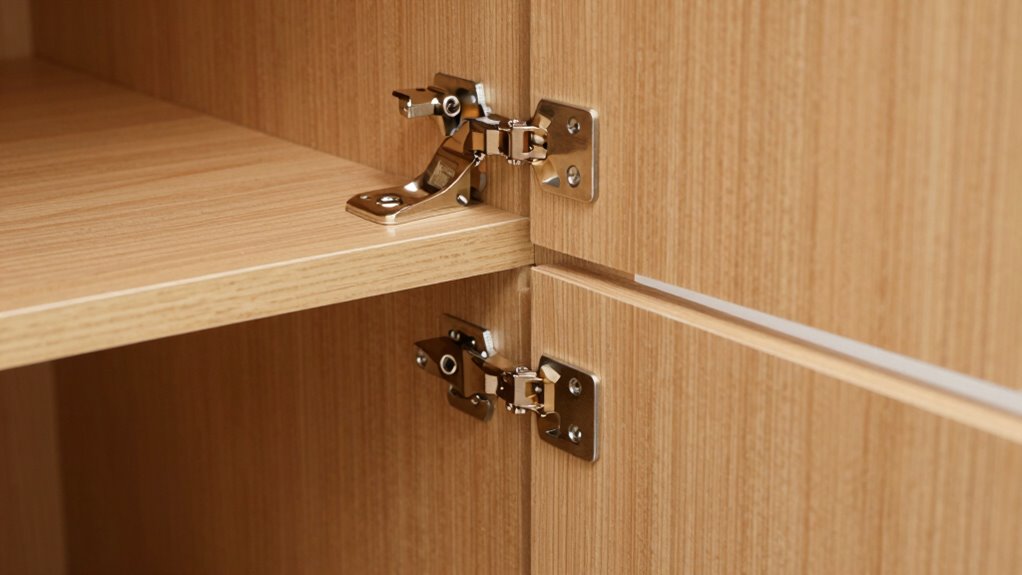
Choosing the right hinges is essential for guaranteeing your cabinet doors operate smoothly and look great. When selecting hinges, consider hinge customization options to match your cabinet style and personal preferences. Proper hinge maintenance, like regular cleaning and lubrication, extends their lifespan and keeps doors functioning smoothly. Before installation, double-check measurements to ensure perfect alignment and avoid gaps or misfits. Use the appropriate tools and follow manufacturer instructions for a secure fit. If your cabinets require special features, explore hinge options that accommodate partial inset or overlay designs. Remember, well-chosen hinges not only enhance aesthetics but also improve durability. Understanding hinge types can help you make informed decisions tailored to your specific cabinet needs. Taking these final tips seriously assures a professional look and reliable performance for years to come. Additionally, familiarizing yourself with supernatural phenomena can inspire creative ideas for customizing hinge styles to match unique or themed cabinet designs.
Frequently Asked Questions
How Do Hinge Types Affect Cabinet Door Durability?
Hinge types critically impact your cabinet door durability. Heavier-duty hinges made from high-quality hinge material, like stainless steel, last longer and support frequent use. Proper hinge maintenance, such as regular cleaning and lubrication, keeps hinges functioning smoothly and prevents premature wear. Choose the right hinge type for your cabinet style, and maintain them well to guarantee your doors stay sturdy, functional, and looking great over time.
Can I Upgrade Hinges Without Removing Cabinet Doors?
Upgrading hinges is like giving your cabinets a fresh coat of armor—you can often do it without removing doors. Just loosen the hinges carefully and swap them out, ensuring you choose hinge materials that match your needs for durability and ease of hinge maintenance. This quick upgrade keeps your cabinets sturdy and smooth, letting you refresh their look without the hassle of a full renovation.
Are There Hinges Suitable for Curved or Irregular Cabinet Doors?
Yes, you can find hinges suitable for curved or irregular cabinet doors. Look for curved door hinges or irregular panel hinges designed specifically for non-standard shapes. These hinges are flexible and adjustable, allowing you to install them smoothly on unique door designs. Make sure to measure carefully and choose hinges that support your door’s shape and weight for a secure, professional fit.
What Tools Are Needed to Install Different Hinge Types?
Installing different hinge types is like assembling a puzzle—you’ll need a drill, screwdriver, chisel, and possibly a hinge jig for precision. For hinge maintenance and ensuring durability, choose hinges with sturdy materials like steel or brass. I once struggled with inset hinges until I realized a hinge jig made the job easier. These tools help you align hinges perfectly, ensuring smooth operation and long-lasting cabinet doors.
How Do Hinge Choices Impact Cabinet Door Alignment and Sag?
Your hinge choice directly impacts door alignment and sag over time. Proper hinge adjustment ensures doors hang evenly and stay aligned, preventing sagging. Overlay hinges, for example, allow for easier adjustments, maintaining a smooth, consistent gap. Inset hinges require precise alignment from the start, as small adjustments are needed for perfect door positioning. By selecting the right hinges and making regular hinge adjustments, you keep your cabinets looking neat and functioning well.
Conclusion
Choosing the right cabinet hinges can transform your space from ordinary to exceptional. While overlay hinges offer easy access, inset hinges give a sleek, flush look—like a hidden gem. Partial inset hinges strike a balance, blending style with function. By understanding these differences, you’ll enjoy a kitchen that’s not just beautiful but perfectly tailored to your needs. After all, the right hinges don’t just hold your cabinets—they hold your space’s personality.