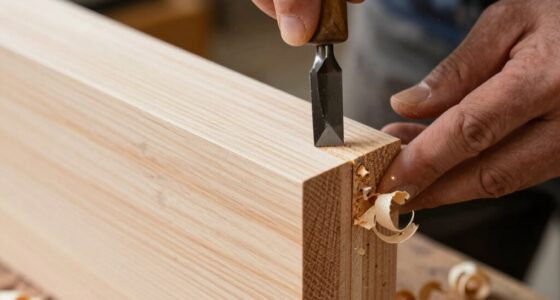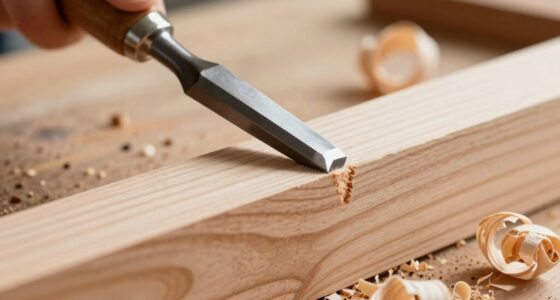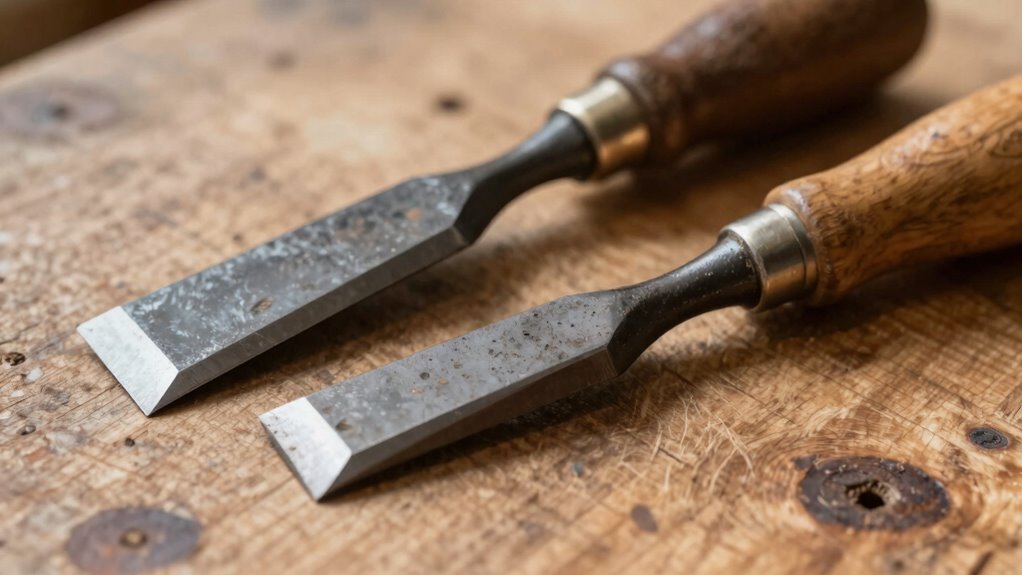
Mortise chisels are built for heavy-duty tasks like creating deep, narrow mortises, with thick blades and sturdy handles designed to withstand forceful impacts. Bench chisels, on the other hand, excel at fine, detailed work such as trimming and cleanup, with sharper edges and more delicate handles for precise control. The main difference in use is that mortise chisels handle tough, demanding cuts while bench chisels focus on finesse. Keep exploring to learn how to choose and use each effectively.
Key Takeaways
- Mortise chisels are designed for heavy-duty, deep cuts and work with hardwood, while bench chisels are suited for fine, detailed carving tasks.
- Mortise chisels have thicker blades and sturdier handles to withstand impact, unlike the thinner, sharper bench chisels for precision work.
- Use mortise chisels with controlled, forceful strikes for mortising, whereas bench chisels require delicate, fluid motions for trimming and finish work.
- Proper grip and stance differ: mortise chisels need a firm grip for force, while bench chisels benefit from lighter, more controlled handling.
- Maintenance and sharpening techniques vary slightly, with mortise chisels needing durability-focused care, and bench chisels requiring fine honing for precise edges.

Narex 863600Chisel / Mortise Chisel Set – 4/6 / 10/12 mm – for Mortises
Robust tool used for chopping out joints as well as cutting mortises
As an affiliate, we earn on qualifying purchases.
As an affiliate, we earn on qualifying purchases.
What’s the Difference Between Mortise and Bench Chisels?
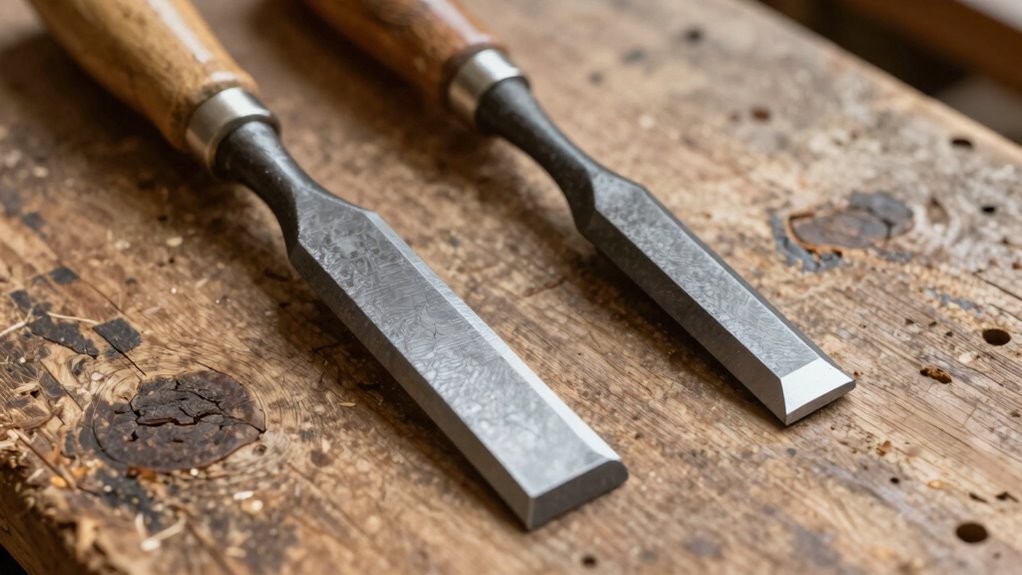
Have you ever wondered how mortise and bench chisels differ? The key lies in their design and purpose. Mortise chisels are built for heavy-duty work, making precise mortise cuts, so they require careful attention to woodworking safety. Their thick blades and sturdy handles help withstand significant force, allowing you to chisel deeply without risking damage or injury. Bench chisels, on the other hand, are more versatile for general carpentry and delicate tasks. They have thinner blades and finer edges, ideal for detailed chiseling techniques. When switching between these chisels, always prioritize safety by securing your workpiece and using proper technique. Understanding these differences guarantees you select the right tool for each task, enhancing both safety and efficiency in your woodworking projects. Proper tool selection is essential for achieving optimal results and maintaining safety standards.

Narex 6 pc Set 6 mm (1/4), 10 (3/8), 12 (1/2), 16 (5/8), 20 (13/16), 26 (1-1/16) Woodworking Chisels in Wooden Presentation Box 853053
6 piece set comes on a wooden presentation box
As an affiliate, we earn on qualifying purchases.
As an affiliate, we earn on qualifying purchases.
Why Mortise Chisels Are Built for Heavy-Duty Joinery
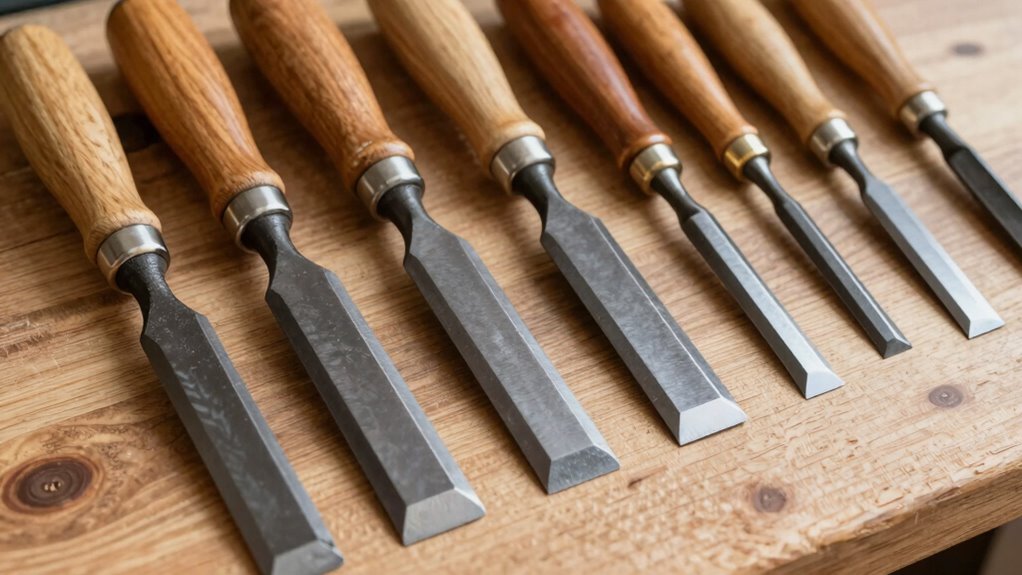
Mortise chisels are designed to handle tough, heavy-duty joinery tasks with ease. Their blades are built for strength, resisting bending or breaking under pressure. Plus, their handles are robust, giving you the control needed for precise, forceful work. These durable tools are essential for maintaining quality in demanding woodworking projects.
Heavy-Duty Blade Strength
Because heavy-duty joinery demands exceptional strength, mortise chisels are specifically designed with robust blades that can withstand intense force. Their blade durability is essential, as it ensures they won’t chip or bend under heavy impacts. These blades are often made from high-quality steel, providing a sharp edge that maintains its integrity even after repeated heavy strikes. The thick, solid construction allows you to apply significant force without risking blades breaking or dulling quickly. While handle ergonomics doesn’t directly influence blade strength, a well-designed handle helps you maintain control and exert force safely, protecting the blade from undue stress. Additionally, Vetted construction ensures these chisels can handle rigorous tasks over time without losing effectiveness. Overall, the combination of reinforced blades and ergonomic handles makes mortise chisels ideal for demanding, heavy-duty joinery tasks.
Robust Handle Design
A robust handle design is essential for mortise chisels, especially when tackling heavy-duty joinery tasks. You need handle comfort to ensure you can work for extended periods without fatigue, and a sturdy grip helps maintain control during tough cuts. The handle material must be durable enough to withstand repeated impacts and heavy force, preventing cracks or loosening over time. Typically, mortise chisels feature thick, solid handles made from tough woods or reinforced composites, providing both strength and stability. This design allows you to apply significant force safely and confidently. When working on large, demanding projects, a well-built handle ensures your tool remains reliable, reducing the risk of accidents and making your heavy-duty joinery tasks more efficient. Additionally, Free Floating handle designs can help reduce stress on the hand and wrist during extended use.
Narex 863600Chisel / Mortise Chisel Set – 4/6 / 10/12 mm – for Mortises
Robust tool used for chopping out joints as well as cutting mortises
As an affiliate, we earn on qualifying purchases.
As an affiliate, we earn on qualifying purchases.
What Makes Bench Chisels Perfect for Fine Carving

Bench chisels are ideal for fine carving because of their precise craftsmanship and delicate design. Their sharp, finely honed edges allow for intricate detail work, making precise cuts easier. You’ll find that sharpening techniques tailored for bench chisels help maintain their edge, ensuring consistent performance. Proper sharpening not only enhances precision but also prolongs the chisel’s lifespan. Handle ergonomics play a vital role, as comfortable grips give you better control and reduce fatigue during delicate carving tasks. The balanced weight and thoughtfully designed handles let you work with finesse, enabling detailed and accurate cuts. These features combined make bench chisels the perfect choice for artists and woodworkers aiming for high precision and refined results in their carvings. Additionally, tool maintenance practices are essential to keep bench chisels performing at their best over time.

7 Pack Precision Mini Chisel Carving Tools for Detailed Small Crafts Such as Wood Carving, Wax Modeling, Soap Carving, and More – One Piece Construction Stainelss Steel
Set of 7 Pieces: Precision Miniature Chisel for Intricate Detailed Carving of Wood, Wax, Plastic, Soap, Leather, and…
As an affiliate, we earn on qualifying purchases.
As an affiliate, we earn on qualifying purchases.
How to Choose the Right Chisel Size and Edge for Your Projects
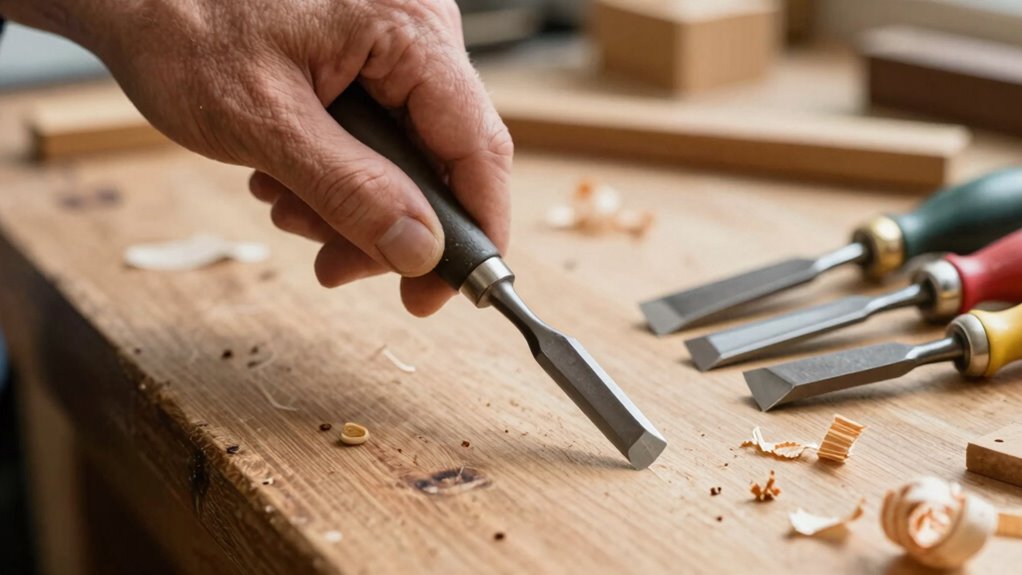
Choosing the right chisel size is essential for precise work and efficient cutting. You also need to select the best edge type for your material and project needs. Let’s explore how to match these factors to get the best results. Understanding joinery techniques and how different chisel styles perform can significantly improve your woodworking accuracy and quality.
Choosing Correct Chisel Size
Selecting the right chisel size is essential for efficient and precise woodworking, but it can be confusing with so many options available. To choose the correct size, consider the scope of your project—smaller chisels are ideal for fine detail and joinery, while larger ones handle heavy removal and mortising. Proper chisel maintenance ensures your tools stay sharp and safe to use, reducing the risk of accidents. Using the appropriate size also promotes woodworking safety, as a well-fitted chisel provides better control and reduces slips. Always match your chisel size to the task at hand, avoiding the temptation to use a too-large or too-small tool. With the right fit, your work becomes more accurate, and your tools last longer. Understanding tool ergonomics can also help improve control and reduce fatigue during prolonged projects.
Selecting Optimal Edge Type
The type of edge on your chisel greatly influences the quality and efficiency of your work. A durable edge guarantees it maintains sharpness through repeated blade sharpening, reducing downtime. For fine detail work, a beveled edge provides precision, but it may require more frequent sharpening due to its thinner profile. A straight or chisel ground edge offers increased edge durability, making it suitable for heavy-duty tasks. Consider the material you’re working with—hardwoods demand a tougher edge, while softer woods allow for easier sharpening. When selecting the ideal edge type, think about your project’s complexity and how often you’ll need to sharpen. Choosing the right edge balances durability and sharpness, ensuring smoother cuts and longer-lasting tools. Additionally, understanding proper tool maintenance techniques can extend the lifespan of your chisels and keep them performing at their best.
How to Handle and Grip Your Chisels for Best Results
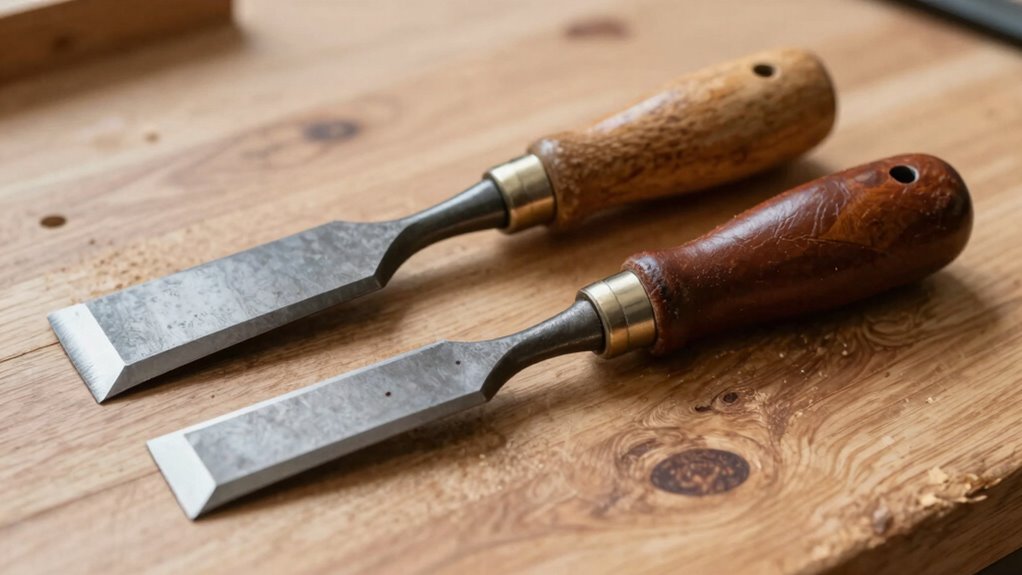
To achieve precise and controlled cuts, how you handle and grip your chisels makes all the difference. An ergonomic grip guarantees comfort and reduces fatigue during work. Focus on proper hand positioning: 1. Keep your dominant hand near the handle’s end for leverage. 2. Use your other hand to steady and guide, maintaining control. 3. Grip firmly but avoid squeezing too tight to prevent fatigue. 4. Maintain a natural, relaxed wrist to improve precision. Using the right hand positioning allows for smooth, accurate cuts, especially when working on detailed mortises or clean bench chisel work. An ergonomic grip minimizes strain, enhances stability, and boosts your overall control. Practicing proper technique helps develop confidence and achieve cleaner, more professional results with your chisels.
How to Maintain and Sharpen Your Mortise and Bench Chisels
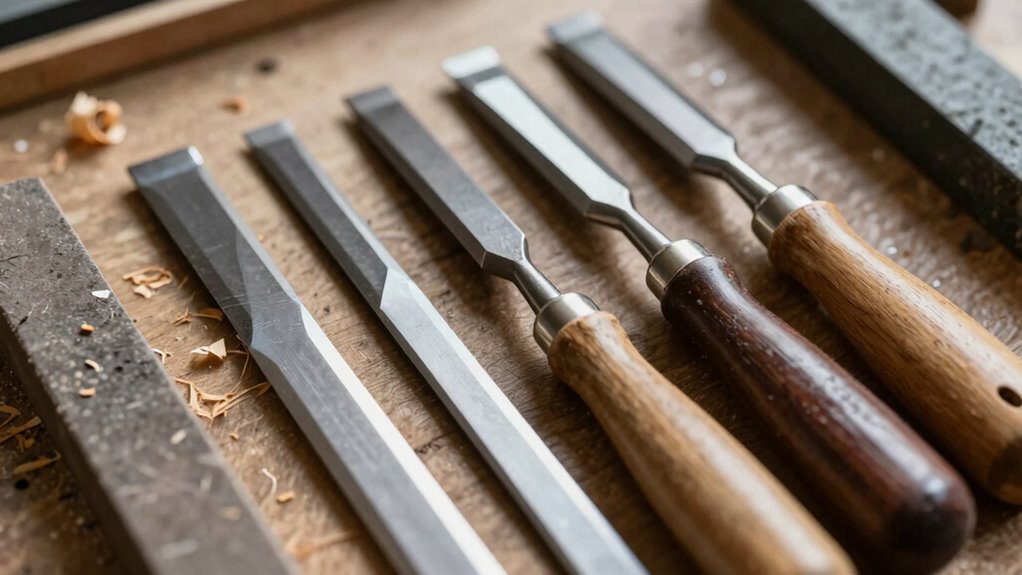
Maintaining and sharpening your mortise and bench chisels is essential for guaranteeing clean, precise cuts and prolonging their lifespan. Regular honing keeps the edges sharp, making your woodworking safer and more efficient. Use a sharpening stone or honing guide to keep the bevel consistent, and always work on a stable surface. Proper tool maintenance tips include cleaning rust off with a wire brush and applying a light coat of oil to prevent corrosion. Remember, dull chisels are unsafe because they require more force and can slip. Here’s a quick reference:
| Maintenance Step | Purpose |
|---|---|
| Honing on a sharpening stone | Sharpens the edge |
| Cleaning rust | Prevents corrosion |
| Inspecting for damage | Ensures safe use |
| Oil application | Protects metal from rust |
Prioritize woodworking safety by keeping tools sharp and well-maintained. Regular inspections can help you identify tool damage early, ensuring continued safe operation.
Common Mistakes When Using Mortise and Bench Chisels: and How to Avoid Them

One common mistake is choosing the wrong tool for the job, which can lead to poor results. Using the correct chisel type and size is essential for efficiency and accuracy. Additionally, applying improper techniques can damage the tool or your project, so it’s important to use proper form and methods.
Improper Tool Selection
Choosing the wrong chisel for a specific task can lead to poor results and even damage your tools or workpiece. Selecting an inappropriate chisel affects tool durability and compromises woodworking safety. To avoid this, consider these points:
- Using a small bench chisel for heavy mortising can cause chisel breakage.
- Relying on a large mortise chisel for delicate carving may damage the tool and workpiece.
- Ignoring the blade width that matches your project’s precision needs reduces control.
- Choosing a chisel without proper sharpening can compromise safety and cut quality.
Proper tool selection ensures your chisels last longer and your work remains safe. Always match the chisel type and size to the task to prevent accidents, preserve tool integrity, and improve results.
Incorrect Technique Use
Using proper technique is essential to get the best results and guarantee safety when working with mortise and bench chisels. One common mistake is neglecting your correct stance and proper posture, which can lead to loss of control or injury. Keep your feet shoulder-width apart, and stand firmly to maintain balance. Hold the chisel with a firm grip, keeping your wrists straight and aligned with your forearms. Avoid leaning or hunching over, which can cause fatigue and reduce precision. Always strike with controlled, deliberate taps rather than forceful blows. Proper technique also means focusing on the angle and direction of your cuts. By maintaining a correct stance and proper posture, you improve accuracy and reduce the risk of slips or accidents.
When Should You Use a Mortise Chisel Versus a Bench Chisel?
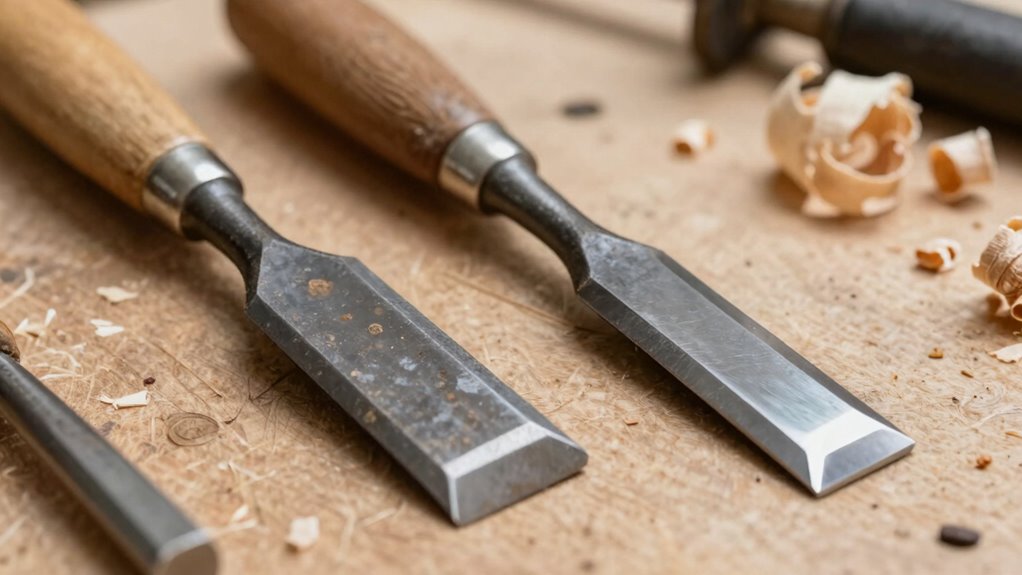
Mortise chisels excel when you need to remove large amounts of material or work on deep, narrow mortises, thanks to their sturdy construction and sharp, thick blades. Use them when woodworking precision matters in heavy-duty tasks requiring tool durability. Consider these situations:
- Creating deep, precise mortises for joinery
- Removing stubborn, compacted wood in tight spaces
- Working on projects with thick or hardwood materials
- When you need to sustain repeated heavy strikes without damage
In these cases, a mortise chisel’s robust design helps you maintain accuracy and ensures the tool withstands tough work. Reserve bench chisels for finer, lighter tasks like clean-up or trimming. Knowing when to choose each ensures ideal results and longevity.
Adapting Your Technique for Different Chisels: Tips and Tricks
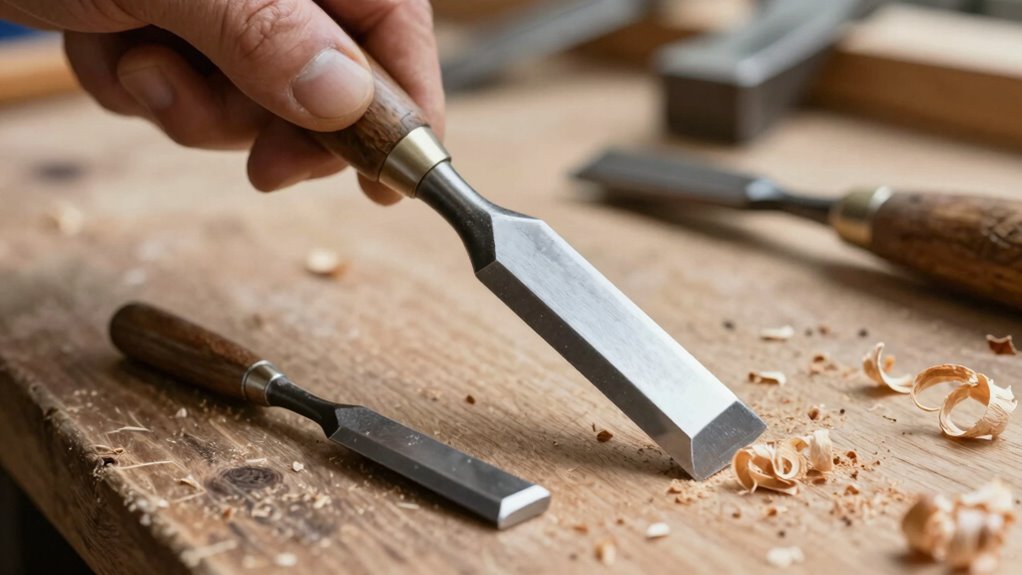
Adapting your technique to different chisels can considerably improve your woodworking results and extend the lifespan of your tools. Focus on tool ergonomics by adjusting your grip and stance based on each chisel’s size and weight. For mortise chisels, use controlled, precise strikes, while bench chisels benefit from a more fluid, versatile approach. Sharpen your chisels regularly, tailoring sharpening techniques to their unique bevels and edge angles. Use the table below to compare key considerations:
| Chisel Type | Technique Focus | Ergonomics Tips |
|---|---|---|
| Mortise Chisel | Deep cuts, controlled force | Use a firm grip, stabilize with your body |
| Bench Chisel | Versatile, general-purpose cuts | Adjust grip for leverage and comfort |
| Sharpening | Maintain edge precision | Use appropriate stones, consistent angles |
| Handling | Minimize fatigue | Switch grips and positions as needed |
How to Seamlessly Incorporate Both Chisels Into Your Woodworking Workflow
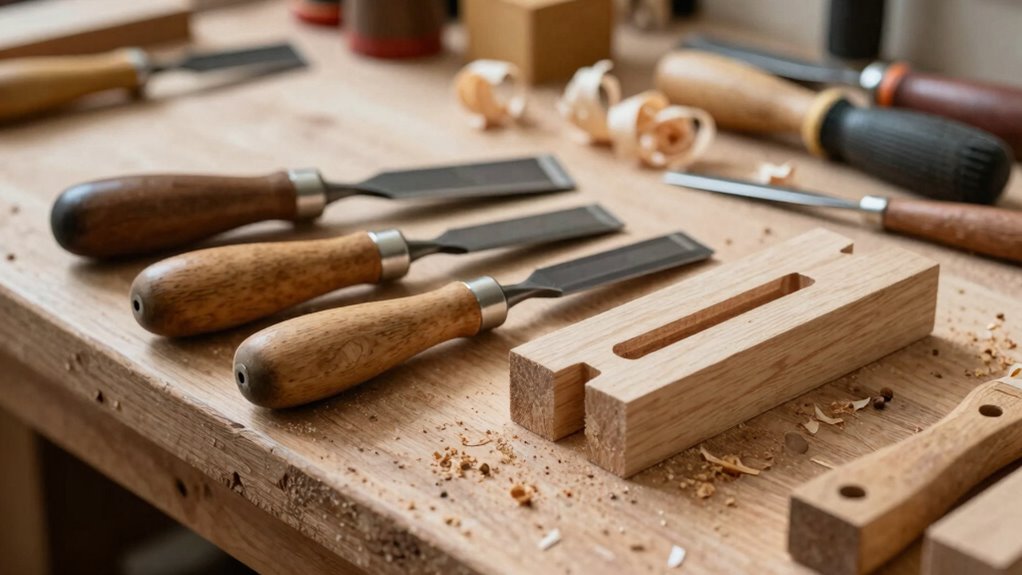
Integrating both mortise and bench chisels into your woodworking workflow can considerably enhance efficiency and precision. To do this seamlessly, consider these steps:
- Use ergonomic grips on each chisel to reduce fatigue during extended work sessions.
- Dedicate specific tool storage spaces for each chisel type, keeping them organized and accessible.
- Switch between chisels smoothly by developing a consistent grip and technique for each, minimizing downtime.
- Keep your chisels sharp and well-maintained to ensure clean cuts, regardless of which chisel you’re using.
Frequently Asked Questions
Can Mortise and Bench Chisels Be Used Interchangeably?
You can’t really use mortise and bench chisels interchangeably because their blade geometry and handle ergonomics differ. Mortise chisels are designed with a thicker blade and a sturdy handle to handle heavy prying, making them ideal for mortising work. Bench chisels have a thinner blade for fine joinery and more comfortable handles for detailed carving. Using them interchangeably might compromise your work quality and safety.
What Safety Precautions Are Essential When Using Both Chisel Types?
When using mortise and bench chisels, you should always wear protective gear like safety glasses to shield your eyes from chips. Keep your workspace safe by securing your workpiece firmly and maintaining a clean area free of debris. Use proper technique, applying controlled pressure, and focus on your task. Always inspect your chisels for damage before use, and store them safely after to prevent accidents.
How Do Different Handle Designs Impact Chisel Control?
You grip the handle firmly, feeling its ergonomic design mold to your hand, offering unmatched grip stability. Different handle styles—smooth, textured, or contoured—dictate your control, sharpening your precision with every cut. As you maneuver, the handle’s shape and material influence your confidence, making each strike feel natural. This subtle difference in handle design transforms your chiseling experience, ensuring you wield power and accuracy with every deliberate motion.
Are There Specific Wood Types Better Suited for Each Chisel?
You’ll find that hardwoods like oak or maple are better suited for mortise chisels because their dense wood grain holds up well against the heavy strikes needed. For bench chisels, softer woods like pine or cedar work fine, as the chisel material and sharper edges easily carve through their lighter wood grain. Choosing the right wood type enhances control and prolongs the life of your chisel, making your work smoother.
What Are the Signs Indicating a Chisel Needs Replacement or Sharpening?
If your chisel has a dull edge or a chipped blade, it’s time to sharpen or replace it. You’ll notice it struggles to make clean cuts, requiring more force, and may cause uneven or rough surfaces. A dull or chipped chisel also risks damaging your workpiece or slipping during use. Regularly inspect your tools, and don’t delay sharpening or replacing to maintain precision and safety in your woodworking projects.
Conclusion
Choosing between mortise and bench chisels is like selecting the right tool for a specific adventure—you’ll get better results and enjoy the process more. By understanding their differences and knowing when to use each, you’ll craft stronger joints and finer details with confidence. With practice, you’ll switch between them as smoothly as a skilled dancer, making your woodworking projects both more precise and rewarding. Happy chiseling!