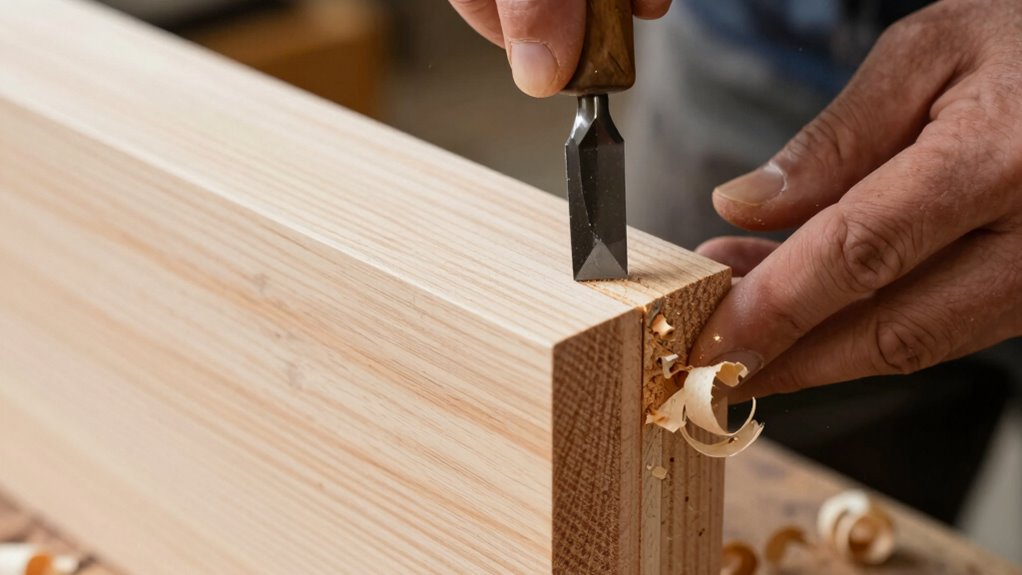
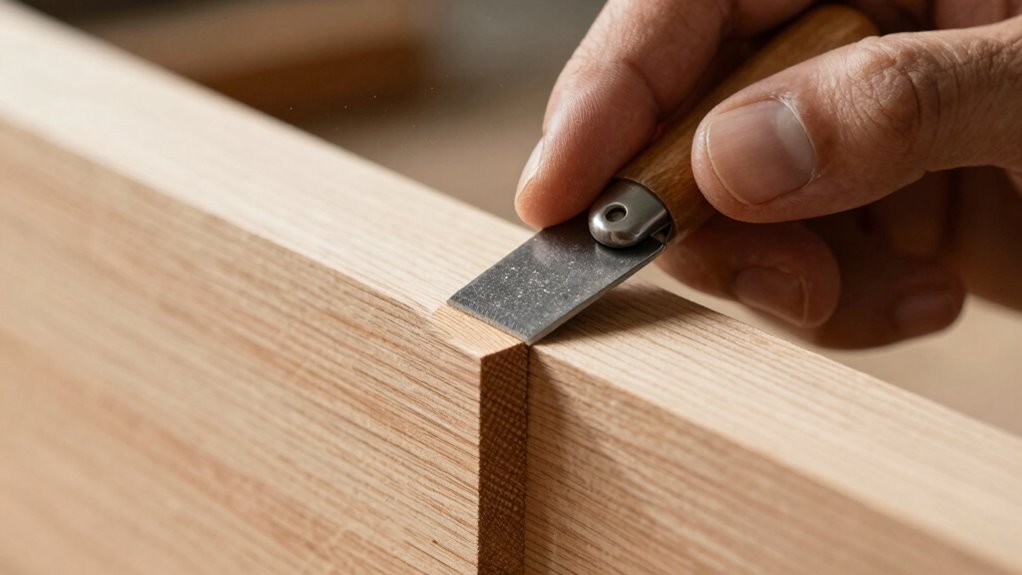
Crafting clean inside corners starts with a precise stop-cut and chisel technique that guarantees a perfect fit—discover how to master this essential skill.
Browsing Category
Hand Tool Techniques
24 posts
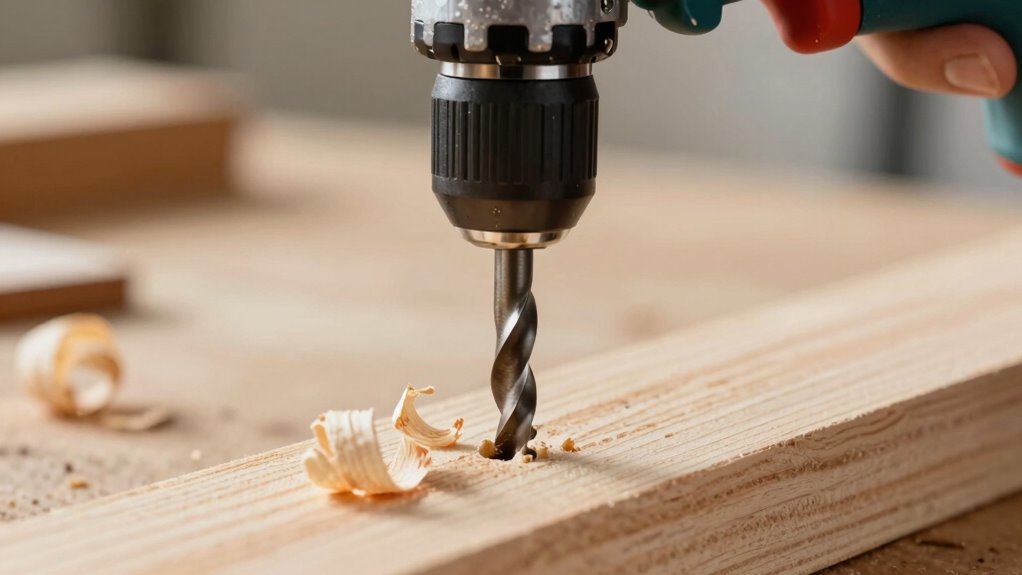
Hand Drills for Woodworking: The Speed Trick for Clean Holes
I’ll show you the essential speed trick for hand drills that guarantees clean, precise woodworking holes every time—keep reading to learn more.
Auger Bits Explained: The Feed Screw Detail That Matters
Keen to master your auger bits? Discover the crucial role of the feed screw and how it can transform your drilling results.
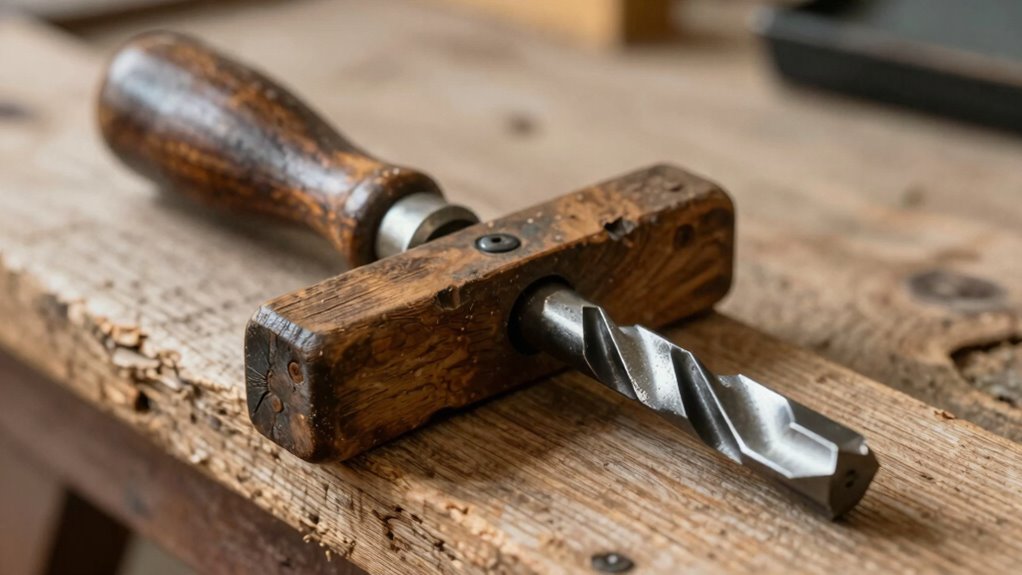
Brace and Bit Basics: Old‑School Drilling With Modern Accuracy
Navigate the fundamentals of brace and bit drilling to unlock precise, traditional craftsmanship—discover how to master this timeless skill today.
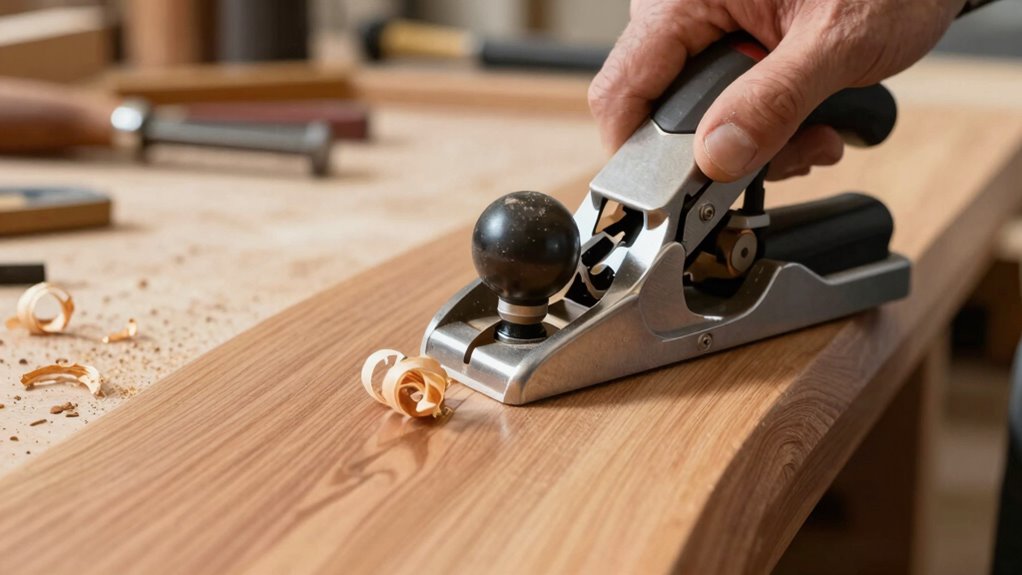
Rounding Edges Cleanly: Why a Plane Beats Sandpaper (Sometimes)
Fascinatingly, using a plane to round edges often results in a cleaner, smoother finish than sandpaper—so, find out why it’s sometimes the better choice.
Chamfers by Hand: The Fast Method for Crisp Edges
Aiming for quick, crisp chamfers by hand? Discover expert tips to master the fast, precise technique that will elevate your woodworking projects.
Flush‑Cutting Dowels: How to Avoid Tear‑Out on Finished Surfaces
By mastering flush-cutting dowels without tear-out, you can achieve flawless finishes—discover the essential techniques to ensure perfect results every time.
Coping Saw Mastery: The Turn Technique That Prevents Binding
Aiming to perfect your coping saw skills? Discover the turn technique that prevents binding and transforms your woodworking projects.
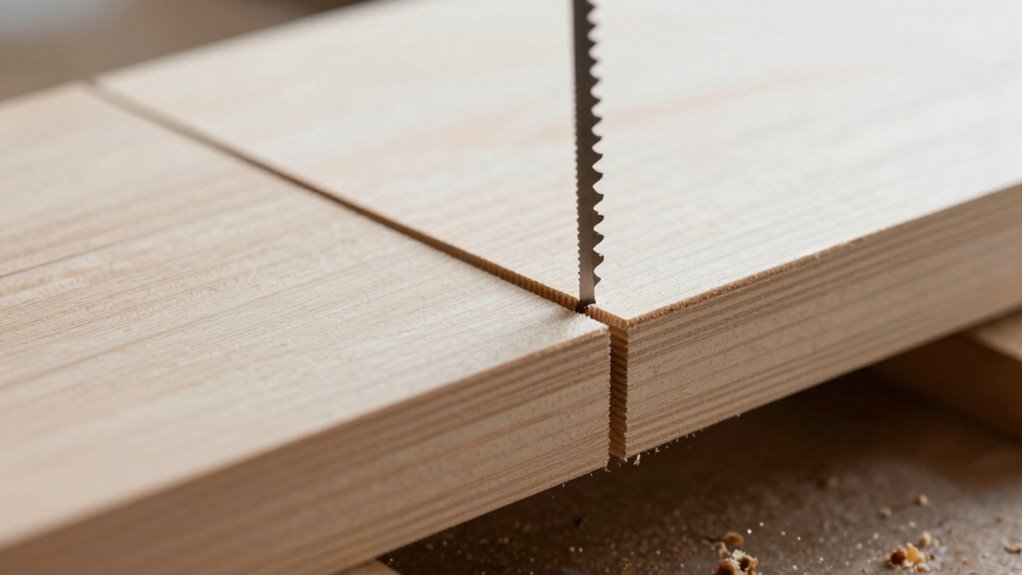
Saw Kerf Control: How to Stay on the Line Without “Correcting”
Understanding saw kerf control techniques helps you stay on the line effortlessly, ensuring precise cuts with minimal corrections; discover how to master this skill now.
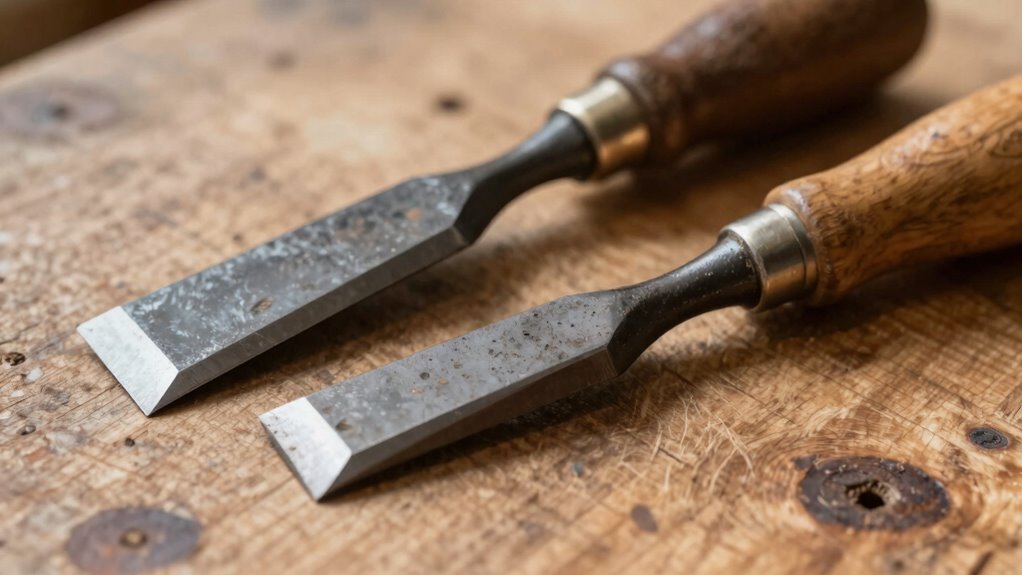
Mortise Chisels vs Bench Chisels: What Changes in Use
Noticing the differences between mortise and bench chisels is essential for optimal woodworking, but understanding their specific uses can be more nuanced than you think.