
TL;DR

Get business pricing on tools and workshop supplies
- Business-only prices and quantity discounts
- Tax-exempt purchasing
- Multiple users, one account, clear invoices
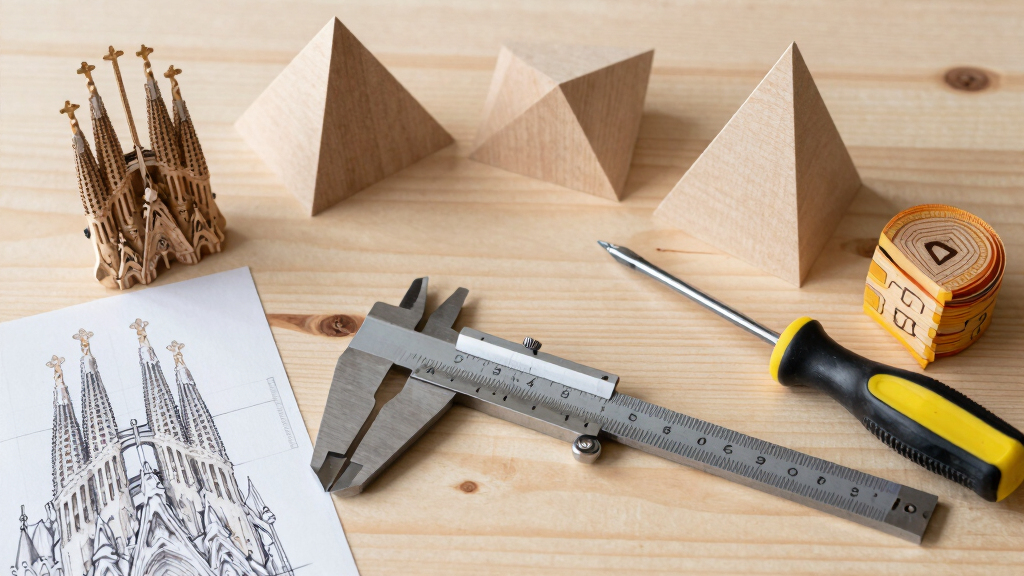
Researchers have uncovered new mathematical principles underlying the design of Barcelona’s Sagrada Familia. These findings explain the church’s complex geometry and influence ongoing construction. The discovery highlights Gaudí’s innovative use of mathematics in architecture.
Researchers have revealed new mathematical principles that underpin the design of Barcelona’s Sagrada Familia, offering fresh insights into the architect Antoni Gaudí’s innovative use of geometry. This discovery enhances understanding of the church’s complex structure and may influence its ongoing construction, making it a significant development in architectural history and engineering.
The research, conducted by a team of mathematicians and architects, has identified a set of hidden mathematical patterns within Gaudí’s design schematics. These patterns involve advanced geometric concepts, including fractal-like structures and recursive proportions that Gaudí used to create the church’s distinctive shapes. The findings suggest that Gaudí employed a deliberate mathematical framework, which was previously unrecognized, to achieve both aesthetic harmony and structural stability.
According to Dr. Laura Martinez, lead researcher from the University of Barcelona, the team analyzed historical sketches, models, and recent scans of the ongoing construction. They discovered that Gaudí’s work incorporates a series of geometric ratios and fractal patterns that repeat at different scales, allowing for precise scaling and structural integrity. This approach aligns with Gaudí’s known fascination with natural forms and mathematical harmony.
The new insights could impact current construction practices, as architects and engineers aim to preserve Gaudí’s original vision while ensuring safety and durability. The research also opens avenues for applying similar mathematical principles to other architectural projects, particularly those involving complex organic shapes.
Implications for Architecture and Preservation
This discovery underscores the importance of mathematics in architectural innovation and highlights Gaudí’s unique integration of geometry into his designs. It provides a deeper understanding of how the Sagrada Familia’s complex forms can be both aesthetically pleasing and structurally sound. For preservationists and builders, these insights offer new methods to maintain and complete the basilica according to Gaudí’s original intent, potentially influencing future restoration efforts and construction techniques.
architectural geometric drawing tools
As an affiliate, we earn on qualifying purchases.
As an affiliate, we earn on qualifying purchases.
Historical and Architectural Context of Gaudí’s Work
Antoni Gaudí began working on the Sagrada Familia in 1883, and it remains unfinished despite being over a century in development. Known for his innovative use of organic forms and complex geometries, Gaudí integrated mathematical concepts into his designs, often inspired by natural patterns. Previous studies focused on the organic shapes and structural innovations, but the recent research reveals a deeper mathematical framework that underpins his work. This aligns with Gaudí’s broader fascination with the harmony between nature, mathematics, and architecture.
“Our findings suggest that Gaudí employed a sophisticated mathematical language, including fractal-like patterns, which contributed to both the beauty and stability of the Sagrada Familia.”
— Dr. Laura Martinez, lead researcher
As an affiliate, we earn on qualifying purchases.
Unconfirmed Aspects of Gaudí’s Mathematical Approach
While the recent research uncovers promising mathematical patterns, it is not yet clear whether Gaudí explicitly intended these patterns or if they emerged through analysis. The extent to which Gaudí used formal mathematical theories versus intuitive geometric exploration remains under investigation. Additionally, some scholars question whether these patterns were consciously employed or are coincidental alignments in the design.
As an affiliate, we earn on qualifying purchases.
Future Research and Practical Applications in Construction
Researchers plan to further analyze Gaudí’s sketches and models to determine the deliberate nature of these mathematical patterns. Architects and engineers involved in the Sagrada Familia’s ongoing construction will explore how to incorporate these findings into structural reinforcement and design fidelity. The team aims to publish detailed methodologies that could inform similar projects involving complex geometries.
structural engineering tools for architects
As an affiliate, we earn on qualifying purchases.
As an affiliate, we earn on qualifying purchases.
Key Questions
How do these mathematical patterns affect the construction of the Sagrada Familia?
The patterns provide insights into Gaudí’s geometric approach, which can guide structural reinforcement and help preserve his original design intentions.
Were these mathematical principles known before this research?
No, the recent analysis uncovered patterns that were previously unrecognized, although Gaudí’s fascination with geometry was well documented.
Could these findings influence other architectural projects?
Yes, understanding Gaudí’s use of fractal and recursive patterns could inspire new approaches to designing and constructing complex organic shapes in architecture.
Is this discovery confirmed or still under investigation?
The core findings are confirmed through recent analysis, but the intentionality behind Gaudí’s use of these patterns remains under study.
Source: hn
Halloween Picks
halloween
As an affiliate, we earn on qualifying purchases.