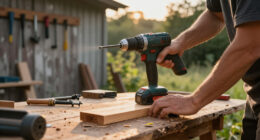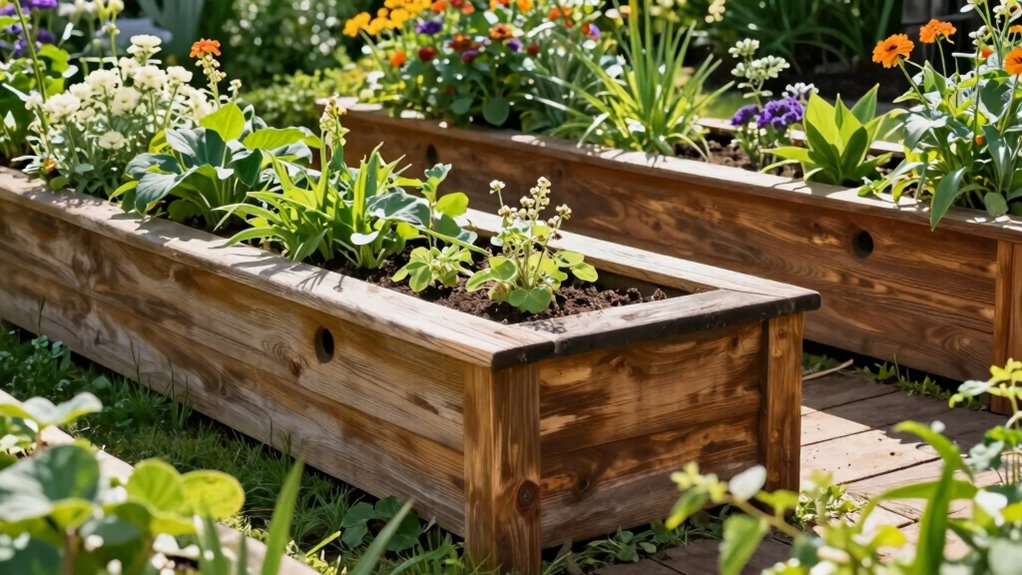

When you build raised garden beds, it’s essential to choose safe wood. Opt for untreated varieties like cedar or redwood, which resist rot. To guarantee proper drainage, elevate your beds and incorporate gravel or drainage holes. This prevents waterlogging and encourages healthy roots. Also, consider how the materials you choose affect your garden’s longevity. Want to know how to enhance your soil mix and plant selection for peak success? There’s more to explore!

Get business pricing on tools and workshop supplies
- Business-only prices and quantity discounts
- Tax-exempt purchasing
- Multiple users, one account, clear invoices
Key Takeaways
- Ensure pressure-treated wood is safe for food production to avoid chemical leaching into soil and crops.
- Cedar and redwood are naturally rot-resistant and pest-repelling options for raised beds.
- Assess drainage by elevating beds and using gravel or drainage holes to prevent waterlogging.
- Consider soil type to implement effective drainage solutions for a healthy garden environment.
- Use durable materials to enhance garden longevity and minimize maintenance needs over time.
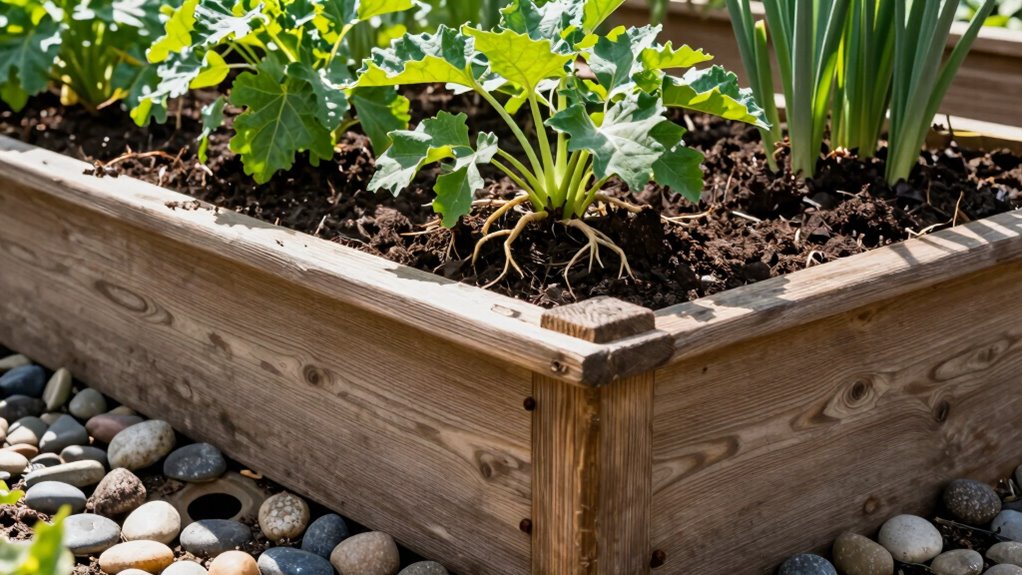
Choosing the right soil mix involves combining organic matter, compost, and your local native soil. This blend not only provides essential nutrients but also retains moisture, helping your plants thrive. It’s imperative to test your soil type before planting. You can do this with simple home testing kits or by observing how water drains in your current garden. Once you know your soil situation, you can make informed decisions about what to plant. If you’ve got sandy soil, for example, you might want to take into account drought-resistant plants, while heavier soils could support leafy greens that thrive in moisture. Additionally, understanding the soil type helps you select appropriate amendments to improve its structure and fertility. Using appropriate soil amendments can further enhance your garden’s productivity and health. Proper soil preparation is also crucial in preventing issues like compaction or poor drainage, which can hinder plant growth. Incorporating amendments that improve soil aeration can be especially beneficial in preventing compaction over time. Choosing the right materials for your beds can also affect how well your garden withstands weather and pests, contributing to its overall longevity.
Choosing the right soil mix is essential for thriving plants; test your soil to make informed planting decisions.
Plant selection is another critical aspect of raised bed gardening. You’ll want to choose plants that are well suited to your specific soil conditions, climate, and available sunlight. Companion planting can also be beneficial; pairing plants that enhance each other’s growth can lead to better yields. Think about what you enjoy eating and how much space you have. If you love tomatoes, think about planting them alongside basil to improve flavor and deter pests.
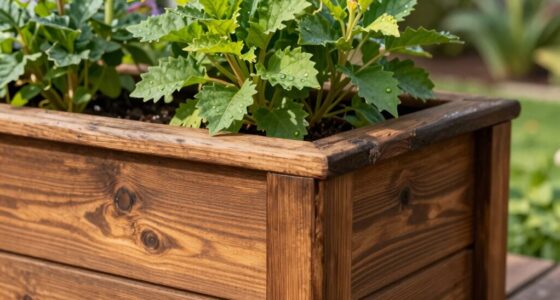
The materials you use for your raised garden beds can impact their longevity and safety. Pressure-treated wood, for example, has been a common choice, but you should verify it’s safe for food production. Cedar and redwood are excellent options, as they’re naturally resistant to rot and pests. If you’re concerned about chemicals leaching into your soil, you might opt for alternatives like composite materials or stone.
Finally, proper drainage is fundamental to prevent waterlogging and root diseases. Elevating your beds slightly off the ground can promote airflow and drainage. Using drainage solutions such as gravel or installing drainage holes can further improve water flow. By carefully evaluating soil types, plant selection, and materials, you can create a thriving garden that lasts for years to come. Whether you’re a seasoned gardener or just starting, raised garden beds can enhance both your gardening skills and your harvest.
As an affiliate, we earn on qualifying purchases.
Frequently Asked Questions
Can I Use Pressure-Treated Wood for My Raised Garden Beds?
Yes, you can use pressure-treated wood for your raised garden beds, but it’s essential to choose the right wood treatment options. Many modern pressure-treated woods use safer chemicals that pose less risk to plants. Alternatively, consider untreated cedar or redwood, which are naturally resistant to decay. Whatever material you select, make sure it’s durable and suitable for your garden’s needs, so your plants thrive without any harmful effects from the wood.
How Deep Should I Make My Raised Garden Bed?
You should make your raised garden bed at least 12 to 18 inches deep. This depth allows for good soil composition, promoting healthy root growth. When deciding on the location, consider sun exposure and drainage to guarantee your plants thrive. A deeper bed can also help with moisture retention, benefiting your garden in drier months. Overall, think about your plants’ needs and the conditions of your chosen spot.
What Plants Grow Best in Raised Garden Beds?
“You reap what you sow.” In raised garden beds, you’ll find that plants like tomatoes, peppers, and leafy greens thrive best. Pairing these with companions—like basil for tomatoes—enhances soil health and boosts growth. Consider rotating your crops and incorporating herbs to keep pests at bay. By focusing on companion planting, you not only optimize your space but also create a vibrant, productive garden that flourishes year after year.
How Often Should I Water My Raised Garden Beds?
You should water your raised garden beds about once a week, but this can vary based on the season. During hot, dry months, you might need to water more frequently to maintain proper water retention. Check the soil’s moisture by sticking your finger in; if it’s dry an inch down, it’s time to water. In cooler seasons, you can reduce watering, keeping an eye on rainfall and adjusting as needed.
Can I Use Old Pallets for My Raised Garden Beds?
You can definitely use old pallets for your raised garden beds! In fact, about 60% of gardeners are opting for recycled materials like pallets, which not only saves money but also promotes sustainability. Just make sure the pallet wood safety is checked—avoid those treated with harmful chemicals. Using pallets can create unique, rustic designs and provide excellent drainage, offering great pallet garden benefits. So, get creative and start building your eco-friendly garden!
As an affiliate, we earn on qualifying purchases.
Conclusion
To sum up, choosing the right materials for your raised garden beds is key. By understanding wood safety, ensuring proper drainage, and considering longevity, you can create a thriving garden that’ll stand the test of time—kind of like that trusty old flip phone you can’t bear to part with! So, get your hands dirty, make smart choices, and enjoy the fruits of your labor in a garden that flourishes season after season. Happy gardening!
untreated wood for vegetable garden beds
As an affiliate, we earn on qualifying purchases.
As an affiliate, we earn on qualifying purchases.
As an affiliate, we earn on qualifying purchases.
Fall yard work Picks
leaf blowers
As an affiliate, we earn on qualifying purchases.