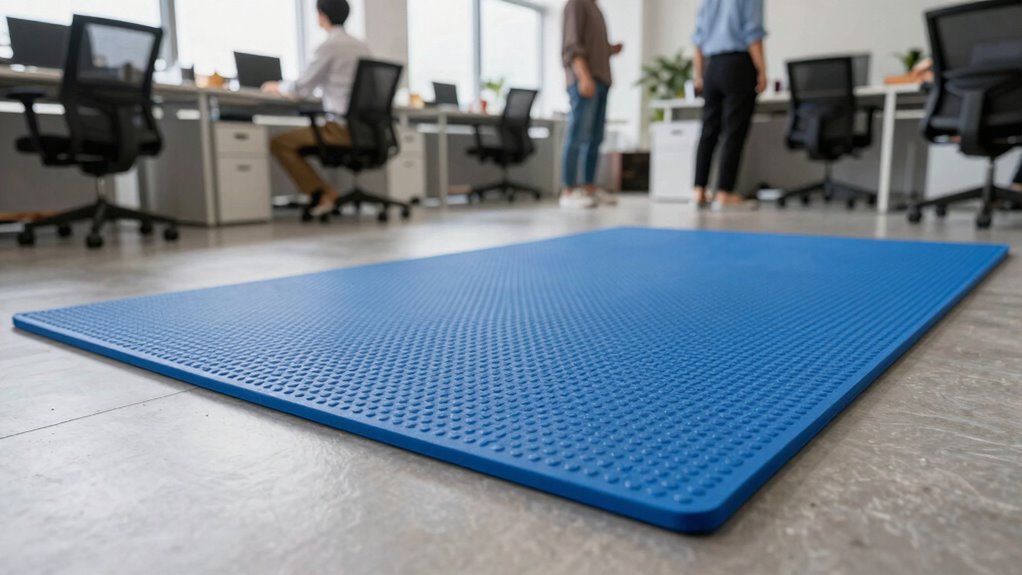
Anti-fatigue mats are both a comfort upgrade and a productivity booster. They support your posture, reduce joint pressure, and absorb shocks, helping you stand longer without fatigue. These mats also enhance safety with non-slip surfaces and textured edges, preventing accidents. By improving comfort and safety, they help you stay focused and reduce errors. If you want to discover how these mats can transform your workday, keep exploring the benefits they offer.

Get tools and workshop supplies delivered free — and shop member deals
- Fast, free delivery on millions of items
- Access to Prime Big Deal Days deals on October 6–7
- Prime Video, Amazon Music and more included
Key Takeaways
- Anti-fatigue mats improve comfort by supporting posture and reducing muscle fatigue during prolonged standing.
- They enhance safety with non-slip surfaces and textured edges, minimizing slip and trip risks.
- Their ergonomic design boosts focus and task performance by decreasing discomfort and fatigue.
- Easy to install and maintain, they contribute to a healthier, more efficient workspace.
- Investing in mats promotes long-term health, safety, and productivity for employees working long hours on their feet.
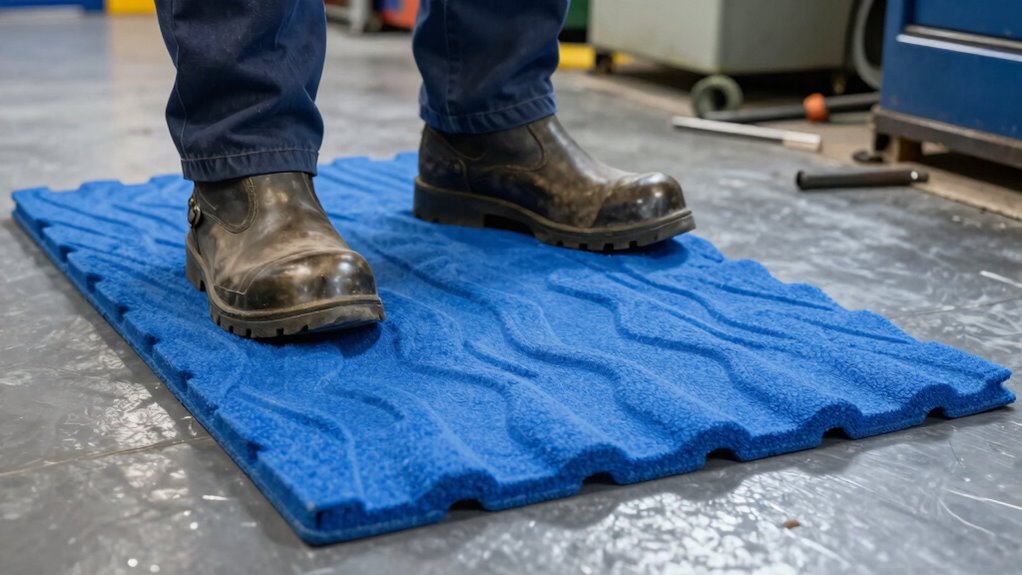
Ever wondered how to make long hours of standing more comfortable? If you’re on your feet all day — whether in a factory, retail store, or office kitchen — anti-fatigue mats could be just what you need. These mats aren’t just about adding a softer surface; they offer significant ergonomic benefits that can reduce discomfort and prevent fatigue. When you stand on a hard floor for extended periods, your muscles work harder to keep you balanced, which can lead to fatigue and even pain over time. Anti-fatigue mats help by encouraging subtle movements in your legs and improving blood flow, which reduces strain and helps you stay more comfortable and alert throughout your shift.
Thinking about ergonomic benefits is essential when considering anti-fatigue mats. They’re designed to support your posture, alleviate pressure on your joints, and reduce muscle fatigue. Unlike standing on a hard surface, which can cause compression and soreness, the cushioned surface of these mats absorbs shock and redistributes your weight more evenly. Over time, this can lead to fewer aches and less discomfort, supporting your overall well-being during long hours on your feet. Plus, many mats are made with non-slip materials, adding an extra layer of safety for you. Safety considerations are critical, especially in environments where spills or moisture are common. Anti-fatigue mats with textured surfaces or beveled edges help prevent slips and trips, reducing workplace accidents and making sure you stay steady while working. Incorporating ergonomic design principles into anti-fatigue mats can further enhance their benefits and provide better support for your body. Investing in ergonomic principles can also contribute to a healthier workspace environment, which benefits overall productivity. Additionally, selecting the right material and thickness for your specific task can maximize comfort and safety.
Anti-fatigue mats support posture, reduce joint pressure, and improve safety with non-slip, textured surfaces.
You might wonder whether investing in anti-fatigue mats is worth it. Not only do they boost comfort, but they can also enhance productivity. When you’re less distracted by discomfort or pain, you focus better on your tasks. Reduced fatigue means you’re less likely to make mistakes or experience fatigue-related errors, which benefits both you and your employer. Furthermore, these mats are generally easy to install and maintain, making them a practical addition to any workspace. In fact, material selection plays an important role in ensuring durability and comfort over time, especially in high-traffic areas. You can find them in various sizes, thicknesses, and materials tailored to your specific needs, whether you’re standing in a food prep area, operating machinery, or working at a cashier station.
In the end, anti-fatigue mats aren’t just about comfort; they’re a smart investment in your health and productivity. By improving ergonomics and addressing safety considerations, these mats help you stand longer and work more efficiently. They’re a simple yet effective upgrade that can make a noticeable difference in your daily routine, making long hours on your feet less of a burden and more manageable.
As an affiliate, we earn on qualifying purchases.
Frequently Asked Questions
How Long Do Anti-Fatigue Mats Typically Last?
Anti-fatigue mats usually last between 1 to 3 years, depending on usage and maintenance. To prolong their lifespan, you should regularly clean and inspect them for wear or damage. Cost considerations also play a role; investing in high-quality mats may have a higher upfront cost but often lasts longer, saving you money in the long run. Proper maintenance ensures your mats provide comfort and productivity benefits longer.
Are Anti-Fatigue Mats Suitable for Outdoor Use?
Yes, anti-fatigue mats are suitable for outdoor use if they have good outdoor durability and weather resistance. Look for mats made from materials like rubber or heavy-duty vinyl that withstand moisture, UV rays, and temperature fluctuations. These features guarantee your mats don’t degrade quickly outdoors. Properly chosen outdoor anti-fatigue mats can provide comfort and safety in various outdoor work environments, extending their lifespan despite exposure to the elements.
Can Anti-Fatigue Mats Help Reduce Workplace Injuries?
Yes, anti-fatigue mats can considerably reduce workplace injuries by providing ergonomic benefits that lessen fatigue and joint strain. You might be surprised how these mats promote better posture and stability, preventing slips and falls. Plus, they’re cost-effective solutions that save you money on injury-related expenses. Incorporating anti-fatigue mats shows you’re committed to safety, making your workspace safer and more comfortable for everyone involved.
What Materials Are Most Durable for Anti-Fatigue Mats?
You should choose anti-fatigue mats made from durable materials like high-density foam or rubber, which offer excellent material flexibility for long-lasting comfort. Look for eco-friendly options such as recycled rubber or biodegradable foam to reduce environmental impact. These materials resist wear and tear, ensuring your mats stay effective over time. Prioritizing durability and eco-friendliness helps you invest in mats that support safety, comfort, and sustainability in your workspace.
Are There Health Risks Associated With Anti-Fatigue Mats?
Think of anti-fatigue mats as double-edged swords — they can be beneficial or pose risks. While most mats made from safe, non-toxic materials have minimal health concerns, poor-quality mats with harmful chemicals can cause skin irritation or respiratory issues. To protect yourself, always check material safety labels and opt for high-quality, non-toxic options. Proper maintenance and choosing the right materials keep your workspace safe and healthy.
ergonomic anti-fatigue mats for workplace
As an affiliate, we earn on qualifying purchases.
As an affiliate, we earn on qualifying purchases.
Conclusion
So, next time you stand for hours, imagine anti-fatigue mats as your steady dance partner—guiding your steps with gentle support. They’re more than just comfort; they’re a secret weapon for productivity, turning fatigue into fuel. With each shift of your weight, they whisper resilience, keeping your focus sharp and your energy flowing. Embrace these mats, and watch your workday become a smoother, more energized rhythm—where comfort and efficiency dance hand in hand.
non-slip anti-fatigue mats for industrial use
As an affiliate, we earn on qualifying purchases.
As an affiliate, we earn on qualifying purchases.
cushioned anti-fatigue mats for kitchen
As an affiliate, we earn on qualifying purchases.
As an affiliate, we earn on qualifying purchases.
Fall yard work Picks
leaf blowers
As an affiliate, we earn on qualifying purchases.