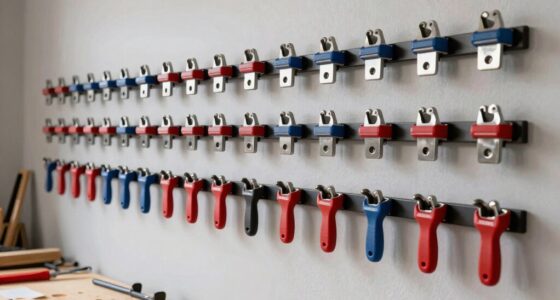
To reduce frustration with your compressor hose, focus on simple upgrades like installing hose reels or wall-mounted hooks. These keep hoses off the ground, prevent tangling, and make access easier. Adding a pressure regulator helps maintain proper hose pressure, preventing leaks and damage. Regular inspections and quick-connect fittings also improve safety and efficiency. Want to discover more smart tips to make your workspace safer and less stressful? Keep going for expert advice.

Get business pricing on tools and workshop supplies
- Business-only prices and quantity discounts
- Tax-exempt purchasing
- Multiple users, one account, clear invoices
Key Takeaways
- Implement hose reels or wall-mounted hooks for organized, off-the-ground storage to prevent tangling and tripping hazards.
- Use quick-connect fittings for easy, secure connections and quick disconnections, reducing setup frustration.
- Incorporate retractable hoses to maintain workspace tidiness and minimize loose hoses that cause trips or damage.
- Regularly inspect hoses for damage and maintain proper pressure regulation to prevent failures and extend lifespan.
- Small upgrades like proper storage and pressure control enhance safety, efficiency, and reduce downtime caused by hose issues.
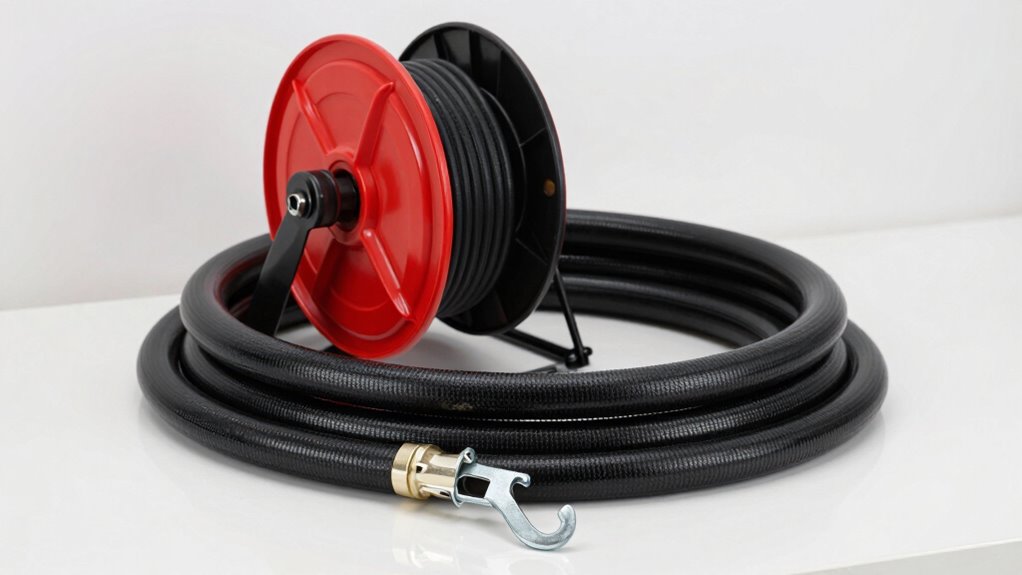
Effective compressor hose management is essential for maintaining a safe and efficient workspace. When you keep your hoses well-organized, you reduce the risk of accidents and damage, making your tasks smoother and less stressful. One of the simplest ways to improve your setup is by paying attention to hose storage. Instead of leaving hoses tangled on the floor or draped across workbenches, invest in proper hose reels or wall-mounted hooks. These keep your hoses off the ground, preventing tripping hazards and minimizing wear and tear. Proper hose storage also makes it easier to grab the right length when you need it, saving you time and frustration during busy workdays. Incorporating biodiversity-friendly storage solutions can also promote a more environmentally conscious workspace.
Keep hoses off the ground with reels or hooks to prevent trips and reduce wear.
In addition to organized storage, pressure regulation plays a vital role in hose management. If your compressor doesn’t have an integrated pressure regulator, consider adding one. Maintaining the correct pressure ensures your tools operate efficiently and reduces stress on the hoses. When pressure is too high, hoses can become hard to handle and even burst over time. Conversely, too low pressure can hinder your work, forcing you to take extra steps or redo tasks. Proper pressure regulation is a fundamental aspect of hose longevity, and it helps you avoid costly replacements. Regularly checking your hoses for damage or wear is also crucial to prevent unexpected failures and extend their lifespan. Incorporating preventative maintenance practices can further enhance the durability of your equipment. A well-maintained hose system can also prevent pressure drops that lead to inconsistent tool performance. By regulating pressure properly, you extend the lifespan of your hoses and avoid costly replacements. This small upgrade can make a big difference in your overall workflow and safety.
Another aspect of hose management involves inspecting hoses regularly for signs of damage or wear. Cracks, leaks, or brittleness indicate it’s time to replace a hose before it causes problems. When you do routine checks, you catch issues early and prevent sudden failures that could disrupt your project or cause injury. Pair these inspections with proper hose storage and pressure regulation, and you create a system that minimizes frustrations and maximizes productivity.
You should also consider using quick-connect fittings and retractable hoses to reduce the hassle of setup and cleanup. These tools make connecting and disconnecting hoses faster while maintaining a secure fit. Retractable hoses, in particular, help keep your workspace tidy by automatically recoiling after use, eliminating loose hoses that could trip you up or get damaged.
In the end, a small upgrade like better hose storage combined with effective pressure regulation significantly enhances your work environment. It reduces the chances of hose failure, improves safety, and saves you time and effort. Taking these simple steps shows that managing your compressor hoses isn’t just about organization—it’s about creating a smarter, safer, and more reliable workspace.
Products Worth Considering

Levoit Eleva 300X HEPA Air Purifier for Home and Bedroom

LEVOIT Vital 200S-P Smart Air Purifier for Large Rooms

Coway Airmega 250 Air Purifier for Large Rooms
As an affiliate, we earn on qualifying purchases.
Frequently Asked Questions
What Types of Hose Management Products Are Most Durable?
You’ll find that hose reels and heavy-duty hose organizers are the most durable options. They undergo durability testing to guarantee they withstand daily wear and tear, and their material selection—like reinforced plastic or stainless steel—adds resilience. These products resist cracking, kinking, and corrosion, making them ideal for long-term use. Opting for high-quality materials and tested designs ensures your hose management system stays reliable and reduces frustration during your projects.
How Often Should Compressor Hoses Be Inspected for Wear?
You should inspect your compressor hoses regularly, ideally every few months, to catch hose aging and wear early. Look for wear indicators like cracks, bulges, or leaks, and check for any stiffness or discoloration. Frequent inspections help prevent hose failure, ensuring safety and efficiency. If you notice any signs of deterioration, replace the hose promptly to avoid costly damage or accidents.
Can Hose Management Systems Fit Any Compressor Model?
About 80% of hose management systems claim universal compatibility, but that’s not always true. You can find systems with custom fittings designed for specific compressor models, ensuring a perfect fit. While many hose management systems are adaptable, it’s essential to check compatibility before buying. With the right system, you’ll reduce tangles and frustrations, making your work smoother and more efficient. Always verify if a system fits your compressor model first.
Are There Safety Concerns With Different Hose Management Setups?
Yes, safety hazards can arise with different hose management setups if they’re poorly designed or installed. You should guarantee that hoses are securely fastened, free from kinks, and away from trip hazards. Proper hose management also supports emergency preparedness by preventing accidents during sudden stops or leaks. Regularly inspect your setup to maintain safety, and consider options that allow quick disconnection in emergencies to reduce risks.
How Do I Choose the Right Hose Length for My Workspace?
To choose the right hose length for your workspace, focus on hose length customization to suit your tasks. Measure the distance between your compressor and work areas, adding a bit extra for movement. This guarantees you avoid excess slack or tension, boosting workspace efficiency. A well-chosen length minimizes trip hazards and makes your workflow smoother. Keep your hose just long enough to reach comfortably without unnecessary slack, enhancing safety and productivity.
Conclusion
By organizing your compressor hose, you gain control and reduce frustration, transforming a tangled mess into a smooth workflow. It’s a small upgrade that makes a big difference—like replacing a stubborn, unruly tool with a sleek, efficient one. While the compressor itself powers your projects, proper hose management powers your patience. In the end, a tidy hose isn’t just about convenience; it’s about reclaiming your time and confidence, proving that small changes lead to big improvements.