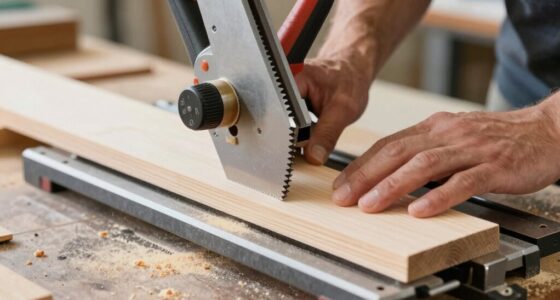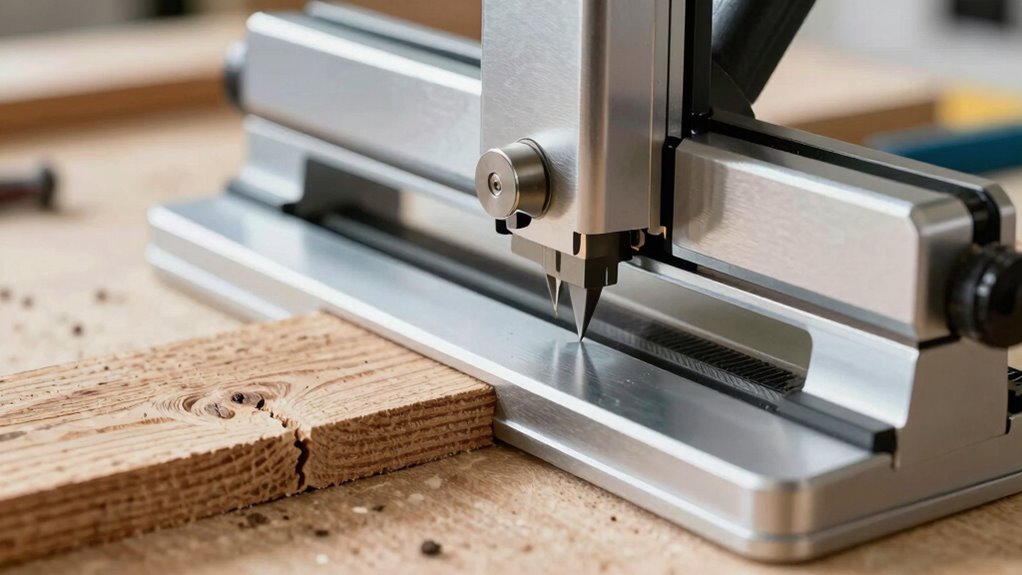

Benchtop jointers work well for smoothing edges and face jointing on small to medium projects, providing consistent, precise results. However, they have limitations with large or heavy-duty tasks, as their size and power can restrict the width and thickness of wood you can handle effectively. Dust collection and blade sharpness are also essential for peak performance. To discover how to get the most from your jointer and understand its boundaries, keep exploring the details.
Key Takeaways
- Benchtop jointers excel at edge jointing and small to medium-sized boards but struggle with large, heavy stock.
- They handle fine, precise cuts well when blades are sharp and properly maintained.
- Limited motor power may hinder heavy-duty planning or thick stock processing.
- Dust collection is effective for light to moderate debris but may be inadequate for large projects.
- Their compact size restricts capacity and versatility compared to larger, stationary jointers.
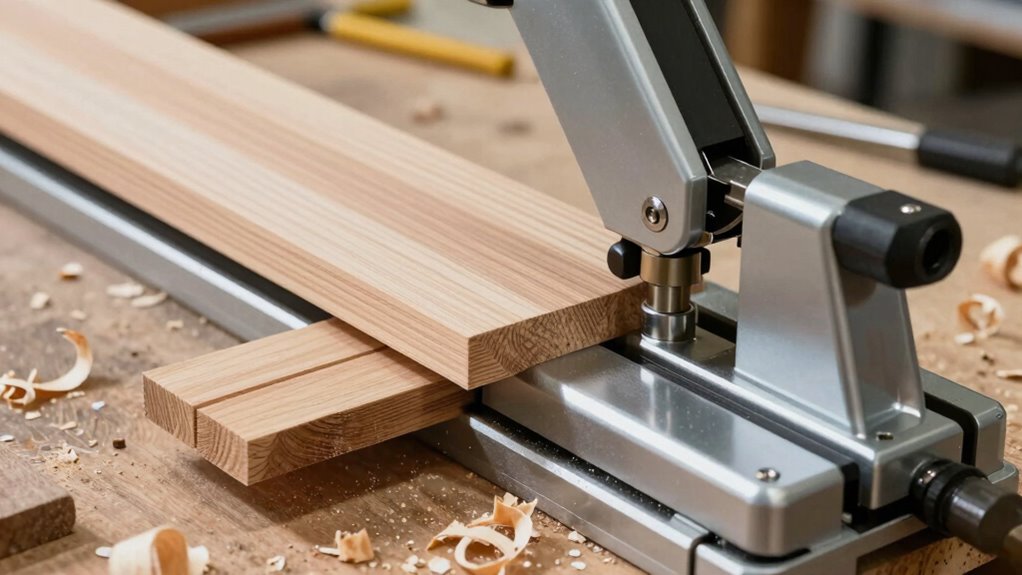
Benchtop jointers are vital tools for woodworking enthusiasts and professionals alike, but they do have limitations that you should be aware of. One key aspect to evaluate is blade sharpness. Over time, the blades on your benchtop jointer can become dull, which affects the quality of your cuts. When the blades aren’t sharp enough, you might notice tear-out or rough surfaces on your wood, forcing you to spend extra time sanding or reworking the piece. Regularly checking and maintaining sharp blades is essential to guarantee clean, precise edges. Dull blades also put more strain on the motor, potentially reducing the lifespan of your machine. Keep a routine for sharpening or replacing blades to maintain peak performance. Additionally, ensuring your dust collection system is effective is crucial for a clean workspace and safe operation. Proper dust management can also prevent the buildup of sawdust inside the machine, which can impair its function over time. An effective dust collection system not only improves safety but also preserves the machine’s internal components and performance.
Dust collection is another vital factor when working with a benchtop jointer. These machines generate a significant amount of sawdust and wood chips during operation, and inadequate dust collection can lead to a messy workspace and compromised air quality. Many models come with built-in dust ports, but their effectiveness varies. If your dust collection system isn’t efficient, dust can settle on surfaces, clog your shop vac filters, and even cause safety hazards by creating slippery floors. To mitigate this, guarantee your jointer is equipped with a powerful vacuum or dust collection system that matches the machine’s output. Good dust management not only keeps your workspace cleaner but also prolongs the life of your tools by preventing dust buildup inside motors and bearings. An effective dust collection system is especially important when working in confined or poorly ventilated areas. Understanding the limitations of your benchtop jointer will help you plan your projects more effectively and avoid unforeseen issues.
benchtop jointer blades replacement
As an affiliate, we earn on qualifying purchases.
As an affiliate, we earn on qualifying purchases.
Frequently Asked Questions
Can Benchtop Jointers Handle Hardwoods Like Oak and Maple?
Yes, benchtop jointers can handle hardwoods like oak and maple, but you need to pay attention to grain direction to guarantee smooth, even results. These machines work well for ripping down rough edges, but dust collection can be a challenge, so wearing a mask and using a good vacuum system helps. Keep your cuts consistent and take shallow passes to prevent tear-out and achieve a clean, professional finish.
What Is the Maximum Board Length Suitable for Benchtop Jointers?
A benchtop jointer can handle boards up to about 6 to 8 feet long, but it’s no giant in the workshop. To make the most of your cuts, guarantee good dust collection and a motor with at least 1 to 1.5 horsepower. Longer boards can cause instability, so stick to these limits for smooth, accurate edges. Trust your tools, and they’ll cut through your projects like a hot knife through butter!
How Often Should I Replace the Cutter Blades on My Benchtop Jointer?
You should replace or sharpen the cutter blades on your benchtop jointer when you notice tear-out or a decline in cut quality. Regular blade sharpening extends their life, usually every few months depending on use. Keep dust collection in mind—clean filters and hoses regularly to maintain peak performance. Proper maintenance ensures smooth cuts, reduces wear on blades, and keeps your work area cleaner and safer.
Are Benchtop Jointers Safe for Beginner Woodworkers?
They say “better safe than sorry,” and that’s true with benchtop jointers for beginners. These tools can be safe if you follow proper safety precautions, like wearing safety gear and understanding your machine. However, rookie mistakes can lead to accidents, so it’s essential to learn correctly before use. With proper training and respect for the equipment, a benchtop jointer can be a safe, valuable addition to your woodworking journey.
Can a Benchtop Jointer Smooth Rough, Uneven Surfaces Effectively?
A benchtop jointer can effectively smooth rough, uneven surfaces, especially for edge jointing and face flattening. It’s designed to straighten and level wood edges, making it ideal for preparing pieces for glue-up. While it handles most moderate imperfections well, it may struggle with very warped or thick stock. For best results, make multiple passes, and guarantee your jointer is sharp and properly aligned to achieve smooth, flat surfaces.
dust collection system for benchtop jointer
As an affiliate, we earn on qualifying purchases.
As an affiliate, we earn on qualifying purchases.
Conclusion
Understanding your benchtop jointer’s limits is like knowing the boundaries of your backyard—stay within them, and your projects flourish; push too far, and things get messy. While it’s perfect for small, precise tasks, don’t expect it to tame massive, unruly boards. Think of it as your trusty sidekick—great for quick fixes and detail work but not a heavyweight champion. Respect its boundaries, and your woodworking journey will stay smooth and satisfying.
small benchtop jointer for woodworking
As an affiliate, we earn on qualifying purchases.
As an affiliate, we earn on qualifying purchases.
As an affiliate, we earn on qualifying purchases.