
TL;DR
A beginner woodworking tool set should help you measure, mark, cut, hold, join, and smooth wood safely. Start with tools suited to one project, such as a shelf or box, and budget for clamps, protective gear, bits or blades, and upkeep alongside the tools themselves.
A shiny 100-piece kit can look like a shortcut to a workshop, but the tool you reach for first may be a square and a clamp. A beginner woodworking tool set works best when it matches the first things you want to build, whether that means a small shelf, a planter box, or a few household repairs.

Get business pricing on tools and workshop supplies
- Business-only prices and quantity discounts
- Tax-exempt purchasing
- Multiple users, one account, clear invoices
You’ll learn which tools cover the basics, how hand and power tools compare, and what to budget for safety and upkeep. You’ll also see how to start in a small space without buying machines you may not need for months.
Think of your first set as a sturdy stool: a few well-fitted parts do the work, while extra pieces only help when they suit the job. These key facts and practical examples can help you choose tools that make accurate cuts and basic assemblies possible.
Choose a first project, then buy tools that match its measuring, cutting, drilling, holding, and smoothing jobs.
Start with a tape or rule, square, marking tool, clamps, saw, drill and bits, and a way to smooth edges.
Pick hand, cordless, or mixed tools based on workspace, noise, project pace, and battery costs.
Budget for blades, bits, batteries, safety equipment, storage, and sharpening or replacement supplies.
Wear eye and hearing protection as needed, secure the work, and control dust before using cutting or sanding tools.
Start with one project and buy tools that serve it
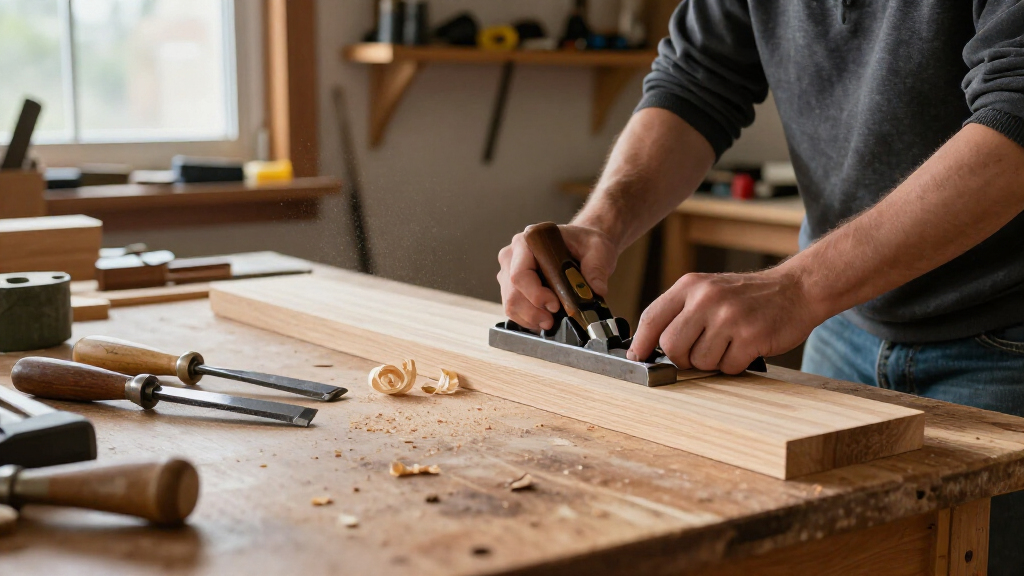
A beginner woodworking tool set should be built around a first project, because a shelf, a box, and a chair ask for different cuts and joints. Choose one small build, then list the jobs it involves: measuring, marking, cutting, holding, drilling, and smoothing. That list becomes your shopping guide.
For a simple wall shelf, you might need a tape measure, combination square, pencil, saw, drill and bits, clamps, and sandpaper. A sturdy square helps you mark a clean right angle; a clamp keeps the board from shifting while you drill. You may not need a chisel set or a router for that shelf at all.
A woodworking tool set is not a standardized bundle. One kit may offer a pile of driver bits and no useful saw, while another has fewer pieces but a dependable square and hand saw. Check the actual contents and quality, then compare them with your project list.
Once you finish the shelf, you’ll know more about what slowed you down. If the edges took too long to smooth, add a sanding block or plane. If assembly felt awkward, buy another clamp. Your first project gives you better evidence than a long list of tools someone else says you need.
Products Worth Considering
Google Nest Smart Thermostat, Programmable Wi-Fi, Charcoal

Shark PowerDetect Robot Vacuum and Mop Combo with 60-Day Self-Emptying Base (AV2800ZE)

Sonos Era 100 Wireless Smart Speakers, 2-Pack, Black
As an affiliate, we earn on qualifying purchases.
Cover measuring, cutting, holding, and finishing first
The most useful beginner set covers four jobs: measuring and marking, cutting, holding, and smoothing. These basics help you make accurate cuts and basic assemblies possible, from a cedar planter to a pine storage box.
Start with a tape measure or rule, a combination square, and a sharp pencil or marking knife. A combination square checks edges and marks 90-degree lines; that small detail can keep a box from twisting into a lopsided shape. Add clamps and a stable work surface so the wood stays put while you cut or drill.
Your saw depends on the stock and workspace. A hand saw is quiet and portable. A drill with suitable bits makes pilot holes and drives screws. Sandpaper or a sanding block softens sharp edges, while chisels and a hand plane can improve joints once you’re ready to practice sharpening and controlled cuts.
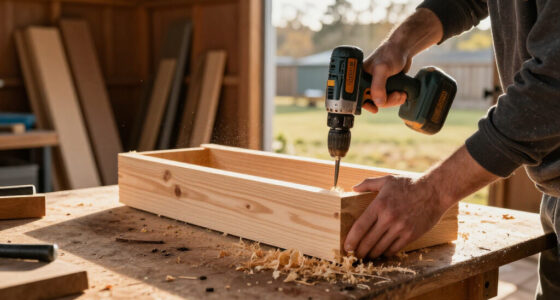
For example, a beginner making a small box can measure and mark four boards, saw them to length, clamp the sides, drill pilot holes, and sand the corners. Each tool has a clear job. That’s a better first set than buying a tool simply because it appeared in a large bundle.
- Measure and mark: tape, square, pencil or marking knife.
- Cut and drill: a project-suited saw, drill, and bits.
- Hold and smooth: clamps, a stable bench or work surface, and sandpaper.
Choose hand tools, power tools, or a practical mix
Hand tools suit quiet, compact work, while power tools speed up some repetitive tasks; a mixed set often balances both. Your choice depends on how much room you have, the noise you can make, and whether you enjoy careful manual work or want faster cuts and drilling.
A hand-tool path might include a saw, square, marking tools, clamps, chisels, and a sharpening stone. It travels easily and needs no batteries, but technique matters. Cutting a straight shoulder with a chisel takes practice, and a dull edge can be harder to control than a sharp one.
A compact cordless path might start with a drill and a saw suited to your projects. Cordless tools can share a battery platform, which cuts down on chargers and spare batteries over time. Check battery cost, replacement availability, and compatibility before choosing a system; a low tool price can be less attractive if the battery ecosystem costs more.
Imagine building a shelf in a shared apartment. A hand saw and drill can keep the setup compact, but cutting may take longer and create less noise than some machines. A hybrid setup—hand saw, cordless drill, square, clamps, and sanding block—gives you useful speed without demanding a full workshop.
Compact track saws, small routers, and benchtop machines give some people more options in limited spaces. They still need safe setup, room for the workpiece, dust control, and careful use. A newer tool can be handy without being a day-one requirement.
Compare three starter paths by project and workspace
The right starter path depends on what you’ll build and where you’ll work. Hand tools fit portable, quiet projects; cordless tools save time on repeated drilling and cutting; a mixed kit covers common home builds without requiring a large machine collection.
If you plan to make a small keepsake box at a shared table, a compact hand-tool setup may be enough. For repeated shelving or planter projects in a garage, a drill and power saw can shorten the work. A mixed set offers flexibility when your projects change, though you’ll still need to learn each tool’s safe use.
| Starter path | Good fit | Tradeoff |
|---|---|---|
| Hand tools | Small, quiet builds and limited storage | More practice and slower repetitive cuts |
| Compact cordless | Drilling and repeated cuts with modest setup | Battery and accessory costs; dust and noise still matter |
| Mixed set | Repairs, shelves, boxes, and changing projects | More items to store and maintain |
Use the table as a starting point, then price the complete setup. A tool’s sticker price leaves out bits, blades, batteries, sharpening supplies, clamps, and protective equipment. Those extras can change which path suits your budget.
Add tools gradually and budget for what keeps them working
Buying tools gradually helps you spend on real needs instead of filling a drawer with gear you rarely touch. The tool, its consumables, and its care all belong in your budget; a drill alone doesn’t include the bits you’ll use up or replace.
Before buying a bundle, check whether its saw blade suits your material, whether its drill bits cover common hole sizes, and whether its measuring tools are easy to read. If a large kit includes several items you cannot name a use for, a smaller set of better-quality essentials may offer more value.
For a first shelf, you could borrow a clamp or rent a specialty machine rather than buy it. After two or three projects, recurring frustrations give you a clear buying signal. If you keep struggling to hold long boards, invest in better workholding. If hand sanding feels endless, look into a sanding option that fits your space and dust-control plan.
Plan for storage, too. A small toolbox can protect a square and chisels from knocks, while labeled containers keep drill bits from disappearing under sawdust. In a shared room, a folding work surface and a tidy case make it easier to pack away safely after the evening’s work.
- Count accessories: bits, blades, batteries, and clamps add to the bill.
- Include upkeep: sharpening supplies and replacement abrasives keep tools useful.
- Buy from experience: borrow or rent a tool before committing to a costly specialty item.
Protect your eyes, ears, lungs, and hands before you cut
Safe woodworking starts with eye protection, secure workholding, and dust control, before the saw or sander starts. Read each tool’s instructions and understand how it should be held, adjusted, and switched off. A few minutes of setup can prevent a small board from skidding or a flying chip from reaching your eye.
Wear safety glasses when cutting or drilling, and use hearing protection around loud power tools. Wood dust can pose health risks, especially during sanding and machine work, so ventilate the area and use appropriate dust control. A respirator may suit fine dust or certain finishes depending on the material and ventilation; follow the product guidance for the dust and finish involved.
Clamp a board before drilling instead of holding it in one hand and reaching for the trigger with the other. Keep loose sleeves and hair away from moving parts, and don’t rush a cut because you’re nearly finished. For example, if you’re sanding a pine shelf in a garage, collect dust at the source where possible and clean the work area before it drifts through the house.
Electrical, gas, structural, and roof work require a licensed professional. Woodworking tools do not make household wiring safe to alter. For any electrical work near your project, keep clear of circuits and have a licensed professional handle the work; electrical tasks require proper isolation and safety procedures.
A sharp edge, a clamped board, and clear eye protection make a better start than speed.
Set up a small workspace that still lets you work accurately
You can start woodworking without a dedicated workshop if you can support the work securely, store tools safely, and manage dust and noise. A compact setup might use a folding bench, a tool case, and hand tools or a small cordless kit that packs away after each session.
Before choosing a power tool, measure the room and the longest board you expect to handle. A short bench may support a small box but leave a long shelf board awkwardly balanced. You also need clear space to guide the material through a cut and a plan for sawdust, especially if the room opens onto a kitchen or bedroom.
Say you’re making a 60-centimeter plant stand in a shared garage. A stable bench and two clamps can hold short pieces for drilling and assembly, but the cutting plan should keep longer stock supported. A broom and vacuum help tidy the fine dust that otherwise gathers in a gray film across the floor and nearby shelves.
For apartment work, hand tools may be a better fit for neighbors and storage, but check building rules before making noise. For projects that need louder machines, consider a shared makerspace or borrowed workshop. The right workspace is one where you can concentrate, support the wood, and put tools away without creating a hazard.
Frequently Asked Questions
What tools do I need to start woodworking?
For simple builds, start with a tape measure or rule, combination square, pencil, clamps, a project-suited saw, a drill and bits, and a sanding block. A shelf might need only that core group, while a box with tighter joints can call for chisels as your skills grow.
Is a hand-tool set or power-tool set better for a beginner?
Hand tools are portable, quiet, and simple to store, but they take practice and can slow repeated work. Power tools speed up some jobs but need safe setup, dust control, room, and sometimes batteries; a hand saw plus cordless drill is a practical middle ground for many first projects.
Which saw should I buy first?
Choose a saw based on the cuts in your first project and the kind of stock you’ll use. A hand saw can cover straightforward cuts with little setup, while powered options can help with repeated cuts; learn the tool’s instructions and secure the work before cutting.
Do I need a table saw, router, or planer right away?
Most beginners can make small shelves, boxes, and household projects without those machines. Consider one when a recurring project needs its specific capability, and account for space, safe operation, dust control, and accessories before buying.
How many clamps do I need for a beginner set?
Start with enough clamps to hold the pieces in your first build without shifting; a small box or shelf may need only a few, depending on its design. Borrow a clamp for a one-off job, then add sizes based on the boards and assemblies you actually work with.
Can I start woodworking in a small apartment?
Yes, if your projects, noise, and dust fit the space and building rules. Compact hand tools, a folding work surface, eye protection, and a tidy storage plan can suit small builds; use a shared workshop for noisy machine work that does not fit at home.
Conclusion
Build your first woodworking set around one project and a safe place to make it. A square, saw, drill, clamps, and sanding supplies can take you a long way; add specialty tools when a real task calls for them.
Start with a board, a clear plan, and a steady work surface. A small, well-chosen set can turn rough timber into something you’ll be glad to keep.