For most buyers, I’d start with the DEWALT DWE7491RS: its 10-inch blade, broad rip capacity, and rolling stand make it a versatile jobsite choice. The BOSCH GTS15-10 stands out for a wheeled stand designed for easier setup and transport, while the SKIL TS6307-00 offers a practical folding-stand format for general cutting. The main tradeoff is between a larger table and cutting capacity on one side, and a lighter, more compact saw on the other. Smaller 8-1/4-inch models can be easier to move, but may limit the size of stock you can handle. Read on for how all nine portable table saws compare and which type of buyer each one suits.

Get business pricing on tools and workshop supplies
- Business-only prices and quantity discounts
- Tax-exempt purchasing
- Multiple users, one account, clear invoices
Complete the kit


Key Takeaways
- The DEWALT DWE7491RS leads on versatility: its 10-inch format and 32-1/2-inch rip capacity suit a wider range of sheet and framing cuts than the compact 8-1/4-inch models.
- Stand design changes day-to-day usability: the DEWALT rolling stand and BOSCH Gravity-Rise stand focus on wheeled transport, while the SKIL folding stand offers a simpler setup approach.
- Compact saws trade capacity for easier handling: the DEWALT DWE7485 and DWE7485WS use an 8-1/4-inch blade, a sensible fit when storage and transport matter more than maximum cutting depth.
- The two DEWALT DWE7491 versions differ mainly in support: the RS package includes a rolling stand, while the X version uses a scissor stand, so buyers should match the stand to how often the saw moves.
- Not every 10-inch option offers the same level of confidence: the MarvTool and Takywep models are less established alternatives in this lineup, so buyers should check warranty, parts access, and service support before choosing them over familiar jobsite designs.
| SKIL 15-Amp 10-Inch Jobsite Table Saw with Folding Stand, TS6307-00 |  | Best Balanced Pick | Motor: 15 A | Power: 120 V, 1800 W, corded electric | Blade: 10-inch, 24-tooth carbide | VIEW LATEST PRICE | See Our Full Breakdown |
| Takywep 8-Inch Compact Table Saw, 6.7-Amp, 3576 RPM, Orange |  | Best for Small Workspaces | Motor: 6.7 A copper motor | No-load speed: 3576 RPM | Blade: 8-inch, 24-tooth | VIEW LATEST PRICE | See Our Full Breakdown |
| MarvTool 10-Inch Portable Table Saw, 15-Amp, 4600 RPM |  | Best Lightweight 10-Inch Pick | Motor: 15 A | Power source: 120 V, corded electric | Speed: 4600 RPM | VIEW LATEST PRICE | See Our Full Breakdown |
| DEWALT 10-Inch Jobsite Table Saw with Rolling Stand, 15 Amp, 4800 RPM, 32-1/2-Inch Rip Capacity (DWE7491RS) |  | Best for Wide Sheet Goods | Motor: 15 A | Speed: 4800 RPM | Blade: 10-inch, 24-tooth | VIEW LATEST PRICE | See Our Full Breakdown |
| DEWALT 10-Inch Jobsite Table Saw with Scissor Stand (DWE7491X) |  | Best for Large Cuts Without a Rolling Stand | Motor and power: 15 A; 120 V; 1800 W | Blade diameter: 10 in | Blade tooth information: Specifications state 50 teeth; included blade listed as 24-tooth carbide | VIEW LATEST PRICE | See Our Full Breakdown |
| BOSCH GTS15-10 10-Inch Portable Jobsite Table Saw with Gravity-Rise Wheeled Stand |  | Best for Mobile Full-Size Capacity | Blade diameter: 10 inches | Motor: 15 amps, 120 volts | Speed: 3,800 rpm | VIEW LATEST PRICE | See Our Full Breakdown |
| DEWALT 8-1/4-Inch Portable Table Saw with Stand (DWE7485WS) |  | Best Compact Pick with a Stand | Blade diameter: 8-1/4 inches | Motor: 15 amps, 120 volts | Rip capacity: 24.5 inches | VIEW LATEST PRICE | See Our Full Breakdown |
| Evolution R10TS 10-Inch Portable Jobsite Table Saw with Dado Plate |  | Best for Versatile Materials and Accessories | Blade diameter: 10 inches | Motor: 15 amps, 120 volts | Rip capacity: 26 inches | VIEW LATEST PRICE | See Our Full Breakdown |
| DEWALT 15-Amp 8-1/4-Inch Compact Portable Jobsite Table Saw (DWE7485) |  | Best for Frequent Carrying | Blade size: 8-1/4 inches | Motor: 15 amps, 120 volts | Speed: 5,800 rpm | VIEW LATEST PRICE | See Our Full Breakdown |
| portable table saw | Motor | Rip capacity | Blade | Weight |
|---|---|---|---|---|
| SKIL 15-Amp 10-Inch Jobsite Ta | 15 A | 25.5 in | 10-inch, 24-tooth carbide | 51.2 lb |
| Takywep 8-Inch Compact Table S | 6.7 A copper motor | — | 8-inch, 24-tooth | — |
| MarvTool 10-Inch Portable Tabl | 15 A | — | 10-inch, 36-tooth alloy steel | 28.3 lb |
| DEWALT 10-Inch Jobsite Table S | 15 A | 32½ in | 10-inch, 24-tooth | — |
| DEWALT 10-Inch Jobsite Table S | — | 32½ in | — | — |
| BOSCH GTS15-10 10-Inch Portabl | 15 amps, 120 volts | 32-1/8 inches | — | 103 pounds |
| DEWALT 8-1/4-Inch Portable Tab | 15 amps, 120 volts | 24.5 inches | — | 66 pounds |
| Evolution R10TS 10-Inch Portab | 15 amps, 120 volts | 26 inches | 40-tooth tungsten carbide | — |
| DEWALT 15-Amp 8-1/4-Inch Compa | 15 amps, 120 volts | 24.5 inches | — | 54 pounds |
More Details on Our Top Picks
SKIL 15-Amp 10-Inch Jobsite Table Saw with Folding Stand, TS6307-00
The SKIL TS6307-00 balances full-size cutting capacity with a more manageable jobsite setup than the 110-pound DEWALT DWE7491RS. Its 25.5-inch rip capacity handles many sheet and trim tasks, while the rack-and-pinion fence makes width adjustments more controlled than a basic sliding fence. The integrated folding stand and 51.2-pound weight help when the saw needs to move between a garage and a work area, though it is not as light to carry as the MarvTool 10-Inch Portable Table Saw. Blade alignment can be adjusted to the fence and miter slot, a useful feature for buyers prioritizing cut accuracy. The tradeoff is less rip capacity than either DEWALT 32½-inch model, and the listed bevel range has stops only at 0° and 45°.
Pros:- 25.5-inch rip capacity supports a broad range of common jobsite cuts.
- Rack-and-pinion fence supports smooth, repeatable adjustments.
- Folding stand makes storage and transport more practical.
- Micro-adjustable blade alignment helps keep cuts parallel to the fence and miter slot.
Cons:- Rip capacity is narrower than the 32½-inch DEWALT DWE7491RS and DWE7491X.
- At 51.2 pounds, it is not as easy to carry as the 28.3-pound MarvTool.
- The stated bevel range has positive stops at 0° and 45° only.
Best for: DIYers and remodelers who want a full-size 10-inch saw, a folding stand, and a dependable fence without moving a 110-pound machine.
Not ideal for: Buyers who regularly rip very wide sheet goods or need a lighter saw to carry by hand; the DEWALT DWE7491X offers more rip capacity, while the MarvTool is substantially lighter.
- Motor:15 A
- Power:120 V, 1800 W, corded electric
- Blade:10-inch, 24-tooth carbide
- Rip capacity:25.5 in
- Cutting capacity:Up to 4×4 at 90°
- Bevel range:0–45°
- Fence and stand:Rack-and-pinion fence; integrated folding stand
- Weight:51.2 lb
Our verdict“Choose the SKIL if you want a capable 10-inch jobsite saw with a folding stand and more manageable weight than the large-capacity DEWALT models.”
Takywep 8-Inch Compact Table Saw, 6.7-Amp, 3576 RPM, Orange
The Takywep is the smallest-footprint option in this group, suited to buyers who value a compact saw more than the capacity of a jobsite model. At 14 x 13.5 x 12.8 inches, it takes up far less room than the SKIL TS6307-00 or either 10-inch DEWALT. A built-in handle makes it easier to move between a bench and storage, and the sliding miter gauge, blade guard, and covered switch add useful basics for small projects. The tradeoff is a 6.7-amp motor and 8-inch blade, so it is not a substitute for the 15-amp, 10-inch saws when cutting larger or thicker stock. The product information also gives two different weights, 31.3 and 36 pounds, making its carry weight uncertain.
Pros:- Compact dimensions suit crowded benches and limited storage.
- Built-in carry handle supports moving it between work areas.
- Blade bevel adjustment covers cuts from 0° to 45°.
- Blade guard, covered power switch, and dust port provide useful basic features.
Cons:- The 6.7-amp motor and 8-inch blade offer less cutting capacity than the 10-inch, 15-amp saws in this roundup.
- No rip-capacity figure is provided, making material-width planning difficult.
- Listed weight conflicts between 31.3 and 36 pounds.
Best for: Hobbyists in small workshops who make occasional cuts on modest-sized wood and need a compact corded saw that can be stored between projects.
Not ideal for: Contractors and cabinet or shelving builders who need wide rip capacity, deeper cuts, or the 15-amp performance of the SKIL and DEWALT jobsite saws.
- Motor:6.7 A copper motor
- No-load speed:3576 RPM
- Blade:8-inch, 24-tooth
- Power source:Corded electric
- Bevel adjustment:0–45°
- Dimensions:14 x 13.5 x 12.8 in
- Listed weight:31.3 lb; description also states 36 lb
- Features:Sliding miter gauge, dust collection port, transparent blade guard, built-in carry handle
Our verdict“Pick the Takywep for compact storage and small projects, not as a replacement for a full-size jobsite saw.”
MarvTool 10-Inch Portable Table Saw, 15-Amp, 4600 RPM
For buyers who want a 10-inch blade but need to keep the saw easy to move, the MarvTool stands apart at a listed 28.3 pounds—well below the SKIL TS6307-00 and the 87-pound DEWALT DWE7491X. Its 15-amp motor and stated 3.4-inch cutting depth at 90° give it more useful capacity than the compact Takywep, while the 36-tooth blade and vacuum-compatible dust port suit workshop tasks where cut finish and cleanup matter. The compromise is that the product data does not state a rip capacity, so buyers cannot readily confirm how it handles wide stock. Its dimensions are also listed as 41.3 x 33.6 x 32.3 inches, which makes the low weight alone an incomplete picture of storage needs. It remains corded and has a shallower 45° cut depth.
Pros:- Listed weight of 28.3 pounds is lower than the other 10-inch saws in this batch.
- 15-amp motor and 10-inch blade provide more capacity than the Takywep compact saw.
- 36-tooth blade is included for wood, plywood, and other listed materials.
- Vacuum-compatible dust port and transparent blade guard are included.
Cons:- No rip-capacity measurement is provided.
- Cutting depth is limited to 3.4 inches at 90° and 2.1 inches at 45°.
- Corded power limits use where an outlet is unavailable.
Best for: DIYers who need a light-to-move 10-inch saw for mixed wood projects and can work within its stated cutting depths.
Not ideal for: Buyers who frequently rip wide panels or need a clearly specified rip capacity; the DEWALT DWE7491X provides a stated 32½-inch capacity.
- Motor:15 A
- Power source:120 V, corded electric
- Speed:4600 RPM
- Blade:10-inch, 36-tooth alloy steel
- Cutting depth at 90°:3.4 in
- Cutting depth at 45°:2.1 in
- Weight:28.3 lb
- Dust management:Vacuum-compatible dust port
Our verdict“Choose the MarvTool if low listed weight matters more than a documented wide-rip capacity or deeper bevel cuts.”
DEWALT 10-Inch Jobsite Table Saw with Rolling Stand, 15 Amp, 4800 RPM, 32-1/2-Inch Rip Capacity (DWE7491RS)
The DWE7491RS earns its place for buyers who regularly rip broad panels: its 32½-inch capacity exceeds the SKIL TS6307-00’s 25.5 inches and gives more room for shelving and large trim stock. The rack-and-pinion fence is designed for quick, controlled width changes, while the rolling, foldable stand helps with setup and breakdown at a jobsite. Onboard storage keeps the fence and guards close at hand, and the 2½-inch port can connect to a vacuum. That capacity comes with a substantial portability penalty: at 110 pounds, it rolls rather than carries, and moving it up steps or loading it into a vehicle may take planning. Dust collection also depends on a vacuum, unlike a setup that can simply redirect debris to a container.
Pros:- 32½-inch rip capacity handles wider stock than the SKIL TS6307-00.
- Rack-and-pinion fence supports fast, accurate adjustments.
- Rolling, foldable stand aids jobsite setup and breakdown.
- Onboard storage keeps key accessories accessible.
Cons:- At 110 pounds, it is cumbersome to lift and transport despite its wheels.
- Dust extraction requires a vacuum connected to the 2½-inch port.
- Its larger capacity may be unnecessary for buyers working mainly with small stock.
Best for: Carpenters and remodelers who often break down wide sheet goods and can transport a heavy saw on its rolling stand.
Not ideal for: Solo users who must lift a saw into a vehicle or carry it between floors; the lighter SKIL TS6307-00 or MarvTool is easier to move by hand.
- Motor:15 A
- Speed:4800 RPM
- Blade:10-inch, 24-tooth
- Rip capacity:32½ in
- Cutting depth:3⅛ in at 90°; 2¼ in at 45°
- Table dimensions:21⅞ x 26⅜ in
- Stand:Rolling, foldable
- Weight and dust port:110 lb; 2½-in port
Our verdict“Choose the DWE7491RS when wide-panel ripping is a regular task and rolling transport is practical.”
DEWALT 10-Inch Jobsite Table Saw with Scissor Stand (DWE7491X)
The DWE7491X pairs the same stated 32½-inch rip capacity as the DWE7491RS with a scissor stand rather than a rolling stand. That makes it a strong fit for users who want room for wide shelving and trim but prefer a folding support frame over the RS model’s wheeled setup. Its rack-and-pinion fence, tool-free guarding adjustments, and two-position flip-over fence support flexible jobsite setups. At 87 pounds, it is lighter than the DWE7491RS, yet still heavy for carrying; the scissor stand does not remove the need to plan transport. Dust extraction needs a vacuum, and the supplied blade is listed as 24-tooth carbide even though another specification states 50 teeth, so buyers should verify the blade details before purchase.
Pros:- 32½-inch rip capacity suits wide shelving and trim materials.
- Rack-and-pinion fence supports quick, accurate adjustments.
- Scissor stand is designed to fold for setup and breakdown.
- Tool-free guarding adjustments and a flip-over fence offer setup flexibility.
Cons:- At 87 pounds, it remains heavy to lift and transport.
- Dust collection requires a vacuum connected to the 2½-inch port.
- Blade tooth-count information conflicts: specifications state 50 teeth, while the included blade is listed as 24-tooth carbide.
Best for: Builders who need wide rip capacity and a folding scissor stand, but do not need the DWE7491RS rolling-stand arrangement.
Not ideal for: Buyers who need a saw they can lift and carry often, or who require unambiguous included-blade specifications; the MarvTool is much lighter.
- Motor and power:15 A; 120 V; 1800 W
- Blade diameter:10 in
- Blade tooth information:Specifications state 50 teeth; included blade listed as 24-tooth carbide
- Rip capacity:32½ in
- Cutting angle:90° listed
- Dust port:2½ in
- Stand and weight:Scissor stand; 87 lb
- Dimensions:26.75 x 26.75 x 30.25 in
Our verdict“Pick the DWE7491X for wide-material capacity and a scissor stand, provided its weight and blade-specification discrepancy fit your needs.”
BOSCH GTS15-10 10-Inch Portable Jobsite Table Saw with Gravity-Rise Wheeled Stand
The Bosch pairs a 10-inch blade and 32-1/8-inch rip capacity with a Gravity-Rise wheeled stand, making it a strong fit for crews who need broad cutting capacity and a setup that rolls between work areas. Its rack-and-pinion fence supports controlled adjustments, while the Smart Guard System includes a riving knife and anti-kickback pawls. Compared with the lighter DEWALT DWE7485, the Bosch offers a larger blade and more rip capacity, but it is substantially heavier at 103 pounds. The wheeled stand helps with transport, though it does not make this a convenient saw to lift into a vehicle alone. The specified single-cut 4×4 capacity also limits what buyers should expect from that dimension. I’d choose it for mobile full-size work, not frequent hand-carrying.
Pros:- 32-1/8-inch rip capacity gives more room for wide sheet and panel cuts than the DEWALT DWE7485.
- Gravity-Rise wheeled stand supports rolling transport and jobsite setup.
- Rack-and-pinion fence helps make repeatable fence adjustments.
- Smart Guard System includes a riving knife and anti-kickback pawls.
Cons:- At 103 pounds, it is heavy to lift or carry, even with the wheeled stand.
- The stated 4×4 capacity applies to a single cut, not a through-cut.
Best for: Carpenters who move a full-size saw around a jobsite and need a wide rip capacity with a wheeled setup stand.
Not ideal for: Solo users who regularly lift a saw into a truck or carry it up stairs; its 103-pound weight makes that a tough routine.
- Blade diameter:10 inches
- Motor:15 amps, 120 volts
- Speed:3,800 rpm
- Rip capacity:32-1/8 inches
- Single-cut capacity:4×4
- Brake stop time:Approximately 3 seconds
- Stand:GTA50W Gravity-Rise wheeled stand
- Weight:103 pounds
Our verdict“Choose the Bosch if you want a wheeled, full-size jobsite saw with generous rip capacity and can accommodate its weight.”
DEWALT 8-1/4-Inch Portable Table Saw with Stand (DWE7485WS)
The DWE7485WS combines an 8-1/4-inch blade, 24.5-inch rip capacity, and included stand in a more transport-minded package than the Bosch GTS15-10. That capacity is enough for ripping 4×8-foot sheet goods, so the smaller blade does not rule out common panel work. Its rack-and-pinion fence makes width changes quick, while onboard storage helps keep the guard, push stick, and miter gauge together between jobs. At 66 pounds, it is easier to move than the Bosch, though the included stand still means more gear to handle than the standalone DEWALT DWE7485. One caution: the supplied speed information conflicts, listing both 5,800 and 4,300 rpm. I’d pick this version when a stand matters; buyers prioritizing the lightest setup may prefer the bare saw.
Pros:- 24.5-inch rip capacity handles 4×8-foot plywood or OSB sheets.
- Rack-and-pinion fence supports quick, smooth adjustments.
- Includes a jobsite stand and onboard accessory storage.
- At 66 pounds, it is lighter to move than the Bosch GTS15-10.
Cons:- The 8-1/4-inch blade offers less cutting depth than the 10-inch Bosch GTS15-10.
- The listed speed conflicts between 5,800 and 4,300 rpm.
- Corded operation requires access to a power outlet.
Best for: Remodelers and contractors who need to rip full-size sheet goods and want a portable saw package that includes a jobsite stand.
Not ideal for: Buyers who want a 10-inch blade for deeper cuts or who prefer the lightest possible carry; the stand adds equipment and the listed speed is inconsistent.
- Blade diameter:8-1/4 inches
- Motor:15 amps, 120 volts
- Rip capacity:24.5 inches
- Speed:Conflicting listings: 5,800 rpm in description and 4,300 rpm in specifications
- Weight:66 pounds
- Dimensions:26.54 × 17.08 × 26.76 inches
- Stand:Included jobsite stand
- Safety features:Blade brake and power-loss reset
Our verdict“Choose the DWE7485WS if you want sheet-goods capacity in a compact saw package with a stand included.”
Evolution R10TS 10-Inch Portable Jobsite Table Saw with Dado Plate
The Evolution R10TS is the most accessory-rich choice here: it includes a dado plate, zero-clearance throat plate, and cross-cut sled, plus a carbide-tipped blade specified for wood, mild steel, aluminum, and composites. That makes it more adaptable than the Bosch GTS15-10, whose supplied details emphasize conventional ripping and cross-cutting rather than multiple materials or dado work. Its 26-inch rip capacity is useful, though it falls short of the Bosch’s 32-1/8 inches for wider rips. A 10-inch blade and 3-3/8-inch maximum cut depth cover many jobsite tasks, but the depth limit should guide buyers handling thicker stock. Carry handles, onboard storage, and an outfeed support bar help with portable use; at 29 × 29 × 15 inches, it still needs room for transport and storage.
Pros:- Included dado plate, zero-clearance throat plate, and cross-cut sled add useful cutting options.
- Carbide-tipped blade is specified for wood, mild steel, aluminum, and composites.
- Dual rack-and-pinion fence and geared bevel adjustment support controlled setups.
- Carry handles, onboard storage, and outfeed support help with jobsite portability.
Cons:- Its 26-inch rip capacity is narrower than the Bosch GTS15-10’s 32-1/8 inches.
- Maximum cut depth is 3-3/8 inches.
- Corded operation requires access to a power source.
Best for: Woodworkers and remodelers who want included dado and cross-cut accessories and plan to cut more than wood.
Not ideal for: Buyers who need the widest rip capacity in this group or regularly cut stock thicker than the stated 3-3/8-inch maximum depth.
- Blade diameter:10 inches
- Motor:15 amps, 120 volts
- Rip capacity:26 inches
- Maximum cut depth:3-3/8 inches
- Bevel range:0–45 degrees
- Blade:40-tooth tungsten carbide
- Included accessories:Dado plate, zero-clearance throat plate, cross-cut sled
- Warranty:3 years
Our verdict“Choose the R10TS if its included dado and cross-cut accessories and broader material range matter more than maximum rip capacity.”
DEWALT 15-Amp 8-1/4-Inch Compact Portable Jobsite Table Saw (DWE7485)
At 54 pounds, the DWE7485 is the easiest of these four saws to carry, yet its 24.5-inch rip capacity still accommodates 4×8 sheet goods. That balance makes it a more practical pick for workers moving tools in and out of a vehicle than the 103-pound Bosch GTS15-10. The rack-and-pinion fence helps keep adjustments direct, and the metal roll cage base is designed for jobsite durability. A tool-free modular guard system and power-loss reset add useful safeguards, while onboard storage keeps loose components with the saw. The tradeoff is the 8-1/4-inch blade: compared with the 10-inch Evolution R10TS, it offers less cutting depth. It also has no included stand in the supplied product details, so buyers should plan their own support arrangement for comfortable jobsite use.
Pros:- 54-pound weight makes it easier to carry than the Bosch GTS15-10 or Evolution R10TS.
- 24.5-inch rip capacity supports 4×8 plywood and OSB sheet cuts.
- Rack-and-pinion fence rails allow quick adjustments.
- Metal roll cage base and onboard storage suit jobsite handling.
Cons:- The 8-1/4-inch blade has less cutting depth than the 10-inch Evolution R10TS.
- The supplied product details do not list an included stand.
- Corded operation requires access to a power source.
Best for: Contractors, installers, and DIYers who regularly carry a table saw between a vehicle and compact work areas but still need sheet-goods capacity.
Not ideal for: Buyers who need a 10-inch blade for greater cutting depth or want an included stand as part of the listed package.
- Blade size:8-1/4 inches
- Motor:15 amps, 120 volts
- Speed:5,800 rpm
- Rip capacity:24.5 inches
- Weight:54 pounds
- Dimensions:22.75 × 22.75 × 13 inches
- Base:Metal roll cage
- Guarding:Tool-free Site-Pro Modular Guarding System
Our verdict“Choose the DWE7485 if carrying ease and sheet-goods capacity matter more than a 10-inch blade or included stand.”
How We Picked
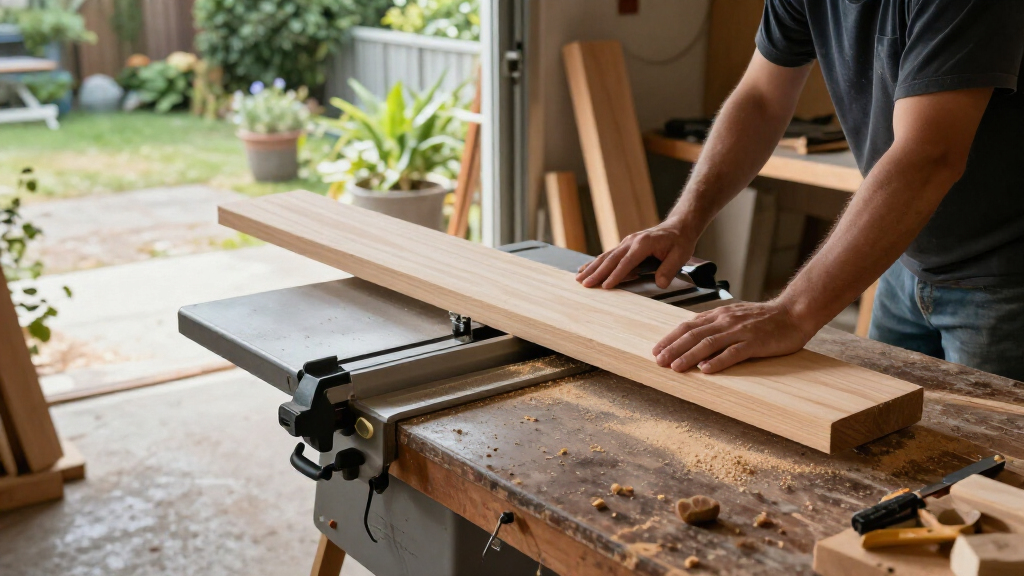
I ranked these portable table saws around the needs that shape a real purchase: cutting capacity, mobility, setup, and the kind of work each saw can reasonably handle. Blade size and rip capacity matter because they affect the stock and sheet goods a saw can cut; stand style matters because a portable saw is only convenient if it can be moved and set up without undue effort. I also weighed useful features such as dado support, while treating motor speed claims as only one part of the picture rather than a substitute for capacity or usability.
The DEWALT DWE7491RS ranks first for its combination of 10-inch capacity, wide rip range, and rolling stand. The BOSCH GTS15-10 and SKIL TS6307-00 follow as compelling jobsite alternatives with distinct stand and setup priorities. Compact models rank higher for buyers who value transport and storage, not for those needing maximum capacity. I placed the Takywep and MarvTool options lower because their available specifications give less basis for comparing support, durability, and serviceability with the established jobsite models.
Factors to Consider When Choosing Portable Table Saws
I’d choose a portable table saw by starting with the work and the route from storage to cutting area—not by blade size alone. These broader checks can help prevent a saw that looks capable on paper from becoming awkward or limiting in everyday use.
Match Blade Size to the Stock You Actually Cut
A 10-inch blade gives more cutting depth than an 8-1/4-inch blade, but that extra capacity only pays off if your projects need it. For sheet goods, framing stock, and repeated cuts across thicker material, the larger format is usually the more flexible choice. A compact saw can be easier to carry and store, which may matter more for trim work or occasional small projects. Check the published maximum depth at common blade angles, not just the blade diameter. Also consider the material you’ll cut most often; oversizing the saw can add bulk without improving your typical work. Choose for regular tasks, then confirm the capacity covers the occasional larger cut you expect to make.
Treat Rip Capacity as a Workflow Decision
Rip capacity determines how far the fence can guide a cut from the blade, which affects how easily you can break down wide panels. A generous range is useful for cabinetry and sheet goods, but it also calls for more clear floor space and reliable material support. Buyers sometimes focus on the maximum number while overlooking how they’ll support a full sheet safely. Measure the space around the saw and plan for infeed and outfeed support before choosing a wide-capacity model. If most cuts are on narrow boards, a smaller capacity may be easier to manage and store. Let your usual material size—not an occasional ambitious project—set the priority.
Compare the Whole Stand, Not Just the Saw
A stand affects setup time, transport, storage, and how stable the saw feels during work. Wheeled stands can make a heavier saw easier to move across a jobsite, while folding or scissor-style designs may suit users who need a simpler footprint or a particular storage arrangement. Check how the stand folds, where it stores, and whether the saw can be moved through doors and into a vehicle. A stand that rolls well on smooth floors may be less convenient over rough ground or steps. Consider whether you’ll work alone; some stand mechanisms and heavier saws are easier to manage with help. The best match is the setup you can deploy safely and consistently.
Plan for Dust, Power, and Site Conditions
Portable saws can produce substantial dust, and a jobsite may not have the same extraction setup as a workshop. Check whether the saw can connect to the dust collection equipment you own and think through where chips will go when you work outdoors. A 15-amp saw also needs a suitable power source, especially if you’re using a long extension cord or sharing a circuit with other tools. Follow the manufacturer’s guidance for cord size and electrical supply rather than assuming any outlet will do. Wet, uneven, or cramped work areas call for extra care with placement and support. These practical constraints can matter more than a small difference in advertised motor speed.
Check Blade, Fence, and Accessory Compatibility
The blade is only one part of a useful cutting system: fence adjustment, guards, and compatible accessories also shape the work you can do. Before purchase, confirm the blade dimensions and arbor details, then check which dado or specialty-cutting accessories the manufacturer supports. A listed dado plate does not mean every dado setup is compatible, so verify the exact limits and required components. Buyers can also overlook replacement blade availability and the time needed to recalibrate a fence after transport. For a saw that will travel frequently, prioritize controls and adjustments that are easy to inspect and maintain. Compatibility checks now can prevent a tool from needing an unplanned workaround later.
Weigh Service Support Against the Initial Feature List
Portable saws take knocks from transport, and parts or support can matter as much as a feature list over the life of the tool. Before choosing a less familiar brand, look for clear warranty terms, accessible replacement parts, and a documented service route. A familiar brand may be easier to maintain, though that does not automatically make every model the right fit. Compare what is included in the package, since a stand or other essential component may change the value of two otherwise similar saws. Avoid treating a higher RPM figure as proof of stronger real-world performance; blade quality, setup, and material all play a role. A little research on serviceability helps separate a good specification sheet from a dependable purchase.
Frequently Asked Questions
Should I choose a 10-inch saw or an 8-1/4-inch portable table saw?
I’d choose a 10-inch model if you regularly cut thicker stock, wide panels, or want more room for varied projects. An 8-1/4-inch saw can make more sense when you carry the tool often, store it in a tight space, or mainly cut smaller workpieces. Blade size alone does not tell you how much panel the fence can handle, so check rip capacity separately. Also compare the complete saw-and-stand weight and how it fits into your vehicle. If you’re unsure, base the decision on your most frequent material rather than the largest cut you might make once.
Is a rolling stand worth choosing over a folding or scissor stand?
A rolling stand is useful when the saw needs to move often across a jobsite or workshop floor, since it can reduce lifting and setup effort. A folding or scissor-style stand may suit a buyer who values a simpler footprint or has a specific storage arrangement. Wheels do not make every move effortless: stairs, rough ground, and narrow doorways can still be obstacles. Check the folded dimensions and transport method, not only the stand’s name. If the saw mostly stays in one place, stand convenience may matter less than capacity or table support.
Can a portable table saw handle full sheets of plywood?
Some models have enough rip capacity for wide cuts, but a portable saw alone is not a safe or convenient way to support a full sheet. You’ll need stable infeed and outfeed support and enough room to control the panel without twisting it against the blade. A second person or a different sheet-breakdown method may be appropriate for large panels. Check the saw’s rip capacity and the manufacturer’s guidance, then plan the surrounding workspace before buying. If full sheets are a regular task, prioritize capacity and support equipment together.
What should I check before buying a lesser-known portable table saw brand?
I’d verify warranty coverage, replacement-part availability, and whether there is a clear service contact before focusing on headline specifications. Check that the fence, blade, guard, and other components have defined specifications and that replacement blades or accessories are easy to source. Look for a manual with clear setup, adjustment, and safety instructions. A low listed weight or high RPM figure does not answer questions about long-term support or practical accuracy. If you rely on the saw for regular jobsite work, established service access may be worth more than a feature you rarely use.
Do I need dado capability on a portable table saw?
Dado capability is useful when your projects regularly call for grooves or wider housed cuts, but many buyers can handle those jobs with other tools or multiple passes. Confirm the exact dado blade limits, required plate, and permitted setup for the model rather than relying on a general compatibility claim. Accessories can add storage needs and another setup task, especially on a saw that travels. If your work is mainly ripping and crosscutting, dado support should not outweigh a better stand, fence, or capacity match. Choose it for a repeatable need, not just because it appears on a feature list.
Conclusion
For the broadest mix of jobsite capacity and mobility, I recommend the DEWALT DWE7491RS as best overall. The SKIL TS6307-00 is my best value-style pick for buyers who want a 10-inch saw with a folding stand, while the BOSCH GTS15-10 is the premium choice for shoppers who put a capable wheeled setup high on their list. Beginners who want a straightforward general-purpose format can start with the SKIL, provided its capacity suits their projects. For compact transport, compare the DEWALT DWE7485 and DWE7485WS; for dado-oriented work, look closely at the Evolution R10TS and verify accessory requirements. Choose the DWE7491X if its scissor stand suits your setup better than the RS rolling stand, and only favor the MarvTool or Takywep after confirming support and service details. The right portable table saw is the one whose capacity, stand, and support fit the work you do most often.