TL;DR

Get business pricing on tools and workshop supplies
- Business-only prices and quantity discounts
- Tax-exempt purchasing
- Multiple users, one account, clear invoices
A Hunker report describes a DIY hanging planter made from cleaned small glass paint jars, wooden dowels and twine. The project is presented as a way to reuse materials and hold plant cuttings or herbs, though the source does not provide tested dimensions, cost estimates or care guidance.
Hunker has outlined a DIY hanging planter made from small, empty glass paint jars, wooden dowels and twine, offering plant owners a way to reuse containers rather than buy a ready-made holder. The project, based on a craft by YouTube creator Shivangiart_craft, is designed to suspend jars for plant cuttings or small herbs, though the report does not give tested dimensions or a cost estimate.
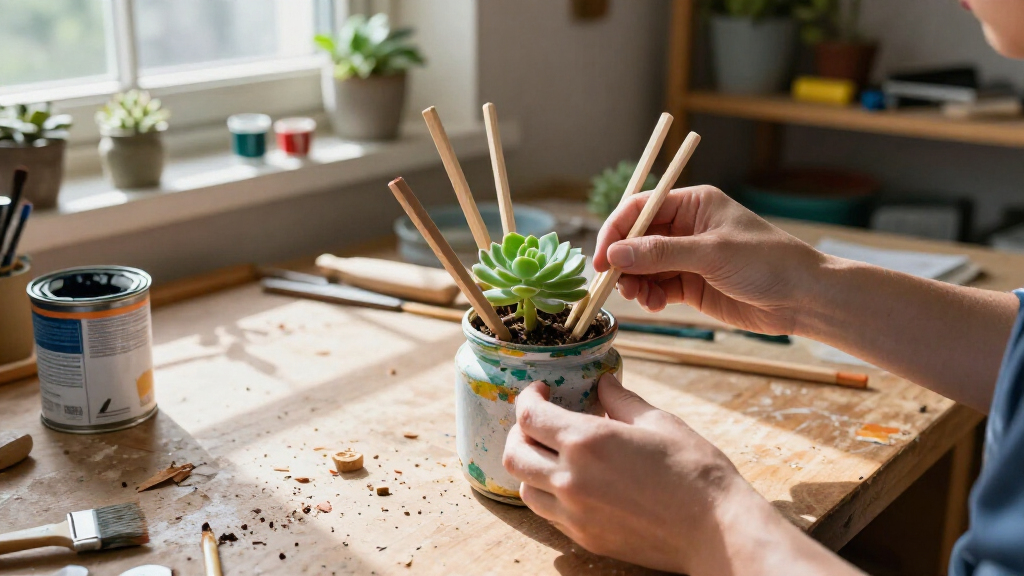
The design uses a wooden frame with a ladder-like center and taller side supports. The jars hang from a horizontal dowel at the top, held by jute twine. The source says the creator cleans the small glass jars and removes their labels before assembling the support. Materials also include wooden sticks or dowels, paint, a small brush and a glue gun.
For the frame, the report suggests starting with two dowels about 10 to 12 inches long, spaced a few inches apart. Shorter pieces are cut to fit between them as rungs and glued in place. Four larger dowels are then attached at the corners as side supports and joined at the top; another horizontal dowel extends across the top to serve as the hanging rod. The report does not specify the lengths of the rungs or side supports, and says the creator’s exact measurements are not provided.
After the glue dries, the frame can be painted and the jars hung with twine. The source describes the setup as useful for propagating cuttings, with a leaf exposed and a stem sitting in water, and for keeping herbs such as rosemary or parsley nearby. It also suggests decorating the frame or jars with paint, ribbon, fabric, dried flowers or beads. These are proposed customization options, not tested requirements for the planter to function.
A Reuse Project for Small Plants
The project offers a practical alternative for people who have small plants but lack suitable holders, while giving empty glass jars another use. Its hanging format can keep a propagation cutting visible and accessible, and the jars can be arranged as a compact display. The report also frames the build as a budget-friendly option, but provides no itemized costs or comparison with store-bought planters, so savings are not quantified.
For readers trying the idea, the distinction between a craft suggestion and a tested planting system matters. The source does not explain how much water each jar should hold, how often it should be changed, or how to prevent spills. The finished frame’s stability will also depend on its materials, joints and the weight of the filled jars. Those factors should be considered before hanging it above furniture or in a busy area.
Products Worth Considering

Philips Hue Festavia 65-Foot Smart LED String Lights, 250 Color-Changing Mini LEDs

eufy Security SoloCam S340 3K Dual-Lens Solar Security Camera

eufy C28 Robot Vacuum and Mop with HydroJet Roller and 15,000 Pa Suction
As an affiliate, we earn on qualifying purchases.
How the Jar Planter Is Built
The Hunker report presents the planter as an upcycling craft adapted from a project by Shivangiart_craft on YouTube. It names wooden dowels and natural jute twine as materials, alongside paint and adhesive. The source also references particular retail products as examples; those references do not establish that the project requires those brands or that the products have been independently tested for this use.
The sequence is straightforward in outline: clean the jars, build a runged frame, attach the side supports, add a top bar, finish the wood and suspend the jars. The report recommends waiting for paint and adhesive to dry before adding greenery. It leaves several construction details to the maker, including jar size and weight, the number of jars, precise spacing and the amount of twine needed.
“a budget-friendly plant DIY project with function and flair”
— Hunker’s description of the project
Measurements and Hanging Safety
The source does not report whether the design has been tested for weight capacity or long-term stability. It gives no exact measurements for most frame pieces, no recommended jar volume and no guidance on suitable wall or ceiling fixtures. The best way to attach the planter will depend on its finished weight and the surface where it is hung.
It is also unclear whether the suggested materials are suitable for every plant or for prolonged contact with water. The report does not offer watering, drainage or maintenance instructions. Readers should treat the project as a craft outline and adapt it to their jars and plants; the source makes no claim that it is a professionally tested planter system.
Before Adding Plants or Hanging
The next steps for anyone making the planter are to choose jars and dowels that fit together, measure the frame around the intended jars, and let glued joints and paint dry fully before loading it. Check that the frame remains steady with the jars in place and select a hanging point that can support the combined weight. Because the report does not specify a hanging method or capacity, those decisions remain with the maker.
Once assembled, the jars can be used for cuttings or small herbs, with regular checks for water spills and the condition of the twine and frame. Hunker’s report provides no follow-up testing, performance results or formal care schedule; any such details would depend on the materials and plants selected.
Key Questions
What materials does the mini planter use?
The report lists small glass paint jars, wooden dowels, jute twine, paint, a brush and a glue gun. Decorative materials such as ribbon or beads are optional ideas.
Can the jars hold plant cuttings?
The source describes using them for propagation, with a cutting’s stem submerged in water and its leaf left exposed. It does not provide a care schedule or guidance for every plant type.
What size should the wooden dowels be?
Hunker suggests two main dowels around 10 to 12 inches long. It does not provide exact measurements for the shorter rungs or side supports, so builders need to size those pieces to their jars and desired frame.
Does the report say how much the project costs?
No. It describes the idea as budget-friendly but gives no itemized price or savings comparison. The total will depend on which materials a maker already has and what they need to buy.
Is there a stated weight limit for hanging the planter?
No weight limit or tested hanging method is supplied. The finished weight depends on the frame, jars and water, so the source leaves stability and mounting decisions to the maker.
Source: hunker.com